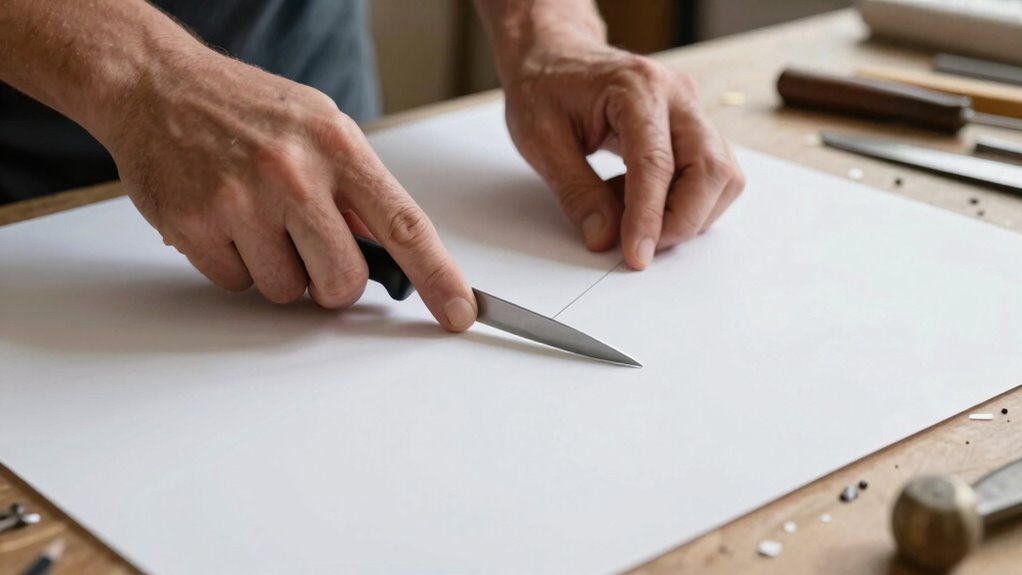

To improve your accuracy fast, develop a habit of practicing repetitive cutting along simple lines like straight, curved, or zigzag shapes. Focus on locking your eyes on the line and maintain steady, controlled movements without rushing. Regular practice helps train your brain and hands, boosting muscle memory and confidence. As your skills grow, challenge yourself with more complex shapes. Keep at it, and you’ll find your precision and steadiness improving quickly—there’s more to discover ahead.
Listen free for 30 days with Audible
Thousands of audiobooks and originals — cancel anytime.
As an affiliate, we earn on qualifying purchases.
Key Takeaways
- Practice cutting along simple lines daily to build muscle memory and improve precision quickly.
- Maintain focused visual attention on the line to enhance steady hand movements.
- Gradually increase the complexity of shapes to challenge and develop your skills further.
- Concentrate on controlled, deliberate actions over speed for more accurate results.
- Repetition reinforces coordination, boosting confidence and producing cleaner, more precise cuts.
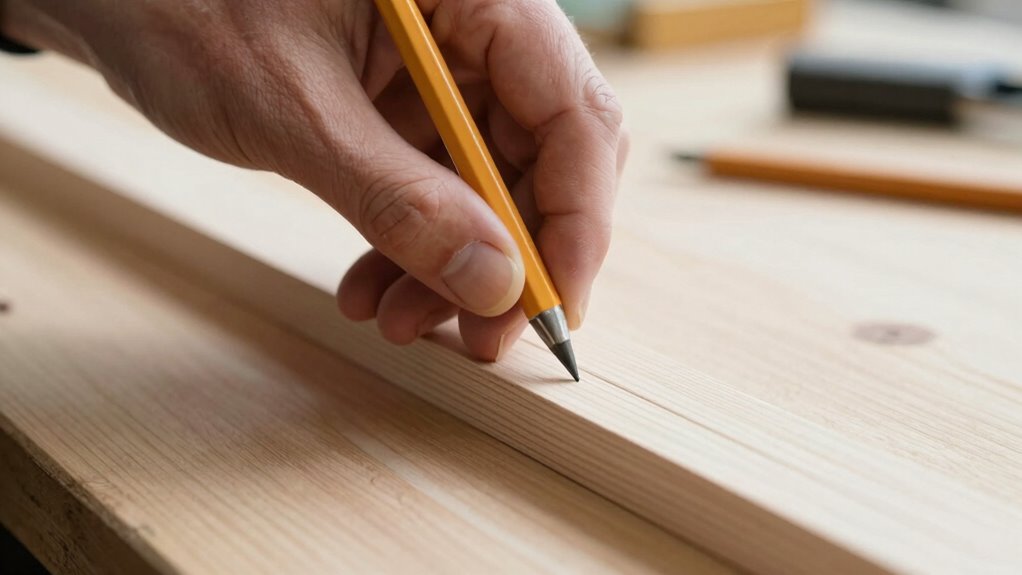
Many people develop the habit of repeatedly drawing or cutting along a specific line, often without even realizing it. This habit might seem trivial, but it can greatly improve your accuracy over time. When you focus on this repetitive action, you train your brain and hands to work together more efficiently. Your visual focus becomes sharper, and your hand becomes steadier, leading to cleaner cuts and more precise lines. The key is consistency; by repeatedly engaging in this practice, you reinforce muscle memory, making the process almost automatic.
Practicing repetitive drawing or cutting sharpens focus, steadies your hand, and boosts accuracy through muscle memory.
To start, pick a simple line or shape to trace or cut along. It could be a straight line, a curve, or even a zigzag pattern. As you do this, pay close attention to your visual focus. Keep your eyes locked on the line and avoid distractions. Your brain needs to process the visual information clearly to guide your hand accurately. Simultaneously, concentrate on maintaining a steady hand. Don’t rush; instead, aim for smooth, controlled movements. Over time, this focus helps your hand learn to follow the line precisely, reducing wobbliness and inconsistencies. Developing this visual focus can also help you better anticipate the movement needed for more complex cuts. Additionally, practicing this habit trains your hand-eye coordination, which is essential for achieving greater accuracy in any craft.
Consistency is essential. Set aside a few minutes each day to practice this habit. As you become more comfortable, challenge yourself with more complex shapes or tighter curves. This gradual increase in difficulty enhances both your visual focus and your steadiness, which translates into better accuracy in real projects. Remember, it’s not about speed but control. The more deliberate your movements, the more your muscles adapt to the precise motion needed. Muscle memory plays a crucial role in making accurate actions feel natural and automatic. Developing this skill can significantly improve your hand-eye coordination, making your work more precise and professional.
You’ll also notice that your confidence grows as your accuracy improves. When you rely on your visual focus and steady hand, you develop a sense of control that boosts your overall skill. Whether you’re cutting paper, fabric, or working with other materials, this habit helps you produce cleaner, more accurate results. It’s a simple yet powerful way to train your hand-eye coordination without complicated tools or techniques. Developing this visual focus can significantly impact your overall precision and confidence in any craft or task. Over time, this repetitive practice becomes second nature, and you’ll find yourself making cuts or drawings with greater confidence and precision.
Ultimately, the combination of sharp visual focus and a steady hand forms the foundation of accuracy. With patience and consistent practice, you’ll notice that your ability to follow lines improves rapidly, saving you time and frustration. Just start small, stay focused, and keep practicing—your skills will grow faster than you expect.
precision craft cutting scissors
As an affiliate, we earn on qualifying purchases.
As an affiliate, we earn on qualifying purchases.
Frequently Asked Questions
How Long Does It Take to See Improvement With the Habit?
You can start noticing improvements within a few days to a week if you practice consistency. Developing this habit takes patience, but regular, focused practice helps you refine your skills quickly. Stick with it daily, and you’ll see your accuracy improve faster. Remember, persistence is key—over time, your muscle memory will develop, making your cuts more precise and reliable. Keep practicing, and you’ll gain confidence in your abilities.
Can This Habit Be Practiced Without Special Equipment?
You can absolutely practice this habit without special equipment through equipment-free training, making it accessible anywhere. Consistently practicing the habit strengthens muscle memory and improves accuracy faster. Many successful athletes swear by daily, simple drills that require nothing but your focus. So, by maintaining habit consistency and dedicating a few minutes each day, you’ll notice rapid improvement, proving that effective training doesn’t always need costly or fancy gear.
Is This Habit Suitable for All Skill Levels?
Yes, this habit suits all skill levels because it’s highly adaptable. Beginners can start with simple adjustments to build confidence, while experienced players can refine their technique for even better accuracy. You can modify the practice to match your current skill level, making it accessible and effective. As you progress, you’ll find it easier to integrate this habit into your routine, steadily improving your precision regardless of your starting point.
How Often Should I Practice This Habit?
You should practice this habit daily, ideally for 10-15 minutes, to build focus consistency and master ideal timing. Imagine a golfer who practices his swing line every morning; over time, his accuracy improves considerably. Consistent daily practice helps embed the habit into your muscle memory, making your accuracy faster and more reliable. Stick with it, and you’ll see progress much sooner than you expect.
Are There Common Mistakes to Avoid?
Yes, watch out for common pitfalls like rushing your practice or using incorrect techniques, which can hinder your progress. Avoid focusing solely on speed, as it may lead to sloppy cuts. Instead, prioritize precision and consistency. Make sure your cutting line is steady, and don’t skip warm-ups. By staying mindful of these mistakes, you’ll develop better habits faster and markedly improve your accuracy over time.
As an affiliate, we earn on qualifying purchases.
Conclusion
Think of the cutting line habit as your trusty compass in a dense forest. As you sharpen this skill, you’ll navigate with greater precision, avoiding the tangled underbrush of mistakes. Each time you practice, you’re carving a clearer, straighter path towards accuracy. Stick with it, and soon your aim will be as steady as a seasoned sailor steering through a storm—confident, steady, and always on course. Keep honing that habit, and watch your skills flourish.
craft knife set with sharp blades
As an affiliate, we earn on qualifying purchases.
As an affiliate, we earn on qualifying purchases.
As an affiliate, we earn on qualifying purchases.
Fall yard work Picks
leaf blowers
As an affiliate, we earn on qualifying purchases.