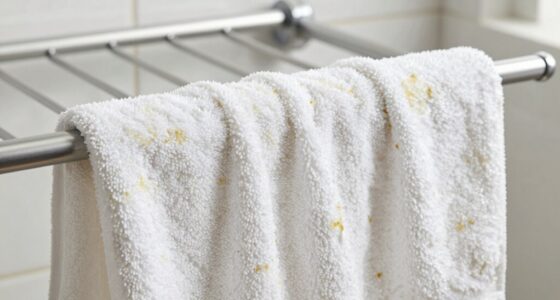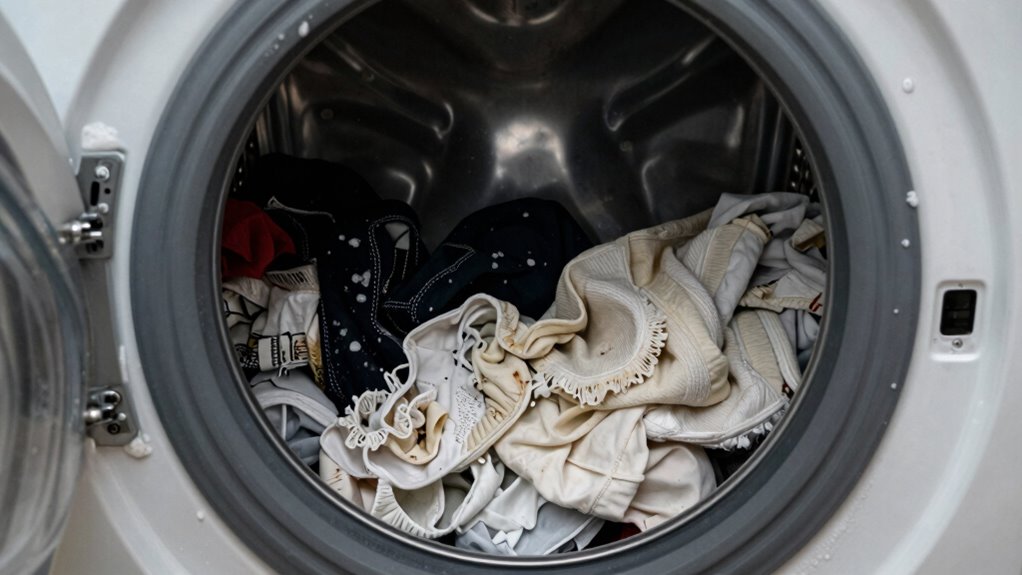

If you overload or underload your washing machine, your clothes won’t get cleaned properly, leaving dirt and odors behind. Overloading blocks water and detergent from circulating effectively, trapping dirt inside fabrics. Underloading wastes water and energy, preventing proper rinsing and cleaning. Both mistakes can make your clothes come out dirtier than when they went in. Keep in mind that balancing load size is key to better results—stay with us to learn how to get it right.

Prime made for students and young adults
- Fast, free delivery for dorm and study essentials
- Prime Video and Amazon Music included
- Member-only deals
Key Takeaways
- Overloading restricts water and detergent circulation, trapping dirt and oils in clothes.
- Underloading causes inefficient washing, leading to incomplete dirt removal.
- Incorrect detergent use, especially in HE washers, can leave residues that trap dirt.
- Improper load size prevents proper rinsing, leaving clothes dirtier than expected.
- Consistently improper load sizes can damage the machine and reduce cleaning effectiveness.
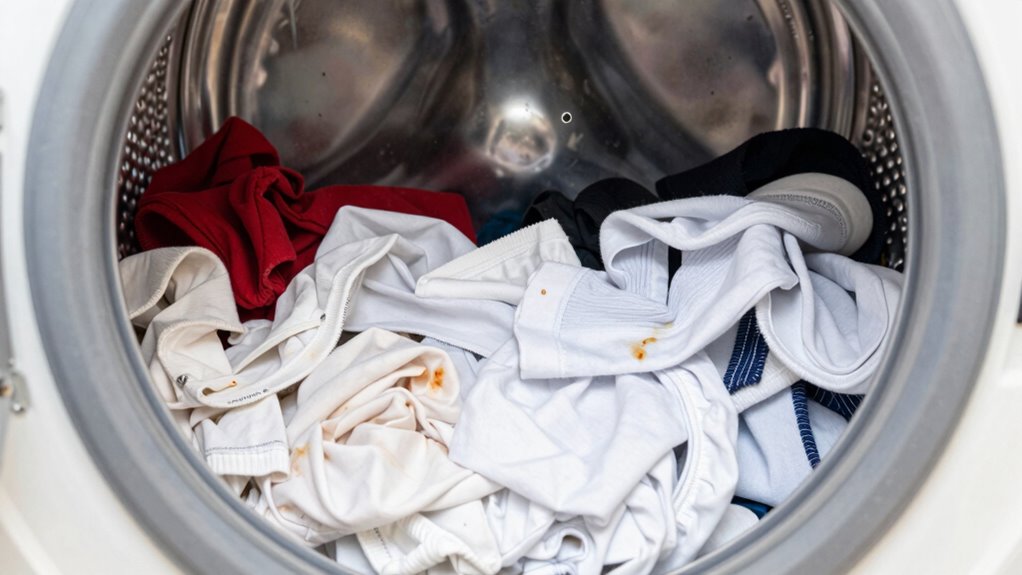
Have you ever wondered if you’re overloading or underloading your washing machine? It’s a common mistake that can impact how clean your clothes actually get. When you stuff too many clothes into the drum, the water and detergent can’t circulate properly. This means that dirt, oils, and odors might remain trapped, leaving your clothes dirtier than they should be. On the flip side, running loads that are too small isn’t much better. Small loads can cause the machine to work inefficiently, using more water and energy than necessary and sometimes not rinsing out detergent completely. The key is finding that perfect balance so your laundry comes out fresh and thoroughly cleaned.
Overloading or underloading your washing machine can prevent clothes from getting truly clean.
One factor that influences laundry effectiveness is your choice of detergent types. Not all detergents are created equal, and using the wrong type for your load size can lead to poor cleaning results. For example, high-efficiency (HE) detergents are designed for smaller, more efficient loads and require less water. Using a regular detergent in an HE washer or vice versa can cause excess suds, which hinder cleaning and rinsing. If you’re running a large load, you might need a different type of detergent to guarantee all clothes get the right amount of cleaning power. Pay attention to the labels and recommended use instructions, especially when adjusting load sizes, so you don’t end up with clothes that never quite get clean. Proper detergent use is essential for optimal cleaning results. Additionally, understanding the impact of load size can help prevent detergent waste and improve overall washing efficiency. Being mindful of detergent compatibility ensures your laundry routine remains effective and eco-friendly.
Fabric softeners can also influence how well your laundry turns out, especially if you’re overloading or underloading. These products help reduce static and make fabrics softer, but they need proper water flow to work effectively. Overloading your washing machine can prevent fabric softeners from dispersing evenly, leaving some clothes less soft and static-prone. Conversely, too small a load can mean an uneven distribution of softener, which won’t give you the desired effect. To maximize their benefits, always measure the softener carefully and consider the water circulation within your machine. Always follow the recommended amount of fabric softener and ensure your load isn’t too full or too sparse. Proper load size allows the softener to distribute evenly, ensuring all fabrics benefit from its smoothing and static-reducing properties.
Furthermore, the size of the laundry load can also affect the longevity of your washing machine, as consistently improper loads can cause wear and tear over time. In the end, understanding the importance of load size, choosing appropriate detergent types, and using fabric softeners correctly can considerably improve your laundry results. It’s not just about tossing clothes into the machine; it’s about doing it smartly. Avoid stuffing your washer to the brim or running tiny loads, and you’ll see cleaner, softer clothes with less effort. Small adjustments make a big difference, helping you achieve that perfect wash every time.
high efficiency washing machine detergent
As an affiliate, we earn on qualifying purchases.
As an affiliate, we earn on qualifying purchases.
Frequently Asked Questions
How Can I Tell if My Washing Machine Is Overloaded?
You can tell if your washing machine is overloaded by checking its load capacity—if clothes are tightly packed or you have to force the door shut, it’s too full. Overloading hinders proper cleaning and harms your washing habits. To avoid this, follow the manufacturer’s guidelines for load sizes, ensuring clothes have enough space to move freely. This helps your machine clean effectively and prolongs its lifespan.
Does Water Temperature Affect Cleaning Efficiency?
Water temperature greatly influences cleaning effectiveness; in fact, hot water can remove up to 90% of germs and stains. Water temperature affects how well detergents work and how effectively dirt and grime are lifted from fabrics. Using the right temperature for each load guarantees ideal cleaning. For heavily soiled clothes, hot water is best, while cold water preserves colors and saves energy, making your laundry more efficient overall.
How Often Should I Run a Cleaning Cycle on My Washer?
You should run a cleaning cycle on your washer once a month to prevent detergent residue and mold buildup. Regular cleaning keeps your machine fresh, ensuring it works efficiently and your clothes stay cleaner. If you notice odors or residue on your laundry, increase the frequency. Always leave the door open after washes to allow air circulation, which helps prevent mold and keeps your washer smelling fresh.
What Types of Detergents Work Best for Heavy Loads?
For heavy loads, you should use eco-friendly detergents and enzymatic cleaners. Eco-friendly options are gentle on your clothes and the environment, while enzymatic cleaners break down tough stains and dirt more effectively. Make certain to choose a detergent formulated for heavy-duty cleaning, and follow the recommended amount to avoid residue or buildup. This combination ensures your clothes come out clean, fresh, and less likely to be dirtier after washing.
Can Using Too Much Detergent Harm My Clothes or Machine?
Yes, using too much detergent can harm your clothes and machine. Excess detergent creates residue that sticks to fabrics, causing fabric damage over time. It also leaves behind detergent build-up in your washer, which can lead to mold and unpleasant odors. Always follow the recommended amount for your load size, ensuring thorough rinsing. Proper detergent use keeps your clothes cleaner, prevents damage, and extends the life of your washing machine.
laundry load size measuring device
As an affiliate, we earn on qualifying purchases.
As an affiliate, we earn on qualifying purchases.
Conclusion
If you overload or underload your washer, your clothes won’t get properly clean. Studies show that about 30% of people struggle with laundry load sizes, leading to dirtier clothes and wasted energy. By paying attention to load size, you guarantee your laundry comes out fresh and spotless every time. Next time, check your washer’s capacity and load accordingly—your clothes will thank you for it! Proper load sizes make all the difference in achieving truly clean laundry.
As an affiliate, we earn on qualifying purchases.
automatic laundry detergent dispenser
As an affiliate, we earn on qualifying purchases.
As an affiliate, we earn on qualifying purchases.
Columbus Day / Indigenous Peoples' Day Picks
long weekend sales
As an affiliate, we earn on qualifying purchases.