If your home keeps smelling from the drain, it’s likely due to organic buildup, mold, or trapped debris causing bacteria to grow. Poor air circulation and bad ventilation can trap these odors, making the smell linger longer. Aging pipes or materials that absorb odors also contribute. Clogged or stagnant water pockets provide perfect breeding grounds for bacteria. Addressing these issues with regular cleaning and proper airflow can help, and if you want to find out more, there’s more to discover.
Key Takeaways
- Persistent buildup of bacteria, mold, or debris in pipes causes ongoing foul odors.
- Poor ventilation traps and disperses odors slowly, leading to repeated smells.
- Absorptive materials like rubber seals can retain and slowly release odors over time.
- Underlying plumbing issues, such as clogs and stagnant water, create breeding grounds for bacteria.
- Inadequate maintenance and cleaning allow organic buildup, exacerbating repeated drain odors.

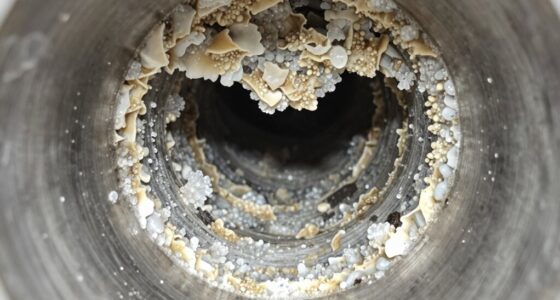
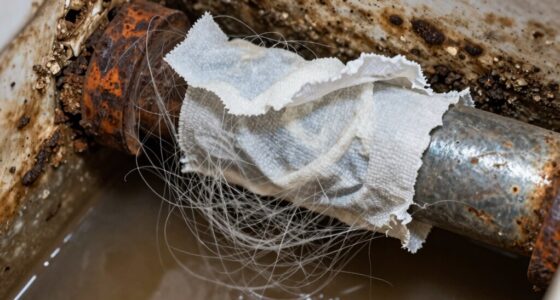
If you notice a persistent smell coming from your drains, it can be more than just an annoyance—it’s often a sign of underlying issues that need addressing. Drain odors are typically caused by the buildup of bacteria, mold, or trapped debris in the pipes, which produce foul smells as they decompose. When these odors linger, it’s usually because the air circulation around your plumbing fixtures isn’t enough to disperse the smell or because the materials in your pipes absorb odors over time.
Air circulation plays a crucial role in controlling drain smells. When there’s limited airflow around your plumbing fixtures, the odors tend to stay trapped, intensifying the smell. Proper ventilation helps move the air in the area, dispersing unpleasant odors and preventing them from becoming overwhelming. If your bathroom or kitchen lacks adequate ventilation, you might notice that smells stick around longer. Installing exhaust fans or opening windows can significantly improve air circulation, reducing the persistence of drain odors. Additionally, ensuring proper airflow can prevent the formation of stagnant pockets of water that contribute to odor buildup. Understanding how airflow dynamics affect odor dispersal can help you design more effective ventilation solutions.
Odor absorption is another key factor. Certain materials in your pipes, like rubber seals or aging plastic, can absorb odors over time, releasing them slowly into your home. Additionally, organic buildup inside the pipes acts like a sponge, soaking up smells that are difficult to eliminate once they’re absorbed. Regular cleaning can help prevent this absorption, but when odors become persistent despite cleaning, it indicates deeper issues like clogging or stagnant water pockets. These stagnant pockets provide a breeding ground for bacteria, which produce the foul smells you notice. Understanding pipe material characteristics can help in choosing appropriate maintenance methods to prevent odor absorption. Proper maintenance and awareness of plumbing system design can further reduce the likelihood of recurrent smells.

Broan-Nutone® Bathroom Exhaust Fan, 50 CFM Modern Grille, Energy Star Fan, 2.0 Sones
50 CFM BATHROOM EXHAUST FAN: 50 CFM is sufficient ventilation to remove, moisture, odor and pollutants from your…
As an affiliate, we earn on qualifying purchases.
As an affiliate, we earn on qualifying purchases.
Frequently Asked Questions
Can Drain Smells Indicate a Serious Plumbing Problem?
Yes, drain smells can indicate a serious plumbing problem. Persistent odors often stem from drain odor sources like dry traps or sewer leaks. You should schedule a plumbing inspection to identify the root cause. Ignoring these smells might lead to more significant issues, such as contaminated water or pipe damage. Addressing drain odors promptly helps prevent costly repairs and guarantees your home’s plumbing system remains safe and functional.
How Often Should I Clean My Drain Traps?
You should clean your drain traps at least once a month to prevent odors and buildup. Regular drain maintenance through trap cleaning helps stop foul smells from recurring. If you notice persistent smells or slow drainage, consider cleaning traps more often. Maintaining clean traps keeps your plumbing functioning smoothly and prevents unpleasant drain smells from becoming a regular problem. Consistent trap cleaning is key to a fresh, odor-free home.
Are Certain Types of Pipes More Prone to Odors?
Yes, certain pipe materials are more prone to odors. PVC pipes, for instance, can absorb odors over time, especially if they’re old or damaged. Cast iron pipes tend to resist smells better but can corrode and cause issues. Additionally, ventilation systems play an essential role. Poor ventilation traps odors, making smells linger longer. Ensuring proper venting and choosing the right pipe material can greatly reduce recurring drain odors.
Can Household Chemicals Worsen Drain Smells?
Yes, household chemicals can worsen drain smells more than a volcano eruption. When you pour chemicals down the drain, they can trigger chemical reactions that produce foul odors instead of eliminating them. Some products only mask the odor temporarily, leading to a cycle of worsening smells. Using the wrong chemicals can also corrode pipes, creating more opportunities for odors to escape. Always choose appropriate cleaning agents to avoid this smell escalation.
Do Drain Odors Affect Indoor Air Quality?
Drain odors can impact your indoor air quality, making your home smell unpleasant and potentially affecting your health. Poor air circulation and inadequate ventilation strategies trap these smells inside, allowing them to linger and spread. To improve air quality, guarantee proper ventilation, open windows regularly, and use exhaust fans. These steps help remove odors and promote fresh air, reducing the negative effects of drain smells on your indoor environment.

Bioda Multi-Purpose Probiotic Enzyme Cleaner and Deodorizer | Professional Strength | Trash Can Deodorizer, Pet Stains and Odors, Drains, Floors, Bathrooms, Toilets | Made in USA | 1 Gallon
THE POWER OF ONE: This versatile product is the only probiotic cleaner you need, providing powerful cleaning performance…
As an affiliate, we earn on qualifying purchases.
As an affiliate, we earn on qualifying purchases.
Conclusion
To prevent repeated drain smells, you need to identify the cause, clean the drain thoroughly, and maintain regular upkeep. You must eliminate lingering debris, disinfect the pipes, and guarantee proper ventilation. You should check for leaks, replace worn-out seals, and use natural remedies or commercial cleaners. By staying vigilant, cleaning diligently, and maintaining consistently, you can keep your drains fresh, odor-free, and enjoy a cleaner, more pleasant home environment.
Broan-Nutone® Bathroom Exhaust Fan, 50 CFM Modern Grille, Energy Star Fan, 2.0 Sones
50 CFM BATHROOM EXHAUST FAN: 50 CFM is sufficient ventilation to remove, moisture, odor and pollutants from your…
As an affiliate, we earn on qualifying purchases.
As an affiliate, we earn on qualifying purchases.

2 Pcs Drain Pipe Silicone Seal Plug Drain Sewer Deodorant Cover Washing Machine Drain Pipe Seal Plug Floor Drain Anti-Odor Silicone Plug for Kitchen Bath Washing Machine Drain
Size Details: Our multifunctional drainage filter comes in two sizes, size S with an outer diameter of 53mm/2.08…
As an affiliate, we earn on qualifying purchases.
As an affiliate, we earn on qualifying purchases.