
📊 Full opportunity report: Recovery-percentile tracker for orthopedic surgery patients on IdeaNavigator AI — validation score, market gap, and execution plan.
TL;DR
A pilot program is testing a recovery-percentile tracker for orthopedic surgery patients to help patients assess their recovery and reduce unnecessary calls. The initiative aims to improve post-op care efficiency and patient experience.
A new recovery-percentile tracker for orthopedic surgery patients is being piloted in a single practice to help patients objectively assess their recovery progress and reduce the volume of post-operative calls to surgeon offices. This development aims to address the rising demand for outpatient orthopedic procedures and the staffing challenges faced by offices.
The tracker allows patients who undergo procedures such as knee replacements to log daily data on pain, swelling, range-of-motion, and walking milestones. These metrics are then plotted as percentiles against anonymized recovery curves for similar surgeries, providing patients with an objective benchmark of their progress.
Initial testing involves recruiting 15 knee-replacement patients who will log their recovery metrics daily for two weeks. The goal is to determine whether access to this data reduces the number of ‘is this normal?’ calls made to the practice compared to a control group without the tracker. The concept is designed as a subscription service billed per seat to orthopedic practices, aiming to streamline post-op care and improve patient reassurance.
Potential Impact on Post-Operative Care Efficiency
If successful, the recovery-percentile tracker could significantly reduce the workload of orthopedic office staff by decreasing unnecessary patient calls. It offers a data-driven way for patients to self-assess their recovery, potentially leading to earlier identification of complications and improved patient satisfaction. The approach aligns with broader trends toward digital health tools that enhance outpatient care and optimize resource use.

Knee Replacement Recovery Logbook: A 12-Week Daily Tracker for Pain, Mobility, PT Exercises, Medications, Appointments, Swelling Notes & Caregiver Updates
As an affiliate, we earn on qualifying purchases.
As an affiliate, we earn on qualifying purchases.
Growing Need for Post-Op Monitoring Tools
The rise in outpatient orthopedic procedures, such as knee and hip replacements, has increased the demand for effective post-operative monitoring solutions. Currently, patients often rely on subjective assessments or call offices with concerns, creating staffing burdens and delays. While some digital health tools exist, few provide real-time, personalized benchmarks against anonymized recovery data. This pilot explores whether a simple, daily check-in system with percentile visualization can address this gap and improve post-surgical outcomes.
“This tool could help patients better understand their recovery trajectory and reduce unnecessary calls, easing the burden on busy office staff.”
— an anonymous researcher

NEHOO Cold Therapy System, Pain Relief for Post-Surgery Recovery, Programmable Ice Therapy Machine, Continuous Cryotherapy, Universal Pad for Knee, Ankle, Cervical, Back and Leg, Including 4 Straps
Portable and durable ◆ Lightweight design paired with triple-wall premium insulation keeps the internal temperature chilled for hours….
As an affiliate, we earn on qualifying purchases.
As an affiliate, we earn on qualifying purchases.
Effectiveness and Adoption Uncertainties
It is not yet confirmed whether the tracker will effectively reduce call volume or improve patient outcomes. The pilot is ongoing, and results are pending. Additionally, questions remain about patient engagement, data privacy, and how widely such a tool could be adopted across different practices and procedures.
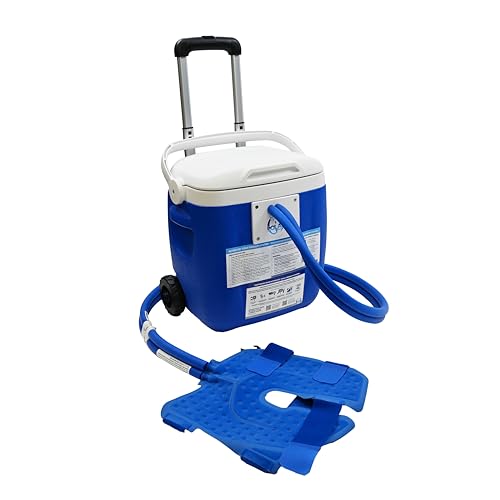
Polar Active Ice 3.0 Cold Therapy Ice Machine System with Programmable Timer, Knee and Joint Compression Pad, Lightweight 16 Quart Cooler, Quiet Pump, Strong Cryotherapy Pain Relief Treatment
CUSTOM PROGRAMMABLE TIMER: Our patent-pending programmable timer allows you to customize a personalized cooling on and off cycle…
As an affiliate, we earn on qualifying purchases.
As an affiliate, we earn on qualifying purchases.
Next Steps in Validation and Implementation
The practice will monitor the logged data and call patterns over the two-week period, comparing results with a control group. If the pilot demonstrates a reduction in calls and positive patient feedback, plans include expanding testing to other procedures and practices. Further validation will focus on long-term outcomes, integration with electronic health records, and potential for broader commercialization.

DOMAS Ab Stimulator & Muscle Stimulator, Dual EMS TENS Unit for Workout Recovery & Muscle Relaxation, App Control Waist Trainer for Men Women, Core Ab Machine with 12 Modes, Secure Fit
[Secure Fit for Active Workouts] Tired of belts slipping? Our upgraded host structure ensures the ab stimulator stays…
As an affiliate, we earn on qualifying purchases.
As an affiliate, we earn on qualifying purchases.
Key Questions
How does the recovery-percentile tracker work?
The tracker prompts patients to log daily metrics such as pain, swelling, range-of-motion, and walking milestones. These are then plotted as percentiles against anonymized recovery curves for similar surgeries, providing an objective view of recovery progress.
Will this tool replace in-person follow-ups?
No, it is intended as a supplementary tool to help patients self-assess and reduce unnecessary calls. It does not replace clinical evaluations but aims to improve communication and early detection of issues.
Is patient data privacy protected?
Data privacy measures are a key consideration in the pilot, with anonymization and secure data handling protocols in place. Further testing will evaluate compliance with health data regulations.
When will the results of the pilot be available?
The two-week logging period is ongoing, with preliminary results expected shortly afterward. Full analysis and potential wider rollout will follow based on initial findings.
Could this approach be used for other types of surgeries?
Potentially, yes. If the pilot proves effective for knee replacements, similar models could be adapted for other orthopedic procedures or outpatient surgeries, pending further validation.
Source: IdeaNavigator AI