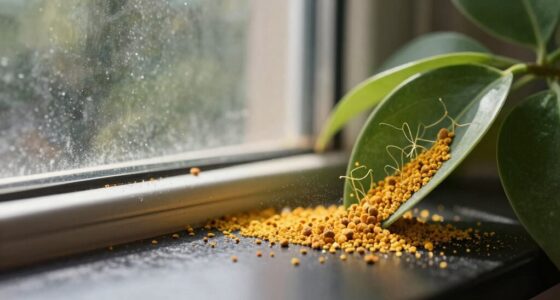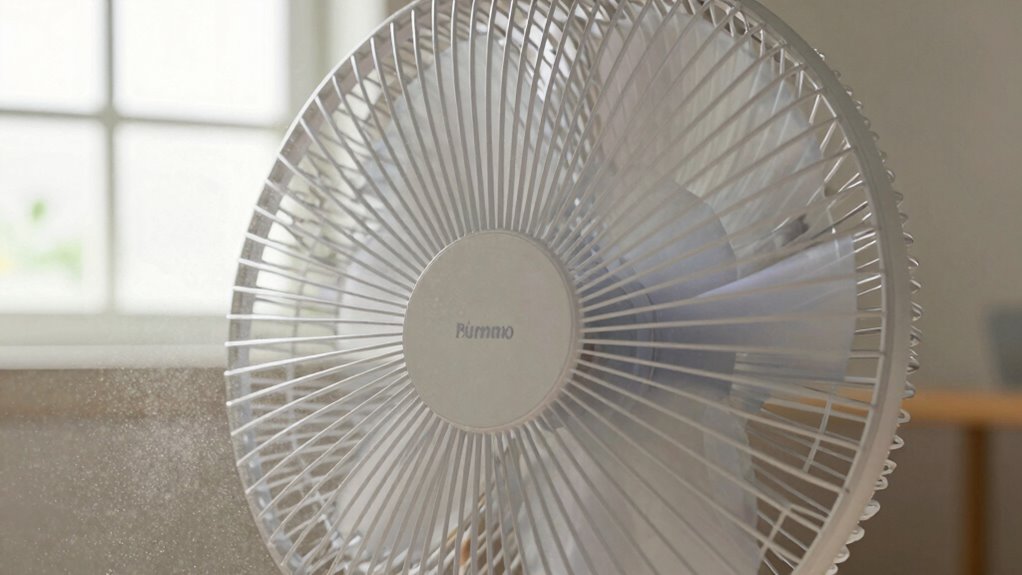

Running your fan constantly at high speeds can actually spread dust and pollutants instead of cleaning the air. When you operate it continuously, dust from surfaces gets pushed into the air, where it lingers longer, especially in poorly ventilated spaces. Sudden airflow from high speeds stirs up more particles, worsening allergies and respiratory issues. The key is to use your fan wisely and maintain it properly. Keep going, and you’ll discover how small changes make a big difference.
Key Takeaways
- Running fans continuously without proper positioning can circulate and spread dust and airborne pollutants.
- Pointing fans directly at walls or corners causes pollutants to bounce and disperse throughout the room.
- Using fans at excessively high speeds stirs up more dust, increasing indoor pollutant levels.
- Neglecting regular cleaning of fan blades allows dust buildup, which is then released into the air during operation.
- Operating fans without considering airflow direction and ventilation can worsen indoor air quality.
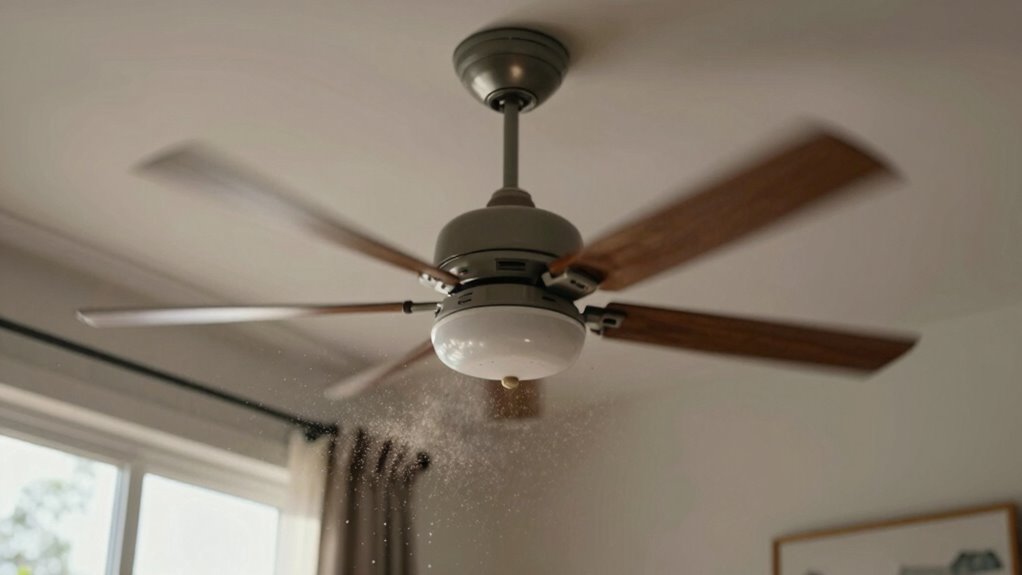
When you turn on a fan, you might not realize how your habits can influence the spread of pollutants in your environment. Fans are often seen as tools to improve comfort, but they can also unintentionally circulate dust and other airborne particles if not used carefully. Proper air circulation is key to maintaining a healthy indoor space, and how you use your fan directly impacts whether it helps or hampers that goal. If your fan is constantly blowing in the same direction, it can cause dust distribution to become uneven, settling in one area while stirring up particles in another.
Most people tend to leave their fans running for hours without considering how it affects dust and allergen dispersal. When a fan runs continuously, it can pick up dust from surfaces like carpets, furniture, and even clothing, then push it into the air. This creates a cycle where dust particles are constantly redistributed throughout the room, rather than settling out or being filtered away if you use other ventilation methods. Dust distribution becomes more widespread, aggravating allergies or respiratory issues, especially in homes with pets, smokers, or older carpets that trap more particles. Additionally, airborne particles can linger longer in poorly ventilated spaces, further increasing indoor pollution. Ensuring proper indoor air quality through effective fan use and ventilation can significantly reduce these issues. Regular maintenance of your fans is also crucial to prevent them from becoming sources of pollution.
Leaving fans on constantly redistributes dust, worsening allergies and respiratory issues in homes with pets or smokers.
Another habit that worsens pollutant spread is pointing fans directly at walls or corners. Instead of promoting healthy air circulation, this causes the dust and pollutants to bounce off surfaces and spread more widely. Fans should ideally be positioned to promote gentle, even air flow, pushing stale air out and drawing fresh air in. When you neglect this, pollutants remain suspended longer, increasing the chance they’ll be inhaled. Over time, this can lead to a build-up of indoor pollutants, which can be particularly problematic in spaces lacking proper ventilation. An additional tip is to avoid running fans at excessively high speeds, as this can increase the amount of dust stirred up in the air.
Furthermore, using fans without regular cleaning can turn them into sources of indoor pollution. Dust and debris collect on the blades and grills, and when you turn the fan on, these particles are released into the air. If you don’t clean your fan regularly, you’re essentially redistributing accumulated dust and allergens every time you operate it. This habit not only diminishes air quality but also counteracts the purpose of fan use, which is to improve air circulation and remove pollutants, not spread them.
In essence, your habits directly influence how effectively a fan can improve indoor air quality. Instead of just turning it on and leaving it running aimlessly, consider how you position it, how often you clean it, and how long you keep it running. Proper air circulation and maintenance are essential for reducing dust and pollutant spread, ensuring your indoor environment remains healthy and comfortable. By doing so, you ensure that your fan supports healthy air circulation and minimizes dust distribution, rather than spreading pollutants throughout your space.
air purifier for dust and allergens
As an affiliate, we earn on qualifying purchases.
As an affiliate, we earn on qualifying purchases.
Frequently Asked Questions
Can Cleaning Fans Reduce Pollutant Spread?
Cleaning fans can definitely reduce pollutant spread if you perform proper fan maintenance regularly. Dust and debris buildup can circulate allergens and pollutants, so cleaning the blades and filters improves air filtration. Make certain to turn off the fan before cleaning, and replace or wash filters as needed. This proactive approach guarantees your fan works efficiently, improving indoor air quality and helping to prevent the spread of airborne pollutants.
Are Certain Fan Types Safer for Air Quality?
Think of your fan as a guardian of airflow patterns, guiding pollutants away or trapping them inside. Certain fan types, like those with high airflow efficiency and durable materials, are safer for air quality because they reduce pollutant spread. Fans made of sturdy, easy-to-clean materials prevent dirt accumulation and airborne contaminants. Choosing a fan designed for peak airflow and durability ensures you keep harmful pollutants at bay, safeguarding your indoor environment.
How Often Should I Replace Fan Filters?
You should replace your fan filters every 1 to 3 months to maintain ideal air quality. Regular air filter maintenance prevents dust accumulation, which can worsen indoor air quality and strain your fan’s motor. If you notice increased dust or reduced airflow, it’s time to change the filter sooner. Consistent replacements guarantee your fan effectively removes pollutants rather than spreading them, keeping your indoor environment healthier and cleaner.
Do Ceiling Fans Contribute to Indoor Pollution?
Did you know indoor air can contain pollutants like dust and mold? Ceiling fans can contribute to indoor pollution if their fan material traps dust, which gets recirculated with each air circulation. Regularly cleaning your fan blades helps prevent this buildup, ensuring better air quality. Proper maintenance reduces the risk of pollutants spreading and keeps your indoor environment healthier, making your fan a helpful tool rather than a source of contamination.
Can Fan Placement Affect Pollutant Distribution?
Yes, fan placement directly affects pollutant distribution by influencing airflow patterns. If you position fans incorrectly, they can circulate indoor pollutants rather than remove or dilute them. To improve air quality, place fans to promote proper airflow, ideally near fresh air sources or in locations that encourage cross-ventilation. Avoid pointing fans directly at pollutants or clutter, as this can spread contaminants throughout the room instead of helping clear them out.
As an affiliate, we earn on qualifying purchases.
Conclusion
If you’re not careful, your fan habits could be spreading pollutants rather than removing them. Imagine running your ceiling fan while cooking; instead of pushing out smoke and odors, it circulates them throughout your home. A recent case showed that improper fan use during cleaning spread dust and allergens, worsening indoor air quality. So, next time, turn on your exhaust fan or open windows instead—your lungs will thank you for it.
oscillating fan with adjustable speed
As an affiliate, we earn on qualifying purchases.
As an affiliate, we earn on qualifying purchases.
air circulation fan for living room
As an affiliate, we earn on qualifying purchases.
As an affiliate, we earn on qualifying purchases.