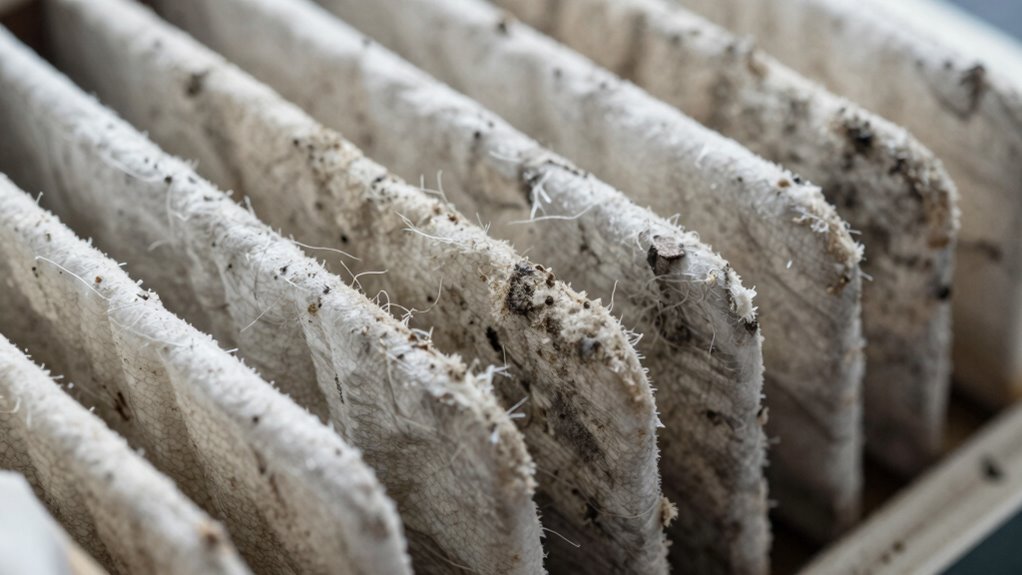

Some filters restrict airflow more than they help because they use dense media that trap tiny particles but also create resistance. When filters are too fine or improperly selected, they cause bottlenecks, forcing machinery to work harder. This can lead to reduced efficiency, overheating, and faster wear. To avoid these issues, it’s important to balance filtration needs with airflow capacity. Keep exploring how proper filter choices can improve your equipment’s performance and longevity.
Key Takeaways
- Dense filter media trap more particles but significantly impede airflow, causing restrictions without proportional filtration benefits.
- Overly fine filters increase air resistance, leading to reduced airflow and higher energy consumption.
- Inappropriate filter material selection can create unnecessary airflow restrictions, hindering machinery performance.
- Excessive filter clogging due to inadequate maintenance exacerbates airflow restrictions over time.
- Filters designed without considering equipment-specific airflow needs may restrict air more than they help.
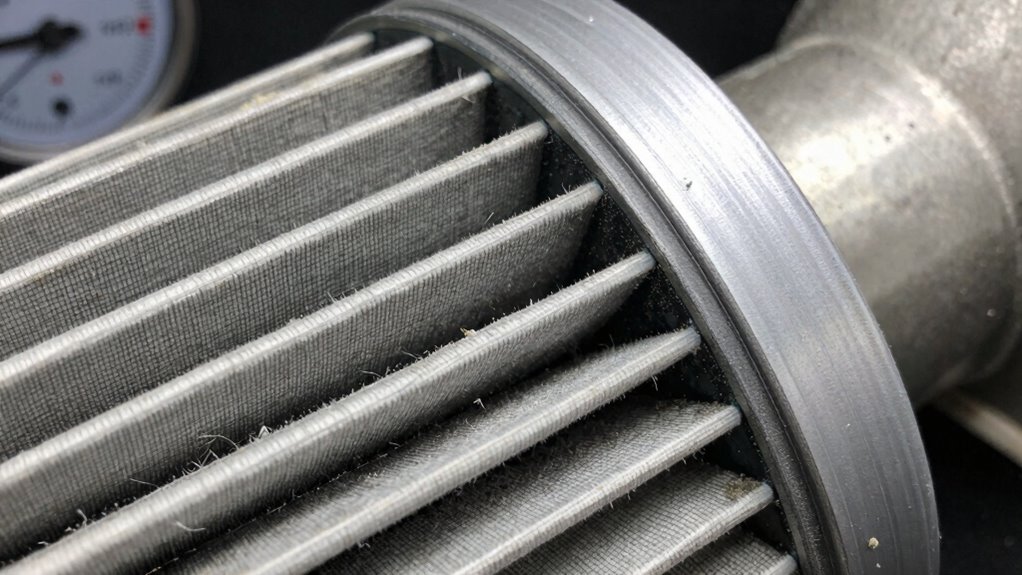
Have you ever wondered how filters and air restrictions impact the performance of your machinery? It’s a common question, especially when equipment doesn’t seem to run as smoothly as it should. At the core, the answer lies in understanding the balance between air quality and filtration efficiency. When filters are too restrictive, they can actually hinder performance instead of helping. This happens because excessive air restriction limits the flow of air into your machinery, which can reduce its overall efficiency and increase wear and tear on components. Instead of improving air quality, overly restrictive filters create a bottleneck, forcing the system to work harder to draw in the necessary airflow. Over time, this added strain can lead to overheating, increased energy consumption, and even premature failure of parts.
In many cases, filters that restrict air too much are often chosen based on their ability to trap tiny particles. While high filtration efficiency is important, it’s equally crucial to evaluate how much air the filter allows to pass through. If a filter’s media is too dense, it might catch more dust and debris, but it also substantially reduces airflow. This trade-off can be detrimental, especially if your machinery relies on a steady, unobstructed air supply to operate at its best. When air volume drops, performance drops with it, and you may notice reduced power, slower operation, or inconsistent results. This is why selecting the right filter involves balancing filtration efficiency with airflow capacity. A filter that’s too fine may be excellent at trapping contaminants but can create more problems than it solves if it restricts airflow excessively. Additionally, the filter material plays a significant role in determining both filtration and airflow, emphasizing the need for proper selection.
Furthermore, understanding the importance of proper filter selection can help prevent these issues and ensure optimal machinery performance. Regularly checking and assessing your filters helps maintain the right airflow balance and prevents them from becoming overly restrictive. It’s also beneficial to consider the airflow requirements of your equipment to ensure the filter does not impede its operation. Another common mistake is believing that a filter’s high efficiency automatically means better protection. In reality, the best filters are those that provide sufficient filtration without creating unnecessary air resistance. When filters restrict air too much, the machinery compensates by working harder, which leads to higher energy costs and potential damage over time. It’s essential to evaluate your equipment’s airflow needs and choose a filter that maintains a healthy balance. Regular maintenance and timely replacement also help prevent filters from becoming clogged and overly restrictive. Remember, the goal isn’t just cleaner air but ensuring that your machinery receives enough airflow to operate efficiently and reliably. When filters are carefully selected and maintained, they support ideal air quality without sacrificing performance, keeping your equipment running smoothly and extending its lifespan.

HEAVY DUTY HIGH FLOW COMPRESSED AIR IN-LINE PARTICULATE FILTER WITH METAL BOWL, 3/4" NPT PORTS, 140 CFM, VISIBLE SIGHT GLASS, 5 MICRON ELEMENT
HEAVY DUTY 3/4" FEMALE NPT IN LINE COMPRESSED AIR PARTICULATE FILTER MOISTURE TRAP
As an affiliate, we earn on qualifying purchases.
As an affiliate, we earn on qualifying purchases.
Frequently Asked Questions
How Do I Know if My Filter Is Too Restrictive?
You’ll know your filter is too restrictive if you notice decreased airflow or your HVAC system struggles to maintain temperature. Check the filter material—if it’s densely packed or clogged, airflow resistance increases. Regularly inspect and replace filters to prevent excessive restriction. If you feel your system is working harder than usual or airflow feels weak, it’s a sign that your filter may be too restrictive, affecting efficiency and air quality.
Are There Filters That Improve Air Quality Without Restricting Airflow?
Imagine a gentle breeze flowing effortlessly through a lush forest; some filters use advanced air purifier technology and innovative filter material options to achieve this. Yes, there are filters designed to improve air quality without restricting airflow, by balancing filtration efficiency and breathability. These filters often feature fine mesh or electrostatic materials that trap pollutants while allowing air to circulate freely, providing cleaner air without sacrificing airflow.
Can a Filter’s Lifespan Affect Its Air Restriction Level?
Yes, a filter’s lifespan can affect its air restriction level. As the filter material undergoes lifespan degradation, it tends to trap more particles and becomes denser, which restricts airflow more. Over time, accumulated debris and reduced permeability increase resistance. You’ll notice this as decreased airflow or higher energy bills. Replacing filters regularly guarantees they maintain peak airflow and filtration efficiency, preventing excessive restriction caused by aging filter material.
What Are the Signs of a Filter Restricting Airflow Excessively?
Like a clogged artery, a filter restricting airflow excessively shows signs you can’t ignore. You’ll notice reduced airflow from vents, longer times to heat or cool, and increased energy bills. A filter material that’s become too clogged or dense increases airflow resistance, making it harder for air to pass through. If you observe these signs, it’s time to replace or clean your filter to restore proper airflow and efficiency.
How Often Should I Replace Filters to Prevent Airflow Issues?
You should replace filters every 1 to 3 months, depending on filter materials and your home’s environment. Regular replacement guarantees proper airflow measurement and prevents restrictions. Check your filters monthly and replace them when they appear dirty or clogged. Using high-quality filters suited for your system can extend their lifespan, but always monitor airflow to catch restrictions early. Consistent maintenance keeps your system running efficiently.

Filtrete 16x25x1 Air Filter, MERV 13 MPR 1900, Allergens, Bacteria, Viruses & Air Pollutants, 3-Month AC/Furnace Filters, Cleaner Air Reliable Airflow, 2 HVAC Filters(Act Size 15.62×24.62×0.78 in)
MAKE YOUR HOME YOUR SANCTUARY: 1-pack of 3-month pleated Filtrete 16x25x1 MERV 13 MPR 1900 AC Furnace Air…
As an affiliate, we earn on qualifying purchases.
As an affiliate, we earn on qualifying purchases.
Conclusion
If you think a filter’s just about trapping dirt, think again. Some filters block so much air, it’s like trying to breathe through a brick wall. You might as well be holding your breath during a marathon! Over-restrictive filters turn your perfect air supply into a suffocating chokehold, making your home feel more like a cave than a sanctuary. So, choose wisely—otherwise, you’ll be fighting your air system more than you ever imagined possible!

Nuwave OxyPure ZERO Air Purifier for Home Large Rooms Up to 2,002 Sq Ft 100% Particle Removal to 0.1 Micron, Dual 4-Stage Filtration, Adjustable Airflow, Smart Air Cleaner Washable & Reusable Filter
True No Replacement Filters: Revolutionary Bio-Guard filters are washable and reusable, eliminating replacements and reducing waste.
As an affiliate, we earn on qualifying purchases.
As an affiliate, we earn on qualifying purchases.

CoreCarbon 20x30x1 Cut To Fit Furnace & Air Conditioner Washable Reusable High Air Flow Polyester Fiber Filter Media, Made in USA (20" x 30" x .75" actual)
MADE IN USA: UL 900 Classified Material designed for use in HVAC systems – Polyester Washable Furnace /…
As an affiliate, we earn on qualifying purchases.
As an affiliate, we earn on qualifying purchases.