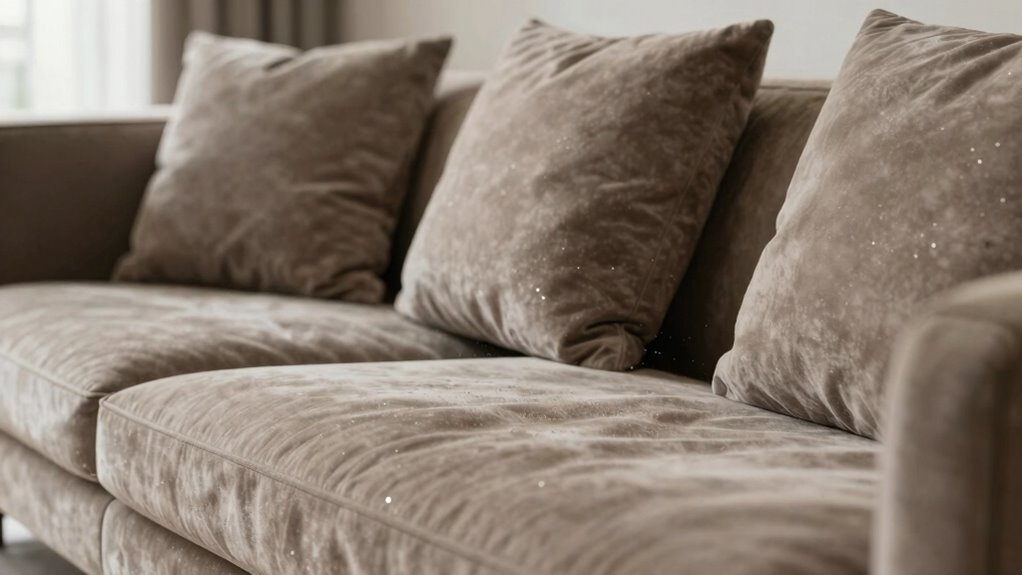

Soft surfaces in your home, like carpets, upholstery, and curtains, act as hidden reservoirs for airborne particles such as dust, pet dander, and pollen. These materials absorb and trap pollutants deep in their fibers, making it harder to keep air clean. When you disturb these surfaces, trapped particles get released back into the air, affecting your indoor air quality. To fully understand how surface choices and cleaning habits can improve your environment, keep exploring more effective strategies.

Prime made for students and young adults
- Fast, free delivery for dorm and study essentials
- Prime Video and Amazon Music included
- Member-only deals
Key Takeaways
- Soft surfaces like carpets and upholstery absorb airborne particles, acting as hidden reservoirs of indoor pollutants.
- Disturbing soft surfaces releases embedded particles back into the air, recontaminating indoor environments.
- Surface porosity influences how much pollutants soft materials can trap and retain over time.
- Regular cleaning and appropriate material choices can reduce surface-embedded particle accumulation.
- Recognizing soft surfaces as indoor particle traps informs effective cleaning and air quality management strategies.
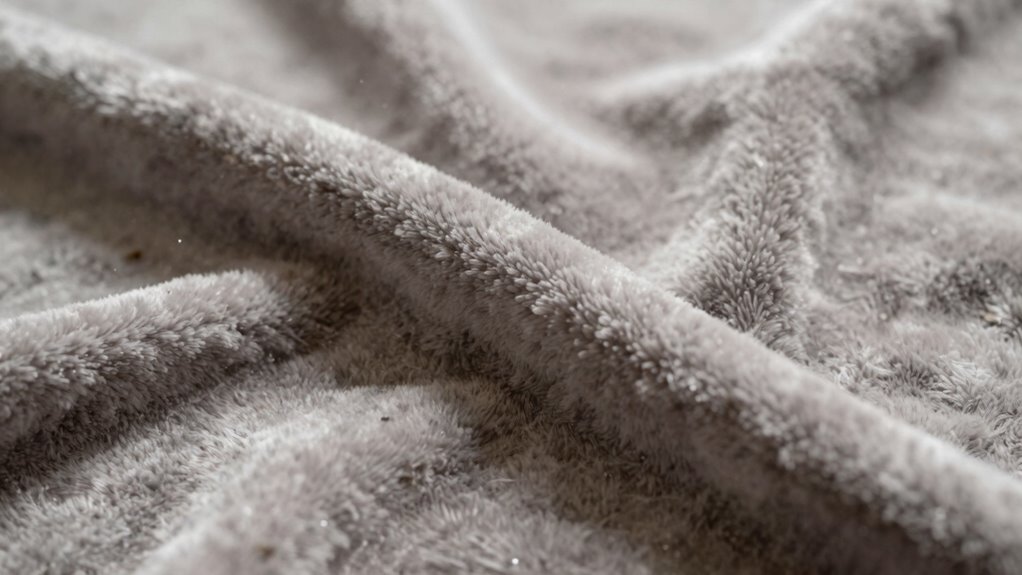
Have you ever wondered how to keep indoor air clean and free of harmful particles? It’s a common concern, especially as we spend more time inside. You might have invested in air filters or purifiers, but there’s another silent trap hiding right in your soft surfaces—carpets, upholstery, curtains, and bedding. These surfaces are more than just comfort; they act as natural reservoirs for airborne particles through a process called surface absorption. When dust, pet dander, pollen, or microscopic pollutants settle on soft surfaces, they don’t just stay put. Instead, they become embedded, making air filtration more challenging because the particles are no longer floating freely in the air but hidden within the fabric fibers.
This surface absorption creates a kind of indoor particle trap that can continually release pollutants back into the air over time. Every time you walk across a carpet or fluff up your sofa cushions, you disturb these trapped particles, sending them airborne again. Your soft surfaces, thus, play a dual role—they both absorb and release particles, impacting indoor air quality. This is why regular cleaning of these surfaces is essential, but it’s also important to understand that cleaning alone isn’t enough. You need to *take into account* how these surfaces interact with airborne pollutants, especially if you have allergies or respiratory issues.
Additionally, understanding the surface absorption process can help you better target your cleaning efforts and reduce indoor pollutant levels more effectively. Effective air filtration systems can help, but they often fall short if they don’t *factor in* surface absorption. HEPA filters, for instance, are excellent at capturing particles from the air, but they don’t address the particles hiding in soft materials. To improve overall indoor air quality, you should combine air filtration with thorough cleaning strategies. Vacuuming with HEPA-equipped machines, washing curtains, and regularly cleaning upholstery can reduce the reservoir of trapped particles. Moreover, choosing low-porosity materials for furniture and curtains can significantly decrease the amount of pollutants that these surfaces absorb over time. Additionally, using protective covers on furniture and opting for hard, non-porous surfaces in certain areas can limit surface absorption altogether. Recognizing that porous materials can harbor pollutants emphasizes the importance of selecting appropriate materials to minimize indoor pollutants.
Understanding that soft surfaces act as hidden indoor particle traps empowers you to take more *in-depth* steps toward cleaner air. It’s also beneficial to consider surface porosity when selecting furnishings, as it directly influences the extent of pollutant absorption. Recognizing that the interaction between *porous materials* and pollutants is a key factor influencing indoor air quality. Recognizing that porous materials can harbor pollutants highlights the importance of choosing non-porous surfaces where possible, to minimize absorption. By doing so, you reduce the risk of reintroducing pollutants into the air, creating a healthier environment for yourself and your family. Ultimately, recognizing how surface absorption works allows you to develop smarter cleaning habits and improve your indoor air quality more effectively.
HEPA vacuum cleaner with HEPA filter
As an affiliate, we earn on qualifying purchases.
As an affiliate, we earn on qualifying purchases.
Frequently Asked Questions
How Do Soft Surfaces Compare to Traditional Filters in Trapping Particles?
Soft surfaces often outperform traditional filters by trapping particles through electrostatic attraction and surface porosity. Unlike rigid filters, soft materials can attract and hold tiny particles more effectively, especially when charged electrostatically. Their surface porosity allows them to absorb particles into tiny gaps, making them excellent at trapping dust, allergens, and pollutants. This natural ability makes soft surfaces a hidden yet powerful indoor particle trap, improving air quality naturally.
Are Certain Soft Materials More Effective at Trapping Indoor Particles?
Certain soft materials act like sponges for indoor particles, making them more effective. You’ll find that fibers with high density and low surface porosity trap particles better, like a net catching every fish. Materials such as dense microfiber or plush fabrics excel because their tight fiber arrangement and porous surfaces provide more surface area for particles to cling to. So, choosing soft surfaces with these qualities boosts your indoor air quality naturally.
Can Cleaning Soft Surfaces Release Trapped Particles Back Into the Air?
Yes, cleaning soft surfaces can release trapped particles back into the air. When you dust accumulation occurs, disturbing these surfaces through vacuuming or wiping may cause surface re-emission of dust and allergens. This process temporarily increases indoor air particles, especially if cleaning isn’t thorough. To minimize this, use gentle methods, like damp cloths or HEPA-filter vacuums, to reduce the chances of releasing trapped particles during cleaning.
How Long Do Particles Typically Stay Trapped in Soft Surfaces?
Particles can stay trapped in soft surfaces like carpets and upholstery for days or even weeks, depending on dust accumulation and surface porosity. The more porous the surface, the longer particles tend to remain hidden within the fibers. Regular vacuuming and cleaning reduce dust buildup, helping to release trapped particles. Keep in mind, some particles may cling tightly, making it harder to remove them completely without deep cleaning.
Do Soft Surfaces Trap All Types of Indoor Pollutants Equally?
Soft surfaces don’t trap all indoor pollutants equally. Imagine electrostatic attraction pulling tiny particles like dust and pollen into plush carpets or fabric curtains, while surface absorption captures oils and some chemicals. However, some pollutants, like gases or very small particles, slip past these soft surfaces. So, your soft furnishings act like selective filters, trapping certain pollutants effectively but letting others escape, making them imperfect as all-encompassing air purifiers.
As an affiliate, we earn on qualifying purchases.
Conclusion
Now, as you relax on your soft sofa, you might think the surface is just cozy—it’s actually trapping tiny particles you can’t see. This quiet defender hides in plain sight, catching allergens and dust, yet it’s often overlooked. So, instead of fighting dust in the air, remember your soft surfaces work silently to keep your home cleaner. In the comfort of your home, softness becomes your unexpected, yet powerful, ally in indoor air quality.
air purifiers with particle sensors
As an affiliate, we earn on qualifying purchases.
As an affiliate, we earn on qualifying purchases.
low porosity curtains and furniture covers
As an affiliate, we earn on qualifying purchases.
As an affiliate, we earn on qualifying purchases.
Fall Picks
fall essentials
As an affiliate, we earn on qualifying purchases.