Basements can be a trap for your belongings and safety if you don’t pay attention to proper placement. Moisture issues from leaks, high humidity, and poor drainage can cause mold, wood rot, and structural damage over time. Placing items directly on damp floors or against wet walls only makes things worse. To avoid costly repairs, you need to support heavy objects properly and control moisture levels. Keep going to discover how to protect your basement long-term.
Key Takeaways
- Basements are prone to moisture issues, which can cause structural damage if belongings are improperly placed.
- Poor placement can hide early signs of moisture, mold, or foundation problems, leading to costly repairs later.
- Heavy or unsupported items on compromised floors may worsen existing structural weaknesses.
- Inadequate ventilation and moisture barriers increase dampness, risking long-term damage and health hazards.
- Proper placement and proactive measures protect both the structural integrity and safety of basement environments.
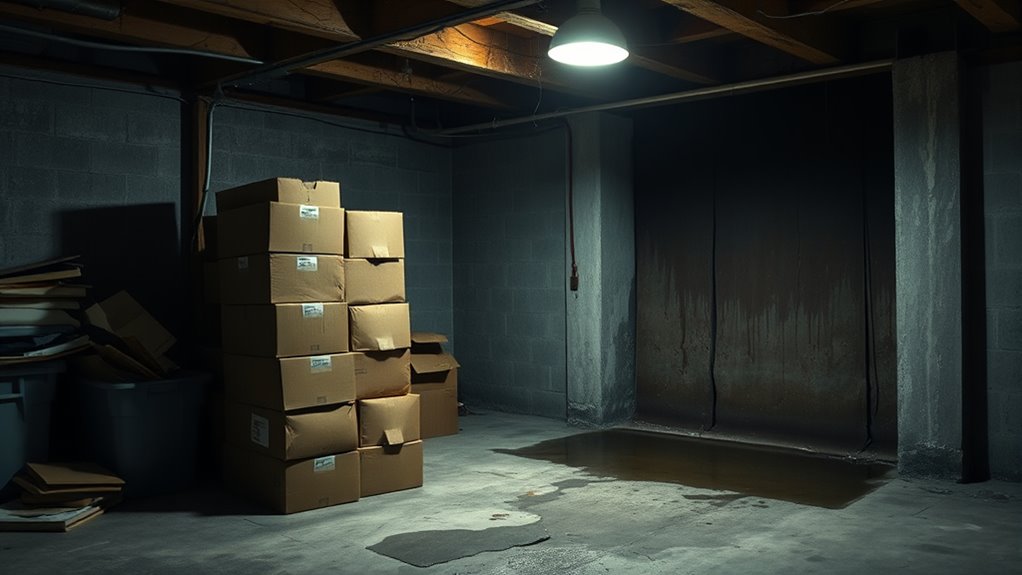
Safe placement is crucial whether you’re positioning equipment, furniture, or personal belongings. When it comes to basements, this becomes especially critical because of the unique risks involved. Many people overlook the potential hazards in these spaces, assuming they’re safe simply because they’re underground. However, basements often harbor moisture issues that can lead to significant structural concerns over time. If you’re not careful about where you place items or how you approach renovation or storage, you might unknowingly contribute to ongoing damage that compromises the integrity of your home.
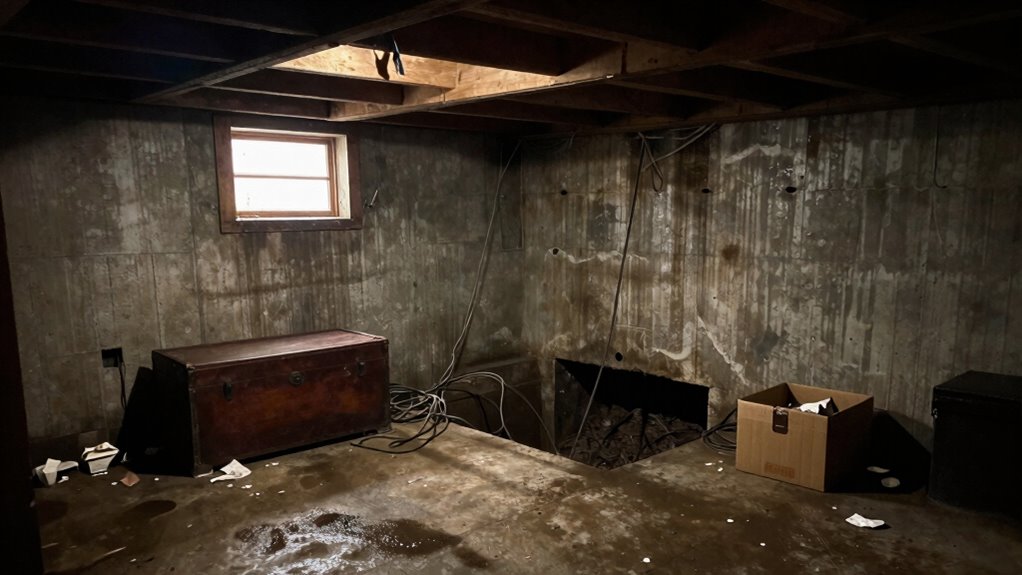
Moisture issues are one of the most common problems in basements. They can stem from poor drainage, leaks, or high humidity levels that aren’t properly managed. When moisture seeps into the foundation or walls, it can cause wood rot, mold growth, and even concrete deterioration. If you place belongings directly on damp floors or against wet walls, you risk damaging those items and encouraging further moisture buildup. Over time, this persistent dampness can weaken the structural components of your basement, making walls and floors less stable. As you organize your space, it’s important to keep items elevated and ensure proper ventilation to minimize moisture buildup. Using moisture barriers and dehumidifiers can help, but the placement of stored belongings should always prioritize dry, well-ventilated areas. Additionally, understanding the importance of foundation health can help you identify early signs of structural issues before they become severe.
Moisture buildup in basements causes mold, rot, and structural damage—keep items elevated and ventilated to prevent issues.
Structural concerns are closely tied to moisture problems but also include issues like foundation cracks, settling, or shifting that occur over years or due to poor construction. When you place heavy furniture or equipment on compromised floors, you may unknowingly accelerate structural deterioration. For example, placing heavy items directly on uneven or cracked concrete slabs can cause additional stress, leading to further damage. You should always assess the condition of your basement’s foundation and floors before placing significant loads there. Properly supporting heavy equipment with stable, level surfaces can prevent uneven pressure that might worsen existing structural concerns. Remember, what seems like a simple storage decision could have long-term implications for your home’s stability.
In many cases, neglecting safe placement in basements results in hidden problems that only become evident when significant damage occurs. By paying close attention to moisture issues and understanding the structural concerns, you can make informed decisions about where and how to place your belongings. Taking proactive steps—like waterproofing, elevating items off the floor, and regularly inspecting the foundation—can save you money and stress in the long run. Ultimately, avoiding the trap of unsafe placement in your basement means respecting its vulnerabilities and addressing potential issues before they escalate. Being mindful about placement isn’t just about organization; it’s about safeguarding your home’s foundation and ensuring a safe, healthy environment for years to come.

Whitecap – Woven Vapor Barrier – 20 Mil (12' x 100'), Thick Plastic sheeting, Drop Cloth Moisture Barrier Covering for Crawl Space Encapsulation, Life-Time Warranty
20 MIL HEAVY-DUTY VAPOR BARRIER — Thick 20 mil construction helps block ground moisture and vapor intrusion in…
As an affiliate, we earn on qualifying purchases.
As an affiliate, we earn on qualifying purchases.
Frequently Asked Questions
How Do I Identify Hidden Hazards in My Basement?
To identify hidden hazards in your basement, start by inspecting for signs of moisture intrusion like damp walls, mold, or musty odors. Check electrical outlets and wiring for fraying or corrosion, which could pose electrical hazards. Use a moisture meter if needed. Regularly look for leaks or water stains, and ensure proper ventilation. Address any issues promptly to keep your basement safe and prevent potential dangers.
Are There Specific Signs Indicating My Basement Is Unsafe?
If your basement shows signs of moisture problems like damp walls, mold, or peeling paint, it’s a red flag. Watch for electrical hazards such as flickering lights, sparking outlets, or exposed wiring, which can be dangerous. These signs indicate your basement might be unsafe. Address moisture issues promptly to prevent further damage, and have a professional inspect electrical systems to guarantee safety before using the space extensively.
Can a Basement Be Safely Converted Into a Living Space?
You can safely convert a basement into a living space if you address issues like basement mold and pest infestations first. For example, a homeowner who treated mold and sealed cracks found their basement became a cozy, safe area. Guarantee proper ventilation, waterproofing, and insulation. Consult professionals to meet building codes, and perform thorough inspections to prevent hidden hazards, making your basement a comfortable, safe extension of your home.
What Are the Legal Requirements for Basement Safety?
You need to follow local fire codes and ventilation standards to guarantee basement safety. Check that your basement has proper egress windows or exits for quick escape during emergencies. Install adequate ventilation to prevent mold and ensure good air quality. Obtain necessary permits and inspections to meet legal requirements. Regularly maintain smoke alarms and fire extinguishers, and ensure wiring and heating systems comply with safety standards to keep your basement safe and legal.
How Often Should I Inspect My Basement for Safety Issues?
You should inspect your basement monthly, like a vigilant guardian watching over a hidden fortress. Check for signs of moisture control issues, such as damp spots or mold, and assess structural stability by looking for cracks or shifting walls. Regular inspections help catch problems early, preventing water damage or structural failure. Staying attentive guarantees your basement remains safe, dry, and sound, protecting your home from lurking hazards beneath your feet.

Dehumidifier, 95OZ Dehumidifier for Home 1000 Sq.Ft – Quiet with Auto Shut Off & Relaxing 7 Color Ambient Light,Ideal for Livingroom, Bedroom, Basement(Black)
Semiconductor dehumidifiers use thermoelectric cooling to remove moisture from the air. They create a drier, more comfortable environment…
As an affiliate, we earn on qualifying purchases.
As an affiliate, we earn on qualifying purchases.
Conclusion
So, next time you think about storing your valuables in the basement, remember—it’s a trap that could swallow your belongings whole! Basements can flood at any moment, turn into dangerous mold zones, or become hiding spots for pests. Don’t let your precious items become victims of hidden disasters lurking beneath your feet. Stay alert, think twice, and choose a safer spot—because losing everything in a basement nightmare is a risk you can’t afford to take!

PP Pallet Ventilation Floor Pallet Pad Easy to Stack Waterproof Grid for Basement Storage for Warehouse Kitchen Cargo Storage- M
【ENHANCED VENTILATION & DRYNESS】: Features arched holes on both sides to prevent water accumulation and promote air circulation,…
As an affiliate, we earn on qualifying purchases.
As an affiliate, we earn on qualifying purchases.

6 Pack Extra Large Heavy Duty Moving Bags with Reinforced Zipper & Wide Handles, Moisture-Resistant Storage Bins Packing Cubes for Clothes, College Dorm, Travel, and Home Organization, Dark Blue
1.Military-Grade Durability Crafted with 210GSM reinforced PE-coated fabric, tested to withstand 65+ lbs of weight and 10,000+ zipper…
As an affiliate, we earn on qualifying purchases.
As an affiliate, we earn on qualifying purchases.