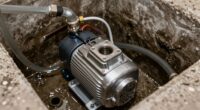
A float switch failure is a common cause of basement flooding because it prevents your sump pump from activating when water levels rise. If the switch sticks, gets submerged improperly, or isn’t installed correctly, the pump won’t turn on during heavy rain or groundwater seepage. This can lead to flooding even if your pump is in place. Understanding how float switches work and how to maintain them can help you avoid costly water damage; learn more to protect your space.

Prime made for students and young adults
- Fast, free delivery for dorm and study essentials
- Prime Video and Amazon Music included
- Member-only deals
Key Takeaways
- Float switch failure prevents the sump pump from activating during rising water levels.
- Obstructions, incorrect placement, or sticking can cause float switch malfunctions.
- Malfunctioning float switches often lead to basement flooding despite having a pump.
- Regular inspection and maintenance of the float switch are essential to prevent failures.
- Proper backup systems, like battery backups, ensure pump operation during float switch or power failures.
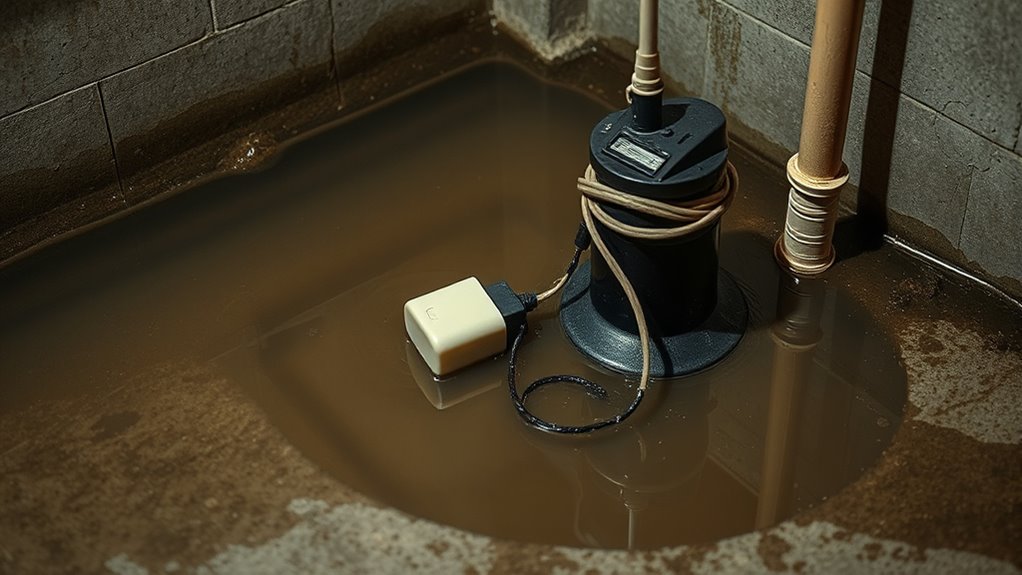
Ever wondered how to protect your basement from flooding? One of the most pivotal components of this protection is your sump pump, especially considering the risks posed by float switch failures. The float switch is a simple yet essential part that triggers your sump pump to turn on when water levels rise. If it fails, your pump might not activate, leading to basement flooding even during heavy rain or groundwater seepage. To prevent this, investing in a reliable sump pump with a battery backup is indispensable. A battery backup ensures your sump pump continues working during power outages, which often coincide with storms or flooding events. When choosing a backup system, look for models that are easy to install and compatible with your existing sump pump. Proper installation tips include making certain the backup battery is fully charged, placing the backup unit on a stable surface, and regularly testing it to confirm it functions correctly. This proactive approach minimizes the chance of float switch failures causing floods.
You should also consider the placement of the float switch itself. It needs to move freely without obstructions, and the sump basin should be clear of debris that could hinder its operation. An improperly positioned float switch might stick or fail to trigger, so take care to install it at the correct height and ensure it has room to move. Additionally, routine maintenance is indispensable. Periodically inspect the float switch and battery backup, replacing batteries as needed and cleaning the switch to prevent malfunctions. Many sump pumps come with installation tips in their manuals or online guides, which can help you set everything up correctly. If you’re unsure about installation, hiring a professional can be a worthwhile investment to guarantee your system functions flawlessly.
Regular testing is another key step. Manually lift the float switch to see if the pump activates, and verify that the battery backup kicks in during simulated outages. This way, you confirm your system’s readiness for actual storms. Remember, a sump pump’s effectiveness isn’t just about having the right equipment but also about ensuring it’s properly installed and maintained. Taking these precautions helps you avoid the costly and stressful aftermath of basement flooding caused by float switch failure. With a reliable, well-installed sump pump complemented by a robust battery backup and consistent maintenance, you can markedly reduce your risk of flooding and protect your home from water damage. Ultimately, investing in these measures offers peace of mind, knowing your basement has a strong defense against the unpredictable forces of nature. Proper navigation and mapping of your sump system can further enhance its reliability and response time during emergencies.
sump pump float switch replacement
As an affiliate, we earn on qualifying purchases.
As an affiliate, we earn on qualifying purchases.
Frequently Asked Questions
How Often Should I Test My Sump Pump’s Float Switch?
You should test your sump pump’s float switch at least once a month as part of your maintenance schedule. Regular testing helps you catch issues early and guarantees proper functioning. To troubleshoot tips, lift the float manually to see if the pump activates. If it doesn’t, inspect for debris or damage. Staying consistent with these checks prevents flooding and keeps your basement dry, saving you time and money.
Can a Faulty Float Switch Cause Continuous Sump Pump Operation?
Yes, a faulty float switch can cause your sump pump to run continuously. When the float switch becomes misaligned, stuck, or improperly calibrated, it fails to signal the pump to turn off. Regular sump pump maintenance and float switch calibration help prevent this issue. You should check the switch’s movement and position during routine checks, ensuring it functions smoothly and accurately, ultimately protecting your basement from flooding.
What Are the Signs of a Failing Float Switch?
You’ll notice your sump pump runs constantly or cycles on and off unexpectedly, indicating a failing float switch. Other signs include inconsistent operation, strange noises, or failure to activate during heavy rain. If these occur, it’s time for float switch replacement and proper sump pump maintenance. Addressing these issues early helps prevent basement flooding, ensuring your sump pump functions reliably when you need it most.
Are There Different Types of Float Switches for Sump Pumps?
Think of float switch types like different keys for the same lock; each serves a specific purpose. You can choose from vertical, tethered, or electronic float switches for switch installation. Vertical switches rise with water, tethered ones float freely, and electronic types detect water levels electronically. Picking the right float switch type depends on your sump pump setup, ensuring reliable operation and preventing floods.
How Does Debris Affect Float Switch Performance?
Debris accumulation can clog or obstruct your float switch, causing it to malfunction or fail to activate your sump pump properly. This buildup may prevent the switch from moving freely or reaching its calibration point. Regularly cleaning your switch and checking switch calibration helps guarantee debris doesn’t interfere with its performance, reducing the risk of basement flooding due to float switch failure. Keep an eye on debris to keep your sump pump working reliably.
As an affiliate, we earn on qualifying purchases.
Conclusion
Now that you understand how a float switch keeps your basement dry, think of it as a vigilant gatekeeper, quietly watching over your home’s underground fortress. When it falters, the floodgates burst open, turning your haven into a swimming pool. Regular checks act like a trusted alarm system, catching problems before they swell into disasters. Keep this tiny hero in top shape, and your basement will stay a dry sanctuary, no matter how high the water rises.
As an affiliate, we earn on qualifying purchases.
automatic sump pump with float switch
As an affiliate, we earn on qualifying purchases.
As an affiliate, we earn on qualifying purchases.
Columbus Day / Indigenous Peoples' Day Picks
long weekend sales
As an affiliate, we earn on qualifying purchases.