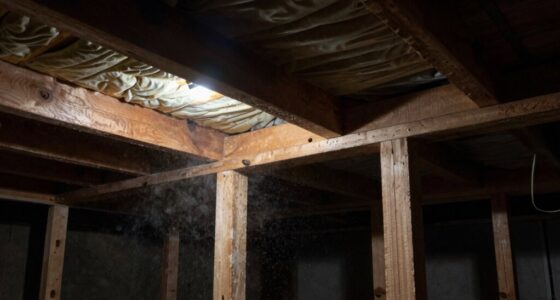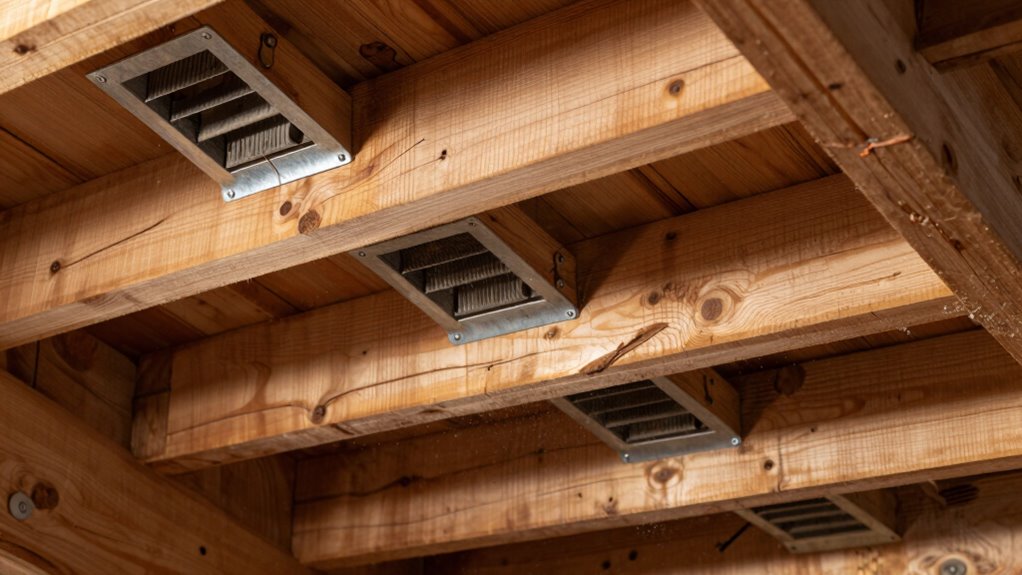

Adding more vents to your attic isn’t always a good idea because it can disrupt airflow and cause moisture problems. Over-ventilation can create pressure differences that draw in humid outside air, leading to mold, rot, and damage. Instead, proper insulation and balanced vent placement are smarter solutions. If you continue exploring, you’ll discover how sealing leaks and installing the right vents work together to keep your attic dry and healthy.
Get ready for Prime Big Deal Days — try Prime free
Exclusive member deals on October 6–7, plus fast free delivery. Cancel anytime.
As an affiliate, we earn on qualifying purchases.
Key Takeaways
- Adding vents without proper balance can cause pressure differences that draw in moisture, increasing humidity and risk of mold.
- Excessive vents may disrupt insulation, creating drafts and reducing energy efficiency.
- Proper attic ventilation relies on strategic placement of intake and exhaust vents, not just increasing their number.
- Over-ventilation can lead to condensation and roof damage if not paired with adequate insulation and sealing.
- Achieving balanced airflow and sealing leaks is more effective than simply adding more vents.
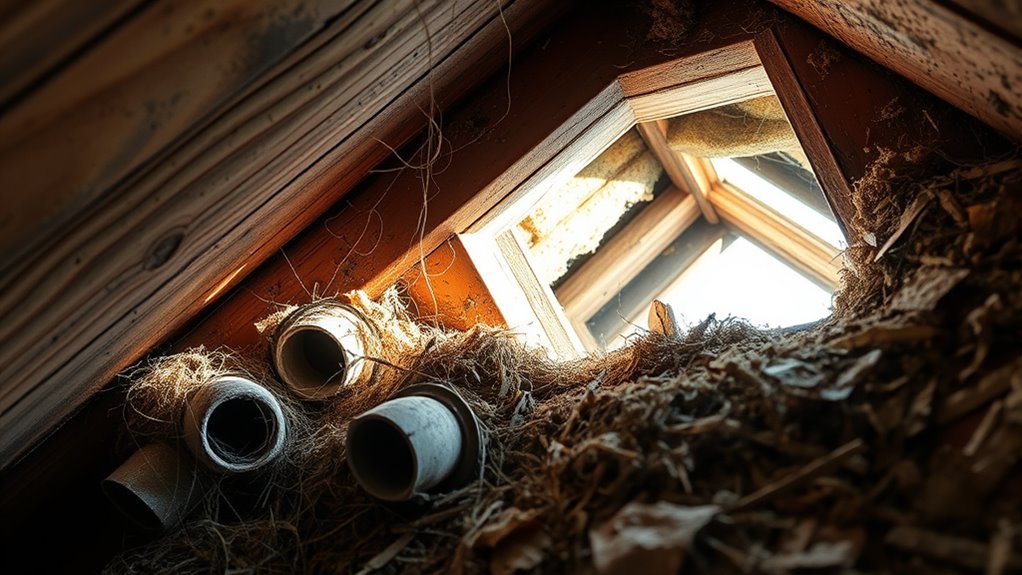
Have you ever wondered how proper attic ventilation can protect your home? It’s a vital aspect of home maintenance that often gets overlooked. While adding more vents might seem like a quick fix to improve airflow, it’s not always the best solution. In fact, simply increasing the number of vents can sometimes do more harm than good. Proper ventilation involves a balanced system that promotes airflow without disrupting the insulation or creating drafts. When your attic isn’t ventilated correctly, moisture can accumulate, leading to issues like mold, wood rot, and insulation damage. That’s why focusing on insulation upgrades and moisture control is essential to maintaining a healthy attic environment.
If you’re considering better attic airflow, start by evaluating your current insulation. Upgrading insulation helps regulate temperature and prevents warm, moist air from rising into the attic during winter or seeping in during summer. When insulation is inadequate or old, it can allow moisture-laden air to condense on rafters or sheathing, fostering mold growth and deterioration. Proper insulation upgrades create a barrier that minimizes the transfer of heat and moisture, reducing the need for excessive ventilation. It’s a more effective way to control humidity levels and protect your home’s structure than simply adding vents.
Moisture control is at the core of effective attic ventilation. An overly ventilated attic with too many vents can create pressure differences that draw in moist air from outside, especially if the vents aren’t properly screened or sealed. This can lead to increased humidity and condensation problems, which damage your roof deck and insulation. Instead of just adding vents, you should focus on sealing leaks, insulating thoroughly, and installing the right type of vents—such as soffit and ridge vents—that work together to promote natural airflow without causing pressure imbalances. Proper moisture regulation, combined with balanced ventilation, ensures that your attic stays dry and free from mold or rot.
Additionally, understanding the importance of balanced airflow in attic ventilation can help prevent common pitfalls and maintain a healthy, energy-efficient home environment.
As an affiliate, we earn on qualifying purchases.
Frequently Asked Questions
How Do I Determine the Optimal Number of Attic Vents?
You determine the ideal number of attic vents by focusing on proper vent placement and airflow balance. Guarantee vents are evenly distributed to promote consistent airflow, avoiding over-venting or under-venting. Measure your attic’s size and consult local building codes or a professional to calculate the right vent amount. Proper placement and balanced airflow prevent moisture buildup and improve ventilation efficiency, helping you maintain a healthier, more energy-efficient attic space.
Can Adding More Vents Cause Leaks or Structural Issues?
Adding more vents can be like overloading a boat, risking leaks or structural issues. It might compromise your attic’s ventilation efficiency if it disrupts proper airflow or causes uneven pressure. Poorly placed vents can lead to moisture buildup, damaging insulation and framing. To avoid this, balance the number and placement of vents, ensuring your attic stays dry and well-ventilated without risking leaks or structural harm.
What Are the Signs of Inadequate Attic Ventilation?
If your attic isn’t properly ventilated, you might notice signs like excessive heat buildup, persistent moisture, or mold growth on your roof or insulation. You may also see condensation on rafters or a musty smell. Inadequate ventilation can lead to damaged attic insulation and roof mold, which reduces energy efficiency and causes long-term structural issues. Address these signs promptly to protect your home’s integrity.
Are There Specific Vent Types Better for Certain Climates?
Yes, certain vent types work better depending on your climate. For hot, humid areas, ridge vents combined with soffit vents improve ventilation efficiency by promoting airflow and reducing moisture buildup. In colder climates, powered attic vents can help expel excess heat and moisture, but they need to be used carefully to avoid energy waste. Always consider climate considerations to choose the right vent type for ideal attic ventilation.
How Often Should Attic Vents Be Inspected or Maintained?
Think of your attic vents as the lungs of your home—they need regular check-ups. You should inspect them at least once a year, preferably in spring or fall, to catch any blockages or damage. Clean out debris and ensure vents aren’t clogged, busting ventilation myths that more vents automatically mean better airflow. Proper attic insulation works hand-in-hand with ventilation, so keeping both in check sustains a healthy, energy-efficient space.
As an affiliate, we earn on qualifying purchases.
Conclusion
Remember, more vents don’t always mean better airflow. Sometimes, adding extra openings can disrupt the balance, letting in more moisture or heat than you want. Think of your attic like a delicate dance—too many steps, and you stumble. Instead, focus on proper placement and quality. When you find that sweet spot, your attic breathes just right, protecting your home without chaos. After all, in ventilation as in life, balance is everything.
As an affiliate, we earn on qualifying purchases.
attic sealing and insulation products
As an affiliate, we earn on qualifying purchases.
As an affiliate, we earn on qualifying purchases.
NFL season / tailgating Picks
team gear
As an affiliate, we earn on qualifying purchases.