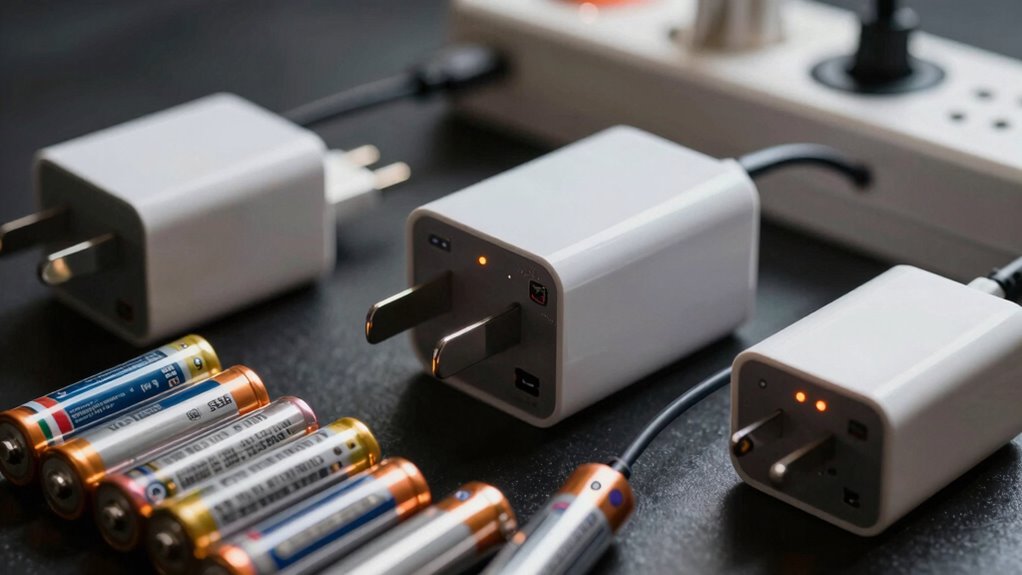

To stay safe with batteries and chargers, always keep heat in check by using well-ventilated areas and avoiding overcharging. Regularly inspect for swelling, leaks, or unusual warmth, and never charge in hot environments or overnight. Use the correct charger for your device, follow manufacturer instructions, and disconnect once fully charged. Proper storage and disposal are vital to prevent heat build-up and potential hazards. Keep these safety rules in mind to protect yourself and extend your equipment’s life. Keep going to learn more tips on safe handling.
Key Takeaways
- Always use compatible chargers and avoid overcharging to prevent excessive heat buildup.
- Charge batteries in well-ventilated areas away from direct sunlight and hot environments.
- Regularly inspect batteries for swelling, leaks, or damage, and dispose of damaged units safely.
- Avoid charging or using batteries in enclosed spaces to ensure proper heat dissipation.
- Follow manufacturer guidelines and safety instructions to minimize heat-related hazards during charging and use.
Understanding How Batteries Store and Release Energy
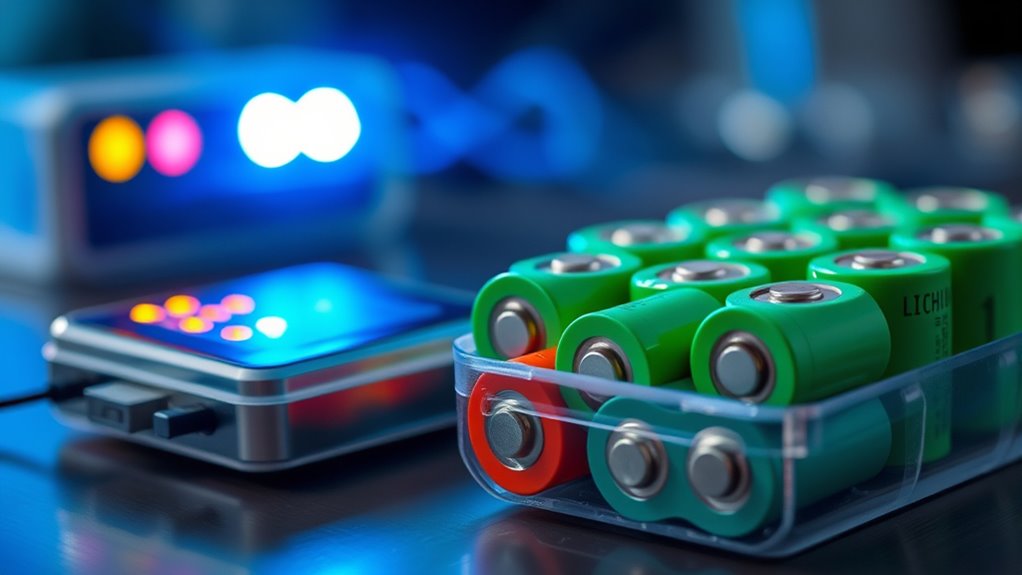
Batteries store energy through chemical reactions that occur inside their cells. The key to this process is battery chemistry, which involves specific materials and reactions that enable energy storage and release. When you use a device, the chemical reactions convert stored chemical energy into electrical energy, powering your device. The energy density of a battery determines how much energy it can hold relative to its size or weight, impacting how long your device runs between charges. Different battery chemistries, like lithium-ion or nickel-metal hydride, offer varying energy densities and performance characteristics. Understanding how these reactions work helps you appreciate the importance of choosing batteries suited to your needs, ensuring efficiency and longevity in your devices. Additionally, the technology behind battery design influences safety features and charging capabilities, which are crucial for reliable operation.
Choosing the Right Chargers for Safety and Efficiency
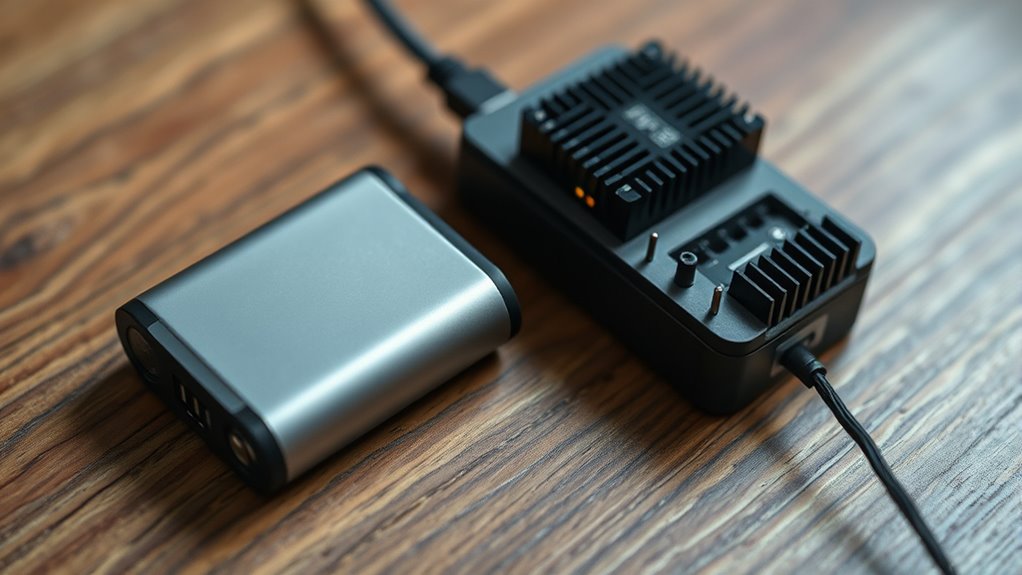
Choosing the right charger is essential for both safety and efficiency, as using incompatible or low-quality chargers can damage your batteries or pose safety risks. To pick the best charger, consider your battery chemistry—lithium-ion, NiMH, or lead-acid—as each requires specific charging parameters. Confirming charger compatibility means checking that the charger matches your battery’s voltage, current, and chemistry requirements. Using an incompatible charger can lead to overcharging, overheating, or reduced battery lifespan. Always select chargers designed for your battery type and follow manufacturer instructions. A well-matched charger not only protects your batteries but also ensures they charge safely and efficiently, avoiding unnecessary heat buildup or damage. Proper charger selection is a simple but crucial step in maintaining battery health and safety. Smart charging technology can further optimize energy use and extend battery life through adaptive power management. Additionally, choosing chargers that incorporate European standards ensures compliance with safety regulations and promotes reliable performance. Being aware of battery management features can help prevent common issues like overvoltage or deep discharge, enhancing overall safety. Incorporating regular inspection and cleaning of charging ports can prevent connection issues and maintain safe operation. Implementing proper charger maintenance habits can also prolong the lifespan of your charging devices and ensure consistent performance.
Recognizing Signs of Battery and Charger Malfunctions
If you notice strange smells or smoke coming from your battery or charger, it’s a clear warning sign something’s wrong. Excessive heat during use or charging is another red flag that needs immediate attention. Swelling or leaking batteries are serious issues that can lead to safety hazards, so recognizing these signs early is vital. Additionally, always stop using the device and seek professional help if you observe battery malfunctions or other irregularities. Being aware of electrical safety hazards can help prevent accidents and ensure safe handling of batteries and chargers. Regularly inspecting your sauna and cold-plunge systems for signs of damage or wear can further reduce the risk of malfunctions.
Unusual Smells or Smoke
Unusual smells or smoke from a battery or charger are clear warning signs that something is wrong. A strong battery odor often indicates overheating or a chemical leak, signaling an imminent malfunction. Smoke detection is vital; if you see smoke or detect a burning smell, disconnect the device immediately. Don’t ignore these signs—continuing to use the battery or charger can lead to fires or further damage. Always stay alert to any strange odors or visible smoke, as they mean the device is failing. Remove the battery from the device carefully and move it to a safe, non-flammable area. Prompt action can prevent accidents and guarantee your safety. Trust your senses—if something smells or looks off, take immediate steps to address the issue. Understanding battery safety and proper handling techniques can further reduce the risk of hazards. Being aware of fire prevention strategies related to batteries and chargers can also help mitigate potential dangers. Additionally, recognizing signs of malfunction early can save lives and property.
Excessive Heat During Use
When a battery or charger starts to feel unusually hot during use, it’s a clear sign that something isn’t right. Excessive heat can indicate malfunction or poor heat dissipation, risking thermal expansion and damage. Pay attention to these warning signs:
- Rapid temperature increase during operation
- Persistent overheating even after use
- Unusual warmth that doesn’t subside quickly
If you notice these signs, stop using the device immediately. Overheating suggests the device isn’t effectively managing heat, which could lead to failure or safety hazards. Proper heat dissipation is vital to prevent thermal expansion and maintain safe operation. Always make sure vents aren’t blocked, and avoid prolonged charging or use if you feel excessive heat. Recognizing these signs early helps prevent serious damage or accidents. Additionally, heat management techniques can help extend the lifespan of your batteries and chargers. Implementing proper thermal regulation is essential for maintaining safe operation and avoiding potential hazards. Understanding battery safety protocols is essential for safe micromobility use.
Swelling or Leaking Batteries
Swelling or leaking batteries are clear signs that a battery or charger is malfunctioning and should be addressed immediately. When you notice the battery casing bulging or puffing, it indicates internal gas buildup, which can lead to rupture or fire if ignored. Electrolyte leaks are another warning sign; if you see liquid outside the battery, it’s a sign the seal has broken, and corrosive electrolyte may be escaping. Do not attempt to handle or puncture the battery, as this can cause dangerous chemical exposure or fire. Always disconnect the device and safely dispose of the faulty battery according to local regulations. Recognizing these signs early helps prevent accidents and ensures your safety around batteries and chargers. Understanding battery safety is essential for preventing potential hazards and maintaining safe handling practices. Proper disposal methods are also crucial to reduce environmental impact and avoid health risks associated with battery chemicals. Being aware of battery malfunctions can help you respond promptly and prevent further damage or danger.
Managing Heat During Charging and Use

Proper ventilation is essential to keep batteries cool during charging and use. You should also avoid overcharging, as it can generate excessive heat and damage the battery. Additionally, ensuring adequate airflow can help dissipate heat and prevent overheating. You can also check battery performance and safety regularly to identify potential issues early. Regular monitoring of battery health indicators can provide early warning signs of overheating or damage. Maintaining proper charging practices is crucial for extending battery lifespan and safety. By managing these factors, you can prevent overheating and extend your battery’s lifespan. Incorporating safe play practices can further ensure that children enjoy their activities without risks associated with heat buildup.
Proper Ventilation Matters
Heat buildup during battery charging and use can pose serious safety risks if not properly managed. Ensuring good ventilation airflow helps dissipate heat and prevents overheating. Proper indoor cooling is essential to maintain safe operating temperatures. You should:
- Use well-ventilated spaces to allow heat to escape
- Avoid enclosed areas that trap heat around batteries
- Regularly check ventilation systems for obstructions
- Be aware of thermal management techniques to optimize heat dissipation during device operation
Good ventilation maintains consistent airflow, reducing the risk of heat accumulation. Proper indoor cooling keeps batteries at safe temperatures during charging and use. Without adequate airflow, batteries can overheat, increasing fire or explosion risks. Always prioritize ventilation to keep your batteries safe and functioning efficiently. Proper management of heat through ventilation isn’t just smart—it’s essential for safety.
Avoid Overcharging Risks
Overcharging a battery can cause it to generate excessive heat, which increases the risk of damage, fire, or explosion. To prevent this, always use chargers with built-in overcharge protection and unplug devices once fully charged. Overheating batteries should be properly recycled through battery recycling programs, reducing environmental harm and safety risks. Similarly, charger recycling ensures that old or damaged chargers don’t pose fire hazards or lead to inefficient charging. Avoid leaving devices charging overnight or in hot environments, as heat builds up quickly. Regularly inspect batteries and chargers for signs of damage or swelling. Proper management of charging habits, combined with responsible disposal and recycling, minimizes overcharging risks and keeps you safe.
Safe Storage and Handling of Batteries and Chargers
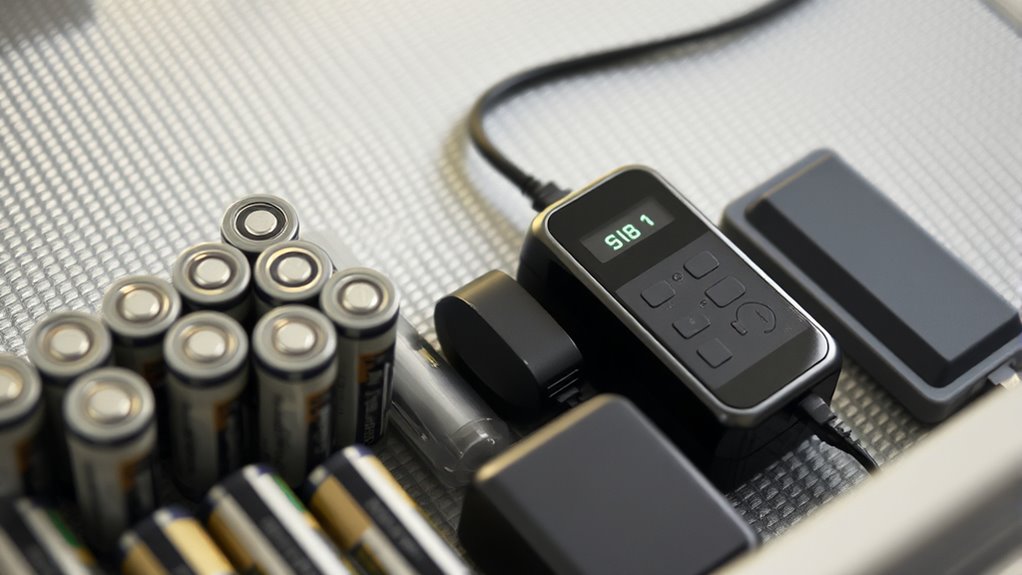
To guarantee your batteries and chargers stay safe and functional, it’s essential to store and handle them correctly. Proper storage prevents damage and reduces safety risks. Keep batteries in a cool, dry place away from direct sunlight and extreme temperatures. Use only chargers compatible with your devices to avoid overcharging or damage. When handling batteries, avoid puncturing or crushing them, and always follow local battery recycling guidelines to prevent environmental harm.
Proper storage and handling of batteries and chargers ensure safety and longevity.
Remember these key points:
- Store batteries separately to prevent contact or short circuits
- Ensure charger compatibility before plugging in
- Recycle batteries responsibly when they’re no longer usable
Tips for Preventing Heat-Related Accidents
Proper handling and storage of batteries and chargers help keep your devices safe and functioning well. To prevent heat-related accidents, avoid exposing batteries or chargers to direct sunlight or high temperatures. Always use chargers compatible with your device to reduce the risk of overheating. When batteries reach the end of their life, recycle them properly through battery recycling programs, instead of leaving them in hot environments. Keep batteries and chargers in cool, dry places, and never cover them during charging. Monitoring the temperature during charging sessions helps prevent overheating. If a device becomes excessively warm, disconnect it immediately. Implementing these tips guarantees safe operation and minimizes heat-related hazards, protecting both your devices and your safety.
Frequently Asked Questions
How Do Temperature Fluctuations Affect Battery Lifespan?
Temperature fluctuations can markedly impact your battery’s lifespan. When it gets too hot, thermal expansion occurs, damaging internal components and reducing capacity over time. Conversely, cooling effects slow down chemical reactions, which can extend battery life but also cause contraction that stresses the structure. Frequent changes between hot and cold environments accelerate wear, ultimately decreasing your battery’s efficiency and longevity. To protect it, keep your device in stable temperatures whenever possible.
What Are the Signs of Internal Battery Damage?
You’ll notice signs of internal battery damage if you see battery swelling or electrolyte leakage. Swelling indicates gas buildup inside, risking rupture, while electrolyte leaks can cause corrosion and short circuits. If your device’s battery feels unusually hot, deforms, or emits a strange smell, it’s a sign of damage. Always handle these signs carefully and replace the battery promptly to prevent safety hazards or device failure.
Can Using Incompatible Chargers Cause Safety Hazards?
A stitch in time saves nine, and using incompatible chargers can lead to serious safety hazards. When you connect a charger that isn’t compatible, it may supply the wrong voltage or current, risking overheating or even fires. Always check charger compatibility before plugging in. This simple step helps prevent damage to your device and keeps you safe. Don’t ignore these risks—properly matching chargers is your best defense.
How Do Different Battery Chemistries Impact Heat Generation?
Your battery chemistry greatly impacts heat generation, affecting heat management. For example, lithium-ion batteries tend to produce more heat during charging and discharging compared to nickel-metal hydride ones. High-energy chemistries require careful heat management to prevent overheating or thermal runaway. Understanding your battery chemistry helps you implement proper cooling and avoid safety hazards, ensuring safe operation and longevity of your devices. Always follow manufacturer guidelines for ideal heat control.
What Are the Best Practices for Recycling Batteries Safely?
You should research local recycling programs, follow their guidelines, and use designated collection points for battery disposal. Always handle batteries carefully, avoid damaging or puncturing them, and keep them away from heat sources. Participate in certified recycling initiatives, avoid throwing batteries in regular trash, and guarantee proper labeling if you transport them. By adhering to these practices, you help prevent environmental harm and ensure safe, responsible battery recycling.
Conclusion
Remember, following simple safety rules keeps you safe around batteries and chargers. Some might think these precautions are unnecessary, but neglect can lead to dangerous heat and fires. By choosing the right chargers, managing heat, and storing batteries properly, you prevent accidents before they happen. Safety doesn’t require extra effort—just awareness and caution. Stay vigilant, and you’ll enjoy the benefits of your devices without risking your safety or property.