
The advice to “sit up straight” is a common myth that overlooks how natural, relaxed postures actually benefit your comfort and health. Rigid postures can cause muscle tension and restrict breathing, leading to discomfort over time. Instead, focus on finding positions that feel comfortable, supported, and allow movement. Moving regularly and paying attention to your body helps maintain good posture without strain. Keep exploring how to develop sustainable habits that support your well-being.
Key Takeaways
- Rigidly “sitting up straight” can cause muscle tension and discomfort over time.
- Good posture should be natural and relaxed, not forced into a strict position.
- Maintaining a static, upright posture isn’t necessary for health or confidence.
- Movement and gentle adjustments are more beneficial than holding a rigid stance.
- Ergonomic and body-awareness strategies promote comfort without relying on myths of perfection.
Where Did the ‘sit up Straight’ Advice Come From?

Have you ever wondered where the advice to “sit up straight” originated? The posture history reveals that this guidance stems from cultural beliefs emphasizing discipline and decorum. In many societies, good posture was seen as a sign of respect, confidence, and moral character. During the Victorian era, for example, maintaining an upright stance was linked to social status and propriety. Medical professionals in the 19th and early 20th centuries also promoted straight posture, believing it prevented health issues and improved appearance. These ideas became ingrained in social norms, reinforcing the notion that slouching was improper. Today, these cultural beliefs still influence how we view posture, even though modern science offers a more nuanced understanding of what healthy posture truly entails. Additionally, the emphasis on posture has been influenced by Healthy Kid Play principles that support natural and comfortable movement.
Does Rigid Posture Actually Cause Harm?

Holding a rigid posture can lead to tension and fatigue, making you feel more exhausted over time. It may also restrict your breathing, reducing oxygen flow and causing discomfort. Plus, staying too stiff limits your natural movement, which can impact your overall comfort and mobility. Additionally, poor posture habits can negatively influence your long-term health, especially in relation to precious metal investments, where stress and decision fatigue may affect your judgment.
Tension and Fatigue Risks
While rigid posture is often blamed for causing tension and fatigue, recent evidence suggests that it’s not necessarily harmful in itself. Maintaining a strict posture doesn’t automatically lead to muscle tension or fatigue. In fact, some degree of muscle engagement can support fatigue prevention and comfort. Problems arise when you stay in one position for too long or ignore your body’s signals. Ensuring proper posture maintenance can help distribute weight evenly and reduce unnecessary strain. Consider these points: – Rigid postures can reduce muscle tension if balanced properly – Constant movement helps prevent fatigue and discomfort – Listening to your body reduces strain and improves endurance – Flexibility in posture allows muscles to relax and recover – Proper ergonomic setup minimizes tension buildup Ultimately, it’s about balance, not rigidity, to reduce tension and avoid fatigue risks.
Restricted Breathing Concerns
Many assume that rigid posture restricts breathing and causes discomfort, but recent research shows the connection isn’t so straightforward. While it’s true that posture tension can lead to breathing restriction, this isn’t an automatic outcome of sitting up straight. Tension in your muscles may cause a feeling of constriction, but it doesn’t necessarily impair your lung capacity or oxygen intake. In fact, rigid postures don’t inherently block airflow; instead, they might make you more aware of your breathing. Properly aligned postures can support comfortable breathing, so it’s less about avoiding all tension and more about maintaining a balanced position. Remember, the idea that a strict, upright posture causes breathing harm is a myth—your body adapts and functions well within a range of postural variations. Additionally, understanding posture tension can help you differentiate between discomfort caused by muscle strain and actual breathing impairment.
Movement Restrictions Effects
Rigid postures can lead to movement restrictions, but they don’t automatically cause harm. Many posture myths suggest that staying rigid will damage your body, but that’s not always true. Your body adapts to different positions, and occasional stiffness isn’t harmful. Instead, prolonged immobility or extreme tension may cause discomfort or stiffness, but not necessarily injury. Movement restrictions are often misunderstood as damaging, yet they can simply be a sign your body needs variation. Avoid believing that all rigid postures are harmful; instead, focus on balance and regular movement. Somatic therapy emphasizes the importance of mindful movement and body awareness, highlighting that flexibility and variation are key to overall health.
What’s the Difference Between Good Posture and Tension?

Good posture should feel comfortable and relaxed, not tense or strained. Tension often causes discomfort and can lead to poor alignment over time. Embracing natural alignment helps you stay comfortable and reduces unnecessary tension. Remember, understanding the “why” behind good posture can empower you to develop habits that support long-term comfort rather than just forcing an upright position.
Tension vs. Comfort
Understanding the difference between tension and comfort is key to maintaining healthy posture. When you’re comfortable, your muscles are relaxed, allowing natural movement without strain. Tension, however, causes muscles to stiffen and tighten, leading to discomfort and potential injury. To find the balance, focus on muscle relaxation and ergonomic adjustments that support your body’s natural alignment. Being mindful of posture technology can also help monitor and improve your sitting habits.
- Feel relaxed, not tight, in your shoulders and neck
- Use ergonomic tools like adjustable chairs and desks
- Avoid holding static positions for too long
- Recognize early signs of tension before pain develops
- Incorporate gentle stretches to release muscle tightness
Natural Alignment Benefits
Maintaining natural alignment in your posture offers numerous benefits, helping you move efficiently and reducing the risk of discomfort or injury. When your muscles are balanced, your body naturally aligns itself without unnecessary tension, making movement smoother and more sustainable. Good posture isn’t about rigidly sitting upright but about embracing ergonomic design that supports your body’s natural curves. This approach minimizes strain on joints and muscles, promoting relaxation instead of tension. Proper alignment encourages muscle balance, preventing overuse of certain muscles while underusing others. As a result, you can avoid chronic pain and fatigue. Instead of forcing yourself into a “perfect” posture, focus on allowing your body to find its natural, balanced position, which enhances comfort and overall well-being. Understanding natural alignment can help you develop better habits that support your body’s health over time.
How Does Your Body Find a Natural, Comfortable Position?

Your body naturally seeks a position where it feels most balanced and relaxed, often without you even realizing it. This instinctive process involves muscle relaxation and subtle adjustments to find comfort. When you sit or stand, your muscles relax to support your skeleton, helping you avoid tension and strain. To promote this natural positioning, ergonomic adjustments are key—such as adjusting your chair height or keyboard position—to support your body’s preferences. You might notice that your shoulders loosen, your spine aligns without conscious effort, and your weight distributes evenly. These small, intuitive shifts ensure your body remains in a comfortable state, reducing fatigue and discomfort over time. Trust this natural mechanism to maintain your posture, rather than forcing an ideal position. Incorporating ergonomic principles can help your body maintain comfortable, healthy alignment effortlessly.
Why Is Movement Key to Healthy Posture?
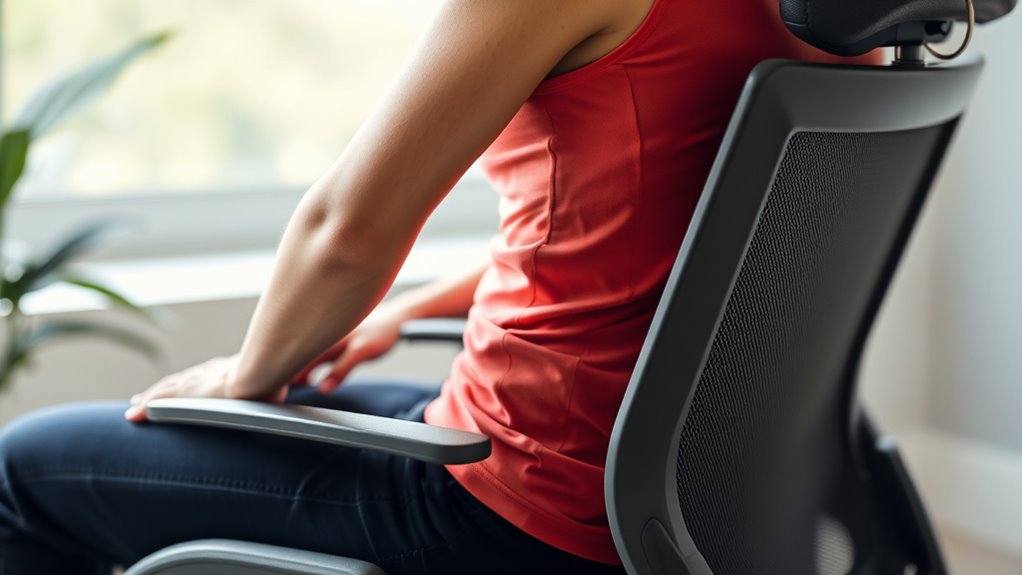
Moving regularly is essential for healthy posture because it keeps your muscles active and prevents stiffness. When you stay active, muscles don’t weaken or tighten, reducing discomfort and the risk of misalignment. Incorporate stretching routines to loosen tight areas, and use ergonomic accessories to support your movements. Regular movement also improves circulation, delivering nutrients to tissues and removing waste. To visualize this, consider the following ideas:
| Movement Type | Benefits | Tools Needed |
|---|---|---|
| Stretching routines | Increase flexibility, reduce tension | Yoga mat, foam roller |
| Dynamic exercises | Boost circulation, strengthen muscles | Resistance bands |
| Changing positions | Prevent stiffness, improve posture | Ergonomic accessories |
Staying active is your best strategy for maintaining healthy posture over time. Understanding how movement affects muscles and tissues can help you develop effective routines.
What Are Simple Strategies to Improve Posture Sustainably?

Simple strategies can make a lasting difference in improving your posture over time. Incorporating ergonomic tools, like adjustable chairs and monitor stands, helps support proper alignment daily. Establishing stretching routines targeting your neck, shoulders, and back keeps muscles flexible and reduces tension. Pay attention to your workspace setup to avoid slouching or strain. Regular movement breaks prevent stiffness and promote circulation. Mindful posture habits, such as sitting with your feet flat and shoulders relaxed, reinforce good alignment. You can also use posture reminders or apps to stay aware throughout the day. These simple adjustments create sustainable habits, making good posture an effortless part of your routine. Consistency and small daily efforts lead to noticeable, long-term improvements in how you feel and function.
What Posture Myths Should You Stop Believing?

Many common beliefs about posture are actually myths that can do more harm than good. One widespread ergonomic myth is that you must sit perfectly upright at all times, which isn’t realistic or healthy. Posture misconceptions often lead to unnecessary tension and discomfort, making you feel guilty for minor slouches. Another myth is that “good” posture looks the same for everyone; in reality, everyone’s body is different, and what’s comfortable varies. Believing that you need a “perfect” posture can cause stiffness and reduce mobility. Instead, focus on moving naturally and listening to your body’s signals. Discard these ergonomic myths and posture misconceptions to develop a more sustainable, comfortable approach that supports your overall well-being.
Frequently Asked Questions
Can Poor Posture Lead to Long-Term Health Issues?
Poor posture can definitely lead to long-term health issues. When your spinal alignment is off, it strains your muscles and joints, which can cause discomfort and musculoskeletal health problems over time. Poor posture may also contribute to chronic pain, headaches, and even nerve issues. Maintaining good spinal alignment through active habits helps protect your musculoskeletal health and prevents these long-term issues. So, paying attention to your posture matters.
Is There an Ideal Sitting Position for Everyone?
Think of your sitting position as a unique key that unlocks comfort and health. There’s no one-size-fits-all ideal. Focus on ergonomic tips that support your natural posture and develop good posture habits, like adjusting your chair and screen height. Listen to your body’s cues, and avoid rigid rules. Your perfect position adapts as you move, reminding you that comfort and alignment are personal, not prescribed.
How Can I Correct Posture Without Feeling Stiff?
To correct your posture without feeling stiff, incorporate gentle stretching routines that target your neck, shoulders, and back regularly. Practice mindful posture by paying attention to how you sit and stand throughout the day, making small adjustments as needed. Avoid forcing yourself into rigid positions; instead, move naturally and comfortably. Consistent, relaxed awareness combined with stretching helps improve posture while keeping you comfortable and free of stiffness.
Do Ergonomic Chairs Automatically Improve Posture?
Think of ergonomic chairs as tools, not magic wands—like a sturdy ship won’t sail straight without a skilled captain. While they can help, ergonomic myths and posture misconceptions often lead you to believe they automatically improve your posture. You still need to stay mindful, adjust the chair properly, and move regularly. An ergonomic chair supports, but you steer your posture; it’s a partnership, not a cure-all.
What Role Does Core Strength Play in Posture?
Your core strength plays a vital role in maintaining proper posture by supporting spinal alignment and enhancing core stability. When your core muscles are strong, they help you sit and stand upright effortlessly, reducing strain on your back and neck. Building core stability through exercises improves your overall posture, making it easier to stay aligned naturally without relying solely on external supports like chairs or reminders to sit up straight.
Conclusion
Forget the outdated “sit up straight” myth—your body naturally finds a comfortable, healthy posture without rigid effort. Embracing movement and awareness is far more effective than forcing your spine into perfection. If you think this means neglecting good habits, consider this: sustainable posture isn’t about perfection, but consistency. By trusting your body’s natural cues and staying active, you’ll reduce strain and promote well-being—no strict rules required.