Your hip angle when using a desk bike directly impacts comfort, posture, and overall pedaling efficiency. Even with adjustable resistance, if your hips aren’t properly aligned, you’ll likely experience discomfort, fatigue, or strain. An ergonomic hip position allows for natural movement, reduces joint stress, and helps you pedal longer without soreness. Focusing on your hip angle can make your workout more effective and enjoyable—keep going to explore how proper positioning maximizes your benefits.
Key Takeaways
- Proper hip angle ensures natural movement, improving comfort and reducing fatigue during desk bike use.
- Ergonomic design prioritizes hip alignment, which supports better posture and joint health over resistance adjustments.
- Correct hip positioning enhances pedal efficiency by enabling smoother, more effective pedaling motion.
- Focusing on hip angle promotes sustained activity without soreness, regardless of resistance level.
- Proper hip alignment helps prevent discomfort and strain, making longer, healthier workouts possible.
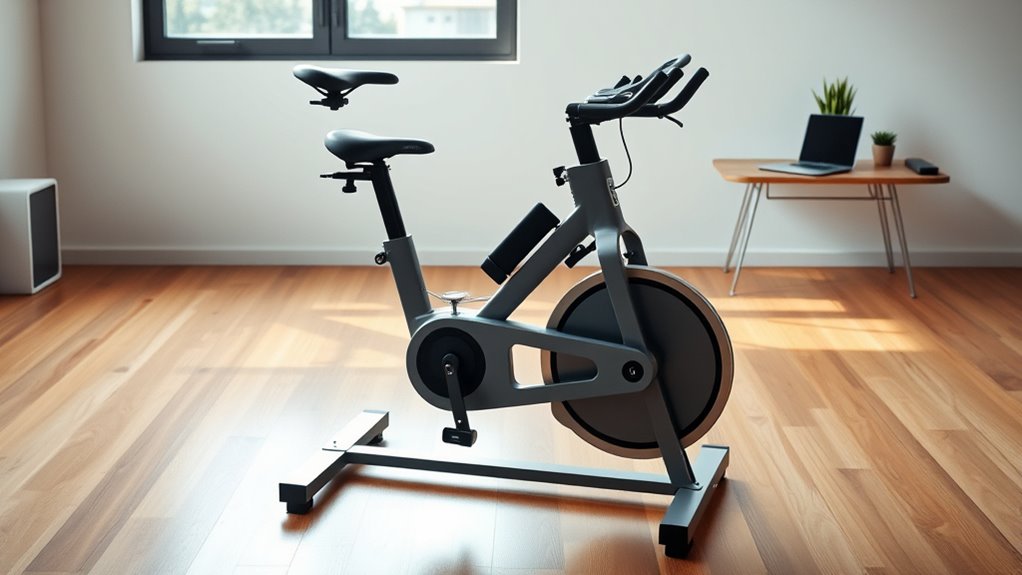
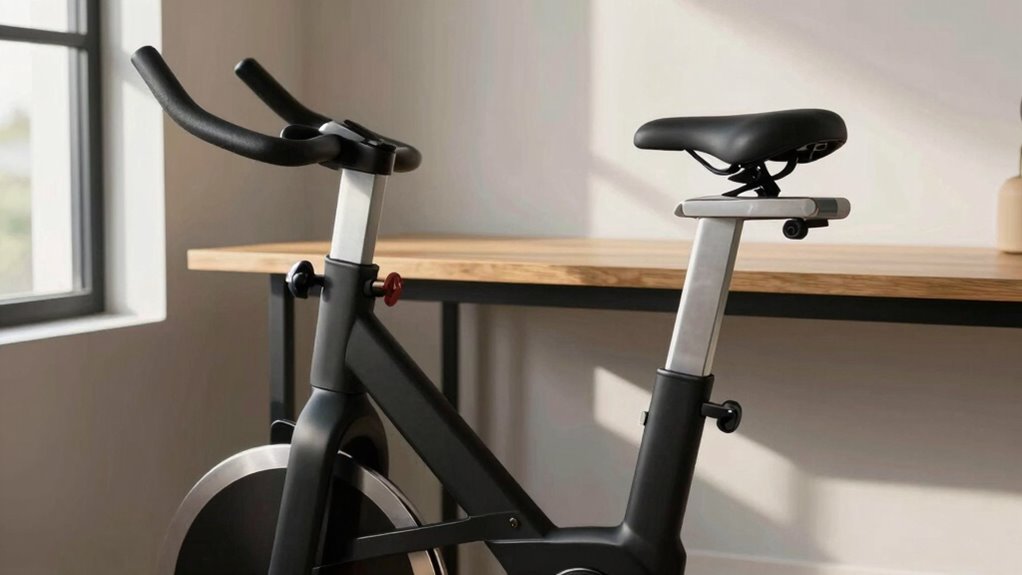
Have you ever considered turning your desk into a mini gym? If so, a desk bike might be just what you need to stay active while working. But before you immerse yourself, it’s essential to understand why the hip angle is more critical than resistance when choosing a model. That’s because the way your hips bend and move during pedaling impacts your comfort, posture, and overall effectiveness. An ergonomic design that promotes proper hip angle ensures you won’t strain your knees or back, making your workout feel natural and sustainable over long periods. When you sit at your desk, your hips should be positioned so that your knees are roughly level with your hips, allowing a slight bend. If the desk bike’s design forces your hips into an awkward or extreme angle, you might experience discomfort or fatigue quickly, defeating the purpose of integrating movement into your workday. Proper ergonomic design can also help prevent long-term joint issues associated with poor posture. Pedal efficiency is another key factor to consider, but it’s often misunderstood as just about resistance. In reality, how smoothly and comfortably you pedal is heavily influenced by your hip angle and the ergonomic features of the bike. When your hips are correctly aligned, you can generate more consistent power with less effort. This means you can pedal longer and more comfortably, without feeling like you’re fighting against the machine. A well-designed desk bike will have adjustable components that accommodate different body sizes and shapes, helping you find that ideal hip angle. Proper pedal efficiency doesn’t necessarily mean high resistance; it’s about the quality of the movement and how effortlessly you can sustain it, which is directly related to ergonomic design and your positioning. Choosing a desk bike that emphasizes ergonomic design isn’t just about comfort; it’s about maximizing your productivity and health. When your hips are in the right position, you maintain better posture, reduce strain on your joints, and prevent aches that could distract you from your tasks. This also helps you stay focused and energized throughout the day, making it easier to incorporate movement without feeling exhausted or sore. Resistance can be increased later if you want a more intense workout, but initially, the priority should be on finding a bike that aligns with your body’s natural movements. Remember, a little bit of movement, done correctly, can have a significant impact on your overall well-being and work efficiency. So, invest in a desk bike that values ergonomic design and promotes ideal pedal efficiency, and watch how it transforms your workspace into an active, healthier environment.
Frequently Asked Questions
How Does Desk Bike Height Affect User Comfort?
You’ll find that the desk bike height greatly impacts your comfort. By making ergonomic adjustments to the seat height, you guarantee your hips are in a natural position, reducing strain. When the seat is too high or low, it can cause discomfort and improper posture. Adjust the seat height so your hips are slightly open, allowing for better movement and support, making your workout more comfortable and effective.
Can Desk Bikes Help Improve Posture Long-Term?
Yes, desk bikes can improve your posture long-term if you make proper ergonomic adjustments. As you pedal, you engage muscles that strengthen your core and back, encouraging better alignment. But beware—if you neglect proper setup, you might develop bad habits. The secret lies in maintaining correct hip angles, which maximize muscular engagement and support good posture. Stay attentive, and you’ll release lasting benefits for your spine and overall comfort.
Are There Safety Considerations When Using Desk Bikes?
Yes, there are safety considerations when using desk bikes. You should prioritize ergonomic safety by adjusting the seat and pedal height to prevent strain. Keep your hips at a comfortable angle to avoid injury, and take regular breaks to stretch. Always start slow and listen to your body, stopping if you experience pain. Proper setup and awareness help avert injuries and ensure a safe, effective workout during your desk bike sessions.
What Is the Ideal Hip Angle for Different Users?
You should aim for an ergonomic hip angle of about 90 to 110 degrees, adjusting based on your hip flexibility and comfort. This position helps reduce strain and promotes proper posture during use. If your hips are less flexible, a slightly larger angle works better, while more flexible hips can handle a smaller, more efficient angle. Always listen to your body to guarantee long-term comfort and safety.
How Do Desk Bikes Impact Productivity Levels?
Using a desk bike is like igniting a hidden engine within you, boosting your focus and energy. You’ll find your productivity soars as you stay active, turning mundane tasks into energizing moments. The ergonomic benefits keep you comfortable, while the increased cardiovascular health sharpens your mind. With each pedal, you’re not just working—you’re transforming your workspace into a powerhouse of efficiency and well-being.
Conclusion
Just like Icarus soaring too close to the sun, focusing solely on resistance can make you overlook the true power of your desk bike—your hip angle. By paying attention to your form and comfort, you release a smoother, more effective ride that keeps you energized and injury-free. Remember, it’s not about how hard you pedal, but how well you position yourself to fly higher without falling. Embrace the angle, and let your productivity take flight.