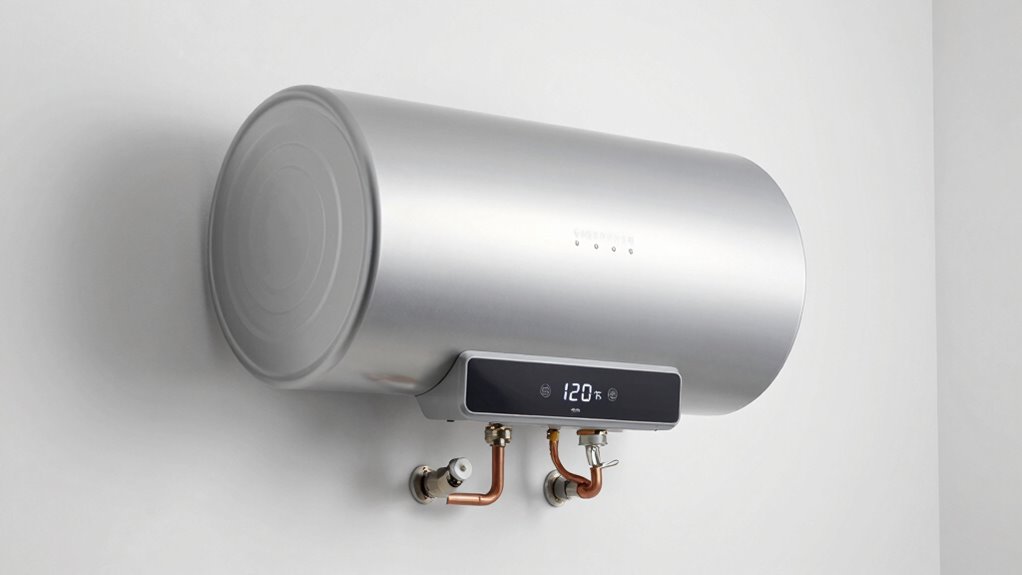
To keep your water heater safe, efficient, and comfortable, set the temperature around 120°F to prevent scalding and save energy. Regularly check safety features like thermostats and pressure relief valves to prevent accidents. Insulating your heater and pipes reduces heat loss, cutting costs. Watch for signs of issues like strange noises or leaks, and perform routine maintenance to prolong its lifespan. Keep these basics in mind—further details can help optimize your system even more.
Key Takeaways
- Set water temperature around 120°F (49°C) for safety, efficiency, and to prevent scalding or bacteria growth.
- Use thermostats, sensors, and mixing valves to control and maintain safe, consistent water temperatures.
- Insulate the tank and pipes to reduce heat loss, improve efficiency, and lower energy costs.
- Regularly inspect safety features like pressure relief valves and flush sediment to ensure proper operation.
- Routine maintenance and proper settings extend water heater lifespan, ensure safety, and optimize energy efficiency.
Understanding Water Heater Types and How They Work
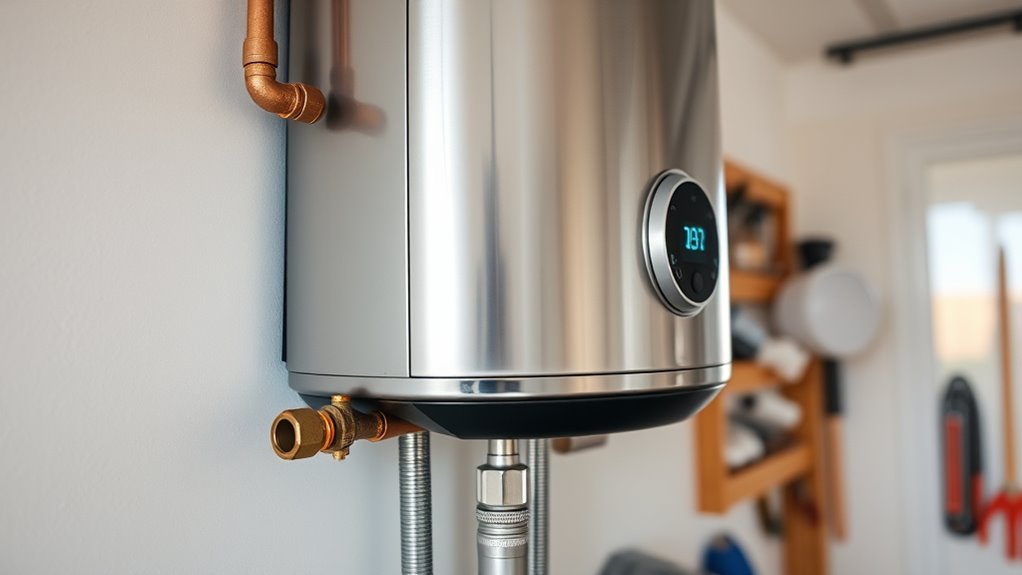
Understanding the different types of water heaters is essential for choosing the right system for your home. You mainly have tankless systems and storage tanks. Tankless systems heat water on demand, providing hot water whenever you need it without storing it in a tank. They’re compact, energy-efficient, and ideal for smaller households. In contrast, storage tanks hold a set amount of hot water, usually between 30 to 80 gallons. They keep water heated and ready for use, making them suitable for larger families or homes with high hot water demands. Both types have their advantages, but your choice depends on your household size, energy preferences, and space availability. Understanding how each system works helps you make an informed decision that best fits your needs. Eco-friendly accommodations and sustainable options are increasingly popular choices for environmentally conscious homeowners seeking energy-efficient water heating solutions. Additionally, some modern water heaters incorporate renewable energy sources, further reducing their environmental impact. Recognizing the performance factors of different water heater types can also help optimize energy savings and overall performance.
Setting the Optimal Water Temperature for Comfort and Safety
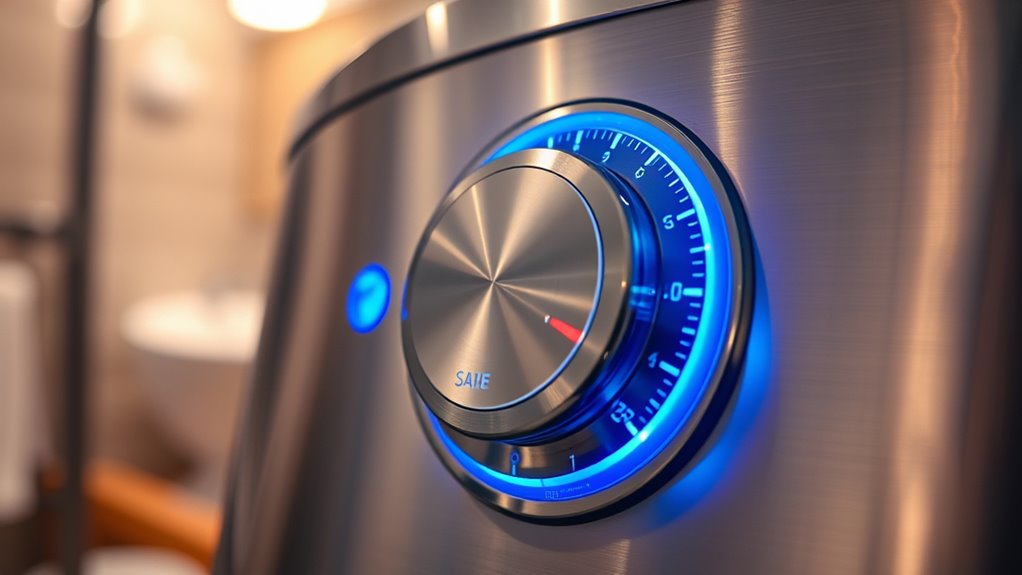
Setting the right water temperature is essential for both your comfort and safety. Proper thermostat calibration helps maintain a consistent temperature, preventing fluctuations that can cause scalding or insufficient hot water. To visualize this, imagine the following:
| Water Temperature | Feelings & Safety Impact |
|---|---|
| 120°F (49°C) | Comfortable, reduces scald risk |
| 140°F (60°C) | Hotter, increased scald danger |
| 100°F (38°C) | Warm, may cause bacteria growth |
| 130°F (54°C) | Balanced, safe and efficient |
| 150°F (66°C) | Very hot, high scald risk |
Regularly check and calibrate your thermostat to avoid temperature fluctuations. This guarantees your water stays at a safe, comfortable level. Additionally, understanding water heater safety can help prevent accidents and ensure optimal operation. Paying attention to temperature regulation can further enhance safety and efficiency in your water heating system. Incorporating temperature monitoring devices can also assist in maintaining consistent water temperatures and prevent potential hazards. Being aware of proper maintenance practices ensures your water heater operates safely and efficiently over time.
Essential Safety Precautions and Features

To keep your water heater safe, you should understand how temperature control devices help prevent scalding and equipment damage. Safety shut-off mechanisms automatically turn off the heater if issues arise, protecting you from potential hazards. Ensuring these features are in place and functioning properly is key to maintaining a safe hot water system. Regular maintenance routines help identify and address potential safety issues before they become serious problems. Additionally, understanding how system controls work can help you troubleshoot minor issues and maintain overall safety. Proper temperature regulation is essential for both safety and efficiency, ensuring your water heater operates within safe parameters.
Temperature Control Devices
Temperature control devices are essential safety features that help prevent scalding and reduce energy waste. You’ll find temperature sensors inside your water heater that monitor water temperature constantly. When the water reaches your set limit, these sensors signal the thermostat to turn down the heat, maintaining a safe and efficient temperature. Safety valves also play a critical role by releasing excess pressure and preventing potential explosions. They activate if pressure or temperature become dangerously high. Some models include thermostatic mixing valves that blend hot and cold water to deliver safe, consistent temperatures at your faucet. Properly functioning temperature control devices ensure you avoid burns, save energy, and keep your water heater operating safely and efficiently. Regular inspections help guarantee these safety features work when you need them most. Routine maintenance of these devices is crucial to ensure reliable performance and safety. Additionally, understanding the types of thermostats can help you choose the most suitable safety features for your water heater, especially considering modern advancements in smart temperature regulation. Being aware of temperature regulation technology can further enhance your system’s safety and efficiency by integrating smart controls that adapt to your usage patterns.
Safety Shut-off Mechanisms
Safety shut-off mechanisms act as the final line of defense, automatically stopping the water heater if dangerous conditions occur. A thermal cut-off detects excessive heat, shutting off power to prevent overheating and potential fires. A pressure relief valve releases pressure if it becomes too high, preventing tank rupture. These safety features protect you from hazards caused by malfunction or system failure. Regularly inspecting and maintaining these components guarantees they work properly. If either device triggers, don’t ignore it—address the issue immediately. Understanding these mechanisms helps you keep your water heater safe and reliable. Here’s a quick overview:
| Safety Feature | Function |
|---|---|
| Thermal Cut Off | Shuts down heater if overheating occurs |
| Pressure Relief | Releases excess pressure to prevent rupture |
| Automatic Shut-off | Stops operation during unsafe conditions |
| Temperature Sensor | Monitors water temperature |
| Pressure Valve | Maintains safe pressure levels |
Additionally, ensuring proper system maintenance can extend the lifespan of these safety components and prevent unexpected failures. Being familiar with safety shut-off mechanisms helps you respond promptly to any safety concerns, reducing the risk of damage or injury. Regular testing of these safety features ensures they function correctly when needed. Proper installation and timely replacement of faulty components are crucial for optimal safety performance.
Tips for Improving Energy Efficiency and Reducing Costs
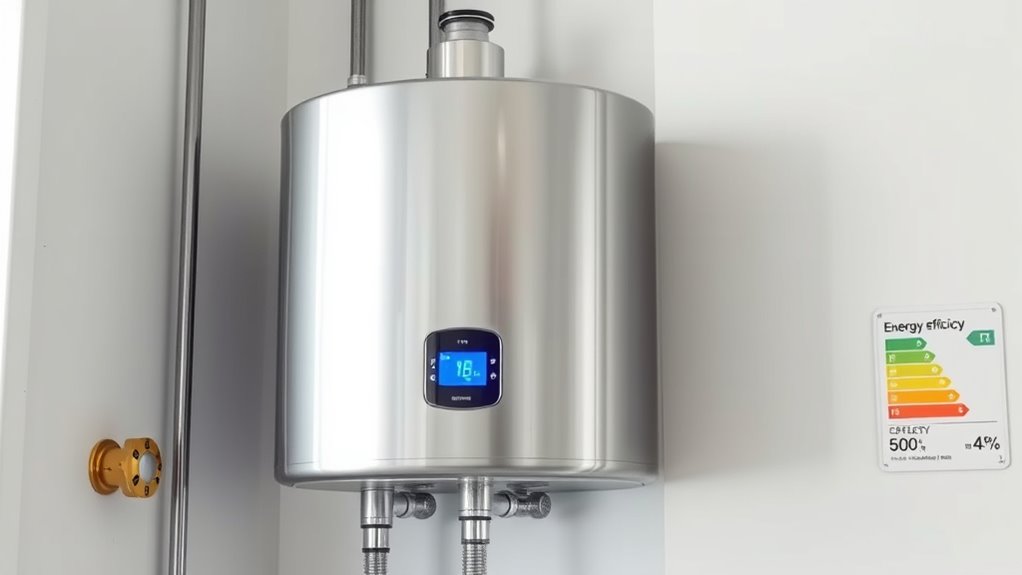
To save energy and cut costs, start by insulating your water heater to prevent heat loss. Lowering the thermostat to a safe, efficient temperature also helps reduce energy use. Making these simple adjustments can lead to noticeable savings over time. Additionally, regularly monitoring water temperature and chemistry ensures the system operates safely and efficiently, extending the lifespan of your heater. Proper family photoshoot fails can also reveal opportunities for safer and more comfortable setups, reducing the risk of mishaps. Maintaining air quality awareness can also help identify other energy-saving opportunities and ensure safe operation.
Insulate Water Heater
Insulating your water heater is a simple yet effective way to boost energy efficiency and cut down on utility bills. Using the right insulation materials and proper installation techniques, you can keep heat in and reduce energy loss. Start by choosing high-quality insulation materials designed for water heaters, like foam or fiberglass. Wrap the tank carefully, ensuring no gaps or compression. Make sure the insulation is dry and secure it firmly with tape or fasteners. Proper insulation not only saves money but also extends your water heater’s lifespan.
| Insulation Materials | Installation Techniques |
|---|---|
| Foam sleeves | Wrap tightly, no gaps |
| Fiberglass blankets | Secure with tape |
| Reflective covers | Cover evenly |
| Pipe insulation | Fit snugly around pipes |
Lower Temperature Settings
Lowering your water heater’s temperature setting is one of the simplest ways to improve energy efficiency and cut costs. By making a small temperature adjustment, you reduce the amount of energy needed to heat water, leading to significant energy savings over time. Experts recommend setting your water heater to around 120°F (49°C), which is hot enough for most household needs while preventing overheating. Lower temperatures also decrease the risk of scalding and extend the lifespan of your unit. Before adjusting, check your manufacturer’s guidelines, and remember to test the water temperature afterward to ensure comfort and safety. Regular temperature adjustments can help you maintain an efficient system, reduce energy bills, and promote safety in your home.
Common Signs of Water Heater Problems and Troubleshooting
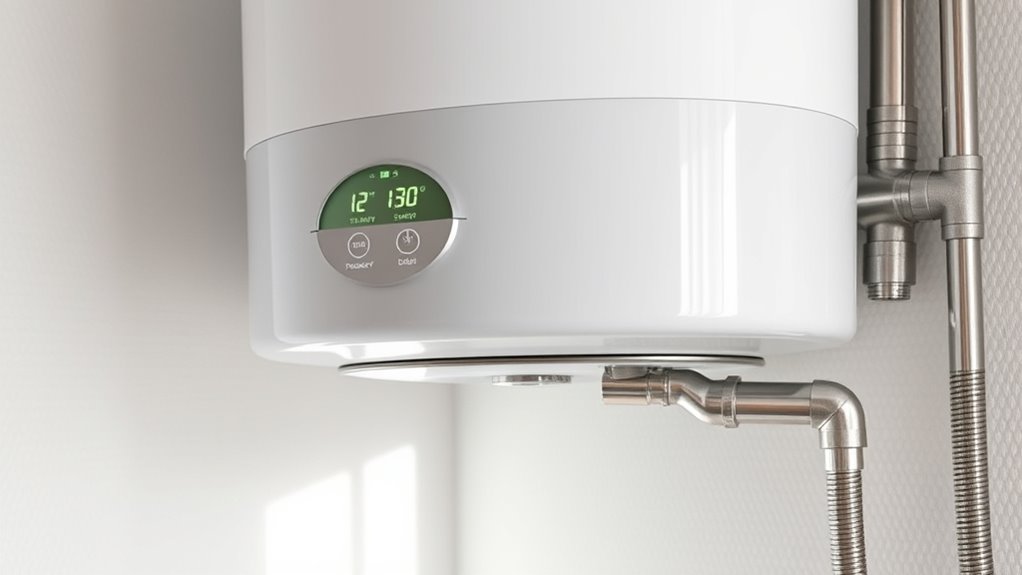
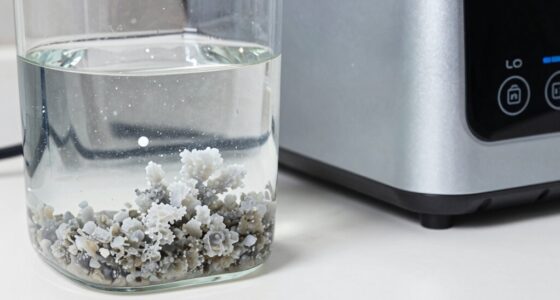
One of the most common signs of water heater problems is inconsistent or insufficient hot water. If your hot water runs out quickly or takes too long to heat, it could be due to sediment buildup at the bottom of the tank, which insulates the water from the heating element. Additionally, tank corrosion can weaken the tank’s structure, leading to leaks or rust-colored water. Strange noises, like banging or popping sounds, often indicate sediment layers shifting inside the tank. If you notice rusty water, reduced water pressure, or unexplained leaks, these are signs of internal corrosion or sediment issues. Troubleshooting begins with flushing the tank to remove sediment and inspecting for corrosion, but persistent problems may require professional repairs or replacement.
Regular Maintenance Practices for Longevity and Performance

Regular maintenance is essential to keep your water heater running efficiently and extend its lifespan. By inspecting and caring for your unit, you can prevent issues like tank corrosion and sediment buildup that reduce performance and cause damage. Regularly flush the tank to remove sediment, which can insulate the heating element and cause overheating. Check the anode rod annually to prevent tank corrosion and replace it if necessary. Insulate hot water pipes to improve efficiency and reduce energy costs. Also, test the pressure relief valve to ensure safety and proper operation. Performing these simple tasks helps keep your water heater in top shape, reduces repair costs, and prolongs its durability. Staying proactive with maintenance guarantees warm water when you need it most.
Frequently Asked Questions
How Often Should I Flush My Water Heater to Maintain Efficiency?
You should flush your water heater annually to maintain efficiency. Regular tank maintenance helps prevent sediment buildup, which can hinder performance. Sediment removal ensures your heater works smoothly, reduces energy costs, and extends its lifespan. If you notice reduced hot water or strange noises, consider flushing it more frequently. Staying on top of tank maintenance is key to keeping your water heater running efficiently and reliably for years to come.
What Are the Best Materials for Insulating a Water Heater?
You should choose insulation materials like fiberglass, mineral wool, or foam for your water heater. These materials excel at heat retention, preventing heat loss and improving efficiency. Fiberglass batts are affordable and easy to install, while foam insulations provide better R-values for superior insulation. Whichever you pick, make sure it completely covers the tank to minimize heat escape, saving energy and reducing your utility bills.
Can Adjusting the Thermostat Affect Water Pressure?
Adjusting your thermostat doesn’t directly impact your water pressure. However, if you set the temperature too high, it can cause mineral buildup or sediment to accumulate, which may indirectly reduce water flow and pressure over time. To maintain ideal water pressure and avoid issues, make certain your thermostat is set to a safe, moderate temperature. Regular maintenance can also help keep water pressure steady and your water heater functioning efficiently.
Are There Eco-Friendly Alternatives to Traditional Water Heaters?
You’re in luck—there are eco-friendly options that could transform your daily routine. Solar water heaters harness sunlight, providing free, renewable energy for your hot water needs. Heat pump systems, on the other hand, extract warmth from the air, using markedly less electricity. Both alternatives reduce your carbon footprint and save money over time. Ready to make a change? These innovative solutions might just be the upgrade you’ve been searching for.
How Do I Prevent Mineral Buildup in My Water Heater?
To prevent mineral buildup and sediment accumulation in your water heater, flush it regularly—at least once a year. Use a mixture of vinegar and water to dissolve mineral deposits, and consider installing a sediment filter on your water supply line. These steps help maintain efficiency, extend your heater’s lifespan, and improve water quality by reducing mineral accumulation. Regular maintenance is key to sediment prevention and keeping your water heater running smoothly.
Conclusion
Think of your water heater as the heart of your home’s comfort system—pumping warmth and safety through your daily life. By understanding its types, setting the right temperature, and practicing regular maintenance, you keep its rhythm steady and reliable. When you prioritize safety and efficiency, you guarantee your home’s warmth flows smoothly, like a well-tuned symphony. Take charge now, and let your water heater serve you faithfully for years to come.