Your pipe routing can ensure water pressure by affecting flow resistance, turbulence, and pressure drops. Sharp bends, long distances, and narrow sections increase resistance and reduce pressure at fixtures. Properly routing pipes with gentle curves, straight runs, and strategic placement of valves helps maintain steady pressure. Elevation changes also impact flow; designing around these factors ensures better pressure regulation. If you want to learn how to optimize your system further, keep exploring these key design principles.
Key Takeaways
- Sharp bends and narrow sections increase resistance, causing pressure drops in the piping system.
- Excessive pipe length and unnecessary turns reduce water pressure at fixtures.
- Elevation changes create gravity-related pressure variations, affecting overall flow.
- Proper placement of valves and fittings minimizes pressure losses and maintains consistent flow.
- Unsupported or sagging pipes can disrupt flow, leading to pressure fluctuations.
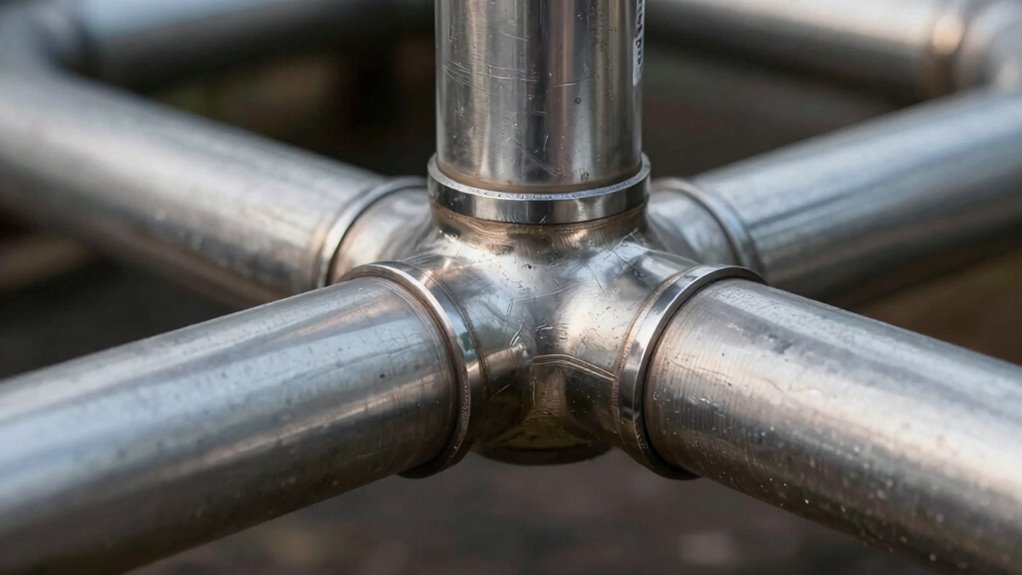
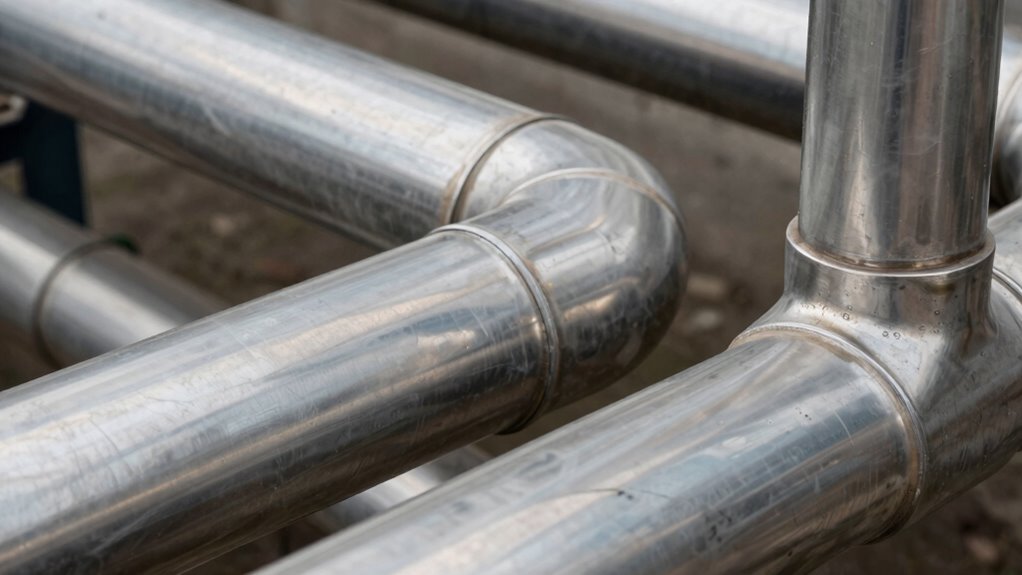
The way you route your pipes can considerably impact water pressure throughout your system. When designing or modifying your plumbing, understanding the flow dynamics is essential. Flow dynamics refer to how water moves through the pipes, influenced by factors like pipe length, diameter, and the number of bends. Proper routing ensures smooth water flow, minimizing turbulence and pressure drops. If your pipes are too long or include excessive turns, the water encounters more resistance, reducing pressure at fixtures. Conversely, straight, direct routes promote better flow, helping maintain consistent pressure.
Proper pipe routing ensures smooth flow and consistent water pressure throughout your system.
Pressure regulation is another critical aspect affected by pipe routing. When water encounters restrictions—such as sharp bends, narrow pipes, or abrupt changes in diameter—pressure drops occur. These drops can cause uneven water delivery and reduce the efficiency of fixtures. To optimize pressure regulation, you should aim for gentle curves rather than sharp angles, and avoid constrictions that create bottlenecks. Properly planned routing helps distribute pressure evenly, ensuring each outlet receives sufficient flow without overburdening your pump or pressure regulator. Incorporating proper pipe supports can further prevent sagging or movement that might disrupt flow and pressure stability.
Additionally, the positioning of valves and fittings plays a significant role in pressure management. Installing shut-off valves, pressure regulators, or filters at strategic points can help fine-tune flow and pressure throughout your system. When routing pipes, consider how these components will be integrated, keeping them accessible for maintenance and adjustments. Proper placement prevents unnecessary pressure losses and helps you maintain better control over the entire system. Also, understanding how pressure drops accumulate along the piping can guide more effective system design.
Another consideration is the elevation changes within your piping layout. Rising pipes can cause pressure drops due to gravity, especially if the system isn’t designed with adequate flow dynamics in mind. Incorporating features like pressure tanks or booster pumps can help maintain consistent pressure when elevation changes are unavoidable. Conversely, lowering pipes or keeping them at a consistent level maintains steady pressure. When planning your routing, think about how elevation and gravity will influence flow, and incorporate features like pressure tanks or booster pumps if needed to compensate. Additionally, paying attention to pipe material can also influence flow efficiency and pressure stability.

Aquastrong Whole House Water Pressure Booster Pump 80 PSI, 115V Automatic Variable Speed, Constant Pressure, Integrated Design, Self-Priming, for Home, Apartment, Shower, Garden, Shallow Well,Smart 45
Adjustable Pressure & Speed: Smart 45 is a fully integrated and intelligent water pump designed for domestic boosting….
As an affiliate, we earn on qualifying purchases.
As an affiliate, we earn on qualifying purchases.
Frequently Asked Questions
How Does Pipe Material Affect Water Pressure?
You should know that pipe material influences water pressure mainly through pipe diameter and flow velocity. Different materials have varying internal roughness, affecting flow resistance. A narrower pipe diameter increases flow velocity, which can reduce pressure, while smoother materials decrease friction loss. Choosing the right pipe material helps maintain ideal water pressure, ensuring your system functions efficiently without unnecessary pressure drops or noise.
Can Insulation Impact Water Pressure in Pipes?
Insulation effects can influence water pressure by helping maintain consistent temperature and reducing heat loss, which supports pressure stability. When pipes are properly insulated, the water inside stays at a steady temperature, preventing pressure fluctuations caused by temperature changes. While insulation doesn’t directly increase or decrease pressure, it guarantees the system runs smoothly and efficiently, reducing the risk of pressure drops or surges caused by external temperature variations.
What Unseen Factors Influence Pressure Changes in Pipes?
Like hidden currents beneath the surface, unseen factors influence water pressure through flow dynamics and pressure fluctuations. You might not notice how sharp bends, narrow sections, or obstructions act as silent gatekeepers, throttling or surging pressure. Variations in elevation or temperature shifts can also sway the system like a fickle tide. These subtle influences weave a complex web that quietly but powerfully impacts your water flow, beyond what meets the eye.
How Often Should Pipe Routing Be Reviewed for Pressure Issues?
You should review your pipe routing regularly, ideally every 1-2 years, especially if you notice pressure fluctuations. During inspections, check for proper pipe insulation, which helps maintain consistent pressure, and verify pressure regulators are functioning correctly. If you experience sudden drops or spikes in water pressure, it’s a good idea to reassess the routing and components to prevent potential damage or inefficiency in your system.
Do External Environmental Conditions Affect Pipe Pressure?
Yes, external environmental conditions directly impact pipe pressure. Environmental factors like temperature changes, soil movement, and weather can cause pressure fluctuations, making your water system less reliable. You might say it’s a double-edged sword—these factors can cause unexpected disruptions. To keep water pressure steady, regularly monitor environmental conditions and consider protective measures, like insulation or reinforcement, to prevent pressure issues caused by external influences.

Camco Brass Marine/RV Water Pressure Regulator – Protects RV Kitchen Small Appliances, Plumbing & Hoses – Reduces RV Water Pressure to Safe & Consistent 40-50 PSI – Drinking Water Safe (40055)
Protects RV/Marine Plumbing: Keep your RV/marine plumbing safe with this brass Camco water pressure regulator. Safeguard against high-pressure…
As an affiliate, we earn on qualifying purchases.
As an affiliate, we earn on qualifying purchases.
Conclusion
By paying close attention to pipe routing details, you can effectively control water pressure in your system. Did you know that improper routing can cause pressure drops of up to 30%? That’s a significant difference that impacts performance and efficiency. So, when planning your setup, prioritize best pipe placement and angles. Small adjustments can lead to big improvements—making your water flow smoother and more reliable every time you turn on the tap.

10-Pack 1/2 Inch 45 Degree PVC Elbow Pipe Fittings, Furniture Grade SCH40 PVC Pipe Connectors, 2 Way Socket Corner Joints for DIY Shelves, Garden Support Structures & Greenhouses, White
Precise Fit for 1/2" PVC Pipe: Designed strictly to ASTM standards to fit 1/2-inch Schedule 40 PVC pipes…
As an affiliate, we earn on qualifying purchases.
As an affiliate, we earn on qualifying purchases.

HoldRite 20 Inch Pipe Support Bracket, Galvanized Steel, PEX, CPVC, Copper, 103-18-H
VERSATILE: Multi-purpose galvanized steel pipe support bracket at 20 inches
As an affiliate, we earn on qualifying purchases.
As an affiliate, we earn on qualifying purchases.