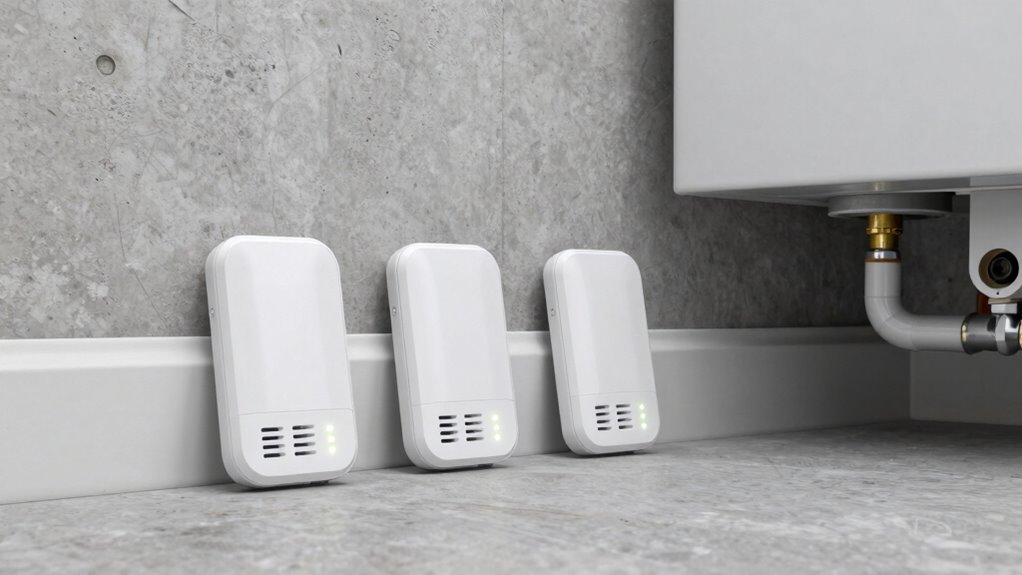

For maximum coverage, place your smart leak sensors near pipe insulation to catch early leaks, especially in cold areas prone to freezing. Install them at water flow obstruction points like under sinks and around appliances, and along your plumbing layout where leaks are more likely. Don’t forget to position sensors beneath appliances and in hidden spots such as crawl spaces to monitor less obvious leak sources. Keep in mind, proper placement boosts detection, and detailed tips follow to ensure thorough protection.
Key Takeaways
- Install sensors near pipe insulation to detect leaks early, especially in colder areas prone to freezing or condensation.
- Place sensors beneath appliances like washing machines and water heaters to catch leaks at their source.
- Position sensors along plumbing lines and junctions to monitor water flow and prevent pooling or seepage.
- Install sensors on floors under frequently used fixtures to detect leaks before they cause significant damage.
- Use sensors in hidden areas such as behind appliances or in crawl spaces for comprehensive leak detection coverage.
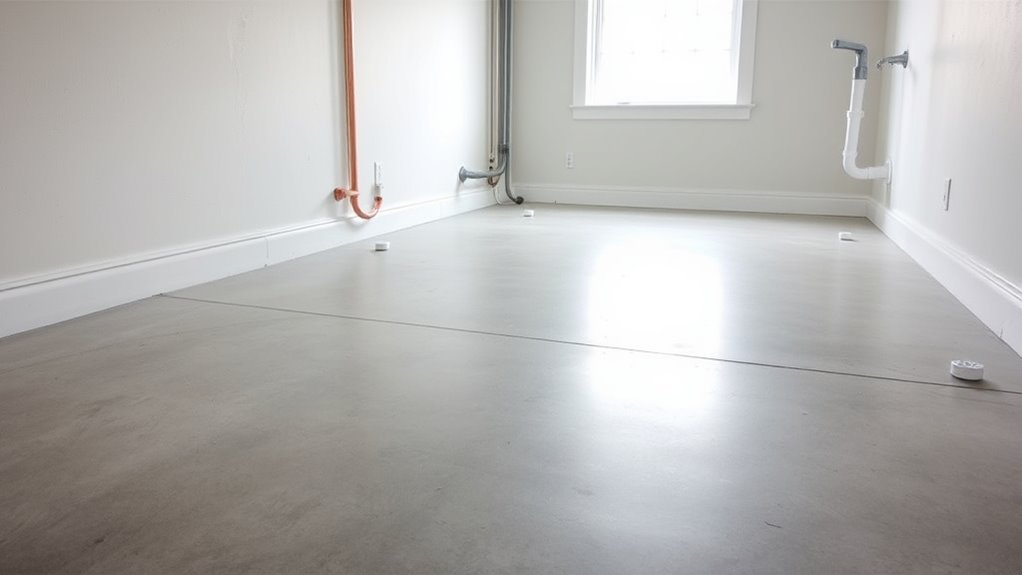
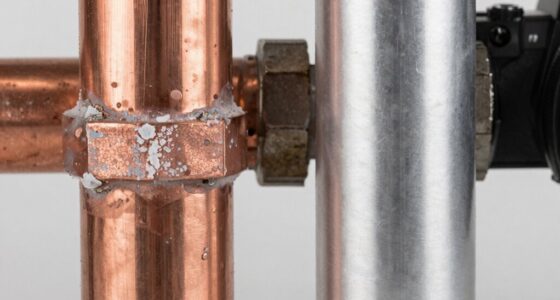
Proper placement of leak sensors is essential to detecting water problems early and preventing costly damage. When it comes to safeguarding your home or business, understanding where to position these devices can make all the difference. One of the most effective strategies involves placing sensors near areas where pipe insulation is used or where water flow is most concentrated. Pipes with insulation are prime spots because they tend to be in colder areas, increasing the risk of leaks from freezing or condensation. By positioning sensors close to these insulated pipes, you ensure that any unexpected moisture or leaks are detected before water causes damage to walls, floors, or ceilings.
You should also consider placing leak sensors at points where water flow is most likely to be obstructed or diverted. For example, under sinks, near washing machines, or around water heaters—these are common spots where leaks originate or worsen. Sensors located in these places can catch leaks early, especially if water begins to accumulate or seep into areas where it shouldn’t be. Remember, a sensor’s effectiveness depends on its proximity to the problem source. If you place it too far away, a leak might develop and cause damage before the sensor detects it.
Another critical placement tip involves considering the layout of your plumbing system. Water tends to flow along pipes, so positioning sensors along the path of water movement ensures comprehensive coverage. For instance, installing sensors along supply lines or at junction points can catch leaks that might otherwise go unnoticed. This proactive approach prevents water from pooling or seeping into structural components, which can lead to mold or rot.
In addition, you should install leak sensors on the floor beneath appliances and fixtures that use water regularly. These areas are particularly vulnerable since leaks often leak onto the floor first, creating a clear detection zone. If your home has any exposed or accessible pipe insulation, place sensors nearby to detect condensation or leaks early. This way, you’re covering the most common leak-prone spots where pipe insulation is present or water flow is concentrated, ensuring early detection.
Finally, don’t forget to consider the placement of sensors in less obvious spots, such as behind appliances or in crawl spaces. These areas might not be obvious leak sources, but water can accumulate rapidly there. Keeping sensors in these hidden yet strategic locations provides a comprehensive safety net. Proper placement, especially near pipe insulation and along water flow paths, guarantees that your leak sensors will alert you promptly, helping you avoid costly repairs and water damage. Additionally, utilizing trustworthy and well-designed sensors can improve detection accuracy and reliability over time.

GoveeLife Upgraded Smart Water Leak Detector 1s with 1804 ft Ultra-Long Range, WiFi Water Sensor with SMS/Email/APP Push and Sound Alarm,5-Year Battery Life, 5 Pack, Suit for Home, Basement, Kitchen
Breakthrough 1804 ft Connectivity: Engineered with advanced Sub-1G long-range wireless tech, our leak detector maintains robust signals over…
As an affiliate, we earn on qualifying purchases.
As an affiliate, we earn on qualifying purchases.
Frequently Asked Questions
How Often Should Leak Sensors Be Tested for Optimal Performance?
You should test your leak sensors at least once every three to six months to guarantee peak performance. During testing, check sensor calibration to confirm accuracy and replace batteries as needed to maintain battery life management. Regular testing helps you catch issues early, prevents water damage, and ensures your sensors remain reliable. Keep a schedule and follow manufacturer guidelines for best results and peace of mind.
Can Leak Sensors Detect Slow Leaks or Only Sudden Water Intrusions?
You might think leak sensors only catch dramatic water bursts, but surprisingly, they excel at slow leak detection too. Thanks to sensor sensitivity, many models can detect tiny, gradual drips before they turn into floods. So, whether it’s a whisper of water or a sudden splash, your sensor’s got it covered. Ironically, the quiet leaks are the ones that sneak past human notice, making your sensor a true hero in disguise.
Are There Specific Brands Recommended for Different Household Areas?
You should consider brand comparisons like Flo by Moen, Honeywell, and Fibaro, as each offers unique sensor features suited for different household areas. For example, Flo by Moen provides advanced app controls, Honeywell offers reliable alarms, and Fibaro integrates with smart home systems. Your choice depends on your needs, such as connectivity, alerts, or integration, ensuring maximum coverage and effective leak detection throughout your home.
How Do Environmental Factors Affect Leak Sensor Accuracy?
Environmental factors like humidity interference and temperature fluctuations can impact your leak sensor’s accuracy. High humidity may cause false alarms or sensor malfunctions, while temperature swings can affect sensor sensitivity, leading to missed leaks or false readings. To guarantee reliable detection, keep sensors away from humid areas and avoid placing them where temperature varies drastically. Regularly check and calibrate your sensors to maintain ideal performance in varying environmental conditions.
What Maintenance Is Required to Keep Leak Sensors Functioning Properly?
You need to regularly check your leak sensors, performing sensor calibration to guarantee accuracy. Replace batteries promptly when they run low to prevent false alarms or sensor failure. Keep the sensors clean and free of dust or debris, which can interfere with detection. Test the devices periodically by simulating leaks, and follow the manufacturer’s maintenance instructions to keep them functioning properly and protect your home from water damage.

5 Pack Water Leak Detectors for Home, 100dB Water Sensor Alarm for Basement,Flood Leakage Detection Devices for Pipe/Drain/Sink/Faucet Drip Alert,Floor Flooding in Bathroom/Kitchen/Toilet/Laundry Room
Leaking & Dripping: 2 water sensitive probes on the front for monitoring pipe/drain drip and 4 rear probes…
As an affiliate, we earn on qualifying purchases.
As an affiliate, we earn on qualifying purchases.
Conclusion
Think of leak sensors like vigilant guards, always on duty. I once installed one near my water heater, and it alerted me before a small leak became a flood. That tiny sensor saved me from thousands in repairs. Proper placement guarantees you’re covered where leaks are most likely to happen — just like having guards stationed at every door. With the right spots, you’ll catch problems early and keep your home safe and dry.

YoLink DIY Automatic Water Leak Detection & Shut-Off Starter Kit, EVO Valve Operator, Wireless Valve Controller, (3) Leak Sensors, Hub
Comprehensive Kit for Complete Leak Protection: This bundle includes 3 YoLink Water Leak Sensors, 1 Smart Valve Controller,…
As an affiliate, we earn on qualifying purchases.
As an affiliate, we earn on qualifying purchases.

5 Pack Water Leak Alarm Detector, 120dB Loud Alert Water Sensor, IP66 Waterproof, Sensitive Leak and Drip Alert, Easy Installation for Home, Basement Flood Prevention, Bathroom, Sink, Laundry
**Universal Leak Detection** – This water leak detector is equipped with 2 top sensor probes and 4 bottom…
As an affiliate, we earn on qualifying purchases.
As an affiliate, we earn on qualifying purchases.