To prevent scalding, set your water heater to around 120°F (49°C). This temperature balances safety and comfort, reducing the risk of burns and bacterial growth. Always verify the temperature with a reliable thermometer and follow your manufacturer’s instructions. Installing anti-scald devices and teaching household members about hot water risks enhances safety. If you want tips on how to adjust your heater properly and guarantee maximum protection, keep exploring to learn more.
Key Takeaways
- Set your water heater to around 120°F (49°C) to balance safety and hot water needs.
- Lower temperatures reduce scalding risk but ensure sufficient hot water supply.
- Use anti-scald devices or mixing valves for added protection against hot water injuries.
- Turn off the heater before adjusting the temperature and verify with a thermometer.
- Regular maintenance and safety checks help maintain a safe and effective temperature setting.
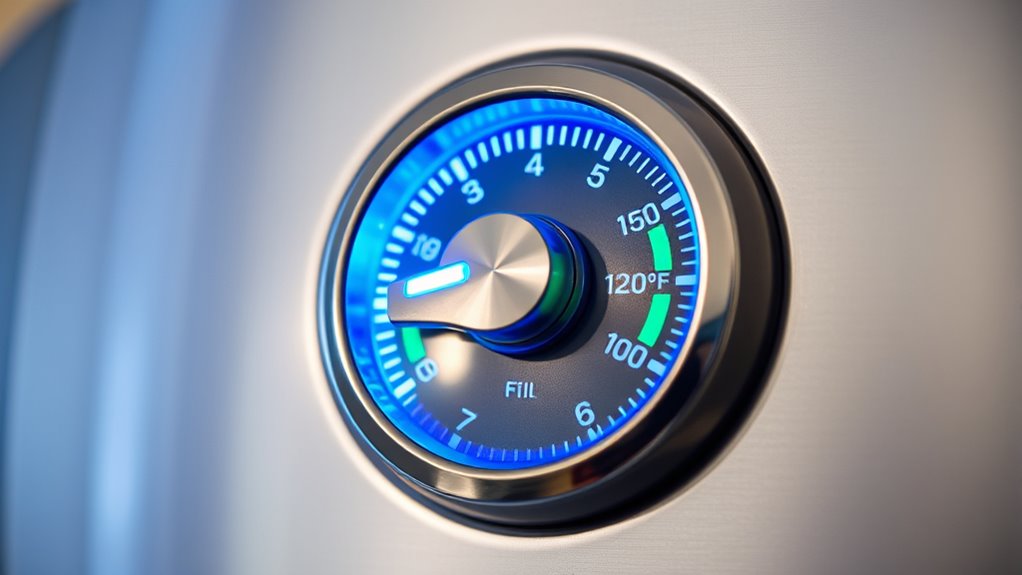
Have you ever wondered if your water heater is set to the right temperature? It’s a common question, especially when considering both comfort and safety. Proper temperature regulation is essential to ensure you’re not only enjoying hot water when you need it but also protecting yourself from potential hazards like scalding. Setting your water heater to the correct temperature isn’t just about convenience; it’s about making sure safety considerations are front and center. Many people overlook this aspect, assuming that higher temperatures mean faster hot water, but that’s a dangerous misconception.
Ensuring your water heater is at the right temperature balances comfort and safety effectively.
The ideal water temperature for most households is around 120°F (49°C). This setting strikes a good balance between providing enough hot water for daily tasks and minimizing the risk of burns. When your water heater is set too high, you increase the chance of accidental scalds, which can happen quickly, especially to children and seniors. Conversely, setting it too low might save energy but can lead to insufficient hot water and potential bacterial growth, such as Legionella, if the temperature drops too much. That’s why proper temperature regulation is critical—it helps you optimize safety and efficiency simultaneously. Regular maintenance and temperature controls are vital for ensuring safe operation over time.
Adjusting your water heater’s temperature is straightforward, but it’s important to follow safety considerations during the process. First, always turn off the heater before making any adjustments to avoid accidental scalding or electrical hazards. Use a reliable thermometer to check the water temperature after the heater has been running for a bit, ensuring it’s within safe limits. If you’re unsure how to change the temperature setting, consult your unit’s manual or contact a professional. Remember, safety considerations extend beyond just the temperature—regular maintenance and inspections can prevent issues like corrosion or malfunction that could compromise safety.
Additionally, consider installing anti-scald devices or mixing valves if you have children or elderly family members. These devices work with your existing setup to add an extra layer of protection by limiting the hot water flow to safe levels. Always educate household members about the dangers of hot water and the importance of setting the heater to a safe temperature. Taking these precautions helps you create a safe environment and avoids costly accidents.

Wall-Mounted Space Heater with ECO Thermostat and Remote Control, LED Display, 60°/90°/120° Oscillation Modes, 24-Hour Timer, Indoor Electric Space Heater
ECO Energy-Saving Thermostat Mode: This wall-mounted heater features an intelligent ECO mode that automatically adjusts heating power based...
As an affiliate, we earn on qualifying purchases.
Frequently Asked Questions
How Often Should I Check My Water Heater Temperature Setting?
You should check your water heater temperature setting at least once a year to guarantee safety and efficiency. Regularly calibrate the thermostat to prevent it from drifting and causing scalding. If you notice any issues, use the emergency shutoff to turn off the heater immediately. Keeping an eye on the temperature helps avoid accidents and prolongs your water heater’s lifespan, so don’t skip this routine check.
Can Lowering the Temperature Save Energy?
Lowering your water heater temperature can definitely save energy and reduce your bills. When you set it to a safe yet lower temperature, you use less energy to heat the water, which promotes energy conservation. This not only cuts costs but also extends your water heater’s lifespan. Just make certain the temperature isn’t too low to avoid bacteria growth. A moderate adjustment balances safety, energy efficiency, and cost savings effectively.
What Are Signs My Water Heater Is Set Too High?
Your water heater might be set too high if you notice sudden, unpredictable temperature swings or if the water feels scorching hot, like a fiery furnace. Sediment buildup can cause thermostat calibration issues, making it harder to maintain a safe, consistent temperature. If you’re constantly adjusting the thermostat or experiencing inconsistent hot water, it’s a sign to check these problems and dial down the temperature for safety and efficiency.
Is There a Recommended Temperature for Households With Children?
For households with children, you should set your water heater to 120°F (49°C) to guarantee child safety. This temperature helps prevent scalding injuries while still providing hot water for everyday use. Always check the thermostat regularly to maintain this setting, and consider installing anti-scald devices for extra protection. Following temperature guidelines like these keeps your family safe without sacrificing comfort or convenience.
How Do I Safely Adjust My Water Heater’s Thermostat?
You should start by turning off the power to your water heater, then locate the thermostat. Use a screwdriver to carefully adjust the thermostat, typically to 120°F, making sure you don’t override safety features. Check the thermostat calibration with a thermometer afterward. Always follow the manufacturer’s instructions for safety features, like high-temperature cutoffs, to prevent scalding and ensure safe, effective temperature adjustments.

GiveBest Electric Wall Heater with WiFi and Remote Control, Floor or Wall Mounted Heater, Large Room Coverage, 3 Heating Modes, 1500W Fast Heating Space with Thermostat for Indoor Room Use, White
【3-in-1 Smart Control: WiFi, Remote & Touch】Upgrade your winter comfort with this smart wall heater. Use the WiFi...
As an affiliate, we earn on qualifying purchases.
Conclusion
Setting your water heater to a safe temperature is like tuning a delicate instrument—you want just the right note to prevent burns without sacrificing comfort. When you keep the thermostat around 120°F, you’re gently guarding your skin, like a protective shield, while still enjoying warm, soothing water. Think of it as finding the perfect balance on a tightrope—staying safe doesn’t mean sacrificing warmth; it’s about mastering the art of harmony between comfort and caution.

Dreo Smart Wall Heater, Electric Space Heater for Bedroom 1500W, 120° Vertical Oscillation, Adjustable Thermostat, Remote Control, 24H Timer, Easy-Mount Heater for Indoor Use, Works with Alexa, WH719S
Widespread Warmth: Dreo's 120° wide oscillation heating distributes warm air evenly from top to bottom, helping to bring...
As an affiliate, we earn on qualifying purchases.

DR. INFRARED HEATER NEW Upgraded DR-975 7500-Watt 240-Volt Hardwired Shop Garage Electric Heater, Wall/Ceiling Mounted with Remote Controlled Thermostat White
Heavy duty 240V single Phase 4700W/7500W electric heater
As an affiliate, we earn on qualifying purchases.