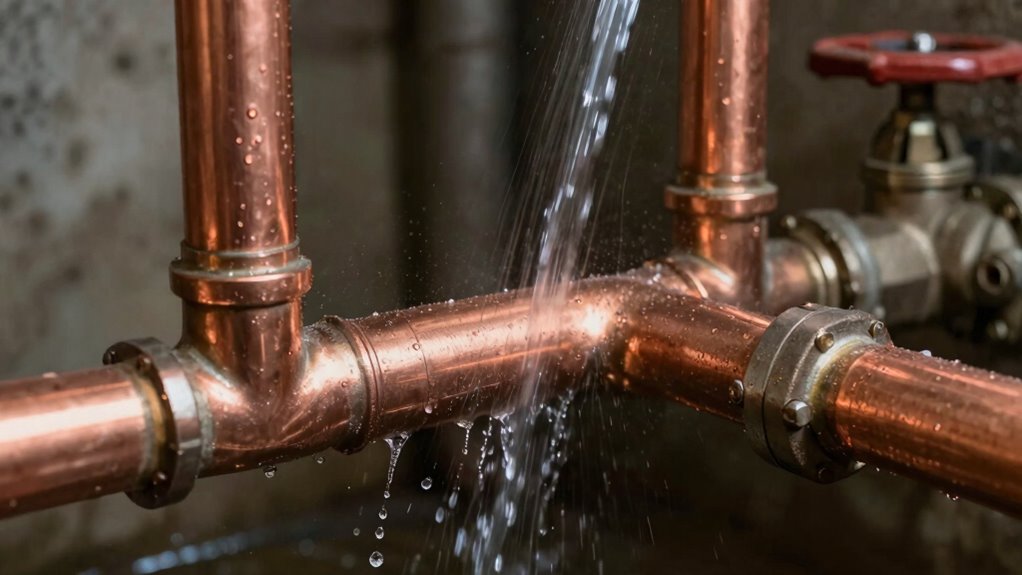

If your pipes suddenly bang or rattle, you’re likely facing water hammer, which happens when fast-moving water hits a valve or stop abruptly, creating pressure surges that send shockwaves through your plumbing. This often occurs if valves close too quickly or if your system lacks air chambers to absorb the shocks. To diagnose the issue, listen for banging sounds, check for loose pipes, and observe any sudden pressure changes. Keep going to discover how to fix it effectively.
Key Takeaways
- Water hammer occurs when rapid valve closure causes sudden pressure surges in pipes, leading to banging sounds.
- Symptoms include loud banging, rattling, and pipe movement during faucet or valve shutoff.
- Installing air chambers or water hammer arrestors helps absorb pressure shocks and prevent pipe noise.
- Faulty, old, or quickly closing valves contribute to pressure spikes; inspecting and repairing them reduces banging.
- Diagnosing involves listening for noises, checking pipe movement, and inspecting valves for proper operation.

Water hammer is a sudden surge of pressure that occurs in pipes when a fluid in motion is rapidly halted or redirected. This phenomenon causes loud banging sounds and can put stress on your plumbing system. If you’ve noticed pipes rattling or banging whenever you turn off a faucet or valve, you’re likely experiencing water hammer. It’s a common issue, but understanding its causes can help you address it effectively.
One of the most effective ways to prevent water hammer is by installing air chambers. These are vertical sections of pipe filled with air, acting as shock absorbers that absorb sudden pressure changes. When water flow stops abruptly, the air in these chambers compresses, reducing the force transmitted through the pipes. Over time, however, air chambers can become filled with water or lose their effectiveness, which diminishes their ability to cushion pressure surges. In such cases, you might need to recharge or replace them to restore their function. Installing or maintaining air chambers is a simple yet essential step in controlling water hammer, especially in older plumbing systems.
Installing or maintaining air chambers helps prevent water hammer and protects your plumbing system.
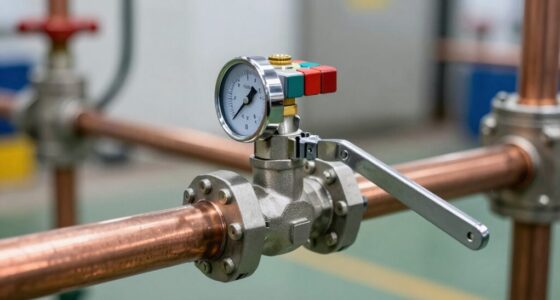
Another key aspect to consider is valve repairs. When valves close too quickly or are faulty, they can cause rapid changes in water flow that lead to pressure spikes. If you’re experiencing frequent banging, check your valves for proper operation. Repairing or replacing malfunctioning valves can greatly reduce water hammer occurrences. Sometimes, valves that are old or damaged cause abrupt halts in water flow, which send shockwaves through the pipes. Ensuring your valves operate smoothly and close gradually helps mitigate these pressure surges.
In many cases, water hammer isn’t just about loud noises; it can also lead to pipe damage over time. The repeated stress from pressure surges may cause pipe joints to loosen or crack. That’s why addressing the issue early is essential. Besides air chambers and valve repairs, you might also consider installing water hammer arrestors—devices designed specifically to absorb shock waves. They work similarly to air chambers but are often more compact and easier to install in tight spaces. Proper plumbing maintenance and timely repairs are key to preventing long-term damage from water hammer.

(Pack of 2) EFIELD S-241 Stainless Steel Water Hammer Arrestor For Washing Machine, 3/4 Inch Swivel FHT x 3/4 Inch MHT,(HAMMER020-2PCS)
2 Pieces Stainless Steel Water Hammer Arrester For Washing Machine Supply Valves or Directly to Washing Machine Tube…
As an affiliate, we earn on qualifying purchases.
As an affiliate, we earn on qualifying purchases.
Frequently Asked Questions
Can Water Hammer Cause Pipe Bursts?
Yes, water hammer can cause pipe bursts. The sudden pressure surge from pipe stress and valve impact creates intense stress on your pipes, weakening their structure over time. If left unchecked, this repeated stress can lead to cracks or bursts. Diagnosing water hammer early helps you prevent damage by reducing the pressure spikes, ensuring your plumbing stays intact and safe from catastrophic failure.
How Long Does It Take to Fix Water Hammer?
Ever wonder how long you’ll wait to silence that banging? Fixing water hammer can take from a quick 30 minutes to several hours, depending on the problem. If you install pipe insulation or adjust pressure regulators, you might speed up the process. Diagnosing the issue early means you can reduce the repair time, ensuring your pipes stop banging sooner. Do you have the right tools ready to fix it?
Are There Permanent Solutions for Water Hammer?
Yes, there are permanent solutions for water hammer. You can install pipe insulation to reduce vibrations and noise, and add pressure regulation devices like shock arrestors or air chambers to manage water flow and pressure fluctuations. These solutions address the root causes, providing a long-term fix. Properly securing pipes and maintaining consistent water pressure also helps prevent future water hammer issues, ensuring quieter and safer plumbing.
Does Water Temperature Affect Water Hammer?
Think of water temperature as the conductor of a symphony, subtly influencing pipe behavior. When water warms up, it causes pipe expansion, which can intensify water hammer sounds. Higher water temperatures increase pressure fluctuations, making pipes more prone to banging. To reduce this, you can install water hammer arrestors or insulate your pipes, helping to absorb shock and minimize the impact of pipe expansion caused by temperature changes.
Can Water Hammer Happen in Plastic Pipes?
Yes, water hammer can happen in plastic piping. Although plastic pipes are more flexible than metal, they still experience pressure surges when water flow suddenly stops or changes direction. Flexible fittings help absorb shock, reducing the noise and damage caused by water hammer. To prevent it, guarantee proper installation with adequate supports and consider installing air chambers or silencers to absorb pressure spikes.
![[10-Pack] PROCURU 1/2" x 6" Copper Sweat Bullet Air Chamber Stub Out](https://m.media-amazon.com/images/I/41u34Lv93DL._SL500_.jpg)
[10-Pack] PROCURU 1/2" x 6" Copper Sweat Bullet Air Chamber Stub Out
Controls water hammer noise in above ground water lines
As an affiliate, we earn on qualifying purchases.
As an affiliate, we earn on qualifying purchases.
Conclusion
Think of water hammer as a sudden thunderclap in your plumbing’s quiet sky, signaling turbulence within. It’s a warning that your pipes are fighting to find balance, like a restless storm seeking calm. By understanding its cause, you become the steady anchor amidst the chaos, restoring harmony. Addressing water hammer isn’t just fixing pipes; it’s calming the storm inside, turning a violent clash into a peaceful flow—bringing serenity back to your home’s silent symphony.

SAMSUNG DC66-00470A DAMPER SHOCK, white
Replacement washing machine damper shock
As an affiliate, we earn on qualifying purchases.
As an affiliate, we earn on qualifying purchases.

PILISPARK Anti-Siphon Industrial-control-valves Repair Kit, ASSE 1019-A Vacuum Breaker Check Valve Replacement Kits with Decorative Cover, Plastic Body,Plunger and O-Ring,1 Pack
【Critical Backflow Prevention 】PILISPARK ASSE 1019 anti-siphon valve replaces core components in faucets, automatically blocking reverse siphonage during…
As an affiliate, we earn on qualifying purchases.
As an affiliate, we earn on qualifying purchases.