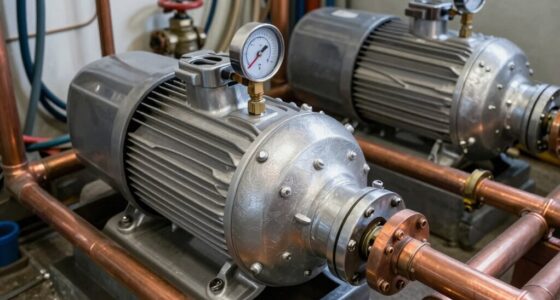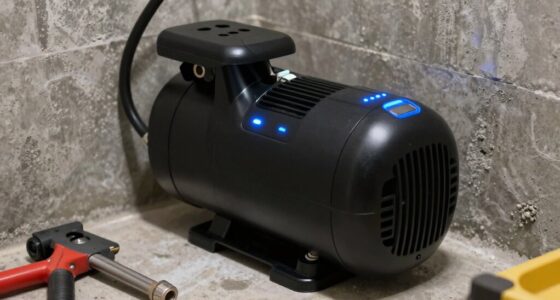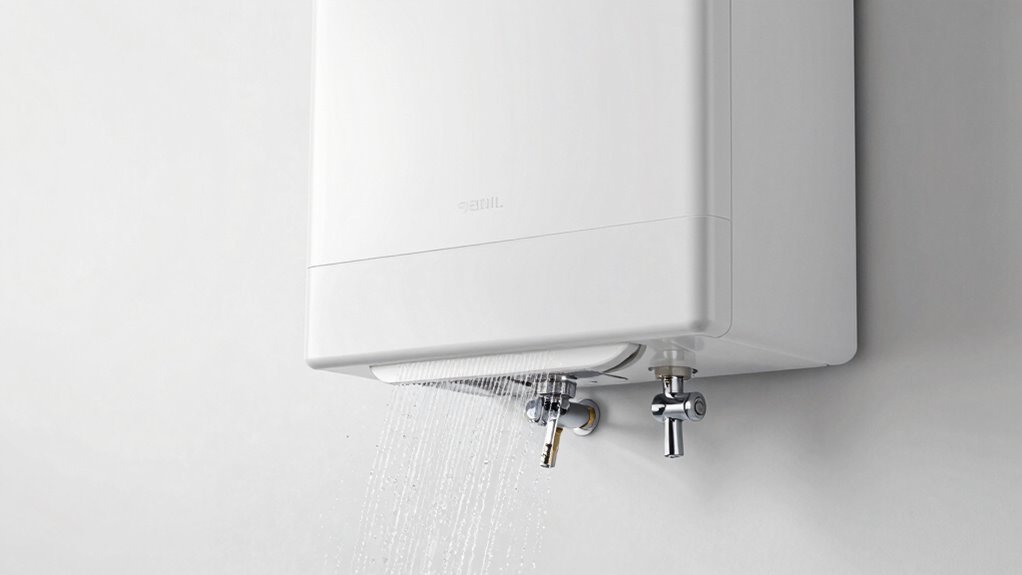

At peak demand, tankless water heaters feel different because they heat water on demand, providing a steady, responsive flow. Unlike traditional models that rely on stored hot water, tankless units adjust instantly to increased usage, so you won’t experience cold showers or shortages. This makes your hot water experience more consistent and reliable during busy times. If you want to understand why they perform so well when it matters most, keep exploring the details.
Open a free Amazon Business account
Business pricing, bulk buying and tax-exempt orders.
As an affiliate, we earn on qualifying purchases.
Key Takeaways
- Tankless heaters heat water instantly, preventing temperature drops during high demand.
- They adjust output dynamically, maintaining consistent hot water flow despite increased usage.
- Unlike traditional tanks, they don’t rely on stored hot water, ensuring continuous supply at peak times.
- Proper sizing ensures the heater can handle simultaneous high-demand appliances smoothly.
- Their responsive heating maintains stable water temperature, enhancing comfort during busy periods.
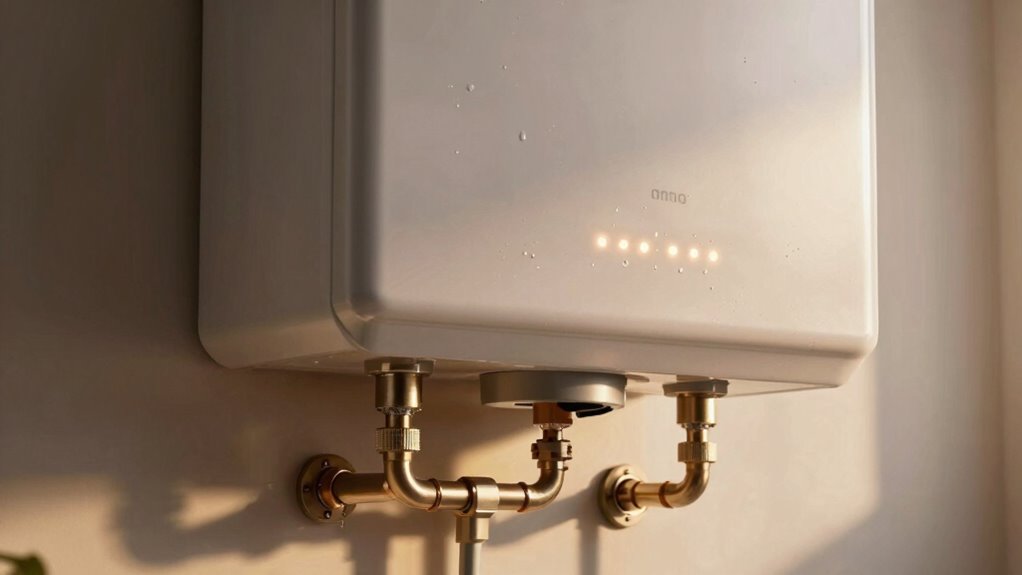
During peak demand periods, traditional water heaters often struggle to keep up, leaving you with cold showers and inconvenience. They rely on a tank that stores hot water, which means once that supply is exhausted, you’re left waiting for the tank to refill and reheat. This can be especially frustrating when multiple family members need hot water simultaneously. That’s where tankless water heaters come in—they heat water on demand, providing a continuous supply without relying on stored hot water. When demand spikes, you’ll notice a significant difference: the water remains hot and steady, feeling different from the traditional experience. Instead of running out of hot water after a certain point, a tankless system adjusts instantly, ensuring your showers and appliances stay supplied as long as needed. Additionally, their on-demand heating capability contributes to a more responsive hot water supply during peak times. This instantaneous heating process also helps to prevent hot water shortages, ensuring consistent comfort even during busy mornings. Furthermore, their energy efficiency features play a crucial role in reducing overall energy consumption during these high-demand periods, making them a smart choice for many households. Properly sized and installed, tankless systems can also reduce energy costs over time, providing long-term savings.
tankless water heater for peak demand
As an affiliate, we earn on qualifying purchases.
As an affiliate, we earn on qualifying purchases.
Frequently Asked Questions
How Do Tankless Heaters Handle Simultaneous Hot Water Demands?
When multiple hot water demands happen simultaneously, your tankless heater manages them based on its flow rate and tank capacity. It heats water on demand, so if your household’s combined flow rate exceeds the unit’s capacity, you might notice a drop in water temperature. To handle peak demand smoothly, choose a model with a higher flow rate and adequate tank capacity, ensuring consistent hot water for everyone.
Can Tankless Heaters Recover Quickly During Peak Usage?
Yes, tankless heaters recover quickly during peak usage, thanks to their energy efficiency and design. They heat water on demand, so there’s no waiting for a tank to refill. Proper installation considerations, like adequate gas supply and correct sizing, guarantee ideal performance. This way, you get consistent hot water, even during high-demand periods, without sacrificing energy efficiency or effectiveness in your home’s water heating system.
Do Different Models Perform Better at Peak Demand?
Yes, different models perform better at peak demand, especially those with higher flow rates and advanced technology. You’ll find that energy-efficient models often handle peak usage more effectively, saving you money on utility bills. However, consider installation challenges—some units require more space or specialized setup, which can impact performance. Picking the right model means balancing energy efficiency, peak demand capacity, and installation feasibility to guarantee you get reliable hot water when you need it.
How Does Water Temperature Fluctuate During High Demand?
Think of your water temperature like a tightrope walker balancing carefully. During high demand, temperature fluctuations can occur if the heater struggles to maintain temperature stability. As demand fluctuates, water may feel warmer or cooler than usual because the heater adjusts output. However, quality tankless models aim to minimize these changes, ensuring you get consistent hot water even during peak demand, keeping your experience smooth and reliable.
Are There Additional Maintenance Needs During Peak Periods?
During peak periods, you should perform extra tank maintenance to guarantee your heater operates efficiently. Check for sediment buildup and flush the system regularly, as higher usage can accelerate wear. Keeping up with maintenance extends your heater’s lifespan and prevents unexpected breakdowns. Additionally, inspecting the heating elements and filters helps maintain consistent water temperature, ensuring your tankless water heater performs reliably during high demand.
high flow rate tankless water heater
As an affiliate, we earn on qualifying purchases.
As an affiliate, we earn on qualifying purchases.
Conclusion
As the tide of demand rises, tankless water heaters can feel like a tightrope walk—balancing hot water supply and performance. Understanding how these systems respond at peak times helps you stay ahead of the game, ensuring your comfort doesn’t dip like a sinking ship. With proper maintenance and realistic expectations, you’ll keep your hot water flowing smoothly, turning a potential storm into a calm sea of warmth, no matter how hectic the demand.
instant hot water heater for multiple outlets
As an affiliate, we earn on qualifying purchases.
As an affiliate, we earn on qualifying purchases.
energy efficient tankless water heater
As an affiliate, we earn on qualifying purchases.
As an affiliate, we earn on qualifying purchases.
NFL season / tailgating Picks
team gear
As an affiliate, we earn on qualifying purchases.