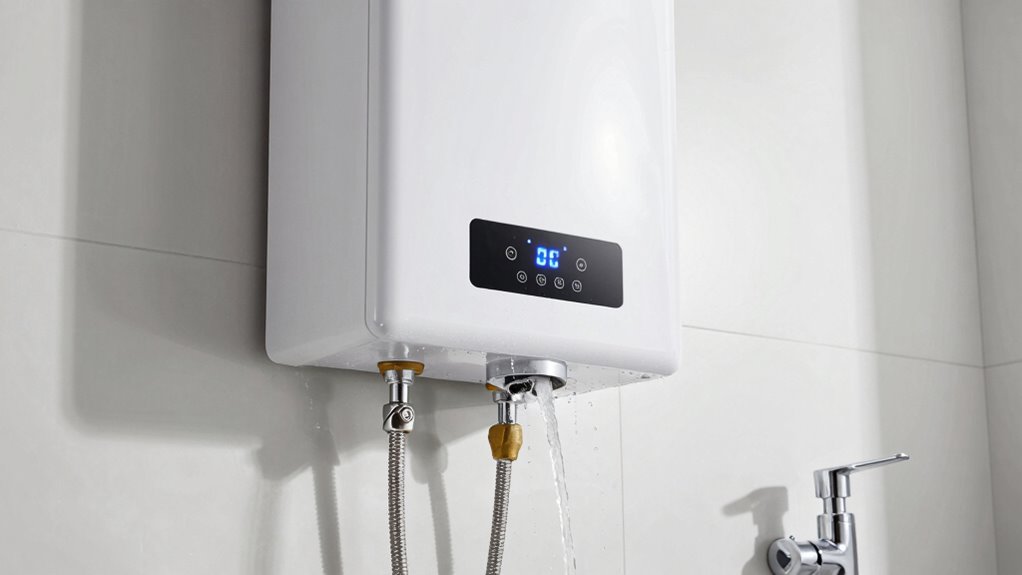

Your choice of flow rate for a tankless water heater is key to keeping your household comfortably supplied with hot water. A proper flow rate guarantees you won’t face cold surprises during busy times or multiple fixtures using hot water at once. If the flow rate is too low, it can cause fluctuations and inconvenience. Understanding how flow rate affects performance helps you select the right unit and optimize its efficiency—keep exploring to learn more about making the best choice.
Key Takeaways
- Flow rate determines how much hot water is available per minute, affecting household comfort during peak usage.
- Proper flow rate sizing prevents temperature fluctuations and ensures continuous hot water supply for multiple fixtures.
- Selecting the right flow rate improves energy efficiency by matching heater capacity to household demand.
- Oversized or undersized units can lead to higher costs and reduced system performance.
- Understanding flow rate helps in choosing a unit that balances upfront costs with long-term reliability and savings.
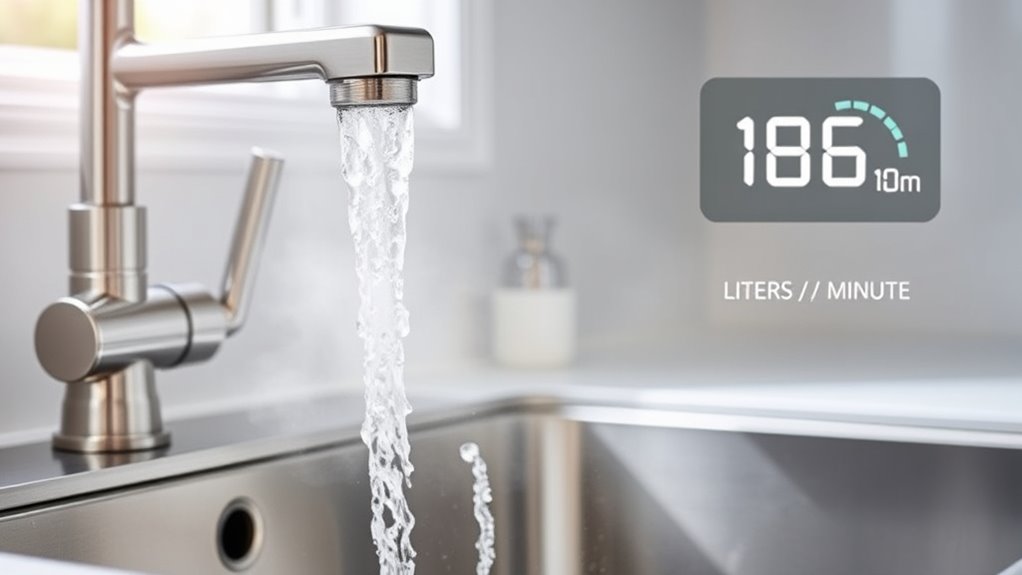
Are you tired of running out of hot water during busy mornings? If so, a tankless water heater might be just what you need. Unlike traditional units, tankless systems heat water on demand, providing a continuous supply without bulky storage tanks. But before you invest, it’s vital to understand why flow rate matters more than you might think. Your flow rate—the amount of water the heater can produce per minute—directly impacts your daily comfort and the overall effectiveness of your hot water system. It determines whether you can shower, wash dishes, and run laundry simultaneously without cold surprises.
Choosing the right flow rate ensures continuous hot water and household comfort.
When considering a tankless water heater, flow rate plays a pivotal role in meeting your household’s needs. If your unit’s flow rate is too low, you might find yourself waiting for hot water or experiencing temperature fluctuations during peak usage. Conversely, a higher flow rate ensures that multiple fixtures can operate at once without sacrificing comfort. For example, if you typically run two showers and a washing machine at the same time, you’ll want a unit with a sufficient flow rate to handle that demand. Ignoring this aspect could mean investing in a heater that doesn’t meet your lifestyle, leading to dissatisfaction and the need for upgrades sooner than expected.
Energy efficiency is another critical factor tied to flow rate. A properly sized tankless heater runs only when you need hot water, reducing energy waste associated with standby heat loss common in traditional tanks. However, selecting a unit with an inadequate flow rate can cause it to work harder, trying to keep up with your demands, which slightly diminishes energy savings. Although tankless models are generally more efficient, the actual savings depend on choosing the right flow rate for your household. It’s worth noting that higher flow rate units often come with increased installation costs, but those costs are balanced by the benefits of reliable hot water and energy savings over time.
Installation costs vary based on the size and capacity of the unit you select. Larger flow rate models tend to be more expensive upfront, and installation might require additional modifications to your existing plumbing or electrical systems. Nevertheless, these costs should be viewed as an investment in convenience and efficiency. When planning your budget, consider not just the initial expense but also the long-term savings on energy bills and the increased comfort you’ll enjoy. Proper sizing ensures your system operates at its best, providing continuous hot water without overtaxing your household’s infrastructure or inflating your energy bills. In the end, understanding the importance of flow rate and balancing it with installation costs will help you make a smarter choice for your home.
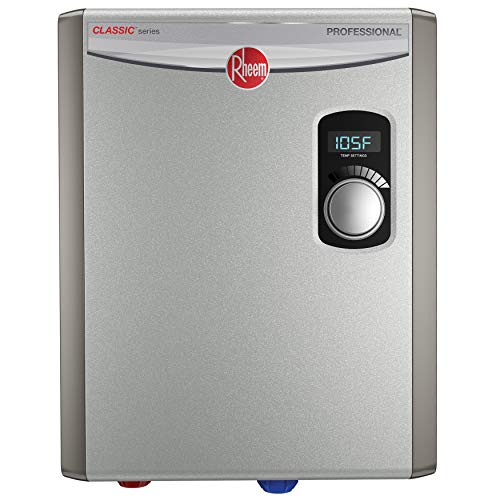
Rheem 18kW 240V Tankless Electric Water Heater, Gray
External digital thermostatic control with LED display (+/1 degree accuracy)
As an affiliate, we earn on qualifying purchases.
As an affiliate, we earn on qualifying purchases.
Frequently Asked Questions
How Does Flow Rate Affect Energy Efficiency?
Flow rate directly impacts your tankless water heater’s energy efficiency by influencing energy consumption and system performance. When you use more hot water at once, the heater has to work harder, increasing energy use and decreasing efficiency. To optimize performance and save energy, you should select a unit with the right flow rate for your household’s needs. This guarantees consistent hot water without overburdening the system.
Can Flow Rate Impact Water Temperature Consistency?
Your water temperature can definitely fluctuate with flow rate changes. If you increase flow rate beyond what your heater can handle, the water might arrive cooler than expected, like a splash of cold shock. Conversely, a steady flow rate ensures consistent water temperature, providing a warm, comforting shower every time. So, controlling your flow rate is key to maintaining stable water temperature and avoiding those annoying temperature swings.
Is a Higher Flow Rate Always Better?
A higher flow rate isn’t always better due to flow rate myths and capacity misconceptions. While it might seem advantageous, too high a flow rate can cause inconsistent water temperature and strain your heater. You want a unit that matches your household’s needs, balancing flow rate with capacity. This guarantees steady hot water and prevents unnecessary wear, making your system more efficient and reliable.
How Do Multiple Fixtures Influence Flow Rate Requirements?
Imagine a busy highway where multiple cars (fixtures) merge onto a single lane. The more fixtures you run simultaneously, the more water flow you need. Your fixture capacity and piping diameter act like lanes, guiding this flow. If they’re too narrow or your fixtures demand more, your water supply slows down, reducing comfort. To keep everyone happy, make sure your tankless heater’s flow rate matches your total fixture capacity and pipe size.
What Are Signs of Insufficient Flow Rate?
If you notice your water isn’t hot enough, or you experience inconsistent temperatures, it’s a sign of insufficient flow rate. Flow rate limitations prevent your tankless heater from supplying enough hot water, especially with multiple fixtures running simultaneously. This also indicates poor fixture compatibility, meaning your heater can’t handle your household’s demand. Upgrading to a unit with a higher flow rate capacity can solve these issues effectively.

14kW Tankless Water Heater Electric, ORBEK On Demand Instant Hot Water Heater 240V, Max 3.38 GPM, Supply for 2-3 Fixtures, ETL Certified, Indoor Installation, New Upgraded 2.0
Note: Please ensure the household circuit breaker panel has a total current capacity of at least 150 amps….
As an affiliate, we earn on qualifying purchases.
As an affiliate, we earn on qualifying purchases.
Conclusion
Remember, when it comes to tankless water heaters, flow rate is like the heartbeat of your home’s comfort. Don’t overlook its importance—selecting the right one guarantees you never run out of hot water when you need it most. As the saying goes, “You get what you pay for,” so invest wisely, and your system will serve you reliably, keeping your daily routines smooth and warm, just like a well-oiled machine.

EcoSmart ECO 11 Electric Tankless Water Heater, 13KW at 240 Volts with Patented Self Modulating Technology
Endless On-Demand Hot Water; Consistent hot water when you need it that never runs out; Continuously monitored water…
As an affiliate, we earn on qualifying purchases.
As an affiliate, we earn on qualifying purchases.
Rheem 18kW 240V Tankless Electric Water Heater, Gray
External digital thermostatic control with LED display (+/1 degree accuracy)
As an affiliate, we earn on qualifying purchases.
As an affiliate, we earn on qualifying purchases.