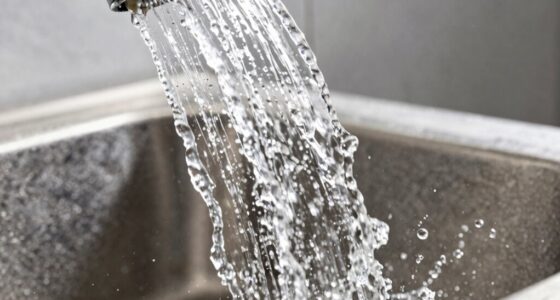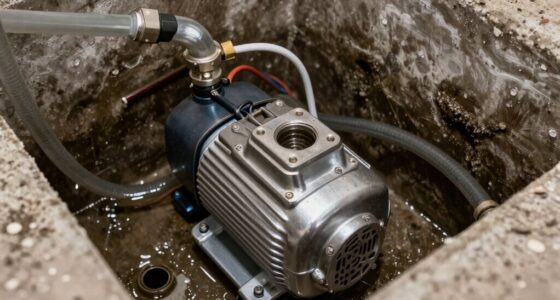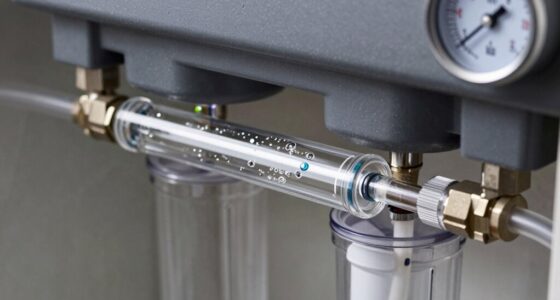
Activated carbon in water filters works by trapping chemicals like chlorine and VOCs that cause bad taste and odors, thanks to its porous structure and large surface area. It adsorbs impurities based on size and chemical properties, improving flavor and safety. While it effectively enhances taste by removing unpleasant chemicals, it also targets contaminants that affect water chemistry. To understand how the pore structure influences both taste and water quality, keep exploring the details.

Prime made for students and young adults
- Fast, free delivery for dorm and study essentials
- Prime Video and Amazon Music included
- Member-only deals
Key Takeaways
- Activated carbon removes chemicals like chlorine and VOCs, improving water taste and odor.
- Its pore size determines which chemical contaminants are adsorbed, affecting flavor and chemical safety.
- Larger pores trap bigger impurities, while smaller pores target microscopic pollutants, balancing taste and chemistry.
- The physical adsorption process enhances water’s chemical balance by reducing harmful substances that cause bad taste.
- Regular filter replacement maintains pore effectiveness, ensuring optimal removal of taste-altering chemicals and contaminants.
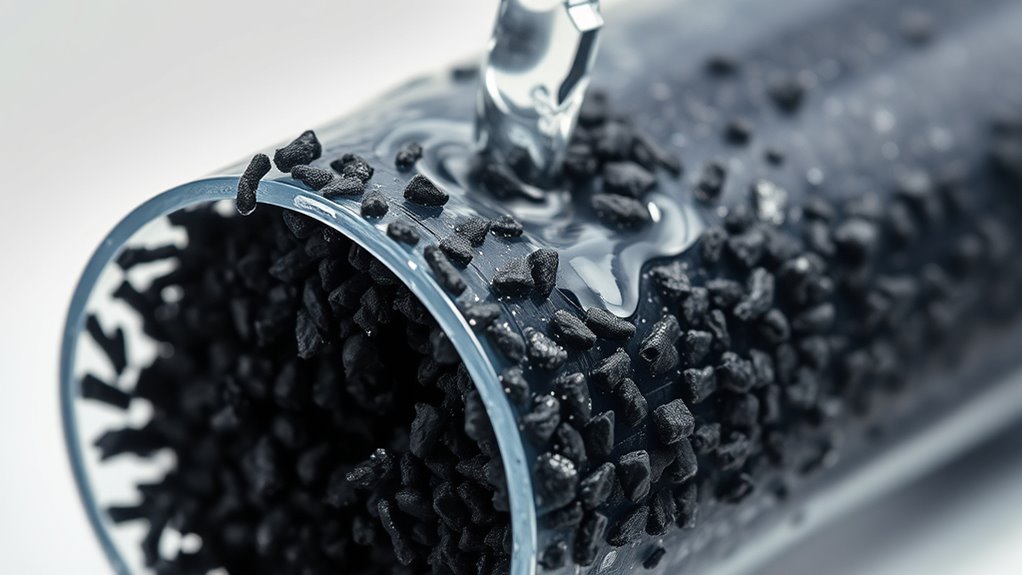
Have you ever wondered how water filters remove common contaminants and improve water quality? It all comes down to the remarkable properties of activated carbon. When water passes through a filter packed with activated carbon, the material’s pore structure plays a crucial role. These tiny pores increase the surface area dramatically, allowing the carbon to trap a wide range of impurities. The pore structure isn’t just about size; it’s also about how well these pores can attract and hold contaminants. A well-developed pore network provides a high adsorption capacity, meaning the activated carbon can capture more pollutants before becoming saturated. This ability makes it incredibly effective at removing chemicals like chlorine, volatile organic compounds (VOCs), and some pesticides, which are often responsible for unpleasant tastes and odors in water.
You might notice that water filtered with activated carbon often tastes better, but that’s just one part of its magic. The taste improvement primarily results from the removal of chlorines and certain organic compounds that cause unpleasant flavors and odors. However, the chemistry behind filtration is more complex. Activated carbon doesn’t just improve taste; it also filters out contaminants that can pose health risks or alter water’s chemical balance. Its adsorption capacity allows it to attract and hold molecules based on their chemical properties, such as polarity and size. This process is driven by physical forces like Van der Waals forces, making it highly effective at trapping molecules that might otherwise pass through a basic filter.
Furthermore, the pore structure is essential because it determines which molecules can be adsorbed. Larger pores are better suited for larger molecules, while smaller pores trap smaller, more insidious contaminants. This specificity enhances the overall effectiveness of activated carbon in purifying water. Over time, as the pores fill with contaminants, the adsorption capacity decreases, which is why filters need regular replacement to keep their performance ideal. When functioning properly, activated carbon in water filters acts as a highly efficient barrier, not only improving flavor but also reducing harmful chemicals, improving water chemistry, and making your water safer to drink.
activated carbon water filter replacement
As an affiliate, we earn on qualifying purchases.
As an affiliate, we earn on qualifying purchases.
Frequently Asked Questions
How Long Does Activated Carbon Last Before Replacement?
You should replace your activated carbon filter every 2 to 6 months, depending on your water usage and quality. The filter lifespan varies with the amount of contaminants it absorbs, so frequent use shortens the replacement frequency. Keep an eye on water flow and taste; when you notice a decline in effectiveness or taste, it’s time for a new filter. Regular replacement ensures superior filtration and water quality.
Can Activated Carbon Remove All Types of Bacteria?
Activated carbon primarily provides bacterial filtration through chemical adsorption, but it can’t remove all types of bacteria. While it can trap some bacteria, it’s not a reliable method for complete sterilization. For thorough bacterial removal, you should use other methods like UV sterilization or reverse osmosis. Activated carbon is excellent at improving taste and reducing chemicals, but it’s not designed to eliminate all bacteria from your water.
Does Activated Carbon Affect Water pH Levels?
Activated carbon can slightly alter water pH levels, often causing minor pH shifts due to adsorption processes. While it mostly works to improve taste by removing impurities, it might lead to pH alteration depending on your water’s initial chemistry. You’ll notice better taste, but if pH balance is critical for you, consider testing your water regularly. Overall, activated carbon provides taste improvement with minimal impact on your water’s acidity or alkalinity.
Is Activated Carbon Safe for Children’s Drinking Water?
Activated carbon is generally safe for children’s drinking water, but you should stay cautious. Studies show that 95% of water filters meet safety standards, yet some activated carbon filters may leach chemicals if not properly maintained. For child safety, choose filters certified for safety and replace them regularly. This helps prevent chemical leaching and guarantees your little ones drink clean, safe water.
How Does Activated Carbon Impact Mineral Content in Water?
Activated carbon primarily removes impurities through adsorption, which can lead to trace mineral removal in your water. It impacts mineral content by retaining essential minerals like calcium and magnesium, but it also removes contaminants. While it generally preserves mineral retention, excessive use may reduce trace minerals important for health. To maintain balanced mineral levels, consider filters with specific mineral retention features or periodically check your water’s mineral content.
best water filters with activated carbon
As an affiliate, we earn on qualifying purchases.
As an affiliate, we earn on qualifying purchases.
Conclusion
So, as you consider activated carbon’s role in your water filter, remember it does more than just improve taste — it interacts with chemistry in unexpected ways. Will your filter truly deliver pure, safe water, or are there hidden factors at play? Stay curious, stay vigilant, because the next sip might surprise you. The truth about activated carbon isn’t just about flavor; it’s about what you can’t see that could make all the difference.
under sink activated carbon water filter
As an affiliate, we earn on qualifying purchases.
As an affiliate, we earn on qualifying purchases.
water filter cartridges for chlorine removal
As an affiliate, we earn on qualifying purchases.
As an affiliate, we earn on qualifying purchases.
Halloween Picks
halloween
As an affiliate, we earn on qualifying purchases.