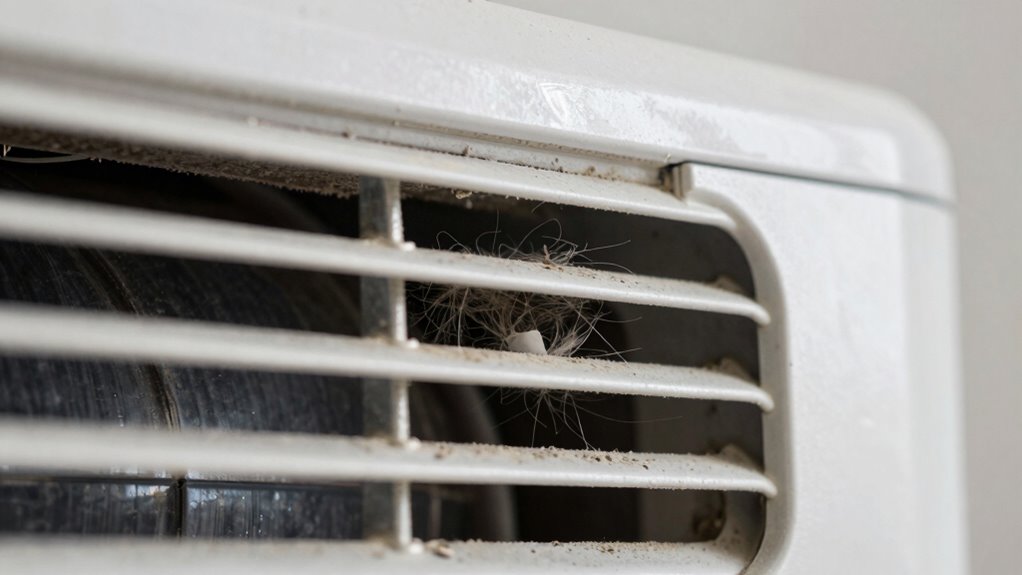

Hidden return-air problems occur when vents are blocked or improperly placed, causing airflow restrictions. This makes your HVAC system work harder to circulate air, leading to uneven heating or cooling, higher energy bills, and faster wear on components. Dirty filters and duct leaks also contribute to these issues. Addressing these problems improves efficiency and comfort. Stay with us to uncover how you can identify and fix these hidden obstacles for better HVAC performance.
Key Takeaways
- Concealed return-air blockages reduce airflow, forcing the HVAC system to operate harder.
- Obstructions like furniture or drapes can inadvertently block return vents, causing performance issues.
- Dirty filters and duct leaks restrict airflow, increasing system workload and energy consumption.
- Poor placement of return vents hampers natural air circulation and airflow efficiency.
- Sealing duct leaks and maintaining filters improve airflow, reducing HVAC strain and enhancing efficiency.
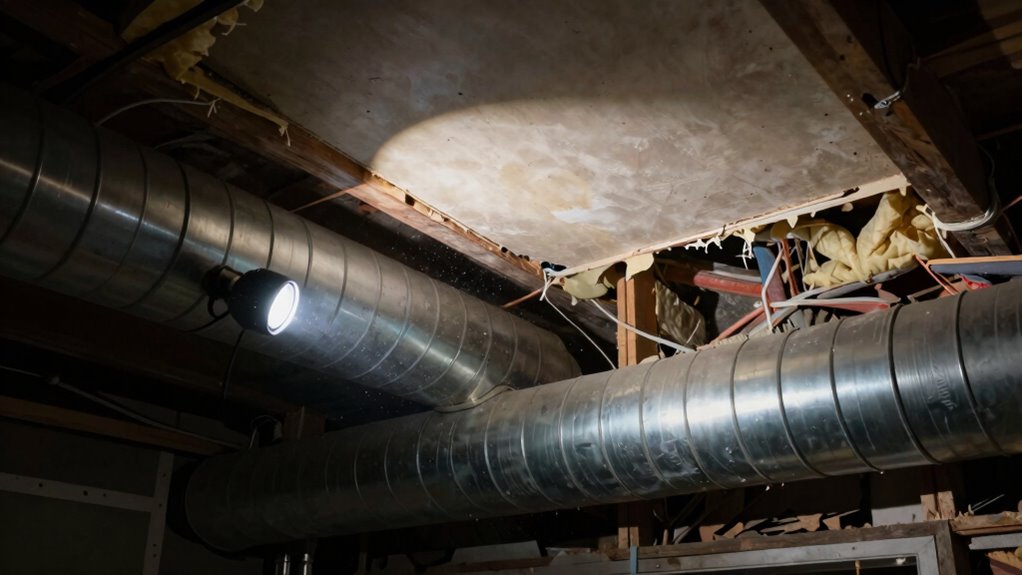
Have you ever wondered why your HVAC system isn’t performing as efficiently as it should? One common culprit is a concealed return-air problem that often flies under the radar but can considerably impact your system’s efficiency. When the return air isn’t flowing smoothly back to the unit, it forces your HVAC to work harder, consuming more energy and potentially shortening its lifespan. The key to fixing this lies in airflow optimization—making sure air moves freely through your system—and paying close attention to filter maintenance, which plays an essential role in maintaining healthy airflow.
Imagine your HVAC system as a cycle: conditioned air is pushed out into your home, and stale air is pulled back in through the return vents. If these return vents are blocked, obstructed, or improperly placed, it creates a vacuum that hampers airflow. This hidden return-air problem can cause uneven heating or cooling, higher energy bills, and increased wear and tear on your system. To prevent this, you need to examine your return pathways carefully. Are your return vents clear of furniture, drapes, or other obstructions? Are they located in areas that allow for natural air circulation? Addressing these issues can notably improve airflow optimization and ensure your HVAC functions at peak efficiency. Additionally, understanding airflow dynamics can help you identify potential problems more effectively.
Blocked or improperly placed return vents can reduce airflow and harm your HVAC system’s efficiency.
Another critical aspect to contemplate is filter maintenance. Your air filter is the first line of defense against dust, debris, and allergens, but it can also become a bottleneck if not replaced regularly. A clogged filter restricts airflow, forcing your system to exert extra effort to circulate air properly. This not only increases energy consumption but also stresses the entire HVAC system. Make it a habit to check your filters monthly—especially during peak usage seasons—and replace them as recommended by the manufacturer. Clean filters help maintain unobstructed airflow and prevent the system from working overtime due to a hidden return-air blockage. Proper filter maintenance also supports indoor air quality, which is vital for health and comfort. Regularly inspecting and maintaining your ductwork for leaks or blockages can further enhance airflow, preventing pressure imbalances that strain your system. Incorporating airflow improvements can significantly boost your system’s efficiency and longevity.
In addition to filter maintenance, inspecting your ductwork for leaks or blockages is essential. Sometimes, a concealed return-air problem stems from leaks in the ducts that divert air away from the return vents or cause pressure imbalances. Sealing leaks and ensuring ducts are properly connected can enhance airflow and reduce unnecessary strain on your HVAC. Regular maintenance and proactive inspections can help uncover these hidden issues before they escalate into costly repairs or inefficient operation. Understanding the importance of biodiversity can lead to more sustainable home practices that support environmental health. Moreover, a well-maintained duct system minimizes energy waste, contributing to your home’s overall sustainability goals.
Ultimately, addressing these concealed return-air problems involves a combination of airflow optimization and diligent filter maintenance. By ensuring your return vents are unobstructed, filters are clean, and ducts are sealed, you allow your HVAC system to operate smoothly and efficiently. This not only improves indoor comfort but also extends the lifespan of your equipment and keeps energy bills in check. Don’t overlook these simple yet crucial steps—they’re the keys to a healthier, more efficient home climate.

Return Air Filter Grille 20×20,Air Return Vent Cover for 20×20 Duct Opening
- Suitable for 20×20 Duct Openings: Outer dimensions 22 5/8" W×22 5/8" H
- Includes Filter Slot: Holds 20x20x1" air filter (not included)
- Durable Steel Construction: Powder-coated for long-lasting use
As an affiliate, we earn on qualifying purchases.
As an affiliate, we earn on qualifying purchases.
Frequently Asked Questions
How Can I Identify if My Home Has a Hidden Return-Air Problem?
You can identify a hidden return-air problem by checking for return air leaks around doors, windows, or vents, which can cause uneven airflow. Also, listen for unusual noises or weak airflow from vents, indicating duct obstructions. Inspect your duct system for visible damage or gaps. If you notice inconsistent heating or cooling, it’s a sign that return air leaks and duct obstructions are making your HVAC work harder than it should.
What Are the Long-Term Effects of Unresolved Return-Air Issues?
You might think unresolved return-air issues only cause short-term discomfort, but they can lead to long-term airflow imbalance and reduced energy efficiency. Over time, your HVAC system strains more, increasing energy bills and risking premature equipment failure. Poor airflow can also cause uneven heating or cooling, affecting your comfort and possibly leading to costly repairs. Tackling return-air problems early guarantees your system runs smoothly and stays efficient for years.
Can Duct Sealing Fix Hidden Return-Air Problems Effectively?
Yes, duct sealing can effectively fix hidden return-air problems caused by duct leakage and airflow imbalance. When you seal leaks, you prevent unconditioned air from escaping, ensuring proper airflow and reducing strain on your HVAC system. This improves efficiency, lowers energy bills, and enhances indoor comfort. By addressing duct leakage, you eliminate airflow imbalance issues, making your system work smarter, not harder, and extending its lifespan.
Are There Specific Signs Homeowners Should Look For?
Yes, homeowners should watch for signs like inconsistent room temperatures, excessive dust, or strange noises from vents, which indicate return air obstructions and airflow imbalance. You might notice your HVAC system running constantly or struggling to maintain comfort. These issues suggest that airflow isn’t flowing properly, often due to hidden duct leaks or blockages. Addressing these signs early can prevent system strain and improve overall efficiency.
Is Professional Inspection Necessary to Detect Hidden Return-Air Problems?
Yes, a professional inspection is necessary to detect hidden return-air problems. They assess your system’s return air efficiency and identify airflow issues that may not be obvious. Proper inspection guarantees your HVAC system operates at peak efficiency, reducing energy bills and extending equipment life. Professionals use specialized tools to find hidden blockages or leaks, helping you optimize airflow and maintain a comfortable, consistent indoor environment.

Amazon Basics 14x20x1 Air Filter, MERV 8 AC Furnace Filters, Allergy Control, Electrostatic, Removes Dust Pollen and Lint, 6-Pack (Actual Size: 13.75" x 19.75" x 0.75")
- Enhanced Air Quality: Captures dust, pollen, and lint
- Improves Furnace Efficiency: Traps particles to protect system
- Durable Construction: Beverage board frame with wire mesh
As an affiliate, we earn on qualifying purchases.
As an affiliate, we earn on qualifying purchases.
Conclusion
If you overlook the subtle signs of the hidden return-air issue, you might find your system constantly working overtime, silently draining your comfort and energy. Addressing this gentle oversight guarantees your HVAC runs smoothly, quietly, and efficiently, preserving both your peace of mind and your budget. Sometimes, it’s the quiet adjustments that make the biggest difference—so stay attentive, and don’t let small problems quietly undermine your comfort. A well-tuned system quietly rewards you in many ways.

Leak Saver AC Leak Sealer Injector Hose | Dual Ball Valve Hose Kit for Injecting HVAC Sealant
- Product Name: Leak Saver AC Leak Sealer Injector Hose
- Kit Type: Dual Ball Valve Hose Kit
- Easy Injection Method: Injects Leak Saver sealants and fluids
As an affiliate, we earn on qualifying purchases.
As an affiliate, we earn on qualifying purchases.

HOXHA Strong Magnetic Vent Covers, 5.5” × 12” Vent Cover Magnetic, Home and RV Vent Magnet Cover for Air Vents Wall Ceiling Floor, 2 Pack
- Strong Magnetism: Anisotropic rubber magnet for good sealing
- Standard Size: 5.5” x 12” fits most vents
- Customizable Fit: Easily cut to any shape
As an affiliate, we earn on qualifying purchases.
As an affiliate, we earn on qualifying purchases.