The main reason for most drain odors is a dry or clogged P-trap, which lets sewer gases escape into your home. To fix this, you should regularly run water down drains, especially unused ones, to keep the trap filled. If you notice smells, check for blockages or leaks in the trap. Ensuring proper ventilation and clearing vent pipes helps too. Keep exploring to learn more about how these simple steps can solve stubborn odors.
Key Takeaways
- Ensure all drains have water in the P-trap to block sewer gases.
- Regularly run water through infrequently used drains to prevent drying out traps.
- Inspect and replace damaged or old P-traps to maintain an effective seal.
- Clear any debris or blockages in vent pipes to prevent pressure buildup and odors.
- Avoid chemical cleaners that can damage traps; use natural solutions like baking soda and vinegar instead.
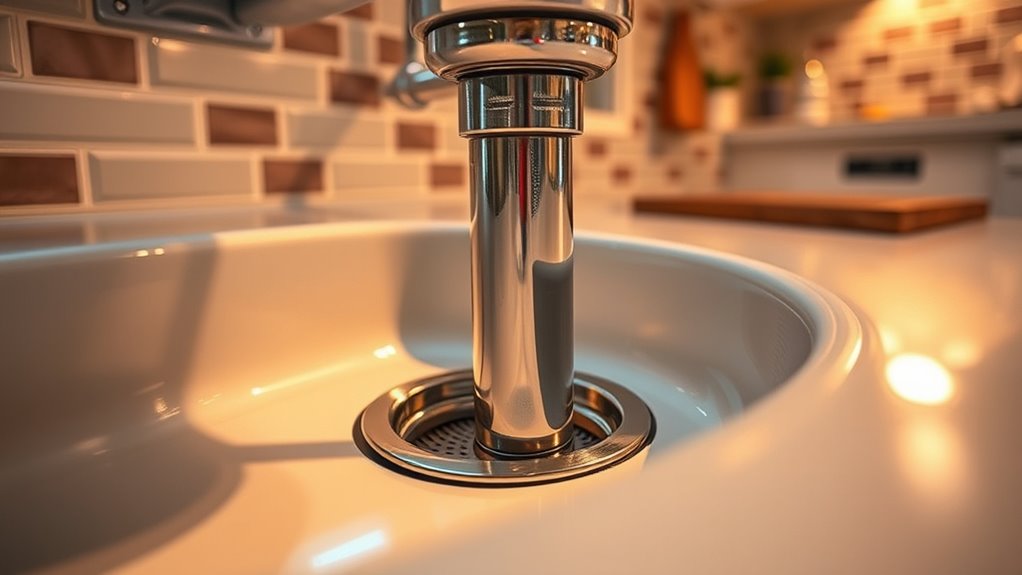
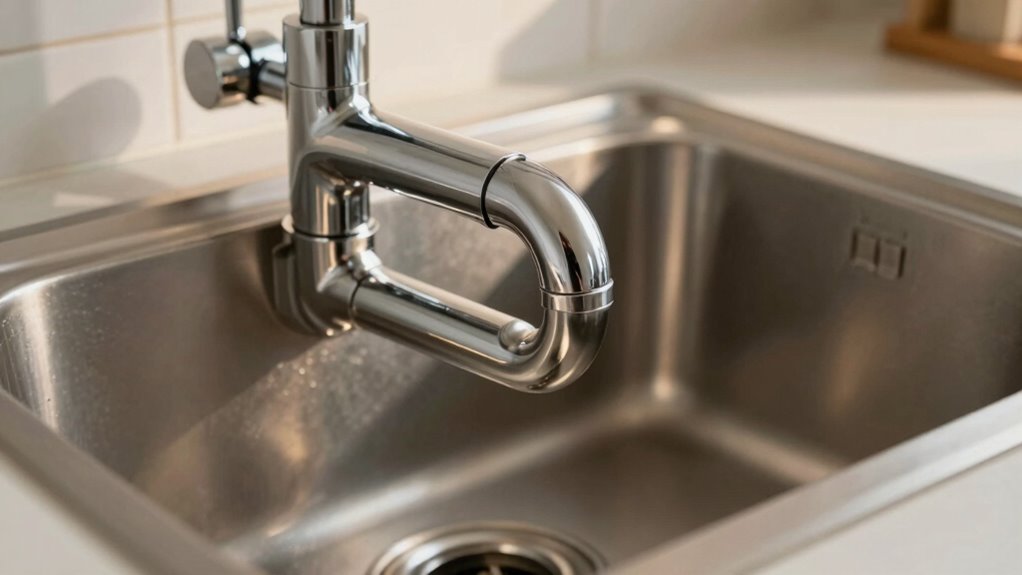
Have you ever noticed a foul smell emanating from your drains? It’s a common frustration that can stem from a variety of issues, but often, the culprit is something as simple as a drain’s trap. The P-trap, a curved pipe beneath your sink, holds water to block sewer gases from escaping into your home. If this trap dries out or becomes clogged, odors can seep through, creating that unpleasant smell you want gone. Fixing this is usually straightforward, but understanding the root cause can save you time and money.
One of the main reasons odors persist is ventilation issues in your plumbing system. Proper ventilation ensures that sewer gases vent out safely, preventing pressure buildup that can cause smells to escape through drains. When the vent pipe gets blocked or clogged—perhaps by debris, bird nests, or snow—airflow is restricted. This disruption allows gases to find the easiest escape route, often through the P-trap or drain openings. If you notice persistent odors, check your roof vent for blockages, or call a professional to inspect the vent system. Addressing ventilation problems is vital because even a perfectly functioning P-trap can’t do its job if the system isn’t properly vented.
Ventilation issues can cause sewer odors; check your roof vent for blockages to keep your drains fresh.
Many homeowners rely on chemical cleaners to tackle drain issues, but these can sometimes do more harm than good. Chemical cleaners may temporarily clear clogs, but they can also damage the piping or degrade the rubber seals inside the P-trap over time. When these seals weaken, leaks and odors can develop. Additionally, strong chemicals can kill beneficial bacteria in your plumbing that help break down organic matter, leading to more stubborn smells. Instead of relying solely on chemical cleaners, consider using natural solutions like baking soda and vinegar, or schedule regular professional drain cleanings. These methods are gentler on your plumbing and often more effective at preventing odors from developing in the first place.
Maintaining your P-trap is essential for odor control. Make sure it’s always filled with water, especially if you have drains that aren’t used frequently. Running water down infrequently used drains keeps the trap sealed and prevents gases from escaping. If odors persist despite these measures, double-check for ventilation issues or consider replacing old or damaged P-traps. Regular inspections and proper maintenance of your plumbing system can prevent many odor problems before they start. Remember, a well-maintained drain system with proper ventilation and cautious use of cleaners can keep your home smelling fresh and free of sewer odors. Taking these simple steps can make a noticeable difference and save you from the discomfort of persistent drain smells.
Frequently Asked Questions
How Often Should I Clean My P-Trap?
You should clean your P trap every six months to prevent buildup. Signs of P trap buildup include foul odors, slow draining, or gurgling sounds. Regular P trap cleaning frequency helps maintain proper drainage and prevents unpleasant smells. If you notice any of these signs sooner, it’s a good idea to clear your P trap right away. Keeping up with routine maintenance ensures your plumbing stays fresh and odor-free.
Can a Clogged Vent Cause Drain Odors?
Yes, a clogged vent can cause drain odors. When vent blockages occur, they prevent proper airflow, leading to pressure imbalances in your plumbing system. This can cause odors to migrate from the drain, making your space smell unpleasant. To fix this, you should inspect and clear any vent blockages, ensuring proper ventilation. Regular maintenance of your vents helps prevent odor migration and keeps your drains smelling fresh.
What Household Products Eliminate Drain Smells?
Did you know that natural remedies can eliminate up to 80% of household odors? You can try enzyme cleaners, which break down organic buildup causing smells, or pour a mixture of baking soda and vinegar down your drain. These options are eco-friendly and effective at neutralizing odors. Regular use of enzyme cleaners keeps your drains fresh and odor-free, making your home more pleasant without harsh chemicals.
Is It Safe to Use Chemical Drain Cleaners?
Using chemical drain cleaners can be risky if you don’t follow safety instructions, as they pose hazards like chemical burns or fumes. Always prioritize chemical safety by wearing gloves and eye protection. Instead of harsh chemicals, consider natural remedies like baking soda and vinegar, which are safer and effective. These options help eliminate smells without the dangers associated with chemical cleaners, making your drain maintenance safer for you and your household.
When Should I Call a Professional Plumber?
You should call a professional plumber when you notice persistent odors despite cleaning, or if plumbing inspection reveals issues like damaged traps or leaks. If troubleshooting odors doesn’t resolve the smell, a plumber can identify underlying problems such as vent blockages or pipe damage. Their expertise guarantees proper diagnosis and repair, preventing further damage and ensuring your drainage system functions correctly. Don’t hesitate to seek professional help for persistent plumbing or odor issues.
Conclusion
Now that you know how a P-trap prevents those pesky drain odors, are you ready to take control of your home’s air quality? By ensuring your P-trap is working properly, you can keep unwanted smells at bay and enjoy a fresher, more comfortable space. Don’t wait for the odors to become unbearable—regular maintenance is your best defense. After all, isn’t a fresh-smelling home worth the little effort it takes to keep those smells out?