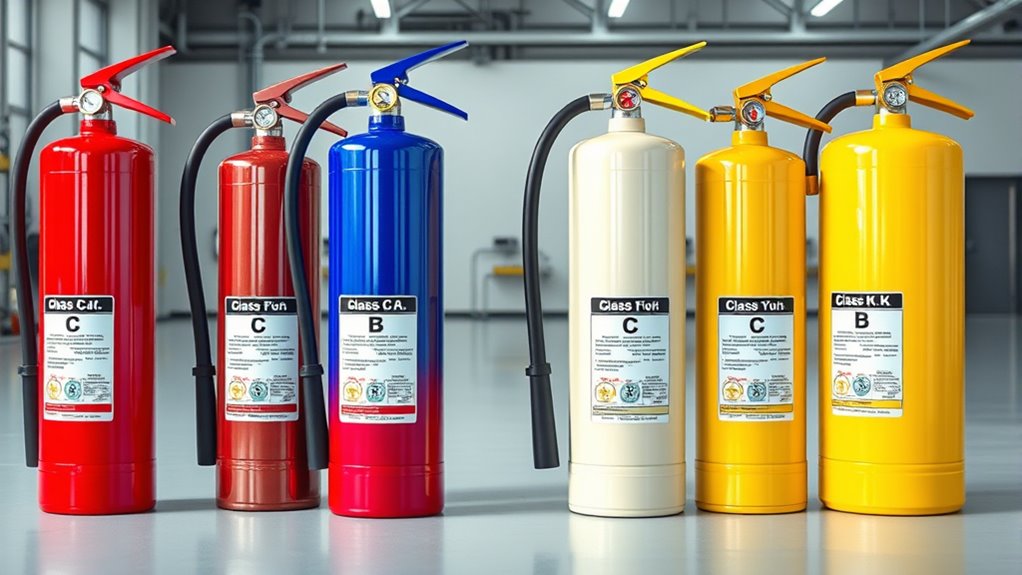
To understand fire extinguisher classes A, B, C, and K clearly, remember that class A is for ordinary combustibles like wood and paper, while B handles flammable liquids like gasoline and oil. Class C is for electrical fires, and K is for kitchen fires involving oils and fats. Using the correct class prevents ineffective responses and safety hazards. If you want to know more about how each class works and when to use them, you’ll find helpful details below.
Key Takeaways
- Clearly label each extinguisher with its specific class(es) to avoid confusion during emergencies.
- Use color-coded tags or markings to differentiate between Class A, B, C, and K extinguishers.
- Provide training on identifying and selecting the correct extinguisher for each fire type.
- Understand that some extinguishers are multi-class, suitable for multiple fire types, to simplify choices.
- Regularly review and maintain extinguishers to ensure proper function and correct classification visibility.
Have you ever wondered what you should do if a fire breaks out in your home or workplace? Knowing how to respond quickly is crucial, but equally important is understanding how to keep your fire safety tools in top condition. Fire extinguisher maintenance is key to ensuring your portable fire safety devices work effectively when you need them most. Regularly checking your fire extinguishers isn’t just about compliance; it’s about preparedness. Make sure the pressure gauge is in the operable range, the nozzle is clear, and the pin and tamper seal are intact. A well-maintained extinguisher can be the difference between controlling a small fire and facing a full-blown disaster.
When it comes to portable fire safety, knowing the classes of fire extinguishers can save valuable time and prevent confusion during an emergency. Each class targets specific types of fires, so understanding which extinguisher to use can make a critical difference. For example, Class A extinguishers are designed for ordinary combustibles like wood, paper, and cloth. Their primary function is to cool the fire and eliminate the source of heat. Class B extinguishers are suitable for flammable liquids such as gasoline, oil, and paint. They work by smothering the fire, cutting off the oxygen supply. Class C extinguishers are meant for electrical fires, including those involving appliances, wiring, and circuit breakers. They contain non-conductive agents that prevent electrical shock hazards during firefighting efforts. Meanwhile, Class K extinguishers are specialized for kitchen fires involving cooking oils and fats, often found in commercial kitchens or homes with deep fryers.
Knowing these classes helps you make quick, confident decisions during an emergency. It’s always better to have the correct extinguisher nearby than to try using the wrong one, which can be ineffective or even dangerous. Regular fire extinguisher maintenance ensures these devices are ready to perform when needed, reducing the risk of failure during a critical moment. Keep an eye on expiration dates, inspect for physical damage, and ensure the pressure is adequate. Proper fire safety equipment maintenance can extend the lifespan of your extinguishers and ensure their reliability. Training yourself and others to recognize fire classes and operate extinguishers properly is crucial, especially in high-risk environments. Remember, portable fire safety isn’t just about having extinguishers on hand; it’s about knowing how to use them correctly and maintaining their readiness.

Kidde, FA110G, Multi Purpose Fire Extinguisher for Home, Office, Dorm, Residential, 1A10BC
Reliable Fire Protection: Stop basic home fires involving trash, wood, paper, liquids, gases, and electrical equipment
As an affiliate, we earn on qualifying purchases.
As an affiliate, we earn on qualifying purchases.
Frequently Asked Questions
How Often Should Fire Extinguishers Be Inspected and Maintained?
You should inspect your fire extinguishers monthly to guarantee they are in good condition. Regular inspections help identify any damage or pressure issues early. Maintenance procedures include checking the pressure gauge, ensuring the pin and tamper seal are intact, and verifying accessibility. Professional maintenance is recommended annually or after any use. Staying consistent with inspection frequency and following proper maintenance procedures guarantees your fire extinguishers work effectively when needed most.
Can a Fire Extinguisher Be Used on Multiple Fire Classes?
Yes, some fire extinguishers offer multi-class compatibility, enhancing their versatility. These multi-class fire extinguishers can safely and effectively tackle different fire classes, such as A, B, and C, making them ideal for diverse fire risks. You should always check the label to confirm fire extinguisher versatility and verify it’s suitable for the specific fire class you’re dealing with. Never use an incompatible extinguisher on a fire, as it could be unsafe.
What Is the Lifespan of a Typical Fire Extinguisher?
You might find it surprising, but the typical fire extinguisher lifespan is about 5 to 15 years. Regular maintenance, following a strict schedule, guarantees it stays effective. Keep an eye on the pressure gauge and expiration date, as neglecting these can compromise safety. Proper maintenance is key, so schedule inspections annually or as recommended by the manufacturer, to keep your extinguisher ready whenever you need it.
Are There Portable Fire Extinguishers Suitable for Outdoor Use?
Yes, there are portable fire extinguishers suitable for outdoor use. When considering outdoor fire safety, look for models with rugged construction and weather-resistant features. Portable extinguisher selection should include those with durable casings, corrosion resistance, and appropriate size for easy handling in outdoor emergencies. Always verify your extinguisher is rated for the specific fire classes you might encounter outdoors, like Class A or B fires.
How Do I Properly Dispose of an Expired Fire Extinguisher?
Did you know that nearly 80% of fire extinguishers end up in landfills unnecessarily? To properly dispose of an expired fire extinguisher, follow the recommended disposal procedures, which often include contacting your local waste management or fire department. Recycling options are available for metal parts, so don’t just toss it. Make sure to vent or discharge remaining contents safely before recycling or disposal, ensuring environmental safety.

Ougist class K fire extinguisher, 40 fl oz Wet Chemical, Quick-Pull Handle, kitchen fire extinguisher for Grease Fires, built for daily peace of mind
PREPARE FOR THE UNEXPECTED: With an average of 158,000 to 178,000 cooking-related fires yearly in the US, preparation…
As an affiliate, we earn on qualifying purchases.
As an affiliate, we earn on qualifying purchases.
Conclusion
Now that you know the different fire extinguisher classes—A, B, C, and K—you’re prepared to respond confidently. While each class targets specific fires, their purpose is the same: safety. The confusion ends here, replaced by clarity and action. You understand the distinctions, the uses, and the importance of choosing the right extinguisher. Fire safety isn’t complicated when you know your classes, and with this knowledge, you can act swiftly, confidently, and effectively when it matters most.

Upgraded 8-IN-1 Fire Extinguisher for Home Vehicle Car Kitchen Boat, Small Fire Extinguishers Spray with Mount for Class A B C K Fire, Portable Non-Toxic Prevent Re-Ignition Easy Clean (2 Pack)
Multipurpose Usage: Ostutry fire extinguisher is suitable for A B C K fires, including solid materials, flammable liquids,…
As an affiliate, we earn on qualifying purchases.
As an affiliate, we earn on qualifying purchases.

Chunful Fire Extinguisher Inspection Tags Set Including 2025-2028 Maintenance Plastic Tamper Seals Fire Extinguisher Pull Pins Numbered Security Tags with Handheld Hole Puncher(151 Pieces)
Large Quantity: the package consists of 50 fire extinguisher tags, 50 disposable tamper seals, 50 fire extinguisher pins…
As an affiliate, we earn on qualifying purchases.
As an affiliate, we earn on qualifying purchases.