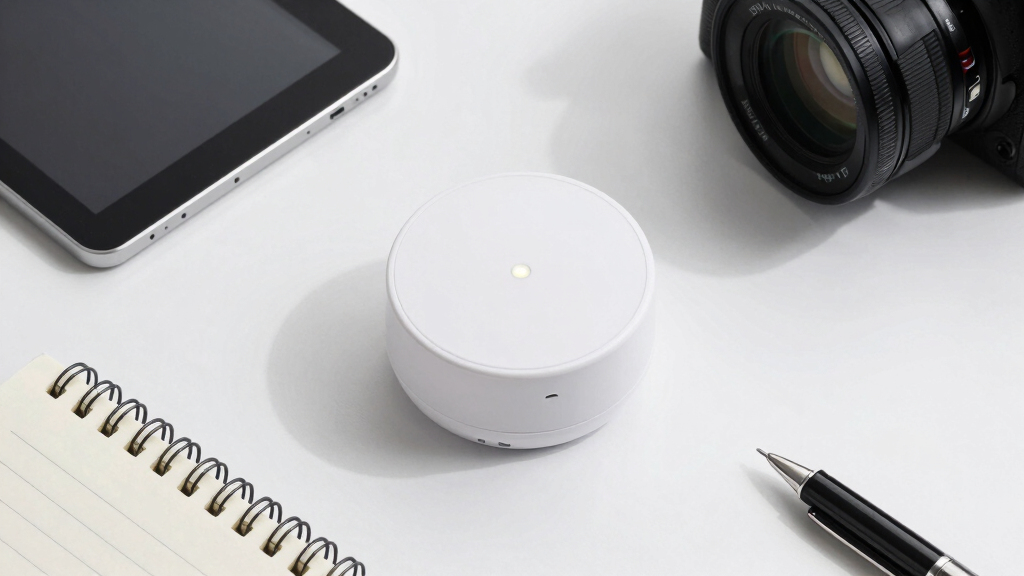

Choosing the best smart humidity sensor depends heavily on your specific needs—whether you want remote WiFi access, long-range monitoring, or seamless home automation integration. The GoveeLife 2.0 WiFi Hygrometer stands out for precise readings and remote access via app, but it’s limited to indoor WiFi networks. The YoLink Sensor Pack offers impressive long-range capabilities, making it ideal for larger or outdoor spaces, but requires a hub and isn’t suited for outdoor environments. Meanwhile, the Tapo T310 provides real-time data with a sleek display, perfect for users invested in the Tapo ecosystem, though it needs a separate hub. This guide compares these options to help you choose based on connectivity, range, automation, and ease of use.

Get school and study supplies delivered free — and shop member deals
- Fast, free delivery on millions of items
- Access to Prime Big Deal Days deals on October 6–7
- Prime Video, Amazon Music and more included
Key Takeaways
- WiFi sensors like the GoveeLife 2.0 excel for remote monitoring within indoor environments.
- LoRa-based options such as YoLink provide exceptional range, suitable for large spaces or outdoor use.
- Sensors requiring hubs, like Tapo models, integrate well with smart home systems but add setup complexity.
- Bluetooth sensors are best for nearby, portable monitoring but lack remote access outside their range.
- Battery life varies, with most high-accuracy sensors offering over a year of operation, reducing maintenance.
| GoveeLife 2.0 WiFi Hygrometer Thermometer with Gateway (3-Pack) | 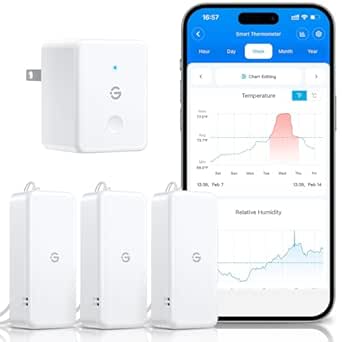 | Best Overall for Precise Indoor Monitoring | Connectivity: WiFi (2.4GHz only) | Battery Life: 2 years | Accuracy: ±0.54°F / ±0.3℃ for temperature, ±3% RH for humidity | VIEW LATEST PRICE | See Our Full Breakdown |
| Govee Indoor Hygrometer Thermometer H5075 with Bluetooth App Control |  | Best for Bluetooth Range and User-Friendly Display | Connectivity: Bluetooth | Battery Description: Alkaline | Operating Humidity: 10-90% RH | VIEW LATEST PRICE | See Our Full Breakdown |
| Tapo Smart Temperature and Humidity Sensor, Requires Tapo Hub, T310 | 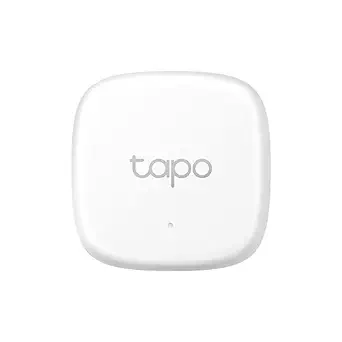 | Best for Tapo Ecosystem Integration | Requires Tapo Hub: H100 (sold separately) | Connectivity: Sub-1G Low-Power Wireless | Sensor Accuracy: ±0.54°F, ±3% RH | VIEW LATEST PRICE | See Our Full Breakdown |
| Tapo Smart Temperature and Humidity Monitor T315 |  | Best for Visual Data at a Glance | Display: 2.7-inch E-ink | Sensor Accuracy: ±0.54°F, ±3% RH | Battery: 2 AAA batteries (included) | VIEW LATEST PRICE | See Our Full Breakdown |
| YoLink Smart Temp & Humidity Sensor 2 Pack with Hub |  | Best for Long-Range Indoor Monitoring | Connectivity: LoRa | Range: Up to 1/4 mile in open air | Battery Life: Up to 2 years | VIEW LATEST PRICE | See Our Full Breakdown |
| smart humidity sensor | Connectivity | Battery Life |
|---|---|---|
| GoveeLife 2.0 WiFi Hygrometer | WiFi (2.4GHz only) | 2 years |
| Govee Indoor Hygrometer Thermo | Bluetooth | — |
| Tapo Smart Temperature and Hum | Sub-1G Low-Power Wireless | Over 1 year |
| Tapo Smart Temperature and Hum | Requires Tapo Hub H100 and 2.4 GHz Wi-Fi | Up to 2 years |
| YoLink Smart Temp & Humidity S | LoRa | Up to 2 years |
More Details on Our Top Picks
GoveeLife 2.0 WiFi Hygrometer Thermometer with Gateway (3-Pack)
This set of three compact WiFi hygrometers provides highly accurate temperature and humidity readings, making them ideal for sensitive environments like wine cellars or greenhouses. What sets this apart is its ability to connect directly via WiFi to an app, enabling remote monitoring, notifications, and trend analysis. Compared to Bluetooth-only options, it offers real-time data with less range limitation, though it only works on 2.4GHz WiFi networks and requires specific gateways. For users who need precise indoor monitoring with historical data, this model offers excellent value despite its limited outdoor applicability.
Pros:- High-precision temperature and humidity measurements
- Remote monitoring with app notifications and email alerts
- Data trend analysis and export capabilities
Cons:- Supports only 2.4GHz WiFi networks
- Requires specific gateways (H5151/H5042)
- Limited to indoor use
Best for: Indoor environments requiring precise, remote monitoring
Not ideal for: Large outdoor areas or spaces without WiFi support
- Connectivity:WiFi (2.4GHz only)
- Battery Life:2 years
- Accuracy:±0.54°F / ±0.3℃ for temperature, ±3% RH for humidity
- Data Refresh Rate:Every 2 seconds
- Supported Gateways:H5151/H5042
- Data Storage Duration:Up to 2 years
Our verdict“This sensor is the best choice for indoor users prioritizing accuracy and remote data access.”
Govee Indoor Hygrometer Thermometer H5075 with Bluetooth App Control
The Govee H5075 offers reliable, high-accuracy temperature and humidity readings within a Bluetooth range of 164 feet. Its bright LCD display makes it easy to read at a glance, and the app provides smart alerts, max/min data, and export options for long-term tracking. This makes it perfect for users who want local, portable monitoring in a defined space. However, its limited Bluetooth range means it can’t be accessed remotely outside that zone, and it requires a Bluetooth connection to use smart features. Compared to WiFi models, it’s more straightforward but less flexible for remote monitoring.
Pros:- Supports remote monitoring within 164 feet via Bluetooth
- High accuracy temperature and humidity readings
- Bright LCD display with clear readings and max/min records
- Smart alerts and data export for long-term tracking
Cons:- Limited Bluetooth range restricts remote access
- Requires Bluetooth connection for smart features
- No Wi-Fi support for outside monitoring
Best for: Local, portable monitoring within a home or small space
Not ideal for: Remote or outdoor monitoring beyond Bluetooth range
- Connectivity:Bluetooth
- Battery Description:Alkaline
- Operating Humidity:10-90% RH
- Temperature Range:Up to 140°F
- Dimensions:2.5″W x 3.1″H
- Color:Black
Our verdict“This pick is ideal for users who prioritize local, easy-to-read data and don’t need remote WiFi access.”
Tapo Smart Temperature and Humidity Sensor, Requires Tapo Hub, T310
The Tapo T310 delivers accurate, real-time temperature and humidity data with updates every 2 seconds, making it suitable for home automation setups. Its compatibility with the Tapo hub (sold separately) allows seamless integration into existing smart home systems, giving users automation triggers based on environmental conditions. The sensor’s accuracy is comparable to other high-end options, and its long battery life over a year reduces maintenance concerns. The main tradeoff is that it requires a Tapo hub and supports only 2.4GHz WiFi, limiting flexibility for non-Tapo users. It’s best suited for those already invested in the Tapo ecosystem or looking to automate environmental controls.
Pros:- High accuracy with real-time updates
- Supports home automation with Tapo devices
- Long battery life over 1 year
- Free data storage for 2 years
Cons:- Requires Tapo Hub (sold separately)
- Limited to 2.4 GHz WiFi networks
- Battery life may vary depending on usage
Best for: Home automation enthusiasts with Tapo ecosystem
Not ideal for: Users without Tapo hub or outside the Tapo system
- Requires Tapo Hub:H100 (sold separately)
- Connectivity:Sub-1G Low-Power Wireless
- Sensor Accuracy:±0.54°F, ±3% RH
- Battery:CR2450 (included)
- Battery Life:Over 1 year
- Data Storage:2 years of free export
Our verdict“This sensor suits users wanting integration into Tapo or smart automation enthusiasts willing to invest in the ecosystem.”
Tapo Smart Temperature and Humidity Monitor T315
The Tapo T315 combines real-time data with a clear, glare-free 2.7-inch E-ink display, offering a straightforward way to monitor conditions at home. It’s designed for users who want long-lasting battery life—up to two years—and visual summaries of their environment. Like the Tapo T310, it needs a hub and Wi-Fi, but its visual display makes it easier to check data without opening an app. Its main limitation is the need for a hub and compatibility solely within the Tapo ecosystem, making it less flexible if you use other smart home systems. It’s ideal for users seeking a dedicated display alongside automation options.
Pros:- High accuracy with real-time updates
- Long battery life of up to 2 years
- Clear, glare-free E-ink display
- Free data storage and visual summaries
Cons:- Requires Tapo hub and Wi-Fi
- Limited to Tapo ecosystem
- Dependent on separate hub for operation
Best for: Users valuing visual summaries and long battery life
Not ideal for: Non-Tapo smart home users or outdoor environments
- Display:2.7-inch E-ink
- Sensor Accuracy:±0.54°F, ±3% RH
- Battery:2 AAA batteries (included)
- Battery Life:Up to 2 years
- Connectivity:Requires Tapo Hub H100 and 2.4 GHz Wi-Fi
- Data Storage:2 years of data export
Our verdict“This model is excellent for users who prefer a visual display combined with long-term reliability within the Tapo system.”
YoLink Smart Temp & Humidity Sensor 2 Pack with Hub
The YoLink pack introduces two LoRa-based sensors that excel in large spaces, providing coverage of up to a quarter mile outdoors or in open air environments. Their long battery life of over 2 years and low-power operation make them suitable for wine cellars, greenhouses, or large indoor spaces. The sensors support alerts via app, email, and SMS, broadening their usability. The main limitation is their indoor-only focus and reliance on a hub, which adds extra setup complexity. Compared to WiFi and Bluetooth options, YoLink’s long-range capabilities make it a compelling choice for expansive or hard-to-reach areas.
Pros:- Long-range, low-power sensors for large spaces
- Up to 2 years of battery life
- Multiple alert options including SMS, email, and app
- Easy setup with QR code and hub connection
Cons:- Not designed for outdoor use
- Requires hub for operation
- Limited to indoor environments
Best for: Large indoor spaces or environments requiring outdoor-like range
Not ideal for: Outdoor use or environments outside of LoRa network coverage
- Connectivity:LoRa
- Range:Up to 1/4 mile in open air
- Battery Life:Up to 2 years
- Sensor Type:Temperature & Humidity
- Included:2 sensors + 1 hub
- Compatibility:Alexa (temperature only), IFTTT
Our verdict“This set is best for large or complex indoor environments where traditional WiFi or Bluetooth sensors fall short.”

How We Picked
To select the best smart humidity sensors, I prioritized accuracy, connectivity options, ease of use, and versatility. I looked for sensors that support different environments—indoor, outdoor, large spaces—and those that offer automation features or data export capabilities. I compared the devices based on their technical specs, user reviews, and compatibility with existing smart home setups. Special attention was given to battery life, data storage, and how intuitive the setup process is. The goal was to identify sensors that balance precision, convenience, and value for various use cases.
| smart humidity sensor | Connectivity |
|---|---|
| GoveeLife 2.0 WiFi Hygrometer | WiFi (2.4GHz only) |
| Govee Indoor Hygrometer Thermo | Bluetooth |
| Tapo Smart Temperature and Hum | Sub-1G Low-Power Wireless |
| Tapo Smart Temperature and Hum | Requires Tapo Hub H100 and 2.4 GHz Wi-Fi |
| YoLink Smart Temp & Humidity S | LoRa |
Factors to Consider When Choosing Best Smart Humidity Sensor
Selecting the right smart humidity sensor involves understanding your environment, the required connectivity, and desired automation features. Whether you prioritize remote WiFi access, long-range coverage, or integration into a smart home ecosystem, different options cater to different needs. Carefully consider placement, compatibility, and data management to find a sensor that fits seamlessly into your space and lifestyle.Connectivity Options
WiFi sensors like the GoveeLife 2.0 provide effortless remote access but are limited to indoor environments with stable WiFi networks. Bluetooth sensors such as the Govee H5075 are excellent for nearby, portable monitoring but lack remote capabilities. LoRa-based sensors like YoLink excel in large areas or outdoor conditions, offering long-range coverage at the cost of added setup complexity with hubs. Consider your environment and whether you need constant remote access or localized monitoring when choosing your sensor.
Accuracy and Data Features
High-precision sensors with ±0.54°F and ±3% RH accuracy are standard among this list, ensuring reliable readings. Data export, trend analysis, and alerts enhance long-term tracking, especially important in sensitive environments like wine cellars or greenhouses. Think about whether you need real-time updates, historical data, or visual displays, as these features influence your choice significantly.
Ease of Integration and Use
Devices supporting home automation or ecosystem integration, like the Tapo sensors, are ideal for users looking to automate climate controls. However, they require additional hubs and ecosystem commitments. Simpler, hub-free options like the Govee WiFi model offer straightforward setup and immediate remote access but might lack advanced automation. Match your technical comfort level and existing smart home setup with the sensor’s compatibility.
Frequently Asked Questions
Can these sensors be used outdoors?
Most of the sensors reviewed are designed for indoor use, with the YoLink sensors being a notable exception due to their long-range capabilities, though they still are intended for indoor environments or sheltered outdoor areas. Always check the manufacturer’s specifications to confirm outdoor suitability, as exposure to weather can damage indoor-only sensors.
How often do these sensors update their data?
Most high-precision sensors, including the Govee models and Tapo T310, update data every 2 seconds, providing near real-time monitoring. Bluetooth sensors like the H5075 refresh less frequently and only within their local range, which can limit immediate responsiveness. Choose a sensor based on how real-time you need your data to be.
Do I need a hub for these sensors?
Some sensors, like the Tapo models and YoLink, require a hub to operate and connect to your smart home system, adding a layer of setup complexity. Others, such as the Govee WiFi sensor, connect directly to your WiFi network without a hub. Consider whether you want a plug-and-play solution or are comfortable managing additional components.
How long do these sensors typically last on a single battery?
Battery life generally exceeds one year for most high-quality sensors, with some like the YoLink and Tapo T315 reaching up to two years. Battery longevity depends on usage frequency, data refresh rate, and environmental conditions, so choosing a model with longer battery life reduces maintenance frequency.
Are these sensors compatible with smart home systems?
Compatibility varies: sensors like the Tapo models integrate with the Tapo ecosystem and support automation, while the YoLink sensors work with Alexa and IFTTT. Bluetooth models require app control within their range and generally don’t support broader smart home integrations. Confirm your existing setup and future automation plans when selecting a model.
Conclusion
For users primarily focused on indoor, remote monitoring with high accuracy, the GoveeLife 2.0 WiFi Hygrometer offers a reliable, straightforward solution. Those with larger spaces or outdoor environments will benefit more from the YoLink LoRa sensors, which deliver extensive range but require extra setup. If you’re a smart home enthusiast invested in the Tapo ecosystem, the Tapo T310 or Tapo T315 provide seamless automation and visual data, though they demand a hub. Bluetooth users or those seeking a simple, local device should consider the Govee H5075. Your choice hinges on your environment, automation needs, and preference for connectivity type.
Fall Picks
fall essentials
As an affiliate, we earn on qualifying purchases.