Military history board games range from quick, accessible battles to sprawling campaigns that reward long sessions and careful planning. My best overall pick is Memoir ’44 for its clear World War II scenarios and approachable tactical play; Undaunted: Stalingrad stands out for a more personal campaign, while Combat Commander: Europe suits players who want detailed tactical decisions. The main tradeoff is between ease of learning and historical or operational depth, with solo play, session length, and table space also shaping the choice. This roundup compares all 14 games by the experience they offer and the players they fit. Read on for the full breakdown and help matching a game to your group.

Prime made for students and young adults
- Fast, free delivery for dorm and study essentials
- Prime Video and Amazon Music included
- Member-only deals
Key Takeaways
- Memoir ’44 is the strongest all-around entry point in this lineup: its scenario-based battles offer historical flavor without the rules burden of a detailed tactical system.
- Undaunted: Stalingrad and Combat Commander: Europe serve different tactical tastes. The former builds a continuing campaign around its battles; the latter puts more emphasis on granular, scenario-based combat decisions.
- Large-scale scope comes with a substantial commitment. A World at War covers Europe and the Pacific, while Blitzkrieg! Combined Edition and Axis & Allies 1942 ask players to think across broader fronts than a focused battle game.
- Solo play changes the shortlist. The Hunters and Pacific War 1942 are designed around solo play, making them more suitable for a player without a regular opponent than most head-to-head options here.
- Historical theme does not always mean a complex wargame. U.S. Army Opoly offers a military-themed family-game format, while Washington’s War and Battalion: War of the Ancients shift the focus to conflicts outside the World War II-heavy portion of this roundup.
| The Hunters: German U-Boats at War, 1939–43 |  | Best Solo Historical Campaign | Game type: Solitaire tactical wargame | Players: 1 | Estimated playing time: 180 minutes | VIEW LATEST PRICE | See Our Full Breakdown |
| Rommel’s War Board Game |  | Best for a Focused Two-Player Campaign | Players: 2 | Playing time: 1 hour or less | Recommended age: 15 years and up | VIEW LATEST PRICE | See Our Full Breakdown |
| Blitzkrieg! Combined Edition Board Game |  | Best for Fast Historical Strategy | Players: 1–2 | Playing time: About 20 minutes | Recommended age: 14 years and up | VIEW LATEST PRICE | See Our Full Breakdown |
| Memoir ’44 World War II Strategy Board Game | 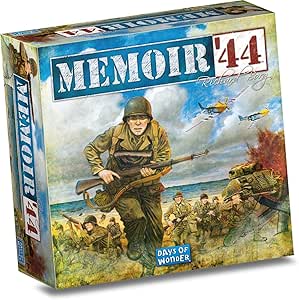 | Best for Accessible Scenario Battles | Players: Primarily two-player sessions; title lists 2–8 | Playtime: 30–60 minutes | Age guidance: 8 years and up | VIEW LATEST PRICE | See Our Full Breakdown |
| A World at War: Second World War in Europe and the Pacific |  | Best for Grand-Strategy Scope | Players: 1–8; listed as best with 4 | Playing time: About 6 hours | Recommended age: 14–15 years | VIEW LATEST PRICE | See Our Full Breakdown |
| Axis & Allies 1942 Second Edition Board Game |  | Best for Global WWII Strategy | Players: 2–5 | Playing time: Approximately 3–4 hours | Recommended age: 12 years and up | VIEW LATEST PRICE | See Our Full Breakdown |
| Osprey Games Battalion: War of the Ancients |  | Best for a Short Ancient-Warfare Match | Players: 2–4 | Estimated playing time: 30 minutes | Recommended age: 14 years and up | VIEW LATEST PRICE | See Our Full Breakdown |
| GMT Games Washington’s War: The American Revolution |  | Best for American Revolution Strategy | Players: 1–2 | Estimated playing time: 90 minutes | Recommended age: 12 years and up | VIEW LATEST PRICE | See Our Full Breakdown |
| Combat Commander: Europe WWII Tactical Wargame (Reprint) |  | Best for Tactical WWII Infantry Combat | Players: 2 | Playing time: 150 minutes | Age recommendation: 12 years and up | VIEW LATEST PRICE | See Our Full Breakdown |
| MasterPieces U.S. Army Opoly Board Game |  | Best for Family-Friendly Army Themes | Players: Up to 6 | Theme: U.S. Army | Recommended minimum age: 8 years | VIEW LATEST PRICE | See Our Full Breakdown |
| World War II Historical Strategy Card Game |  | Best for Casual Group Play | Brand: AUSFUMY | Players: 1–10 | Playing time: 45 minutes | VIEW LATEST PRICE | See Our Full Breakdown |
| Pacific War 1942 Solitaire Travel Game, 2nd Edition |  | Best Compact Solo Campaign | Brand: Worthington Publishing | Edition: 2nd Edition | Players: 1 | VIEW LATEST PRICE | See Our Full Breakdown |
| Renegade Game Studios Axis & Allies: 1941 WWII Strategy Board Game |  | Best Entry Point to Allied-versus-Axis Strategy | Brand: Renegade Game Studios | Game: Axis & Allies: 1941 | Players: 2–5 | VIEW LATEST PRICE | See Our Full Breakdown |
| Undaunted: Stalingrad |  | Best for a Consequential Two-Player Campaign | Brand: Osprey Games | Edition: 1st | Players: 2 | VIEW LATEST PRICE | See Our Full Breakdown |
| military history board game | Players | Recommended age | Playing time | Language |
|---|---|---|---|---|
| The Hunters: German U-Boats at | 1 | 15 years and up | — | English |
| Rommel’s War Board Game | 2 | 15 years and up | 1 hour or less | — |
| Blitzkrieg! Combined Edition B | 1–2 | 14 years and up | About 20 minutes | English |
| Memoir ’44 World War II Strate | Primarily two-player sessions; title lists 2–8 | — | — | — |
| A World at War: Second World W | 1–8; listed as best with 4 | 14–15 years | About 6 hours | — |
| Axis & Allies 1942 Second Edit | 2–5 | 12 years and up | Approximately 3–4 hours | English |
| Osprey Games Battalion: War of | 2–4 | 14 years and up | — | English |
| GMT Games Washington’s War: Th | 1–2 | 12 years and up | — | English |
| Combat Commander: Europe WWII | 2 | — | 150 minutes | — |
| MasterPieces U.S. Army Opoly B | Up to 6 | — | — | — |
| World War II Historical Strate | 1–10 | 18 years and up | 45 minutes | English |
| Pacific War 1942 Solitaire Tra | 1 | 15 years and up | — | — |
| Renegade Game Studios Axis & A | 2–5 | 12 years and up | 1–3 hours | English |
| Undaunted: Stalingrad | 2 | 14+ | 45–75 minutes | — |
More Details on Our Top Picks
The Hunters: German U-Boats at War, 1939–43
The Hunters makes military history personal at the patrol level: you command a single German U-boat, weigh encounters with ships and aircraft, and try to bring your crew home. Its campaign tracks crew quality and commander rank, while more than 350 identified ship targets give patrol choices a concrete historical frame. Compared with Blitzkrieg! Combined Edition, which compresses campaign decisions into a brief contest over resources, this is a longer, more involved solo experience built around successive patrols. The tradeoff is substantial: its listed playtime is 180 minutes, and the decision-heavy patrol system asks for sustained attention. It also offers no shared command for a second player, so it is a poor match for a group seeking head-to-head play.
Pros:- Designed specifically for one player commanding a German U-boat.
- More than 350 identified ship targets support a detailed historical setting.
- Crew quality and commander rank carry development across patrol decisions.
- Combat mat, display mats, player aids, and six dice provide dedicated play materials.
Cons:- Single-player only, with no opposing human command.
- The 180-minute listed playtime makes it a substantial commitment.
- Its patrol system involves many decisions, which may feel demanding for casual play.
Best for: Solo players who want a World War II naval campaign centered on U-boat patrols, crew development, and historical targets.
Not ideal for: Couples or groups looking for direct competition, or players who want a short game with a light decision load.
- Game type:Solitaire tactical wargame
- Players:1
- Estimated playing time:180 minutes
- Recommended age:15 years and up
- Language:English
- Historical scope:German U-boat patrols, 1939–43
- Included components:Rules booklet with designer notes, countersheet, player aid cards, U-Boat combat mat, U-Boat display mats, patrol log sheet, and dice
Our verdict“Choose The Hunters if you want a lengthy, historically grounded solo U-boat campaign rather than Blitzkrieg!’s quick, resource-focused contest.”
Rommel’s War Board Game
Rommel’s War narrows its historical focus to the North African campaign from March 1941 to January 1942, putting one player in Axis command and the other in British command. The central decisions—unit strength, unit types, movement, and supply—make it a more direct operational contest than A World at War, which spreads attention across multiple theaters and production systems. Its listed playtime of one hour or less is a better fit for players who want a defined campaign without committing a full day. Combat resolution uses no dice, so outcomes hinge on the game’s other systems rather than combat-roll suspense. That streamlined scope comes with firm limits: it is designed for exactly two players, and the age guidance and small parts make it less suited to younger family play.
Pros:- Focused Axis-versus-British treatment of the North African campaign.
- Supply, movement, unit type, and strength create distinct operational choices.
- Listed playtime of one hour or less suits a shorter wargame session.
- Mounted board and custom printed blocks give the battlefield a dedicated format.
Cons:- Designed for exactly two players.
- Its single campaign focus offers a narrower scope than A World at War.
- Recommended for ages 15 and up and includes small parts.
Best for: Two experienced players who want a compact World War II North Africa contest built around supply, movement, and force management.
Not ideal for: Solo players, larger groups, or families seeking a game suitable for children under the recommended age.
- Players:2
- Playing time:1 hour or less
- Recommended age:15 years and up
- Campaign:North Africa, March 1941 to January 1942
- Combat system:No dice used for combat resolution
- Board:Mounted game board
- Included components:Mounted board, custom printed blocks, custom tray, card deck, player aid sheet, rulebooks, and die
Our verdict“Pick Rommel’s War for a relatively short, two-player North Africa campaign; choose A World at War instead for a broader, longer conflict spanning multiple theaters.”
Blitzkrieg! Combined Edition Board Game
Blitzkrieg! Combined Edition is the quickest route in this group to a World War II strategy contest: a session is listed at about 20 minutes, with solo play included. Players draw army tokens and allocate resources among campaigns, earning victory points and access to reinforcements, weapons, or strategic advantages. That makes the game a sharper fit for players who want resource decisions without the longer patrol management of The Hunters or the multi-system planning of A World at War. The combined edition also brings the base game and expansion together. Its short format limits how much room there is for extended operational storytelling, though, and token draws mean players should expect uncertainty rather than complete control. The military theme and small components may also be a poor fit for anyone seeking a purely thematic or child-safe experience.
Pros:- About 20 minutes of listed playtime makes it the briefest option in this batch.
- Includes solo mode as well as play for two.
- Combines the base game and expansion in one edition.
- Resource allocation and army-token draws offer a different feel from dice-led combat.
Cons:- Its short format provides less room for sustained campaign development than The Hunters or A World at War.
- Token draws introduce uncertainty into the military resource decisions.
- Small parts present a choking hazard.
Best for: Players who want a short World War II strategy game with resource allocation, token draws, and the option to play solo.
Not ideal for: Wargamers seeking a detailed historical campaign, long-form unit maneuver, or components suited to very young children.
- Players:1–2
- Playing time:About 20 minutes
- Recommended age:14 years and up
- Edition:Combined Edition, including the base game and expansion
- Solo mode:Included
- Language:English
- Material:Cardboard
Our verdict“Choose Blitzkrieg! for quick solo or two-player World War II strategy, not for the extended historical scope of A World at War.”
Memoir ’44 World War II Strategy Board Game
Memoir ’44 turns historically inspired World War II battles into scenario-based tabletop fights using command cards, dice, terrain, and unit abilities. Its easy-to-learn rules and listed 30–60 minute sessions make it more approachable for a mixed-experience group than the long, systems-heavy A World at War. The double-sided hex board, miniatures, terrain, and scenario materials help each battle feel distinct without asking players to manage a full global war. Command cards also shape which forces can act, adding a hand-management decision to the combat. The tradeoff is that this is primarily a two-player experience, despite the title’s broader player-count listing, and its scenario focus is not a substitute for a linked strategic campaign. The supplied information gives two different scenario counts, so I would verify the edition before relying on that figure.
Pros:- Easy-to-learn rules lower the entry barrier for scenario-based wargaming.
- Command cards, dice, and unit abilities create several tactical decision points.
- Double-sided hex board and terrain support different battlefield layouts.
- Includes 144 army miniatures and a broad set of terrain and command components.
Cons:- Designed primarily for two-player sessions, despite a title listing of 2–8 players.
- Scenario counts in the supplied product details conflict: 17 versus over 20.
- Separate battles offer less continuous strategic scope than A World at War.
Best for: Newer wargamers and history-minded pairs who want approachable, scenario-based World War II battles with a substantial tabletop presence.
Not ideal for: Players seeking a global campaign, a solo-first game, or a clearly specified scenario count across editions.
- Players:Primarily two-player sessions; title lists 2–8
- Playtime:30–60 minutes
- Age guidance:8 years and up
- Board:Double-sided hexagonal board
- Army miniatures:144
- Terrain tiles:44 double-sided
- Command cards and attack dice:60 command cards and 8 attack dice
- Scenarios:Product details list 17 in one section and over 20 in another
Our verdict“Choose Memoir ’44 for approachable, component-rich World War II battles; choose A World at War for a connected, multi-theater strategic game.”
A World at War: Second World War in Europe and the Pacific
A World at War takes the broadest view in this group, covering the European and Pacific theaters while combining military deployments with production, research, and diplomacy. That breadth gives players decisions well beyond battlefield movement: economic and political choices shape what forces can be fielded across land, sea, and air. Compared with Rommel’s War, which concentrates on a single North African campaign and a shorter session, this is a much larger undertaking, listed at about six hours. Its player count of one to eight also allows a shared table experience that The Hunters cannot offer, though the product notes say it plays best with four. This scope comes at a real cost: the interlocking systems demand planning and time, making it a poor fit for casual sessions or players who want a straightforward tactical battle.
Pros:- Covers both Europe and the Pacific rather than a single campaign area.
- Links production, research, diplomacy, and military deployments.
- Includes land, sea, and air forces within a broad strategic framework.
- Supports one to eight players, with four listed as the best player count.
Cons:- A typical game takes about six hours.
- Interwoven strategic systems call for substantial planning.
- Its large scope may be less appealing than Memoir ’44’s self-contained scenario battles.
Best for: Committed wargamers who want to manage World War II across both major theaters, including military, economic, research, and diplomatic decisions.
Not ideal for: Players with limited session time, beginners seeking a simple tactical game, or groups unable to commit to a long campaign.
- Players:1–8; listed as best with 4
- Playing time:About 6 hours
- Recommended age:14–15 years
- Historical scope:World War II in Europe and the Pacific
- Strategic systems:Production, research, diplomacy, and military deployment
- Military domains:Land, sea, and air
- Brand:GMT Games
- Model number:GMT 0303-13
Our verdict“Choose A World at War if you want a long, multi-theater World War II strategy game; choose Rommel’s War for a tighter campaign that fits a shorter session.”
Axis & Allies 1942 Second Edition Board Game
Axis & Allies 1942 Second Edition earns this spot for players who want to direct the war across multiple fronts, balancing military moves with national economies. Its five playable powers make it more suitable for a larger group than two-player choices such as Combat Commander: Europe, while the 40 × 26-inch board gives campaigns room to unfold across the globe. The updated rules and double-sided tokens help organize play, and resealable bags offer a practical way to manage its many pieces.
The tradeoff is commitment: a session runs about 3–4 hours, and its broad strategic scope is less focused on individual battles than Combat Commander’s infantry-level scenarios. I’d choose it for a planned game night with players ready to manage several fronts, not for a quick historical match.
Pros:- Five major powers support shared play across a group.
- Large board gives worldwide campaigns room for movement and planning.
- Updated rules and double-sided tokens are part of this edition.
- Resealable bags help sort the substantial component set.
Cons:- The 3–4-hour playing time requires a substantial time commitment.
- Its broad campaign scale offers less tactical infantry detail than Combat Commander: Europe.
Best for: Groups of 3–5 players who want a long World War II campaign spanning multiple nations and theaters.
Not ideal for: Players seeking a short session or close-up tactical infantry combat; the game takes several hours and operates at a broad strategic scale.
- Players:2–5
- Playing time:Approximately 3–4 hours
- Recommended age:12 years and up
- Edition:Second Edition
- Board size:40 × 26 inches
- Playing pieces:410 plastic pieces
- Genre:Wargame
- Language:English
Our verdict“Choose Axis & Allies 1942 Second Edition for a group-ready, global WWII campaign if you have several hours to play.”
Osprey Games Battalion: War of the Ancients
Battalion: War of the Ancients fills a different historical niche from the WWII-heavy choices in this roundup: it centers on armies inspired by the ancient world. Its advertised 30-minute playtime makes it a much more approachable time commitment than Axis & Allies 1942 Second Edition or Combat Commander: Europe, and support for up to four players allows for more than a head-to-head contest. That combination suits players who want a compact historical battle rather than a sprawling campaign.
The available product details provide less information about its components and specific systems than the card-driven mechanics described for Washington’s War, so buyers looking for a richly documented rules experience may prefer a better-specified title. It also stops at four players, making it a weaker fit for larger groups. I’d pick it for a shorter ancient-history session, not for a detailed WWII simulation.
Pros:- Ancient-history setting adds variety beside the roundup’s WWII and American Revolution games.
- Estimated 30-minute playtime suits shorter game sessions.
- Supports both two-player and multiplayer games for up to four.
- Ages 14 and up gives it a clear older-teen and adult audience.
Cons:- The player limit excludes groups larger than four.
- Product information gives little detail about specific rules or included components.
- Its ancient setting will not suit players focused on modern military history.
Best for: Players interested in ancient-world armies who want a short tabletop wargame for two to four people.
Not ideal for: Buyers seeking a detailed modern or WWII setting, a large-group game, or extensive published details about the game’s components and systems.
- Players:2–4
- Estimated playing time:30 minutes
- Recommended age:14 years and up
- Genre:Strategy
- Edition:Standard Edition
- Language:English
- Package type:Reinforced board game box
Our verdict“Choose Battalion: War of the Ancients for a short, small-group ancient battle rather than a long, detailed WWII campaign.”
GMT Games Washington’s War: The American Revolution
Washington’s War is the focused choice here for players drawn to the American Revolution rather than the WWII campaigns that dominate this roundup. Its card-driven system frames the conflict around British and American leadership, while dice-driven combat resolves battles without making the game’s central appeal a detailed tactical firefight. At about 90 minutes, it asks less time than Combat Commander: Europe and Axis & Allies 1942 Second Edition, yet keeps a clear historical contest between two sides.
The narrower setting is also its main limitation: players seeking a broad range of eras or theaters may get more mileage from Battalion: War of the Ancients or the WWII options. The listing supports solo or two-player play, though it gives few details about how the solo mode works. I’d choose this for a targeted Revolutionary War experience, not as a general-purpose historical wargame.
Pros:- Distinct American Revolution setting broadens the roundup beyond its WWII titles.
- Card-driven play provides a streamlined way to manage strategic decisions.
- Dice-driven combat keeps battle resolution moving.
- Supports solo or two-player play.
Cons:- The single historical setting may limit appeal for players wanting several eras or theaters.
- The listed player range does not support multiplayer groups.
- The product details provide limited explanation of its solo play mode.
Best for: Players who want a card-driven strategic contest about the American Revolution, including buyers looking for a solo option.
Not ideal for: Groups wanting more than two players, a WWII setting, or a detailed tactical combat simulation.
- Players:1–2
- Estimated playing time:90 minutes
- Recommended age:12 years and up
- Game type:Card-driven wargame
- Edition:Third Printing
- Designer:Mark Herman
- Material:Cardboard
- Language:English
Our verdict“Choose Washington’s War if you want a focused, roughly 90-minute American Revolution strategy game for solo or two-player play.”
Combat Commander: Europe WWII Tactical Wargame (Reprint)
Combat Commander: Europe is the lineup’s close-up WWII option: its maps represent terrain at a scale where each hex covers about 100 feet, and its units range from leaders to squads. That makes it a sharper fit for players who want to command infantry around scenario objectives than Axis & Allies 1942 Second Edition, which covers a much broader war. Its Fate-card system handles orders and actions while adding unpredictable events, so a plan must adapt rather than unfold as a fixed sequence. Twelve scenarios and six mapsheets give the two-player format varied battle setups.
The tradeoff is that this focus is narrow by design: it supports exactly two players and lists a 150-minute playing time. Compared with the quicker Washington’s War, it asks for more time and attention to tactical positioning. I’d choose it for scenario-driven infantry battles, not a casual multiplayer game night.
Pros:- Tactical map and unit scales support close-range infantry decision-making.
- Twelve historical scenarios and six mapsheets provide varied battle setups.
- Fate cards combine orders, actions, and unpredictable events.
- Scenario focus contrasts clearly with the global campaign scale of Axis & Allies 1942 Second Edition.
Cons:- Designed for exactly two players.
- The listed 150-minute playing time is a substantial commitment.
- Its infantry-focused scope does not cover war at the broader national or global level.
Best for: Two-player WWII enthusiasts who want infantry-scale scenarios, detailed maps, and shifting tactical decisions.
Not ideal for: Groups of three or more, players seeking a short session, or anyone who prefers global strategy over close tactical combat.
- Players:2
- Playing time:150 minutes
- Age recommendation:12 years and up
- Scenarios:12 historical scenarios
- Mapsheets:6
- Map scale:Each hex represents approximately 100 feet (30 meters)
- Unit scale:Leader, 5-man team, or 10-man squad
- Edition:Reprint
Our verdict“Choose Combat Commander: Europe for a long, two-player WWII session centered on tactical infantry scenarios rather than global command.”
MasterPieces U.S. Army Opoly Board Game
MasterPieces U.S. Army Opoly takes a lighter route into military history than the conflict simulations elsewhere in this roundup. Its U.S. Army theme, property-card vehicle trivia, and six distinct metal pieces give families recognizable military references without asking them to manage fronts like Axis & Allies 1942 Second Edition or tactical orders like Combat Commander: Europe. With room for up to six players and a minimum age of eight, it is the most group-friendly option here for a family game night that includes younger players.
That accessibility comes with a different kind of historical depth: the description points to Army and vehicle trivia, not a scenario-based account of a particular war or campaign. The listing describes area control, auctions, and a modular board, but does not give a playtime. Small parts also pose a choking hazard, so younger children need appropriate supervision. I’d choose it for themed family play, not for a serious wargame session.
Pros:- Supports up to six players, more than the other products in this batch.
- Vehicle trivia on property cards adds accessible Army-related learning.
- Six metal Army-themed playing pieces give players distinct tokens.
- Ages eight and up makes it more family-oriented than the other wargames here.
Cons:- Its Army theme and trivia offer less battle-specific history than the wargames in this roundup.
- Small parts present a choking hazard for younger children.
- No playing-time estimate is provided in the product details.
Best for: Families with children aged eight and up who want a U.S. Army-themed board game with vehicle trivia and space for up to six players.
Not ideal for: Wargamers seeking historically specific battles, operational decisions, or a detailed simulation of military conflict.
- Players:Up to 6
- Theme:U.S. Army
- Recommended minimum age:8 years
- Game mechanics:Area control, auction, modular board
- Playing-piece designs:Drill sergeant hat, tank, helicopter, Humvee, military truck, combat boot
- Material:Plastic
- Dimensions:15.5 × 10.5 × 2 inches
- Item weight:2.5 pounds
Our verdict“Choose U.S. Army Opoly for family-friendly Army trivia and group play, not for a historically detailed combat simulation.”
World War II Historical Strategy Card Game
This World War II card game is the lightest, most group-oriented option in this set. Its 1–10 player range makes it a possible fit for a larger game night, while the stated 45-minute playtime is easier to schedule than the longer sessions of Axis & Allies: 1941. The historical setting and educational intent may appeal to players who want a war-themed activity without a large board or miniature army. But the available description does not explain how the cards work, how alliances shape play, or how much historical detail the game provides. That lack of rules detail makes it harder to judge strategic depth than Pacific War 1942 Solitaire Travel Game, whose solo campaign and area-control focus are specified. Choose this for accessible group play, not for a well-documented, campaign-style wargame.
Pros:- Supports a listed range of 1–10 players.
- A stated 45-minute playing time suits shorter game sessions.
- Combines a World War II setting with strategic and educational aims.
- Includes playing cards, a rules sheet, and an instruction manual.
Cons:- The 18+ recommendation limits its suitability for younger players.
- The number of cards and detailed rules are not specified.
- The description does not establish how much historical detail or strategic depth play offers.
Best for: Game-night hosts seeking a compact World War II-themed card activity for a group of adults, including larger gatherings.
Not ideal for: Players seeking detailed historical mechanics or a clearly explained tactical system; the available product information omits the card count and gameplay rules.
- Brand:AUSFUMY
- Players:1–10
- Playing time:45 minutes
- Recommended age:18 years and up
- Language:English
- Game type:War, strategy, historical, educational, and military games
- Package type:Tuck box
- Included components:Playing cards, game rules sheet, instruction manual
Our verdict“Choose this for a short, flexible World War II-themed group game, but pick a better-documented wargame if historical mechanics are your priority.”
Pacific War 1942 Solitaire Travel Game, 2nd Edition
For a buyer who wants to command the Pacific theater alone, this is the clearest solo choice in the lineup. Pacific War 1942 puts Allied land and naval forces against an AI opponent, with area control making sea zones and territorial gains central to the campaign. Its roughly 30-minute sessions and small listed dimensions suit travel better than Axis & Allies: 1941, which is built for several players and longer sessions. The second edition adds Japanese Action Cards and an updated rules booklet, giving the opponent a more explicit role in play. The tradeoff is firm: this is a one-player game, not a way to bring a group into the campaign. The product data also lists only “1 board game” as included, so buyers should not infer more about the component package than the description provides.
Pros:- Designed specifically for solo play against an AI opponent.
- Covers Pacific operations with both land and naval forces.
- Area-control decisions connect territory and sea-zone control to the campaign.
- Compact listed dimensions and an estimated 30-minute playtime suit travel sessions.
Cons:- Supports one player only.
- The included-components listing is limited to “1 board game,” without a detailed component inventory.
- Its focused Pacific setting does not provide the broader multi-front scope of Axis & Allies: 1941.
Best for: Solo wargamers who want a portable World War II campaign focused on Allied naval and land operations in the Pacific.
Not ideal for: Couples or groups looking for shared play, or players who prefer a large, multi-session theater game with clearly itemized components.
- Brand:Worthington Publishing
- Edition:2nd Edition
- Players:1
- Estimated playing time:30 minutes
- Recommended age:15 years and up
- Genre:Historical, solitaire, strategy, wargame
- Game mechanics:Area control
- Dimensions:7.25 x 4 x 0.1 inches
- Included components:1 board game
Our verdict“Pick this for portable solo command in the Pacific theater; choose Axis & Allies: 1941 instead if you need a multiplayer World War II game.”
Renegade Game Studios Axis & Allies: 1941 WWII Strategy Board Game
Axis & Allies: 1941 is the most direct pick here for players who want a familiar, shared World War II power struggle with tangible armies on the board. Its 160 plastic miniatures make military positions easy to read and give unit movement a physical presence, while the mix of tactical and economic decisions asks players to think beyond individual battles. Compared with Undaunted: Stalingrad, which follows a two-player branching campaign with persistent consequences, this is a broader, team-based contest without that scenario-by-scenario narrative structure. The updated rules and organized storage help make a substantial set easier to learn and put away. Its 1–3 hour estimate still calls for a dedicated session, and the 2–5 player requirement rules it out for solo play or small groups without enough participants.
Pros:- Includes 160 plastic miniatures representing military units.
- Combines battlefield tactics with economic decisions.
- Updated rules incorporate community feedback and errata.
- Resealable bags and fitted storage help organize components between sessions.
Cons:- Requires two to five players, so it cannot serve as a solo game.
- The estimated 1–3 hour playing time demands more space in a game night than shorter options.
- Its broad power-versus-power format lacks the branching, persistent campaign consequences of Undaunted: Stalingrad.
Best for: Groups of two to five, including teens and families, who want a miniature-based World War II strategy game with economic decisions.
Not ideal for: Solo players, groups with fewer than two or more than five players, and buyers seeking a short tactical scenario or persistent campaign story.
- Brand:Renegade Game Studios
- Game:Axis & Allies: 1941
- Players:2–5
- Recommended age:12 years and up
- Playing time:1–3 hours
- Miniatures:160 plastic miniatures
- Language:English
- Model number:RGS02553
Our verdict“Choose Axis & Allies: 1941 for a shared miniature-heavy World War II contest, provided your group can commit to a longer session.”
Undaunted: Stalingrad
Undaunted: Stalingrad earns its place for buyers who want a World War II campaign where losses carry into later battles. Its up to 15 branching scenarios let player choices shape the route through the campaign, while casualties and battlefield damage persist, giving each decision weight beyond a single session. That structure sets it apart from Axis & Allies: 1941, which centers on a broader multiplayer conflict rather than an unfolding, consequence-driven narrative. The 375 cards, 129 map tiles, and extensive supporting components provide a toolkit for changing battlefield situations. The same persistence that gives the campaign its identity can also punish a side after costly losses, and the game is restricted to two players. Its reset option helps groups explore different outcomes, but replaying a campaign means revisiting a long chain of scenarios.
Pros:- Offers up to 15 branching campaign scenarios.
- Carries casualties and battlefield damage forward, making earlier choices matter.
- Can be reset and replayed to explore different campaign outcomes.
- Includes a substantial set of cards, map tiles, tokens, dice, and booklets.
Cons:- Designed specifically for two players.
- Persistent casualties can leave a force weakened in later scenarios.
- Its branching campaign suits players willing to follow a linked series of battles rather than seek standalone sessions.
Best for: Two regular opponents who want a multi-session Stalingrad campaign shaped by tactical choices, casualties, and battlefield damage.
Not ideal for: Solo players, larger groups, or anyone who prefers self-contained battles without campaign losses affecting later scenarios.
- Brand:Osprey Games
- Edition:1st
- Players:2
- Recommended age:14+
- Playing time:45–75 minutes
- Scenarios:Up to 15 branching scenarios
- Contents:375 cards, 129 map tiles, 204 tokens, 4 dice, 4 booklets
- Mission briefings:150
- Materials:Cardboard, paper, plastic
Our verdict“Choose Undaunted: Stalingrad if you have a regular two-player partner and want a campaign whose consequences follow you into the next battle.”
How We Picked
I compared these 14 games by the kind of military history experience they create, not by treating every title as if it belonged to the same level of wargaming. The main criteria were historical focus, how clearly the rules support the game’s central decisions, audience and player-count fit, session and campaign commitment, and whether the format offers something distinct, such as solo play or a linked narrative campaign. I also weighed how easily a new player can get to meaningful decisions against how much detail an experienced player may want.
The ranking favors versatility and a clear reason to choose a game. Memoir ’44 leads because it balances recognizable historical scenarios with approachable tactical play. More demanding or narrower titles rank well for the audience they serve, but not above broadly usable choices merely for having more rules or a larger map. The lineup also includes a military-themed family game and a historical card game, which are judged by their fit for military-history buyers rather than presented as direct substitutes for full-scale wargames.
Factors to Consider When Choosing Military History Board Games
Before choosing, I would match the game to the kind of history and play your group actually wants. A famous setting can draw people in, but scale, rules load, and who will be at the table determine whether it gets played again.
Choose the scale of conflict before the historical period
Military games may focus on a single soldier, a battlefield, a theater, or a worldwide war, and those scales create very different decisions. Tactical games ask you to make close-up choices about units and local conditions; theater games put more weight on movement, supply, and coordination across fronts. A broad map is not automatically more historical for your purposes: it may leave less room for the personal detail you want from a battle. A common mistake is picking by era alone, then discovering the game’s scale does not match the story that drew you to it. Decide whether you want to replay a specific engagement or shape a larger campaign before comparing rulebooks.
Match rules complexity to the group, not just the keenest player
The person most interested in military history may be willing to study a dense rules system, but other players may not share that appetite. Check how much time the group can give to learning, and whether a first session can produce meaningful choices before every exception is memorized. A simpler ruleset can still create useful strategic tension when its limits force tough decisions. On the other hand, players who enjoy careful simulation may find a streamlined battle too abstract. Avoid assuming that a thick rulebook guarantees a better historical experience; the right amount of detail is the amount your group will use.
Check session length, campaign persistence, and replay habits
A single-session scenario is easier to schedule than a linked campaign, but a campaign can make earlier outcomes feel consequential. Ask whether players can reliably return to the same game and whether they enjoy seeing a story develop across sessions. If your group meets irregularly, a game that resets cleanly may get more table time than one that depends on continuity. Campaign progress can also make a title a poor fit for players who prefer varied matchups or a complete experience in one sitting. Look for the format that fits your calendar rather than treating longer play as a mark of greater depth.
Treat solo play as a design requirement
Some military games support one player directly, while many others need an opponent to create the central challenge. If solo play matters, verify that it is built into the design rather than relying on one person to operate both sides without guidance. A dedicated solo system can make a game useful between group sessions, but it may offer a different kind of uncertainty than human opposition. Buyers often overlook this distinction and choose a compelling theme that then sits unused when no opponent is available. Consider how often you expect to play alone before treating solo compatibility as a secondary feature.
Think about table space, setup, and the practical cost of detail
Large maps, numerous counters, cards, and scenario materials take time and room to organize. A game that stays set up between sessions may work well at a dedicated table but frustrate players who need to clear the dining table after each play. Smaller formats can make historical gaming easier to fit into daily life, though portability may come with a narrower scope or less room for a long campaign. Check the physical footprint and setup demands alongside the rules; they affect how often a game reaches the table. Paying more attention to component and storage needs can save the annoyance of buying a game your space cannot comfortably support.
Separate military theme from historical simulation
A military label can describe anything from a family board-game theme to a detailed conflict simulation. Decide whether your priority is historical setting, recognizable military imagery, or decisions shaped by the actual conflict and its forces. A lighter themed game may be a better fit for mixed-age or casual groups, while a historically focused wargame may ask players to accept more specialized rules and a narrower audience. Do not judge a title’s historical depth by its cover, name, or map alone. Read the description and rules overview for evidence of how the history affects play, rather than assuming the theme will do that work by itself.
Frequently Asked Questions
Which game in this roundup is the safest starting point for a group new to wargames?
Memoir ’44 is my clearest starting recommendation because its scenario-based battles present a focused set of tactical choices without requiring players to manage a worldwide war. If your group would rather learn through a campaign, Undaunted: Stalingrad offers a different route, though its linked structure asks players to stay invested across sessions. Keep the group’s interest in the historical setting in mind: an accessible game still needs a theme that will bring people to the table. Before buying, check the player count and expected session commitment against your group’s usual habits.
Which options work best when I do not have a regular opponent?
The Hunters: German U-Boats at War, 1939–43 and Pacific War 1942 Solitaire Travel Game, 2nd Edition are the most direct solo-oriented choices in this lineup. They suit players who want a military-history experience they can start without arranging a head-to-head session. Their focus and format differ from a two-player tactical battle, so do not expect them to replace the social contest of games such as Memoir ’44. If solo play is only an occasional need, check whether the game’s central appeal still matches what you want when opponents are available.
Is Axis & Allies: 1941 a better buy than Axis & Allies 1942?
Choose between them based on how much scope and commitment your group wants, rather than assuming one is a universal upgrade. Axis & Allies: 1941 is the more approachable place to start within this pair, while Axis & Allies 1942 Second Edition is the better match for players seeking a broader strategic experience. A shorter or more focused game can be easier to bring to the table, especially with newcomers. Compare the edition’s stated rules, map, and play commitment before deciding, since the right fit depends on your group’s appetite for large-scale play.
Do all 14 games simulate real military history rather than use it as a theme?
No. The lineup includes games with distinct historical conflicts and tactical or strategic framing, but it also includes lighter or more abstract formats. U.S. Army Opoly, for example, is a military-themed family game rather than a substitute for a detailed wargame. The World War II Historical Strategy Card Game also uses a card-game format, so buyers should check how much historical decision-making it puts into play. If simulation depth matters, look for rules and scenario details that show how the conflict shapes choices, not just the subject named on the box.
Should I pay more attention to historical detail or ease of play?
Start with the people who will play and the time they can give the game. A rules-heavy title may offer the kind of detail an experienced wargamer wants, but that detail has little value if the rest of the group avoids it. For mixed-experience groups, an approachable system can make it easier to discuss the historical setting while learning through play. Players seeking a focused campaign or detailed tactical decisions may be happier with a narrower, more demanding game. The best choice is the one whose level of historical treatment your group will engage with repeatedly.
Conclusion
For most players, I recommend Memoir ’44 as the best overall because it offers a readable path into historical tactical battles. For best value in play versatility, I would look to Axis & Allies: 1941 as the more accessible choice in its series; for a best premium-style commitment, A World at War is the pick for groups ready to take on a large conflict across Europe and the Pacific. Newcomers should start with Memoir ’44, while players who want an unfolding battle narrative should choose Undaunted: Stalingrad. For solo needs, consider The Hunters or Pacific War 1942; for detailed tactical play, compare Combat Commander: Europe; and for a lighter military theme, U.S. Army Opoly fits a different kind of table. Choose by scale, rules appetite, and who will play—not by historical period alone.