

Choosing among educational science reference books comes down to one main tradeoff: visual accessibility versus depth of content. Heavily illustrated encyclopedias like the DK Knowledge Encyclopedia Science! 2nd Edition engage younger readers immediately, while denser options like The Usborne Science Encyclopedia offer the depth older students need for schoolwork. For most families, the DK Science Encyclopedia (Revised Edition) hits the best balance of accuracy, organization, and long-term usefulness, which is why it earns my best overall pick. The Usborne Illustrated Dictionary of Science stands out as the best value for exam-focused students, and the Science Knowledge Encyclopedia 6-Book Box Set is the strongest premium option for building a home library. Continue reading for the full breakdown, including who each book suits best and which ones are worth skipping.

Prime made for students and young adults
- Fast, free delivery for dorm and study essentials
- Prime Video and Amazon Music included
- Member-only deals
Key Takeaways
- DK dominates the visual-reference category, but its titles overlap heavily — the 2nd Edition of Knowledge Encyclopedia Science! supersedes the original, so buyers should never purchase both.
- Usborne titles trade flashy visuals for structured, curriculum-aligned explanations, making them better for homework support than the DK equivalents, which are better for browsing and curiosity-driven learning.
- The 6-book box set offers the lowest cost per topic but duplicates coverage found in single-volume encyclopedias, so it only makes sense for families without any existing science references.
- Age grading matters more than page count in this category: several ‘for children’ titles use vocabulary that suits 8-10 year olds, while the Nat Geo and Usborne encyclopedias push into middle-school territory.
- The Elements Book is the most specialized pick — it’s outstanding for chemistry-obsessed kids but too narrow to serve as a general science reference.
- Revised editions (DK Science Encyclopedia, Knowledge Encyclopedia Science! 2nd Edition) fixed dated statistics and Pluto-era astronomy content, so older printings should be avoided when buying used.
| Knowledge Encyclopedia: Inventions and Discoveries for Children |  | Best for Young Inventors | Format: Hardcover children’s encyclopedia | Focus: Inventions and discoveries | Target Age: Approximately 5–10 years | VIEW LATEST PRICE | See Our Full Breakdown |
| Knowledge Encyclopedia Human Body! Human Anatomy as You’ve Never Seen It Before |  | Best Deep-Dive on a Single Subject | Format: Illustrated hardcover reference | Focus: Human anatomy and body systems | Target Age: Approximately 8 years to adult | VIEW LATEST PRICE | See Our Full Breakdown |
| Knowledge Encyclopedia Science! 2nd Edition |  | Best Overall | Format: Hardcover science encyclopedia | Edition: 2nd Edition (updated content) | Focus: All major science disciplines | VIEW LATEST PRICE | See Our Full Breakdown |
| The Usborne Illustrated Dictionary of Science |  | Best Value Study Aid | Format: Illustrated paperback/hardback dictionary | Focus: Scientific terms and definitions across core sciences | Target Age: Approximately 10–16 years | VIEW LATEST PRICE | See Our Full Breakdown |
| Science Encyclopedia | 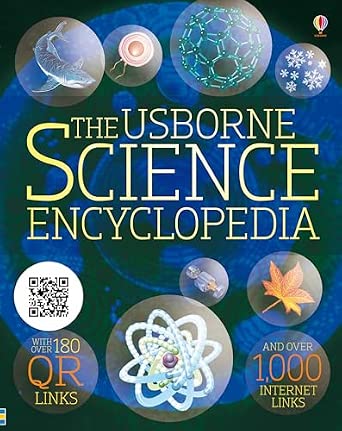 | Best Mid-Range Classroom Reference | Format: Illustrated encyclopedia (paperback/hardback) | Focus: General science across major fields | Target Age: Approximately 9–14 years | VIEW LATEST PRICE | See Our Full Breakdown |
| Science Knowledge Encyclopedia for Children: Collection of 6 Books (Box Set) |  | Best Box Set Value | Format: Box set, 6 physical books | Target audience: Children (age range unspecified) | Topics covered: General science across 6 themed volumes | VIEW LATEST PRICE | See Our Full Breakdown |
| The Usborne Science Encyclopedia: An In-depth Guide for Young Scientists Exploring Gravity, Flight, Genes, DNA and More |  | Best Hybrid Print-Digital Pick | Format: Hardcover print encyclopedia with digital companion | Video content: 180+ video clips | Web resources: 1,000 recommended websites | VIEW LATEST PRICE | See Our Full Breakdown |
| Encyclopedia of Science |  | Best Classic Desk Reference | Format: Print encyclopedia (physical book) | Coverage: Broad range of scientific disciplines | Target audience: Students and science enthusiasts, roughly 10+ | VIEW LATEST PRICE | See Our Full Breakdown |
| DK Science Encyclopedia (Revised Edition) |  | Best for Visual Learners | Format: Print encyclopedia, revised edition | Visual style: Detailed DK illustrations, cutaways, and annotated diagrams | Target audience: Students and general readers, roughly 9–14 | VIEW LATEST PRICE | See Our Full Breakdown |
| First Science Encyclopedia (DK First Reference) |  | Best for the Youngest Scientists | Format: Print encyclopedia (DK First Reference series) | Target audience: Early readers, roughly 5–8 | Visual style: Colorful illustrations with simple labels | VIEW LATEST PRICE | See Our Full Breakdown |
| Knowledge Encyclopedia Science! |  | Best Visual Reference for Older Kids | Publisher: DK Children | Format: Hardcover | Reading Age: 9-14 years | VIEW LATEST PRICE | See Our Full Breakdown |
| The Elements Book: A Visual Periodic Table Encyclopedia for Kids |  | Best Single-Subject Pick (Chemistry) | Publisher: DK Children | Format: Hardcover | Reading Age: 8-12 years | VIEW LATEST PRICE | See Our Full Breakdown |
| National Geographic Kids Science Encyclopedia: Atom Smashing, Food Chemistry, Animals, Space, and More! |  | Best for Reluctant Readers | Publisher: National Geographic Kids | Format: Hardcover | Reading Age: 7-11 years | VIEW LATEST PRICE | See Our Full Breakdown |
| Knowledge Encyclopedia – Science for Children |  | Best Budget Starter Option | Publisher: Wonder House Books | Format: Paperback/Hardcover (edition-dependent) | Reading Age: Approximately 6-10 years | VIEW LATEST PRICE | See Our Full Breakdown |
| educational science reference book | Format | Visual Style | Publisher | Focus |
|---|---|---|---|---|
| Knowledge Encyclopedia: Invent | Hardcover children’s encyclopedia | Illustration-heavy with explanatory captions | — | Inventions and discoveries |
| Knowledge Encyclopedia Human B | Illustrated hardcover reference | Detailed anatomical renderings and cross-sections | — | Human anatomy and body systems |
| Knowledge Encyclopedia Science | Hardcover science encyclopedia | Illustrated spreads with rendered diagrams | — | All major science disciplines |
| The Usborne Illustrated Dictio | Illustrated paperback/hardback dictionary | — | — | Scientific terms and definitions across core sciences |
| Science Encyclopedia | Illustrated encyclopedia (paperback/hardback) | — | Usborne | General science across major fields |
| Science Knowledge Encyclopedia | Box set, 6 physical books | — | — | — |
| The Usborne Science Encycloped | Hardcover print encyclopedia with digital companion | — | Usborne | — |
| Encyclopedia of Science | Print encyclopedia (physical book) | — | — | — |
| DK Science Encyclopedia | Print encyclopedia, revised edition | Detailed DK illustrations, cutaways, and annotated diagrams | DK | — |
| First Science Encyclopedia | Print encyclopedia (DK First Reference series) | Colorful illustrations with simple labels | DK | — |
| Knowledge Encyclopedia Science | Hardcover | 3D rendered cutaway illustrations | DK Children | General science: physics, chemistry, biology, technology |
| The Elements Book: A Visual Pe | Hardcover | Photographic samples of each element | DK Children | — |
| National Geographic Kids Scien | Hardcover | Colorful photos, fun facts, and infographic layouts | National Geographic Kids | — |
| Knowledge Encyclopedia | Paperback/Hardcover (edition-dependent) | Colorful illustrations with simple captions | Wonder House Books | General science topics for young learners |
More Details on Our Top Picks
Knowledge Encyclopedia: Inventions and Discoveries for Children
This volume carves out a niche the broader science encyclopedias don’t fill: while Knowledge Encyclopedia Science! 2nd Edition covers all of science thematically, this one tells the story of human ingenuity through the inventions that changed daily life. That narrative angle makes it the easiest entry point in this roundup for early readers who connect with people and progress rather than abstract concepts. The illustrations do heavy lifting, letting a child absorb ideas before they can read fluently. The tradeoff is depth — skimps on technical detail, and older kids will outgrow it quickly, whereas The Usborne Illustrated Dictionary of Science would serve them longer. Compared with the six-book Science Knowledge Encyclopedia for Children box set, this single volume is cheaper and less overwhelming, but far narrower in scope.
Pros:- Narrative, invention-focused approach that engages reluctant science readers
- Strong visual design that communicates concepts pre-reading fluency
- Affordable single-volume alternative to bulky box sets
- Broad range of inventions and discoveries in one accessible package
Cons:- Lacks technical depth, so it has a short usable lifespan as kids advance
- Too simplified for older children who want real explanations of how things work
Best for: Parents of curious 5–9 year olds who light up at stories of inventions rather than textbook-style science
Not ideal for: Middle-schoolers and up — the simplification that helps young readers will feel thin and babyish to them
- Format:Hardcover children’s encyclopedia
- Focus:Inventions and discoveries
- Target Age:Approximately 5–10 years
- Reading Level:Early independent reader
- Visual Style:Illustration-heavy with explanatory captions
- Series:Knowledge Encyclopedia (children’s line)
- Depth:Introductory; concept-level explanations
Our verdict“A great first science book for young invention-obsessed kids, but plan to graduate to a meatier encyclopedia within a couple of years.”
Knowledge Encyclopedia Human Body! Human Anatomy as You’ve Never Seen It Before
Where every other book here spreads itself across all of science, this one goes all-in on human anatomy, and that focus pays off in visual detail the generalists can’t match. The cross-sectional illustrations make body systems legible in a way dense paragraphs never could, which is why it works across such a wide age band — a parent and a ten-year-old can both get something real from the same page. Compared with Knowledge Encyclopedia Science! 2nd Edition, you trade breadth for depth, and if biology is the spark for your learner, that’s the right trade. The drawback mirrors the strength: it’s useless as a general reference, so it complements rather than replaces a broad encyclopedia like the DK Science Encyclopedia. Advanced biology students will also find it stops short of textbook rigor.
Pros:- Subject-matter depth that general science encyclopedias can’t offer on anatomy
- Rendered illustrations that make complex body systems genuinely understandable
- Wide age appeal, from elementary readers through adults browsing alongside them
- Strong fit for school projects on health and the human body
Cons:- Single-subject scope means it can’t serve as a household’s main science reference
- Too basic for high-school or university-level biology coursework
Best for: Families and students who want one authoritative, visually rich anatomy reference that spans ages
Not ideal for: Anyone wanting a general science reference — this covers the body only and nothing else
- Format:Illustrated hardcover reference
- Focus:Human anatomy and body systems
- Target Age:Approximately 8 years to adult
- Visual Style:Detailed anatomical renderings and cross-sections
- Series:Knowledge Encyclopedia (DK)
- Depth:Intermediate; deeper than general encyclopedias on anatomy
- Use Case:Home reference and school projects
Our verdict“The best pick in this roundup if anatomy is the priority, and a strong companion volume — not a replacement — for a general encyclopedia.”
Knowledge Encyclopedia Science! 2nd Edition
This is the pick I’d point most families toward first, because it balances breadth, visual quality, and readability better than anything else in this batch. Unlike Knowledge Encyclopedia: Inventions and Discoveries, which narrows to one storyline, this edition roams across physics, chemistry, biology, and space with updated content — a real advantage when science books can date quickly. It sits in a sweet spot: more engaging for kids than the dictionary-style Usborne Illustrated Dictionary of Science, yet less overwhelming than the six-book box set. The honest tradeoff is that breadth caps depth on any single topic; a learner obsessed with one subject gets more from Knowledge Encyclopedia Human Body! And buyers should note the updated edition is pricier than the original Knowledge Encyclopedia Science!, so deciding whether the refresh matters to you is part of the value calculation.
Pros:- Broad, well-organized coverage across the major science disciplines
- Updated second-edition content that keeps facts current
- Visual-first layout that works for a wide age range
- Serves as a genuine household reference, not just a one-off read
Cons:- Coverage of each topic stays at survey depth
- Costs noticeably more than the first edition for incremental updates
Best for: Families wanting one visually driven, up-to-date science encyclopedia that serves multiple kids across several years
Not ideal for: Buyers on a tight budget — the original edition or a cheaper single-volume alternative covers similar ground for less
- Format:Hardcover science encyclopedia
- Edition:2nd Edition (updated content)
- Focus:All major science disciplines
- Target Age:Approximately 9–14 years, with adult browse appeal
- Visual Style:Illustrated spreads with rendered diagrams
- Series:Knowledge Encyclopedia (DK)
- Depth:Survey-level across topics
Our verdict“The strongest all-around choice for a family’s primary science reference, provided you’re willing to pay a little more for the updated edition.”
The Usborne Illustrated Dictionary of Science
This is the practical workhorse of the lineup. Instead of the big illustrated spreads that make Knowledge Encyclopedia Science! 2nd Edition engaging, it delivers clear, lookup-friendly definitions — exactly what a student needs when homework throws out an unfamiliar term. That dictionary format makes it cheap, compact, and durable in a way the coffee-table encyclopedias aren’t; it survives a backpack. The tradeoff is obvious within minutes of side-by-side browsing: it informs rather than inspires. There’s little narrative pull to draw a reluctant reader in, and advanced students will hit its ceiling on complex topics. Compared with The Usborne Science Encyclopedia, it’s the quicker, cheaper reference for definitions rather than the deeper explainer — a distinction worth understanding before buying either.
Pros:- Fast, clear definitions ideal for homework and revision
- Affordable and portable enough for everyday school use
- Covers key terms across physics, chemistry, and biology in one volume
- Illustrations support definitions without adding clutter
Cons:- Explanations stay brief, so it can’t support deeper project research
- Visually plain compared with encyclopedia-style competitors, limiting browse appeal
- No digital or multimedia companion resources
Best for: Students (roughly 10–16) who need a quick homework reference for scientific terms, and budget-conscious buyers
Not ideal for: Learners who need engaging visuals and narrative context to stay interested — this is a reference, not a page-turner
- Format:Illustrated paperback/hardback dictionary
- Focus:Scientific terms and definitions across core sciences
- Target Age:Approximately 10–16 years
- Structure:A–Z reference with diagrams
- Series:Usborne Illustrated Dictionaries
- Depth:Definition-level with brief context
- Portability:Compact; backpack-friendly
Our verdict“A smart, low-cost second book for schoolwork — but pair it with a richer encyclopedia if you want something kids will read for pleasure.”
Science Encyclopedia
This Usborne title occupies the middle ground between the definition-focused Illustrated Dictionary of Science and the visually lavish Knowledge Encyclopedia Science! 2nd Edition. Its strength is structured, curriculum-friendly explanations — topics are broken into digestible sections with accompanying illustrations, which suits classroom assignment use and self-directed study better than DK’s more cinematic spreads. It’s also typically kinder on the wallet than the big DK volumes. The weaknesses are real, though: it lacks the visual wow factor that makes encyclopedias magnetic for younger kids, and the edition information is muddled, so buyers should verify printing details before purchasing to avoid an older release. If you want one book that balances cost and content for a student’s desk rather than the living-room table, this option makes the most sense.
Pros:- Topic-organized structure that maps well to school curricula
- Detailed written explanations, not just visual gloss
- More affordable than premium illustrated encyclopedias
- Suitable for both students and general adult readers
Cons:- Plainer presentation than DK competitors, which limits appeal for younger kids
- Ambiguous edition and publication details make it easy to buy an outdated printing
Best for: Students and teachers who need a solid, affordable topic-by-topic reference for coursework rather than a display book
Not ideal for: Younger children or visual learners who need dramatic imagery to stay engaged — this is more functional than dazzling
- Format:Illustrated encyclopedia (paperback/hardback)
- Focus:General science across major fields
- Target Age:Approximately 9–14 years
- Structure:Topic-based sections with illustrations
- Publisher:Usborne
- Depth:Intermediate; curriculum-aligned explanations
- Positioning:Mid-price classroom and home study reference
Our verdict“A dependable, budget-sensible middle choice for study purposes, but not the book to pick if visual inspiration is the goal.”
Science Knowledge Encyclopedia for Children: Collection of 6 Books (Box Set)
Buying science books one at a time gets expensive fast, and that’s where this six-volume box set earns its place. Instead of a single encyclopedia covering everything thinly, this format splits science into themed volumes, which works well for children who like to finish one book before starting the next. Compared with the First Science Encyclopedia, a single-volume option aimed at the youngest readers, this set offers more total content and a longer usable lifespan as a child’s reading level grows. The tradeoff is real, though: publishers of bundled sets like this rarely match the editorial polish of DK or Usborne, and the absence of reviews or age guidance means parents are buying with less certainty about reading level.
Pros:- Six themed volumes provide far more total content than a single encyclopedia
- Themed split makes science approachable for kids who prefer shorter books
- Strong cost-per-page value compared with buying individual DK or Usborne titles
- Covers a broad spread of science topics for general curiosity
Cons:- No age-range guidance, making it hard to match to a child’s reading level
- No customer reviews to verify content quality
- Editorial polish likely below DK and Usborne standards
Best for: Budget-conscious parents building a home library for children roughly 6–12 who want maximum topical coverage per dollar
Not ideal for: Parents who want verified quality signals before buying — with no ratings and no listed age range, it’s a gamble for picky readers
- Format:Box set, 6 physical books
- Target audience:Children (age range unspecified)
- Topics covered:General science across 6 themed volumes
- Publisher detail:Limited bibliographic information available
- Reading level:Unspecified
- Customer ratings:None available
Our verdict“A sensible pick for families who want volume and variety on a budget, provided they accept some uncertainty about quality.”
The Usborne Science Encyclopedia: An In-depth Guide for Young Scientists Exploring Gravity, Flight, Genes, DNA and More
What separates this encyclopedia from every other option in this roundup is its multimedia layer: over 180 video clips and 1,000 curated websites extend the print content far beyond what a physical book can hold. For a child who asks ‘but how does that actually work?’, the QR-linked videos answer in a way the DK Science Encyclopedia‘s static illustrations simply can’t. Compared with the Encyclopedia of Science, which is entirely page-bound, this title keeps pace with how kids actually learn today. The tradeoff is dependency — the digital resources require internet access and will only remain live as long as Usborne maintains them, so longevity is weaker than a pure print reference. It’s also priced as a premium title.
Pros:- Over 180 video clips bring complex topics like flight and genetics to life
- 1,000 curated websites extend learning well past the page count
- Usborne’s editorial reputation for children’s nonfiction
- Covers advanced topics like DNA and gravity without dumbing them down
Cons:- Digital content depends on internet access and continued online support
- Premium price point compared with single-volume rivals
- No customer ratings available to confirm real-world reception
Best for: Parents of curious 8–13 year olds who want a print encyclopedia that grows into an interactive learning system
Not ideal for: Households limiting screen time or lacking reliable internet — a large share of the value sits behind the web links
- Format:Hardcover print encyclopedia with digital companion
- Video content:180+ video clips
- Web resources:1,000 recommended websites
- Key topics:Gravity, flight, genes, DNA, and more
- Target audience:Young scientists, roughly 8–13
- Publisher:Usborne
Our verdict“The clear choice for families who want a science book that doubles as a gateway to vetted online learning.”
Encyclopedia of Science
This is the workhorse reference of the lineup — a straightforward, print-only encyclopedia that covers scientific topics with the depth students need for homework and school projects. Where the Usborne Science Encyclopedia leans on videos and websites, this title puts everything on the page, which makes it reliable in any setting: no internet required, no links that might go dead. Compared with the First Science Encyclopedia, it targets an older, more capable reader and rewards kids who want substance over colorful simplicity. The downside is datedness — without a clearly specified edition or publication date, buyers risk receiving an older printing, and some scientific fields move fast enough that older sections can mislead.
Pros:- Detailed, substantive treatment of a wide range of scientific topics
- Fully self-contained — no internet or devices required
- Well suited to homework and report writing rather than casual browsing
- Durable long-term shelf reference for the whole family
Cons:- No clearly specified edition or publication date raises staleness risk
- No multimedia or interactive elements whatsoever
- Denser presentation may not hold younger children’s attention
Best for: Middle-school and older students who need a dependable, offline reference for homework and reports
Not ideal for: Digital-native learners who expect interactive content — this is strictly a static, page-bound book
- Format:Print encyclopedia (physical book)
- Coverage:Broad range of scientific disciplines
- Target audience:Students and science enthusiasts, roughly 10+
- Interactive content:None — print only
- Edition information:Not specified
- Best use:Homework, reports, general reference
Our verdict“A solid, no-frills reference for students who need facts on the page rather than pixels on a screen.”
DK Science Encyclopedia (Revised Edition)
DK built its reputation on visual-first reference publishing, and this revised encyclopedia is the strongest example in this batch. The detailed cutaway illustrations and annotated diagrams do explanatory work that plain text can’t — think cross-sections of engines or step-by-step breakdowns of photosynthesis. Compared with the Encyclopedia of Science, which conveys similar depth through denser text, this title makes the same material accessible to kids who learn by seeing. It also goes deeper than the First Science Encyclopedia, whose visuals serve pre-readers rather than serious study. The honest tradeoff: DK’s revised edition is still an older printing, so cutting-edge topics like recent genetics breakthroughs won’t appear, and the lack of user reviews makes it harder to gauge how it holds up against newer competitors.
Pros:- Exceptional illustrations and diagrams that explain concepts visually
- Clear, plain-language explanations alongside the artwork
- Serves both students and curious general readers
- DK’s trusted editorial standard for accuracy and layout
Cons:- Revised edition is dated relative to current science
- No user reviews available for social proof
- Heavier and less browsable for very young children
Best for: Visual learners aged roughly 9–14 who understand diagrams faster than paragraphs of text
Not ideal for: Readers who need current science coverage — the revised edition predates many recent developments
- Format:Print encyclopedia, revised edition
- Visual style:Detailed DK illustrations, cutaways, and annotated diagrams
- Target audience:Students and general readers, roughly 9–14
- Edition:Revised edition (specific revision details not listed)
- Interactive content:None — print only
- Publisher:DK
Our verdict“The go-to pick when the reader learns best through pictures, diagrams, and visual breakdowns rather than text walls.”
First Science Encyclopedia (DK First Reference)
Every roundup like this needs a true entry point, and this is it. The First Science Encyclopedia is built for children who are just starting to read independently, pairing simple sentences with the colorful illustrations DK is known for. Compared with the DK Science Encyclopedia, the depth gap is enormous — this is an appetizer, not a meal — but that’s precisely the point: it’s designed to spark curiosity rather than answer exam questions. Against the Science Knowledge Encyclopedia box set, it wins on certainty: the DK First Reference series has a well-established reading level, while the box set offers no age guidance at all. Parents of advanced readers should look elsewhere, because the content caps out early.
Pros:- Simple explanations tuned to early readers
- Bright, engaging illustrations that invite independent browsing
- Trusted DK First Reference series with a predictable reading level
- Builds early science vocabulary and curiosity before deeper books
Cons:- Shallow scientific depth — questions will quickly outgrow it
- No advanced content to carry a child past a year or two of use
- Small format covers fewer topics than full encyclopedias
Best for: Parents of children roughly 5–8 who want a first science book a child can explore without adult help
Not ideal for: Readers above early-elementary level — the simple explanations will feel babyish and run out quickly
- Format:Print encyclopedia (DK First Reference series)
- Target audience:Early readers, roughly 5–8
- Visual style:Colorful illustrations with simple labels
- Depth:Introductory — concepts only, minimal technical detail
- Interactive content:None — print only
- Publisher:DK
Our verdict“The right first science book for young children, and one they will graduate out of — plan for the next step.”
Knowledge Encyclopedia Science!
This encyclopedia stands out for its rendered 3D-style visuals that break down machinery, physics, and biology in a way text-heavy alternatives like The Usborne Illustrated Dictionary of Science simply can’t match. Where the Usborne leans on diagrams and definitions, this DK title builds understanding through layered cutaway illustrations, making it the stronger choice for visual learners aged roughly 9 to 14.
The tradeoff is depth. It covers an enormous range of scientific topics, but a curious teen who wants rigorous explanations will outgrow it and would be better served by a more advanced encyclopedia. Compared with the National Geographic Kids Science Encyclopedia, it skews slightly older and more reference-like, less gimmicky.
Families building a home library will find it durable and browsable for years, though the lack of detailed sourcing may frustrate homeschooling parents who want citations.
Pros:- Stunning cutaway 3D illustrations that explain concepts text alone can’t
- Broad coverage spanning physics, chemistry, biology, and technology
- Structured for browsing, so kids return to it voluntarily
- Hardy hardcover build suited to repeated handling
Cons:- Explanations stay surface-level, so advanced students outgrow it quickly
- Thin sourcing and no bibliography for verifying facts
Best for: Parents of visual learners aged 9-14 who want a single browsable science reference for the home library
Not ideal for: High school students or adults who need rigorous, citation-backed depth — the explanations stop at an upper-elementary level
- Publisher:DK Children
- Format:Hardcover
- Reading Age:9-14 years
- Grade Level:4-9
- Focus:General science: physics, chemistry, biology, technology
- Visual Style:3D rendered cutaway illustrations
- Language:English
Our verdict“The strongest pick for families who want science absorbed through pictures rather than paragraphs, especially for readers not yet ready for dense reference texts.”
The Elements Book: A Visual Periodic Table Encyclopedia for Kids
Most books in this roundup spread themselves across all of science; this one goes deep on one subject done exceptionally well. Each element gets its own page with photographs and real-world context, which makes it far more useful for a chemistry-obsessed kid than the generalist Knowledge Encyclopedia Science!, where elements get only a spread or two.
That focus is also the limitation. Compared with the National Geographic Kids Science Encyclopedia, it won’t help with a space project or an animal report — it’s a specialist companion, not a homework all-rounder. The photography of actual samples sets it apart from illustrated-only competitors, giving kids a concrete sense of what cesium or carbon actually looks like.
It shines as the chemistry supplement on a shelf that already has a broad encyclopedia.
Pros:- Photographs of real element samples, not just cartoons
- Element-by-element structure makes the periodic table feel navigable
- Real-world uses given for each element keep it relatable
- Deep coverage of one topic rather than shallow coverage of many
Cons:- Narrow scope — useless for biology, space, or physics homework
- Younger children may lose interest before reaching the heavier elements
Best for: Kids aged 8-12 fascinated by chemistry, and parents wanting to supplement a general encyclopedia with one deep subject
Not ideal for: Families who need one book to cover all school subjects — this is periodic-table-only
- Publisher:DK Children
- Format:Hardcover
- Reading Age:8-12 years
- Subject:Chemistry — the periodic table and elements
- Visual Style:Photographic samples of each element
- Structure:One element per entry, organized by periodic table
- Language:English
Our verdict“A superb second book rather than a first one: buy it for the kid who already loves chemistry, not as your only science reference.”
National Geographic Kids Science Encyclopedia: Atom Smashing, Food Chemistry, Animals, Space, and More!
Where DK’s Knowledge Encyclopedia Science! rewards patient browsing, this National Geographic title is built to hook kids who don’t normally pick up books. Fun facts, punchy layouts, and quirky topics like food chemistry and atom smashing give it the magazine-style energy Nat Geo is known for.
The tradeoff is staying power. It reads more like an entertaining gateway than a reference your child will consult for years — for serious schoolwork, the DK title offers more systematic organization. But as a curiosity spark for ages 7-11, it beats the denser options here, and its coverage of animals and space appeals to kids whose interests sit outside pure chemistry (unlike The Elements Book).
It makes the most sense as the book that gets a hesitant reader interested in science at all, with a deeper reference to follow.
Pros:- Highly readable, fact-driven format that appeals to hesitant readers
- Unusual topics like food chemistry keep interest broad
- Strong animal and space coverage that general chemistry books lack
- Trusted National Geographic brand and imagery
Cons:- Shallow treatment of each topic — a gateway, not a reference
- Scattered layout makes it hard to find specific information for homework
Best for: Parents of reluctant readers aged 7-11 who need an entertaining entry point into science
Not ideal for: Students who need a structured reference for reports and projects — the layout prioritizes fun over lookup-friendly organization
- Publisher:National Geographic Kids
- Format:Hardcover
- Reading Age:7-11 years
- Topics:Atoms, food chemistry, animals, space, and general science
- Visual Style:Colorful photos, fun facts, and infographic layouts
- Tone:Entertainment-first, magazine-style
- Language:English
Our verdict“Choose this to spark a love of science in a child who avoids textbooks; skip it if the goal is a homework reference they’ll use for years.”
Knowledge Encyclopedia – Science for Children
This is the most affordable entry point in the batch, and that price positioning is its whole argument. Compared with Knowledge Encyclopedia Science! from DK, the visuals are simpler and the coverage less polished, but for a first science encyclopedia for a younger child, the easy explanations and colorful pages do the job without a big investment.
Buyers should calibrate expectations: it’s better matched against First Science Encyclopedia (DK First Reference) than against the premium DK titles, sitting somewhere in between on depth. The limited information on content depth is a real drawback — unlike the better-documented alternatives here, it’s hard to verify reading level or topic scope before buying.
It works best as a gift, a classroom donation, or a low-risk test of whether your child will engage with science books at all.
Pros:- Lower price point than the premium DK and Nat Geo titles
- Simple, easy-to-understand explanations well suited to younger kids
- Colorful illustrations maintain engagement
- Good low-risk gift option for early readers
Cons:- Content depth and reading level are poorly documented, making pre-purchase evaluation difficult
- Visuals and coverage fall short of the higher-priced alternatives in this roundup
Best for: Budget-conscious buyers wanting an inexpensive first science book or a low-risk gift for a child aged 6-10
Not ideal for: Parents who want a documented, long-lasting home reference — the vague content details and lighter depth won’t satisfy serious use
- Publisher:Wonder House Books
- Format:Paperback/Hardcover (edition-dependent)
- Reading Age:Approximately 6-10 years
- Focus:General science topics for young learners
- Visual Style:Colorful illustrations with simple captions
- Price Tier:Budget
- Language:English
Our verdict“A reasonable cheap starter or gift, but families building a lasting home library should spend more on the DK or National Geographic titles instead.”

How We Picked
I evaluated each book against four criteria that actually matter to buyers: accuracy and currency (whether facts, statistics, and astronomy content reflect the last decade of scientific progress), age-appropriate depth (whether the vocabulary and concept load match the stated audience), navigability (how easily a child can find a specific topic for homework versus only browsing), and longevity (whether the book stays useful for three or more years as the child grows). Visual quality counted, but only as a supporting factor — a gorgeous spread with shallow text fails as a reference book even if it wins as a coffee-table book.
The ranking order reflects a simple logic: books that balance depth and accessibility for the widest age range placed highest, specialized or narrow titles placed lower regardless of quality, and redundant editions were ranked below the versions that replaced them. Price-per-year-of-use factored into value placements, which is why multi-book sets and revised editions were judged on cost relative to how long a family will realistically keep them on the shelf.
| educational science reference book | Publisher |
|---|---|
| Knowledge Encyclopedia: Invent | — |
| Knowledge Encyclopedia Human B | — |
| Knowledge Encyclopedia Science | — |
| The Usborne Illustrated Dictio | — |
| Science Encyclopedia | Usborne |
| Science Knowledge Encyclopedia | — |
| The Usborne Science Encycloped | Usborne |
| Encyclopedia of Science | — |
| DK Science Encyclopedia | DK |
| First Science Encyclopedia | DK |
| Knowledge Encyclopedia Science | DK Children |
| The Elements Book: A Visual Pe | DK Children |
| National Geographic Kids Scien | National Geographic Kids |
| Knowledge Encyclopedia | Wonder House Books |
Factors to Consider When Choosing Educational Science Reference Books
Before choosing a science reference book, it helps to understand the patterns across this category — where the real differences lie, and where the marketing makes similar books sound more distinct than they are.Match the Book to How Your Child Actually Learns
The biggest mistake buyers make is assuming all science encyclopedias serve the same purpose. Browsing-first books — the heavily visual DK titles — work best for kids who flip open a book randomly and follow their curiosity. Lookup-first books, like the Usborne dictionaries, are organized for a child who has a homework question and needs a direct, structured answer. If you buy a browsing book for homework support, your child will likely abandon it out of frustration; if you buy a dense reference for a reluctant reader, it will sit untouched. Watch how your child uses library books before committing, because this single factor predicts satisfaction more than any other.
Check the Publication Date Before Anything Else
Science reference books age faster than any other category on a child’s shelf. Space and technology sections become dated quickly — older editions may reference spacecraft missions that ended years ago or omit entire fields like CRISPR gene editing. Revised editions exist for a reason, and in this roundup two of the fourteen titles are revisions that meaningfully updated their content. When buying used or discounted copies, always verify the printing year, because sellers often list old stock under new edition listings. A cheaper copy of an outdated printing is a false economy when the statistics inside are a decade old.
Beware of Overlapping Titles From the Same Publisher
D families often accumulate three or four encyclopedias that cover identical ground at slightly different reading levels. This roundup alone contains multiple DK Knowledge Encyclopedia science volumes that share substantial content, and publishers rarely flag this on the cover. Before adding a second encyclopedia, check its table of contents against what you already own. A better strategy is one general reference plus one or two specialized titles — an elements book, a human anatomy book — rather than three general encyclopedias with 70% overlap.
Reading Level Trumps Age Labels
Publisher age ranges are inconsistent across brands, sometimes off by two or three years in either direction. A book labeled for ages 8+ may contain molecular diagrams better suited to a 10-year-old, while another aimed at 9+ may use sentences a strong 7-year-old can handle. The practical test is vocabulary density per paragraph, not the sticker on the cover. If buying online, use the preview feature to read one full spread and judge whether your child could decode it independently — a reference book that requires an adult for every page stops being used independently, which defeats its purpose.
Box Sets: Value or Redundancy?
Multi-book collections advertise an attractive price per volume, but the math only works if your child will read every book. A six-book set that splits science into narrow topics suits families starting from an empty shelf. If you already own one solid general encyclopedia, half the set duplicates what you have. Sets also tend to have shorter individual volumes with less depth per topic — fine for sampling interests, weaker for sustained study. Ask whether your child prefers finishing one big book or rotating through smaller ones; the answer should drive this decision more than the discount.
When to Pay More for Binding and Print Quality
Reference books get abused — spine cracks, dog-eared corners, pages pulled out by younger siblings. Heavier hardcovers with sewn bindings survive a decade of school use; cheap paperback editions of the same content often fall apart within two years. Glossy paper stock also affects how diagrams render, and fine detail in anatomical or periodic-table illustrations can blur on thin paper. If the book will serve multiple children over several years, the premium hardcover pays for itself. If it’s a one-child, two-year bridge to more advanced texts, the paperback is a reasonable saving.
Frequently Asked Questions
Should I buy one big encyclopedia or several smaller specialized books?
One strong general encyclopedia serves most children better as a first purchase, because it lets them discover which branches of science actually interest them. Specialized books — like a dedicated periodic table or human anatomy title — make the best second and third purchases once that interest reveals itself. Buying several specialized books upfront risks shelving half of them permanently if your child’s curiosity points elsewhere. The exception is the multi-book box set approach, which works when you’re building a home library from scratch or supplying multiple children of different ages at once.
Do I need the newest edition, or is an older printing fine?
For physics, chemistry, and biology fundamentals, an older printing is usually acceptable — photosynthesis and Newton’s laws haven’t changed. Where editions matter is space science, technology, and climate data, which shift meaningfully every few years. If your child is a space enthusiast, insist on the newest edition; if the book is mainly for biology basics, a discounted older printing is a legitimate saving. Check the copyright page rather than the cover art, since covers often stay the same across printings while content updates quietly.
What age is the right age for a first science encyclopedia?
Around ages 5 to 7, children can handle first-reference titles with one concept per spread and heavy imagery. The jump to full encyclopedias typically works at 8 to 10, once independent reading is solid. Introducing a dense encyclopedia too early doesn’t accelerate learning — it usually teaches the child that science books are boring. A staged approach, moving from a first reference to a full encyclopedia over two or three years, keeps the material matching the child’s reading stamina.
Are encyclopedias still worth buying when kids can search online?
Yes, but for different reasons than a decade ago. A printed reference gives a child curated, age-appropriate, ad-free content — something search results can’t guarantee — and the browsing format exposes kids to topics they’d never think to search for. Online sources beat print for current events and fast-changing science, so the two work together rather than in competition. Reference books also build the skill of navigating an indexed, structured source, which transfers directly to research skills schools expect later.
How much should I expect to spend for good quality?
Single-volume quality encyclopedias typically run mid-range prices, with hardcovers commanding a modest premium over paperbacks for durability reasons. Box sets raise the upfront cost but drop the per-volume price considerably — worthwhile only if all volumes will get used. Specialized single-topic books sit at the lower end, making them low-risk gifts. The pattern to avoid is buying multiple overlapping mid-priced encyclopedias; one well-chosen general reference plus targeted specialized titles delivers better value than three general books with duplicated content.
Conclusion
For most families, the DK Science Encyclopedia (Revised Edition) is the best overall choice — it balances depth, visual clarity, and a wide age range better than anything else in this lineup. On a budget, the Usborne Illustrated Dictionary of Science delivers the most homework value per dollar, especially for students who need structured explanations rather than glossy spreads. As a premium pick, the Science Knowledge Encyclopedia 6-Book Box Set makes sense for families building a complete home library from zero. Younger readers just starting out belong with the First Science Encyclopedia, whose single-concept spreads suit early independent readers. For specific interests, the Elements Book serves chemistry-obsessed kids, while the Knowledge Encyclopedia Human Body is the right call for anatomy-focused learners — just avoid buying it alongside a general encyclopedia if budget is tight. Whatever you choose, pick one book that matches how your child actually reads, and skip the redundant second volume; a single well-used reference beats three that gather dust.
Halloween Picks
halloween
As an affiliate, we earn on qualifying purchases.