
🔍 Read the full analysis: Google Genie 4’S Walkable Worlds: Capabilities, Limits, And Access on ThorstenMeyerAI.com

Prime made for students and young adults
- Fast, free delivery for dorm and study essentials
- Prime Video and Amazon Music included
- Member-only deals
TL;DR
Google DeepMind presented Genie 4 on October 27, describing a real-time AI model that generates interactive scenes users can navigate and change with text. The demonstrations are company-selected, no public access date or benchmark results were provided, and DeepMind says worlds may drift during interactions lasting a few minutes.
Google DeepMind demonstrated Genie 4 on October 27, presenting it as a real-time world model that generates scenes people can navigate and alter with text instructions. The company says it can create sound alongside visuals and respond as users move through a scene, but the system is not publicly available, and DeepMind says its worlds can drift during interactions that last only a few minutes.
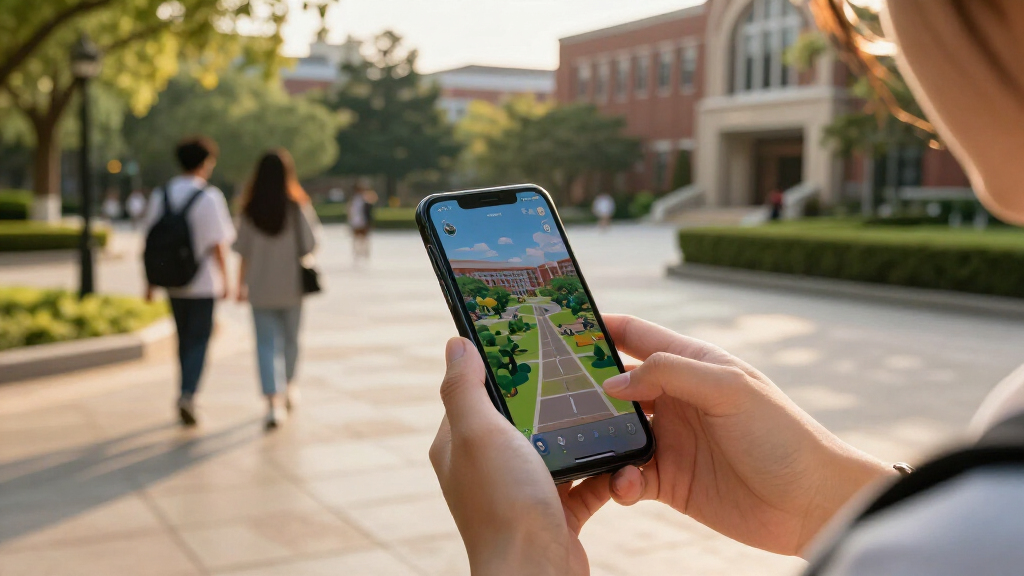
In DeepMind’s demonstrations, users move through generated environments with keyboard and mouse controls, then enter instructions to change elements such as weather, objects or camera movement. The model generates subsequent frames in response rather than rendering a completed video clip. DeepMind also says the system can produce ambient sound, music and character dialogue together with the scene.
These capabilities are company claims illustrated by selected demonstrations. DeepMind did not publish benchmark results in the supplied announcement material. It says Gemini 3.8 Flash can observe the scene, break a goal into steps and help steer the model, while Gemini Omni is used to anchor simulations in real-world appearance and behavior.
Access is limited to trusted testers for now. DeepMind says Google AI Ultra subscribers will get access through Project Genie “coming soon,” and that early partners will use the Gemini API. It has not announced a launch date or API pricing. TechCrunch and Bloomberg, as cited by heise, describe clips lasting up to about two minutes; that figure is not in DeepMind’s own stated description.
Infographic 01 · How Genie grew up
From flat sketches to worlds with sound, in under three years.
Each step as Google DeepMind described it. Session limits and consistency are different measures, so read the labels.
- Feb 2024
Genie 1Simple 2D worlds11 billion parameters, learned from unlabelled internet videos - Dec 2024
Genie 23D worlds from a single imageConsistent “for up to a minute”; real time only as a slimmed-down, lower-quality version - Aug 2025
Genie 3First real-time Genie720p at 24 frames per second, consistent “for a few minutes”, memory about one minute back - Jan 2026
Project GenieUS AI Ultra subscribers can play60 seconds per world, partly because of compute costs - May 2026Project Genie goes globalIn the $200 AI Ultra tier, for users 18 and older
- 27 Oct 2026
Genie 4Sound, live steering, more realismResearch preview for trusted testers; Ultra subscribers and API partners “coming soon”
Genie 3 vs. Genie 4
As described by Google DeepMind. Genie 4 column = vendor claims unless marked.
| Feature | Genie 3 (Aug 2025) | Genie 4 (Oct 2026) |
|---|---|---|
| Sound | Genie 3: None | Genie 4: Generated with the picture: ambient noise, music, dialogue |
| Steering | Genie 3: Keys, plus “promptable world events” | Genie 4: Free-form text changes while it runs; Gemini adapts and checks them |
| Look | Genie 3: 720p, 24 fps | Genie 4: “Unprecedented realism”; no resolution or frame rate published |
| How long | Genie 3: “A few minutes”; Project Genie capped at 60 s | Genie 4: “A few minutes” (DeepMind); up to ~2 min consistent scene reported |
| Access | Genie 3: Small preview, then Project Genie | Genie 4: Trusted testers; Ultra and API partners “coming soon” |
Sources: Genie paper, arXiv, 23 Feb 2024; Genie 2 blog, 4 Dec 2024; Genie 3 blog, 5 Aug 2025; TechCrunch, 29 Jan 2026; Google, 19 May 2026; Google DeepMind, Genie 4 blog, 27 Oct 2026; Genie 4 model page (limitations, disclaimer); TechCrunch, 27 Oct 2026. Table wording: Thorsten Meyer.
Powered by Thorsten Meyer AI
Why Interactive Worlds Matter
If the system works beyond curated demonstrations, interactive generated environments could support early-stage work in games, film and simulation. DeepMind reports tester feedback describing uses such as film previsualization and game prototypes, but these are reported trial uses, not independently established results or a general commercial offering.
The technology also has potential relevance to robotics research. DeepMind showed a simulation involving Apptronik’s Apollo humanoid, but the demonstration used a simulated robot task; no physical Apollo robot was involved in that experiment, according to the source material. Waymo already uses the predecessor Genie 3 in building its driving simulator, which gives a concrete example of how related models may fit into simulation workflows.
For audiences, realistic generated video and audio may make synthetic scenes harder to distinguish from filmed footage. DeepMind says Genie 4 video and audio carry SynthID, its invisible watermark. The effectiveness and visibility of that safeguard to viewers were not detailed in the announcement information provided.
Popular right now

Bose QuietComfort Wireless Bluetooth Headphones with Active Noise Cancellation, Mic, USB‑C Charging, Deep Bass, 24‑Hour Battery – White Smok

Dyson Ball Animal 3 Corded Upright Vacuum

Ninja Flip Toaster Oven & Air Fryer, 8-in-1, Stainless Steel, SP151
As an affiliate, we earn on qualifying purchases.
How Genie Reached Version Four
Genie models have developed from research into generated environments. The first Genie, announced in February 2024, created simple 2D worlds; its research paper described an 11-billion-parameter model trained on unlabeled internet videos. Genie 2 followed in December 2024, generating 3D worlds from a single image and maintaining consistency for up to a minute, though real-time operation required a reduced-quality version.
In August 2025, DeepMind described Genie 3 as its first real-time world model, running at 720p and 24 frames per second and maintaining consistency for a few minutes. Google opened Genie 3 through Project Genie to paying U.S. subscribers in January 2026. TechCrunch reported a 60-second limit per world at that time, citing compute costs. Genie 4’s stated improvements include generated audio and live text changes, but its performance has not been accompanied by benchmark figures in the supplied material.
A world model differs from a conventional game engine, which renders scenes using a stored map and defined assets, and from a video generator that produces a clip after a prompt. Genie instead predicts what appears next from the current scene and user input. That approach can make interaction flexible, but it also means details may change as the model continues generating the world.
“Details and objects “can shift or drift over time.””
— Google DeepMind, describing Genie 4’s limitations
Limits, Evidence and Access
It remains unclear when subscribers will gain access, which regions will be included, what the Gemini API will cost, and whether sessions will have a fixed duration. DeepMind has not published benchmark results in the supplied material, so the relative quality of its claims about realism, physics and sound cannot be assessed from standardized comparisons here.
The public examples are selected by DeepMind, and third-party reports of roughly two-minute scenes do not replace a formal product specification. The company’s own description says details can drift and interaction lasts a few minutes, but does not quantify how often scenes lose consistency or how performance changes across prompts. The robotics example is a simulation, not a physical robot trial.
Subscriber and API Rollout
The next stated step is access for Google AI Ultra subscribers through Project Genie, alongside early-partner access through the Gemini API. Google has not provided a launch date or pricing details for API use. Until those are announced, public availability and the costs of longer or more demanding sessions remain unknown.
Further information to watch for includes the length and regional scope of subscriber access, technical specifications, and evaluations outside DeepMind’s selected clips. Those details will help establish whether Genie 4’s reported uses in creative work and simulation extend beyond demonstrations.
Key Questions
What is Google Genie 4?
Genie 4 is a Google DeepMind world model that predicts and generates a scene as a user moves through it or gives instructions. It is presented as an interactive system rather than a tool that only renders a finished video.
Can the public use Genie 4 now?
No. DeepMind says it is available to trusted testers. Google AI Ultra subscribers and early Gemini API partners are expected to get access later, but no date has been announced.
How long can a Genie 4 world run?
DeepMind says Genie 4 supports a few minutes of continuous interaction. TechCrunch and Bloomberg, as cited by heise, report scenes of up to about two minutes, but DeepMind’s own description does not specify that exact duration.
What are Genie 4’s main limits?
DeepMind says objects and details can shift or drift as a scene continues, and describes interactions as lasting a few minutes. The company has not provided benchmark results in the supplied announcement material.
Does Genie 4 train real robots?
The cited Apollo example is a robotics simulation, not a trial with a physical robot. The source material says Waymo uses the earlier Genie 3 in its driving simulator, but that does not establish Genie 4’s performance in real-world robot training.
Source: ThorstenMeyerAI.com