Educational card games for kids can make practice with numbers, memory, geography, and everyday knowledge feel like play. I rank Melissa & Doug Classic Card Games Set as the best overall for its familiar games and broad family appeal, while School Zone Math War is a stronger fit for focused arithmetic practice and The World Game makes geography the main event. The key tradeoff is between a game that teaches one skill directly and a broader set that offers more ways to play. Age, reading ability, attention span, and how much adult help a child needs can matter as much as the subject. Read on for the full breakdown and help choosing a game that fits your child and your play routine.

Prime made for students and young adults
- Fast, free delivery for dorm and study essentials
- Prime Video and Amazon Music included
- Member-only deals
Key Takeaways
- Melissa & Doug Classic Card Games Set leads for families seeking several familiar ways to play, while focused learning picks teach a narrower skill more directly.
- School Zone Math War suits arithmetic practice, but time-and-money cards are better when a child is ready for practical concepts rather than quick number comparisons.
- The World Game and Scholastic USA Travel both cover geography, but one takes a broad world focus while the other centers on U.S. states and capitals.
- Memory Match Farm and Bug Bash offer simpler entry points for young players; trivia and geography games may ask for more reading or prior knowledge.
- UNO Junior and multi-game packs favor easy family play, while dedicated learning decks trade some variety for more targeted practice.
| Melissa & Doug Classic Card Games Set: Old Maid, Go Fish, and Animal Rummy |  | Best for Preschool Beginners | Brand: Melissa & Doug | Games: Old Maid, Go Fish, Animal Rummy | Included decks: 3 | VIEW LATEST PRICE | See Our Full Breakdown |
| School Zone Math War Addition & Subtraction Game Cards |  | Best for Addition and Subtraction Practice | Card count: 56 | Math skills: Addition and subtraction | Grade levels: Kindergarten, 1st grade, 2nd grade | VIEW LATEST PRICE | See Our Full Breakdown |
| School Zone Time & Money Flash Cards |  | Best for Practical Time and Money Skills | Number of cards: 56 | Grade levels: 1st and 2nd grade | Age range: 6+ | VIEW LATEST PRICE | See Our Full Breakdown |
| Classic Kids Card Games: Go Fish, Old Maid, Slap Jack, and Memory Match, 4 Decks |  | Best Multi-Game Set for Travel | Brand: underbartliv | Games included: Go Fish, Old Maid, Slap Jack, Memory Match | Number of decks: 4 | VIEW LATEST PRICE | See Our Full Breakdown |
| Ravensburger Disney Eye Found It! Travel Card Game |  | Best for Observation on the Go | Brand: Ravensburger | Age range: 3 years and up | Material: Cardstock | VIEW LATEST PRICE | See Our Full Breakdown |
| Trash Monsters Card Game |  | Best for Early Number Sequencing | Brand: Big Monster Games | Players: Up to 4 | Recommended age: 3 years and up | VIEW LATEST PRICE | See Our Full Breakdown |
| The World Game Geography Card Game with World Map |  | Best for Geography Learning | Game type: Geography card game | Players: 2–6 | Recommended age: 8 years and up | VIEW LATEST PRICE | See Our Full Breakdown |
| Hoyle 6-in-1 Kids Card Game Pack |  | Best Variety for Short Sessions | Brand: Hoyle | Games included: Go Fish, Memory, Old Maid, Crazy Eights, Slap Jack, Matching | Number of games: 6 | VIEW LATEST PRICE | See Our Full Breakdown |
| Continuum Games Go Fish Classic Underwater Card Game |  | Best for Go Fish Beginners | Brand: Continuum Games | Game type: Classic card game | Theme: Underwater | VIEW LATEST PRICE | See Our Full Breakdown |
| Mattel Games UNO Junior Card Game for Kids Ages 3+, 2–4 Players |  | Best for Growing Matching Skills | Brand: Mattel Games | Model: GKF04 | Age range: 3 years and up | VIEW LATEST PRICE | See Our Full Breakdown |
| Scholastic USA Travel Card Game: State Capitals and Geography |  | Best for U.S. Geography Practice | Brand: University Games | Recommended age: 6 and up | Players: 2–4 | VIEW LATEST PRICE | See Our Full Breakdown |
| School Zone Memory Match Farm Card Game |  | Best for Preschool Beginners | Card count: 56 | Theme: Farm animals | Recommended age: 3 and up | VIEW LATEST PRICE | See Our Full Breakdown |
| Bug Bash Quick-Counting Card Game |  | Best for Fast-Paced Math Practice | Age range: 7–12 years | Players: 2–4 | Components: Cards | VIEW LATEST PRICE | See Our Full Breakdown |
| Where Did I Learn That? World Trivia Card Game for Kids and Families |  | Best for Broad World Trivia | Brand: QUOKKA | Recommended age: 4 years and up | Players: 2 or more | VIEW LATEST PRICE | See Our Full Breakdown |
| educational card games for kid | Brand | Recommended age |
|---|---|---|
| Melissa & Doug Classic Card Ga | Melissa & Doug | — |
| School Zone Math War Addition | — | — |
| School Zone Time & Money Flash | — | — |
| Classic Kids Card Games: Go Fi | underbartliv | — |
| Ravensburger Disney Eye Found | Ravensburger | — |
| Trash Monsters Card Game | Big Monster Games | 3 years and up |
| The World Game Geography Card | — | 8 years and up |
| Hoyle 6-in-1 Kids Card Game Pa | Hoyle | 3 years and up |
| Continuum Games Go Fish Classi | Continuum Games | 3 years and up |
| Mattel Games UNO Junior Card G | Mattel Games | — |
| Scholastic USA Travel Card Gam | University Games | 6 and up |
| School Zone Memory Match Farm | — | 3 and up |
| Bug Bash Quick-Counting Card G | — | — |
| Where Did I Learn That? World | QUOKKA | 4 years and up |
More Details on Our Top Picks
Melissa & Doug Classic Card Games Set: Old Maid, Go Fish, and Animal Rummy
For young children learning how turn-taking card games work, this set offers three familiar options without requiring a single narrow academic skill. Old Maid, Go Fish, and Animal Rummy each have instructions, while the colorful animal artwork gives new players visual cues as they learn. Compared with Ravensburger Disney Eye Found It!, this set is better for practicing classic matching and grouping through repeated rounds; Eye Found It! puts more emphasis on observation and searching. The large, wipe-clean cards suit smaller hands and everyday spills, but the cardboard box is less protective than individual sturdy travel cases. Its age range begins at 3, making it a stronger early-years choice than School Zone Math War, which targets children 6 and up. The tradeoff is that it teaches broad game skills rather than a specific school subject.
Pros:- Three distinct classic games provide variety in one set
- Large cards are easier for young children to handle
- Wipe-clean surface helps with routine messes
- Instructions and colorful animal illustrations support learning the games
Cons:- Gameplay focuses on general matching and grouping rather than a defined school subject
- The cardboard storage box offers less protection than a hard travel case
- No warranty is included, and FSC certification applies to new inventory only
Best for: Families with children ages 3–8 who want several easy-to-learn, hands-on games for early turn-taking and matching practice
Not ideal for: Caregivers seeking focused academic practice in math, time, or money skills, or a rigid case for frequent travel
- Brand:Melissa & Doug
- Games:Old Maid, Go Fish, Animal Rummy
- Included decks:3
- Age range:3 to 8 years
- Card material:Plastic
- Card features:Large size; durable; wipe-clean surface
- Storage:Cardboard box
- Warranty:No warranty
Our verdict“Choose this set for young beginners who want classic, varied card play, but pick a subject-focused deck for direct academic drills.”
School Zone Math War Addition & Subtraction Game Cards
This is the most direct pick here for children who need repetition with addition and subtraction facts. Its 56-card format turns practice into a compact game, a more focused approach than Melissa & Doug Classic Card Games Set, which offers broader classic play without targeted math drills. It is aimed at kindergarten through second grade and ages 6 and up, so it fits early elementary learners rather than preschoolers. The narrow skill range is also its main limitation: children looking to work on clocks, coin values, or combinations will get more relevant practice from School Zone Time & Money Flash Cards. The supplied information does not specify card material, instructions, or storage, so buyers should not assume features beyond the stated card count and skills. I’d choose it when repeated arithmetic practice is the priority, not as an all-purpose family game set.
Pros:- Targets both addition and subtraction facts
- Designed for a range of early elementary grades
- 56 cards provide a defined set for repeated practice
- Compact card format is easy to keep with learning materials
Cons:- Covers addition and subtraction rather than a wider range of math topics
- Designed for ages 6 and up, so it may not suit younger learners
- Product details do not specify card material, storage, or included instructions
Best for: Families and educators seeking a compact card activity for kindergarten through second-grade learners practicing basic addition and subtraction
Not ideal for: Buyers who want several kinds of math practice, a preschool-level game, or a set with stated storage and card-durability details
- Card count:56
- Math skills:Addition and subtraction
- Grade levels:Kindergarten, 1st grade, 2nd grade
- Age range:6+
- Product type:Math game cards
- Format:Card-based game
Our verdict“Pick Math War for focused early arithmetic practice; choose Time & Money Flash Cards if your child needs broader everyday math skills.”
School Zone Time & Money Flash Cards
Where School Zone Math War concentrates on addition and subtraction, this 56-card set addresses two practical early-grade topics: reading clocks and working with coins. Its listed activities include telling time, identifying coin values, counting coins, and making coin combinations, giving families a more varied skill mix than a single-topic drill deck. That focus suits first- and second-grade learners, but it is less useful for children who are still building basic arithmetic or need broad game variety like Melissa & Doug Classic Card Games Set. The product is described as flash cards, so buyers should expect skill practice rather than the more playful, multi-game structure of a dedicated card-game set. It also stays within a specific slice of math; there is no stated practice in addition, subtraction, or other subjects. I’d choose it for targeted everyday numeracy work, not general entertainment.
Pros:- Combines time and money practice in one set
- Covers clock reading and multiple coin skills
- Aimed at first- and second-grade learners
- 56 cards support repeated, focused practice
Cons:- Limited to a specific group of time and money skills
- Flash-card practice may feel less game-like than classic card sets
- Does not provide the broader arithmetic focus of School Zone Math War
Best for: Parents and teachers helping first- or second-graders practice clock reading, coin values, counting, and coin combinations
Not ideal for: Families seeking a multi-game social activity or children who need addition and subtraction practice rather than time-and-money topics
- Number of cards:56
- Grade levels:1st and 2nd grade
- Age range:6+
- Skills:Telling time, reading clocks, counting coins, identifying coin values, coin combinations
- Product type:Educational flash cards
- Subject areas:Time and money
Our verdict“Choose this set when clock and coin skills are the learning goal, and choose Math War for addition and subtraction practice.”
Classic Kids Card Games: Go Fish, Old Maid, Slap Jack, and Memory Match, 4 Decks
Four separate decks make this the broadest classic-game bundle in this group: children can move between Go Fish, Old Maid, Slap Jack, and Memory Match rather than repeating one format. The games can support memory, matching, concentration, and number recognition, while the themed illustrations give each deck a distinct visual identity. Compared with the Melissa & Doug set, it adds Slap Jack and Memory Match and gives each deck its own box, but Melissa & Doug has wipe-clean cards and a younger stated age range. These cards are sturdy paper, not wipe-clean plastic, so heavy handling and spills may shorten their useful life. The manufacturer-recommended age is 6–7, even though the description also promotes younger use; I’d follow the narrower age guidance for a better fit. It offers variety, not structured subject lessons like School Zone’s math decks.
Pros:- Includes four different familiar games
- Separate boxes make the decks easier to sort and pack
- Themed illustrations support visual matching and memory play
- Card dimensions are provided and suit child-and-adult handling
Cons:- Paper cards may wear with heavy use and are not described as wipe-clean
- Manufacturer age guidance is 6–7, limiting its fit for preschoolers
- Does not focus on a specific school subject like the School Zone sets
Best for: Families with children around ages 6–7 who want several familiar games in separately boxed decks for trips or shared play
Not ideal for: Households with very young children, frequent spills, or a priority for wipe-clean cards and targeted academic instruction
- Brand:underbartliv
- Games included:Go Fish, Old Maid, Slap Jack, Memory Match
- Number of decks:4
- Cards per deck:40–45
- Card material:Thick, sturdy paper
- Card dimensions:3.5 x 2.5 inches
- Manufacturer-recommended age:6–7 years
- Storage:Individually boxed decks
Our verdict“Choose this bundle for variety across classic games and individually boxed decks, but favor Melissa & Doug for younger children or wipe-clean cards.”
Ravensburger Disney Eye Found It! Travel Card Game
This compact game is the clearest choice here for children who enjoy scanning colorful scenes and spotting familiar characters. Its search-and-find format supports observation, memory, and concentration, while the Disney theme may make the first round easier to introduce to young players. Compared with Melissa & Doug Classic Card Games Set, Eye Found It! centers on looking and noticing rather than taking turns with traditional games such as Go Fish or Animal Rummy. That narrower activity is a plus for a quick travel game, but it provides less variety than a multi-deck set and does not target school subjects like the School Zone card sets. The stated age begins at 3, making it accessible to younger children, though older kids seeking harder challenges may outgrow the play style. It is a focused, portable choice, not a broad educational bundle.
Pros:- Search-and-find play encourages observation and concentration
- Familiar Disney characters give young players visual anchors
- Designed for children ages 3 and up
- Compact travel-card format suits trips and short sessions
Cons:- Focuses on one search-and-find style rather than several games
- May offer limited challenge for older children
- Does not provide direct practice in specific school subjects
Best for: Families with children ages 3 and up who want a compact, easy-to-learn observation game for travel or short play sessions
Not ideal for: Older children seeking advanced challenges, families wanting multiple distinct games, or buyers looking for direct math or literacy practice
- Brand:Ravensburger
- Age range:3 years and up
- Material:Cardstock
- Game type:Travel card game
- Theme:Disney
- Included components:Cards
- Model number:1308
- Warranty:No warranty
Our verdict“Choose Eye Found It! for portable observation play with young children, and choose Melissa & Doug for more variety in classic card games.”
Trash Monsters Card Game
Trash Monsters makes number order the central learning task: players arrange Monster Cards from 1 to 10 while watching out for Trash Pandas. Its age recommendation of 3 and up and simple rules make it a more direct fit for preschoolers than The World Game, which asks older children to recall countries, flags, and capitals. The illustrated cards and step-by-step video tutorial can help families get started without a long rules explanation. The tradeoff is a narrower learning focus: it practices sequencing rather than the varied matching, memory, or social skills found in Hoyle 6-in-1. It also accommodates no more than four players, so it is less suited to larger groups. I’d pick it for young kids who are beginning to recognize numbers, not for families seeking complex or varied play.
Pros:- Number sequencing from 1 to 10 gives young players a clear learning goal.
- Simple rules are accessible to children ages 3 and up.
- Monster illustrations make the cards visually engaging.
- Includes instructions and a step-by-step video tutorial.
Cons:- Limited to four players, which rules out larger groups.
- The focus on sequencing 1 to 10 may feel basic for older children.
- Paper cards may need careful handling during frequent play.
Best for: Families with preschoolers who are learning to recognize numbers and put them in order.
Not ideal for: Larger families or older children who want more complex rules and a broader range of learning activities.
- Brand:Big Monster Games
- Players:Up to 4
- Recommended age:3 years and up
- Included components:68 playing cards
- Material:Paper
- Game objective:Sequence Monster Cards from 1 to 10
- Model year:2025
Our verdict“Choose Trash Monsters for a straightforward first number-sequencing game for preschoolers, but skip it if you need room for a big group or more advanced learning.”
The World Game Geography Card Game with World Map
The World Game is the geography specialist in this group, combining country identification with flags and capital cities for all 194 countries and adding a world map for visual reference. Compared with Scholastic USA Travel Card Game: State Capitals and Geography, its scope reaches beyond the United States, making it a stronger match for families who want to study world geography. Cards can also serve as trivia prompts or flash cards, so learning does not have to follow one fixed game format. That breadth comes with a higher entry point: it is recommended for ages 8 and up and requires at least two players for a game. The roughly 30-minute playing time also makes it a less quick option than Hoyle 6-in-1. I’d choose it for school-age kids ready to build geography knowledge, not for preschoolers or solo play.
Pros:- Covers 194 countries with flags and capital cities.
- The included world map supports visual country-finding practice.
- Cards can be used for gameplay, trivia, or flash-card review.
- Compact package is suitable for travel.
Cons:- Requires at least two players for a game.
- The age recommendation of 8 and up excludes younger learners.
- An approximately 30-minute playing time may not suit short attention spans.
Best for: Families with children ages 8 and up who want a broad, repeatable way to practice world countries, flags, and capitals.
Not ideal for: Preschoolers, solo learners looking for a one-player game, or families wanting very short rounds.
- Game type:Geography card game
- Players:2–6
- Recommended age:8 years and up
- Countries included:194
- Included components:Cards and world map
- Language:English
- Playing time:Approximately 30 minutes
- Dimensions:5.12 x 3.54 x 1.89 inches
Our verdict“Pick The World Game for school-age learners who want broad world-geography practice; choose a simpler set such as Hoyle 6-in-1 for younger children.”
Hoyle 6-in-1 Kids Card Game Pack
Hoyle 6-in-1 earns its place through variety: Go Fish, Memory, Old Maid, Crazy Eights, Slap Jack, and Matching give families several ways to practice memory, matching, and turn-taking in one compact set. Its short rounds—15 minutes or less—make it easier to fit a game into a brief break than The World Game, which focuses on geography and takes about 30 minutes. The familiar formats also give adults flexibility to choose a game that suits a child’s current attention and skills. This is broader than Trash Monsters for classic card-play practice, but less focused on teaching one specific academic topic. The paper construction is a durability tradeoff, and the set is designed for up to four players. I’d choose it for variety and portability rather than a targeted lesson.
Pros:- Six game formats offer variety without needing separate sets.
- Rounds last 15 minutes or less, suiting brief play sessions.
- Compact format works for travel, classrooms, and family game nights.
- Activities support memory, matching, and social skills.
Cons:- Paper cards may wear sooner than sturdier card materials.
- Limited to four players.
- The set practices broad foundational skills rather than a specific academic subject.
Best for: Caregivers and teachers who want several familiar, quick card games for children ages 3 and up.
Not ideal for: Buyers seeking durable cards for heavy classroom use or a focused lesson in a specific academic subject.
- Brand:Hoyle
- Games included:Go Fish, Memory, Old Maid, Crazy Eights, Slap Jack, Matching
- Number of games:6
- Recommended age:3 years and up
- Number of players:1–4
- Playing time:15 minutes or less
- Material:Paper
- Educational objectives:Memory, matching, social and emotional skills
Our verdict“Choose Hoyle 6-in-1 for quick variety and classic play, but pick The World Game or Trash Monsters if you want a more focused learning target.”
Continuum Games Go Fish Classic Underwater Card Game
Go Fish Classic Underwater keeps the learning close to the table: children practice handling cards, taking turns, and making simple strategic choices through a familiar game. Its three game variations offer some change of pace while keeping the same underwater theme and 48-card deck. Compared with Hoyle 6-in-1, it gives up variety across different classic games in favor of a dedicated Go Fish set; compared with UNO Junior, it does not build play around matching colors, animals, or numbers. The 3-to-6-player range is useful for a group, but means it is not a fit for two-player households. It is recommended for ages 3 and up, so older children seeking more demanding academic content may outgrow it. I’d choose it for a first group card game, not as a broad learning curriculum.
Pros:- Three variations add options within a familiar Go Fish format.
- Supports card handling, turn-taking, and basic strategy.
- Underwater artwork gives the deck a consistent child-friendly theme.
- Includes a storage box for keeping the cards together.
Cons:- Requires at least three players, unlike UNO Junior, which supports two.
- The learning focus is narrower than Hoyle 6-in-1’s six distinct games.
- Recommended for ages 3 and up, which may not challenge older children.
Best for: Families or early-childhood groups of three to six children learning basic card handling, turn-taking, and beginner strategy.
Not ideal for: Two-player households or older children who want number, color, or subject-based learning challenges.
- Brand:Continuum Games
- Game type:Classic card game
- Theme:Underwater
- Number of players:3–6
- Recommended age:3 years and up
- Cards included:48
- Game variations:3
- Package contents:48 cards and rules
Our verdict“Choose this set for a small group learning Go Fish together, but choose UNO Junior for two-player flexibility or more explicit matching practice.”
Mattel Games UNO Junior Card Game for Kids Ages 3+, 2–4 Players
UNO Junior is the most adaptable pick here for children building early matching skills: animal artwork gives them another cue alongside color and number matching, and three play levels add action and penalty cards as they learn. That gradual step-up makes it a better choice for a child who is ready to move beyond a single simple format than Trash Monsters, which centers on sequencing 1 to 10. It also works with two players, unlike Continuum Games Go Fish Classic, which requires at least three. The tradeoff is that its animal theme and simplified rules may not hold older children’s interest, and its learning stays within matching, counting, rule-following, and social interaction rather than covering a subject like geography. I’d choose it for families who want a familiar game that can gain complexity with the child.
Pros:- Three levels of play provide a gradual increase in rule complexity.
- Animal illustrations offer an alternative matching cue for early learners.
- Supports color and number matching, counting, and rule-following.
- Works for two to four players, including a parent-child game.
Cons:- The simplified format may not challenge older children.
- Learning is centered on matching and gameplay rather than a specific school subject.
- Colors and decorations may vary.
Best for: Families with young children who want a matching game that can become more challenging as they learn the rules.
Not ideal for: Older children seeking advanced strategy or families looking for a focused subject-learning game such as geography.
- Brand:Mattel Games
- Model:GKF04
- Age range:3 years and up
- Number of players:2–4
- Levels of play:3
- Material:Cardstock
- Theme:Zoo animals
- Educational objectives:Matching, counting, rule-following, and social interaction
Our verdict“Choose UNO Junior for a young child ready to grow from basic matching into more involved play, but look elsewhere for older-kid challenges or subject-focused lessons.”
Scholastic USA Travel Card Game: State Capitals and Geography
State capitals, landmarks, and U.S. facts give this game a focused learning goal, while matching and trivia challenges make recall more active than simply studying a list. Its rules are simple enough for quick rounds, and the travel tuck box makes it easy to bring along for family trips or classroom activities. Compared with The World Game Geography Card Game with World Map, this pick trades international breadth and a map-centered format for a narrower focus on U.S. states and capitals. That focus suits children working on state knowledge, but limits its usefulness for broader geography lessons. It also needs at least two players, so it is less suitable for solo practice than flash cards. I’d choose it for guided, repeatable U.S. geography play rather than general trivia.
Pros:- Combines state capitals, landmarks, geography, and state facts
- Matching and challenge cards make recall interactive
- Simple rules support short play sessions
- Travel tuck box is convenient for trips and classroom use
Cons:- Requires at least two players
- Covers U.S. state-related material rather than global geography
Best for: Families and teachers helping children ages 6 and up practice U.S. state names, capitals, landmarks, and facts together.
Not ideal for: Children who need solo practice or families seeking international geography and culture topics.
- Brand:University Games
- Recommended age:6 and up
- Players:2–4
- Included components:50 cards and instructions
- Packaging:Travel tuck box
- Game type:Educational geography card game
- Model number:00711
- Model year:2021
Our verdict“Choose this for compact, multiplayer practice of U.S. states and capitals, but pick a broader geography game for world topics.”
School Zone Memory Match Farm Card Game
For preschoolers, a familiar farm theme gives matching and memory practice an easy starting point, while the cards also support early reading, counting, and vocabulary. The 56-card set offers room for different matching activities, so adults can adjust play to a child’s developing skills. Compared with Mattel Games UNO Junior, this is less about following a changing game sequence and more about noticing, remembering, and naming what’s on the cards—a better fit for a first learning game, but with less variety in the core activity. The age guidance starts at 3, so it is not intended for younger toddlers. Its farm-animal focus may also feel narrow once a child wants more challenging subjects or faster competition. I’d choose it for calm, adult-supported practice rather than a lively group game.
Pros:- Farm animals provide a familiar theme for young learners
- Supports early reading, counting, matching, and vocabulary
- 56 cards allow for repeated matching activities
- Designed with preschool and kindergarten children in mind
Cons:- Recommended for ages 3 and up, so it is unsuitable for younger children
- Farm-animal subject matter offers less topic variety than broader trivia games
Best for: Parents and preschool teachers looking for a straightforward farm-themed game to build matching, counting, and vocabulary skills with children ages 3 and up.
Not ideal for: Families with children under 3 or older kids seeking competitive play and a wider range of topics.
- Card count:56
- Theme:Farm animals
- Recommended age:3 and up
- Skills:Early reading, counting, matching, and vocabulary
- Game format:Memory matching card game
- Intended audience:Preschool and kindergarten children
Our verdict“Pick this for gentle, farm-themed skill practice with preschoolers, not for older children who want varied or competitive rounds.”
Bug Bash Quick-Counting Card Game
Counting, addition, and estimation are built into each round: players tally bugs and race to slap a card with the matching number. That quick response adds energy to arithmetic practice, making Bug Bash a stronger pick for children who enjoy competition than the slower matching format of School Zone Memory Match Farm Card Game. The tradeoff is the pace: counting under pressure and slapping cards may frustrate players who prefer quiet turns or need extra time with numbers. It also supports only 2–4 players, which limits larger-group play. Its compact cardstock format suits travel and classroom use, and the stated ages of 7–12 make it a better fit for children ready for quick number work than for preschool beginners. I’d choose it for active math practice, not a calm learning session.
Pros:- Practices counting, addition, estimation, and number grouping
- Quick rounds and simple rules make it easy to start
- Compact cards suit travel, family play, and classrooms
- Designed for children and adults to play together
Cons:- Fast counting and slapping may not suit slower-paced players
- Limited to 2–4 players
- Its age range may leave younger learners needing a simpler math game
Best for: Families and educators seeking lively counting, addition, and estimation practice for children ages 7–12 who enjoy quick, competitive rounds.
Not ideal for: Children who need unhurried number practice, dislike slap-style play, or need a game for more than four players.
- Age range:7–12 years
- Players:2–4
- Components:Cards
- Material:Cardstock
- Dimensions:3.5 x 2.5 inches
- Weight:0.1 kg
- Educational objective:Enhance math and reflex skills
- Awards and recommendations:Academics’ Choice Brain Toy Award winner; American Mensa recommended
Our verdict“Choose Bug Bash for energetic math practice with children ready to count quickly, but skip it for slower or larger-group play.”
Where Did I Learn That? World Trivia Card Game for Kids and Families
Countries, cultures, animals, and landmarks give this set a wider subject mix than the U.S.-focused Scholastic USA Travel Card Game. Its 50 question cards and 50 true-or-false challenges provide two ways to prompt recall, which can help keep family or classroom rounds from feeling like one repeated quiz format. The listed age begins at 4 years and up, making it accessible to younger children when an adult helps read the cards. Compared with The World Game Geography Card Game with World Map, this is a portable card-only option rather than a map-based experience; that makes it easier to pack but offers no visual map activity. It requires at least two players, and its English-language, card-based format limits how it can be used. I’d pick it for varied world-themed conversation and trivia, not solo geography study.
Pros:- Covers geography, cultures, animals, and landmarks
- Question and true-or-false cards provide different challenge formats
- Compact, lightweight cards are easy to carry
- Uses FSC-certified cardstock
Cons:- Requires at least two players
- Card-based play does not provide a map activity
- English-only cards may not suit multilingual learning needs
Best for: Families and teachers who want portable world-themed questions for mixed-age groups, with an adult available to read for younger players.
Not ideal for: Children seeking solo play or hands-on map practice, and groups wanting a game in a language other than English.
- Brand:QUOKKA
- Recommended age:4 years and up
- Players:2 or more
- Included components:50 question cards and 50 true-or-false challenges
- Game theme:World geography, culture, animals, and landmarks
- Material:FSC-certified cardstock
- Language:English
- Dimensions:4.13 x 2.76 x 0.04 inches
- Weight:0.2 kg
Our verdict“Choose this for portable, varied world trivia with a partner or group, but choose a map-based game for visual geography practice.”
How We Picked
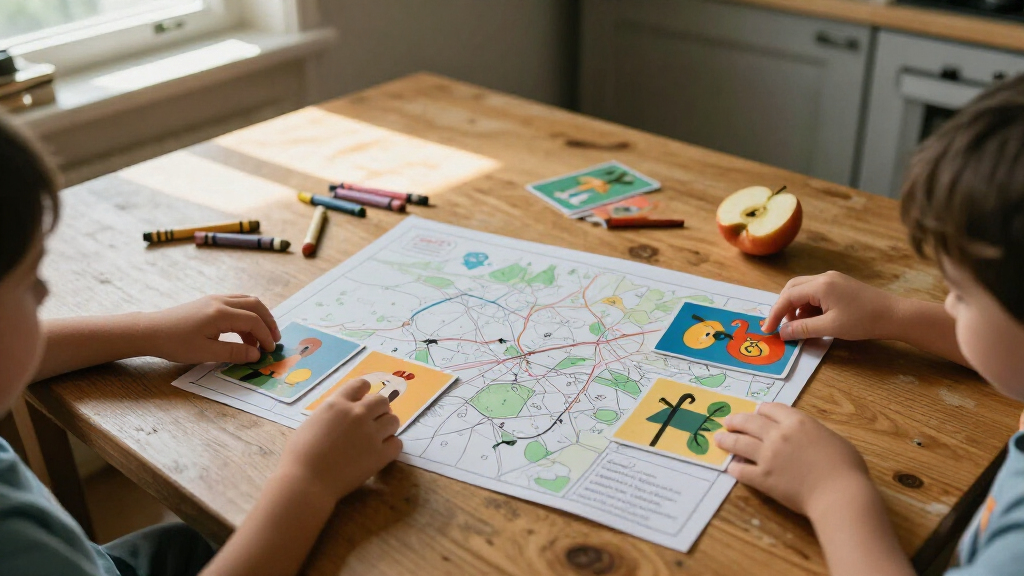
I compared the 14 games by how clearly play supports a learning goal, how easy the rules appear for children to follow, and how well each option fits different ages and family routines. I also looked at the kind of practice each game offers: repeated skill drills, recall and matching, general knowledge, or a mix of familiar card formats. A game earned more consideration when its learning focus was easy to explain and its play style gave children a reason to return to it.
The ranking favors useful balance, not the longest feature list. I placed versatile choices ahead of narrower decks when they offer more ways to play without losing their educational value, while focused picks remain strong for families targeting a particular skill. Age fit, reading demands, subject interest, and likely need for adult support shape the distinctions. Without assuming every family wants the same lesson, I call out tradeoffs so buyers can match a game to the child rather than treating educational content as a measure of quality on its own.
Factors to Consider When Choosing Educational Card Games For Kids
The right educational card game is the one a child will want to play often enough for practice to stick. Before choosing, match the game’s demands to your child’s current skills and your family’s play habits, not only to the subject printed on the box.
Match the Learning Goal to What Your Child Needs
Start with one clear purpose: practice a school skill, build recall, or introduce a topic that sparks curiosity. Math decks can offer repeated number work, while geography and trivia games depend more on recalling facts and connecting ideas. Memory and matching games build attention and recognition, though they may provide less direct academic practice. A common mistake is choosing the subject adults think a child should learn instead of a topic the child already finds engaging. If you are unsure, choose a game with familiar play mechanics and add harder content later.
Check Reading and Rule Demands
Age labels are a starting point, but reading fluency and comfort with turn-taking are often better guides. A child who can identify numbers but reads slowly may enjoy a visual matching game more than a trivia deck with text-heavy prompts. Look for whether the child can understand a turn without an adult translating each card. Games that need frequent help can still be worthwhile as shared activities, but they may not work as independent play. When buying for siblings, consider whether older children will stay engaged while younger players learn the rules.
Choose Between Focused Practice and Variety
A single-skill deck is a better fit when you want regular practice in one area; a multi-game pack can keep family game time from feeling repetitive. Variety does not automatically mean stronger learning: several familiar games may offer less targeted practice than one deck built around a specific concept. On the other hand, children may return more readily to a set that gives them options. Think about whether the game will be used for short practice sessions, travel, or a longer family game night. Choose variety for changing play moods and focus for a particular learning need.
Account for the Social Style of Play
Some children enjoy a quick race to spot a match or answer; others prefer turns with time to think. Speed-based play can energize a group but may frustrate a child who needs extra processing time. Memory and classic matching formats tend to allow a steadier pace, while trivia can make family knowledge differences more visible. Before buying, consider how players handle winning, losing, and waiting. If a child becomes discouraged by competition, choose cooperative-feeling or low-pressure play rather than relying on the educational theme to make a competitive game a good fit.
Think About Replay in Your Actual Routine
A compact deck that is easy to set up may see more use than a more involved game with a wider subject range. Consider where it will be played, how many people usually join, and whether the cards can be sorted and stored without hassle. Travel-focused games need rules that are easy to resume after interruptions, while home games can support longer sessions. Repetition helps children gain confidence, but a deck that feels identical every time may lose appeal. Look for a balance between familiar structure and enough variety to keep play inviting.
Pay More for Fit, Not for More Cards Alone
A larger deck or extra game formats are useful only if they suit the child and get used. Paying more can make sense when a game offers a distinctive learning approach, durable components, or enough flexibility for several children at different stages. It is less useful when added content raises reading difficulty or adds rules that the youngest player cannot follow. Check what the box includes and whether its educational focus matches your goal before weighing quantity. For a first game, a simple, approachable format can be a safer choice than a feature-heavy set.
Frequently Asked Questions
Which kind of educational card game is easiest for a child who is new to games?
Look for familiar actions such as matching, taking turns, or recognizing numbers, rather than a game that depends on reading a long prompt. A straightforward format gives a child room to learn the rules and the content at the same time. Memory Match Farm and beginner-friendly classic games offer clearer entry points than geography or trivia options that rely on prior knowledge. If the child is very young, play a round together before expecting independent play. The best first game is one the child can understand without repeated rule reminders.
Should I choose a game that teaches a school subject or one with a general knowledge theme?
Choose a focused subject game when your child is ready to practice a specific skill, such as addition or recognizing time and money concepts. General knowledge games can be a better fit when curiosity and conversation are the main goals. Subject-focused cards may repeat the same kind of task, which is helpful for practice but can feel like extra schoolwork to some children. Trivia and geography can spark family discussion, though children may need support with unfamiliar facts. Match the choice to whether your priority is deliberate practice or broad exploration.
Can one card game work for children at different ages or skill levels?
It can, especially when the rules are familiar and adults can adjust the challenge by offering hints or simplifying a round. However, a game with fixed reading or knowledge demands may leave younger players watching rather than participating. Multi-game sets can help because family members can select a format that suits the group that day. For mixed ages, agree on a gentle pace and avoid treating speed as the main measure of success. If skill gaps are large, two shorter games may be more enjoyable than forcing everyone into one deck.
Are fast-paced educational card games a good choice for kids who need extra thinking time?
They can be fun, but speed may reward quick reactions more than careful learning. A child who needs time to calculate or recall a fact could feel pressured even when they understand the material. Check whether the game can be played without a timer or with relaxed turn limits before making it the main practice tool. Steadier formats such as matching or turn-based recall may suit that child better. If you choose a quick game, treat it as lively play rather than a test of mastery.
Is a multi-game pack a better buy than a deck focused on one skill?
A multi-game pack makes more sense when your household wants different ways to play and expects to use the cards with several people. A focused deck is the clearer choice when you have a specific learning goal and want repeated practice in that area. More game options do not guarantee more educational depth, and a specialized deck may be easier to bring into a short routine. Consider which option your child is more likely to request again after the novelty wears off. If you cannot name when each included game would be used, a focused pick may be the more practical choice.
Conclusion
For the broadest family fit, I recommend Melissa & Doug Classic Card Games Set as the best overall because its familiar formats give children multiple ways to play. For best value in variety, Hoyle 6-in-1 Kids Card Game Pack is worth a look when your household wants several classic options in one set. I would treat a focused learning deck as the best premium-style choice when a specific goal matters more than variety: choose School Zone Math War for arithmetic practice or The World Game for broad geography. Beginners are better served by approachable matching or classic play, including School Zone Memory Match Farm. For specific needs, pick Bug Bash for quick-counting play, Scholastic USA Travel for U.S. states and capitals, or School Zone Time & Money for practical concepts; the best choice depends on what your child wants to learn and will enjoy repeating.