Science reference flashcards split into a few very different camps: exam-prep decks built around AP and licensing tests, visual anatomy and chemistry sets for coursework, and compact reference kits like periodic table cards you can keep at a desk. My top pick overall is the Anatomy Flashcards: 300 Flashcards set, because its precise drawings and detailed descriptions make it useful far beyond a single exam. For AP students, the AP Biology Flashcards, Third Edition offers the best-curated question bank, while the CARDDIA Periodic Table set wins for younger learners and quick reference with all 118 elements. The main tradeoff you’ll face is depth versus portability, and whether you want a deck tied to one test or one you’ll keep using after the exam. Keep reading for the full breakdown of all 13 sets.
Key Takeaways
- Test-specific decks (AP Biology, AP Environmental Science, Praxis, TExES) offer tight exam alignment but lose nearly all value once the test date passes — they ranked lower as long-term reference tools.
- The 300-card Anatomy Flashcards set separated itself from the QuickStudy and TribeRN anatomy options through illustration quality; the QuickStudy version trades depth for radical portability at a lower price.
- Two periodic table products made the list with opposite philosophies: Duncan‘s set includes a hard storage case for durability, while CARDDIA adds atomic data and color-coded categories that make it the better teaching tool.
- Laminated formats (QuickStudy, the Periodic Table Flashcard Science Kit) consistently outperformed paper card decks for longevity, which matters if flashcards will live in a backpack or lab bag.
- The GACE Science of Reading deck is the outlier in this lineup — it’s a pedagogy exam tool, not a science reference, so it only makes sense for educators preparing for that specific certification.
| AP Biology Flashcards, Third Edition: Up-to-Date Review |  | Best for AP Exam Prep | Format: Physical flashcards | Edition: Third Edition | Target Exam: AP Biology | VIEW LATEST PRICE | See Our Full Breakdown |
| AP Environmental Science Flashcards, Fourth Edition |  | Best Organized Study System | Format: Physical flashcards with sorting ring | Edition: Fourth Edition | Target Exam: AP Environmental Science | VIEW LATEST PRICE | See Our Full Breakdown |
| Duncan Toys Periodic Table Flash Cards with Hard Storage Case |  | Best for Young Learners | Brand: Duncan Educational | Age Range: 6 years and up | Set Name: Periodic Table | VIEW LATEST PRICE | See Our Full Breakdown |
| Biology: A QuickStudy Laminated Reference Guide | 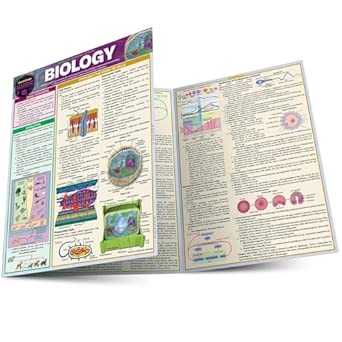 | Best Compact Reference | Format: Laminated reference guide (chart) | Subject: Biology overview | Durability: Laminated, spill-resistant | VIEW LATEST PRICE | See Our Full Breakdown |
| Praxis Earth and Space Sciences (5572) Flashcard Study System |  | Best for Teacher Certification Prep | Format: Physical flashcard study system | Target Exam: Praxis Earth and Space Sciences (5572) | Included Material: Review cards plus practice test questions | VIEW LATEST PRICE | See Our Full Breakdown |
| Anatomy Flashcards: 300 Flashcards with Anatomically Precise Drawings and Exhaustive Descriptions |  | Best for Deep Anatomy Study | Number of Cards: 300 | Format: Physical flashcards | Illustrations: Anatomically precise drawings | VIEW LATEST PRICE | See Our Full Breakdown |
| Anatomy Flash Cards: A QuickStudy Reference & Study Tool |  | Best Compact Anatomy Review | Format: Physical flashcards | Content Style: Concise quick-reference summaries | Target Audience: Students and medical professionals | VIEW LATEST PRICE | See Our Full Breakdown |
| CARDDIA Astronomical Objects STEM Educational Flashcards |  | Best for Astronomy Enthusiasts | Number of Cards: 52 | Material: Durable paper with glossy coating | Size: Standard playing card size | VIEW LATEST PRICE | See Our Full Breakdown |
| Periodic Table of Elements Laminated Flashcard Science Kit |  | Best Value Chemistry Kit | Number of Cards: 118 | Material: Matte laminated | Includes: Storage box | VIEW LATEST PRICE | See Our Full Breakdown |
| TribeRN Anatomy and Physiology Flash Cards – 320 Study Resources for Students |  | Best Overall for Healthcare Students | Number of Cards: 320 | Terms Covered: Over 1,800 | Target Audience: Nursing students, pre-med, medical professionals | VIEW LATEST PRICE | See Our Full Breakdown |
| CARDDIA Periodic Table Educational Flashcards – 118 Elements with Atomic Data & Color-Coded Categories |  | Best Chemistry Reference Set | Number of Cards: 118 | Coverage: All periodic table elements including recent additions | Material: Water-resistant, tear-resistant card stock | VIEW LATEST PRICE | See Our Full Breakdown |
| TExES Science 4-8 (116) Flashcard Study System |  | Best for Texas Teacher Certification | Format: Physical flashcard study system | Target Exam: TExES Science 4-8 (116) | Content Type: Practice questions and concept review | VIEW LATEST PRICE | See Our Full Breakdown |
| GACE Application of the Science of Reading (418) Flashcard Study System |  | Best for Georgia Reading-Science Certification | Format: Physical flashcard study system | Target Exam: GACE Application of the Science of Reading (418) | Content Type: Practice test questions and review material | VIEW LATEST PRICE | See Our Full Breakdown |
| science reference flashcard | Format |
|---|---|
| AP Biology Flashcards | Physical flashcards |
| AP Environmental Science Flash | Physical flashcards with sorting ring |
| Duncan Toys Periodic Table Fla | — |
| Biology: A QuickStudy Laminate | Laminated reference guide (chart) |
| Praxis Earth and Space Science | Physical flashcard study system |
| Anatomy Flashcards: 300 Flashc | Physical flashcards |
| Anatomy Flash Cards: A QuickSt | Physical flashcards |
| CARDDIA Astronomical Objects S | — |
| Periodic Table of Elements Lam | Color-coded interactive flashcard game |
| TribeRN Anatomy and Physiology | — |
| CARDDIA Periodic Table Educati | — |
| TExES Science 4-8 | Physical flashcard study system |
| GACE Application of the Scienc | Physical flashcard study system |
More Details on Our Top Picks
AP Biology Flashcards, Third Edition: Up-to-Date Review
For students staring down the AP Biology exam, this set stands out for its tightly exam-aligned content — the questions mirror what the College Board actually tests, which is more than most generic science flashcard sets can claim. Compared with the Praxis Earth and Space Sciences Flashcard Study System, this deck feels more current and more focused on recall under time pressure, since AP exams reward fast retrieval of dense terminology. The tradeoff is real, though: answers come without worked explanations, so a student who misses a card on cellular respiration will need a textbook or review book to fill the gap. Think of this as a drill tool, not a teaching tool. Paired with a full review guide, it does its job well.
Pros:- Content aligned with the current AP Biology exam framework
- Question-and-answer format builds fast recall for timed testing
- Portable enough for daily short study sessions
- Broad coverage across all major AP Bio units
Cons:- No detailed explanations, so misses don’t self-correct
- Flashcard-only format can’t substitute for conceptual understanding
Best for: AP Biology students in the final 6-8 weeks before the exam who already know the material and need rapid recall practice
Not ideal for: Students learning biology for the first time — the lack of detailed explanations means wrong answers won’t teach you anything on their own
- Format:Physical flashcards
- Edition:Third Edition
- Target Exam:AP Biology
- Content Focus:Exam review and recall
- Study Style:Question and answer
- Portability:High — pocket-sized deck
Our verdict“Buy this if you’re drilling for the AP Bio exam and already have a content source; skip it if you’re still learning the material from scratch.”
AP Environmental Science Flashcards, Fourth Edition
What separates this deck from the AP Biology Flashcards is the included sorting ring, a small detail that changes how you study: you can pull weak cards into a custom “needs work” stack instead of endlessly cycling the full box. For AP Environmental Science — a course heavy on broad, interconnected concepts like pollution, land use, and energy policy — that customization genuinely helps retention. The fourth edition also tracks the current exam standards, so you’re not memorizing outdated frameworks. The honest limitation is the same one facing every Barron’s-style flashcard product: it’s a recall reinforcement tool, not a complete prep system. Students who struggle with the free-response questions will still need practice exams alongside it.
Pros:- Sorting ring lets you reorganize cards by weakness
- Updated to match current AP Environmental Science exam standards
- Comprehensive coverage of the full course scope
- Encourages spaced repetition through custom stacks
Cons:- Flashcard format alone doesn’t prepare you for free-response questions
- No supplementary digital or video content
Best for: AP Environmental Science students who want to build a personalized review loop and track their weak areas over time
Not ideal for: Learners who prefer visual or narrative study — flashcard Q&A format may not stick for students who learn best from diagrams and case studies
- Format:Physical flashcards with sorting ring
- Edition:Fourth Edition
- Target Exam:AP Environmental Science
- Included Accessories:Sorting ring for custom organization
- Content Focus:Current exam-aligned review
- Study Style:Self-paced sorting and drilling
Our verdict“The best pick in this lineup for students who want a self-directed, reorganizable study system rather than a fixed deck.”
Duncan Toys Periodic Table Flash Cards with Hard Storage Case
This is the only product in this roundup built for elementary-age kids, and that changes everything about how it should be judged. Where the CARDDIA Periodic Table Educational Flashcards deliver dense atomic data for older students, Duncan’s version trades precision for engagement: element cards paired with real-life examples and fun facts that make the periodic table feel like a collection of stories rather than a chart to memorize. The hard storage case is a genuinely practical touch for a product aimed at six-year-olds — soft boxes get destroyed in a backpack within weeks. The tradeoff is depth. There’s no mass data, electron configuration, or anything a middle schooler would need. It’s an interest-builder, and a good one, but buyers should know that’s the ceiling.
Pros:- Real-life examples and facts make abstract elements tangible for kids
- Durable hard case survives rough handling and travel
- Cards grouped by element type to build categorical thinking
- Age-appropriate design that works without adult supervision
Cons:- Basic information only — no atomic data needed for coursework
- Design may feel babyish to kids past elementary school
Best for: Parents of curious kids aged 6-12 who want to spark an early interest in chemistry before formal coursework begins
Not ideal for: Middle school, high school, or college students — the content is too basic to support actual chemistry coursework
- Brand:Duncan Educational
- Age Range:6 years and up
- Set Name:Periodic Table
- Included Components:Flash cards, hard protective case
- Model Number:3707FC
- Learning Objective:Science, visual perception
- Card Grouping:Organized by element type
Our verdict“A great first chemistry gift for elementary kids, but anyone studying chemistry formally should step up to a data-rich deck.”
Biology: A QuickStudy Laminated Reference Guide
This isn’t really a flashcard set at all — it’s a laminated quick-reference chart, and that distinction is its whole value proposition. Compared with the AP Biology Flashcards, which are built for self-testing, this guide is built for fast lookup: it lives in a binder or backpack and answers “what does that term mean again?” in three seconds. The lamination means it survives coffee spills and a full semester of abuse, something no paper flashcard deck manages. The compromise is obvious and worth stating plainly — there is almost no depth here. It summarizes; it does not teach. A student relying on it as a primary study resource will be underprepared, but as a companion to flashcards or a textbook, it earns its shelf space.
Pros:- Extremely compact — fits in any binder or backpack pocket
- Laminated surface is spill-proof and tear-resistant
- Covers core biology terminology at a glance
- Cheaper than full flashcard sets or review books
Cons:- Lacks in-depth explanations for any topic it covers
- Not a self-testing tool, so it doesn’t build active recall
Best for: High school and intro-level college biology students who want a durable, glanceable summary chart to keep alongside their main study materials
Not ideal for: Anyone preparing for a rigorous exam like the AP or Praxis — the level of detail is far too thin for test prep
- Format:Laminated reference guide (chart)
- Subject:Biology overview
- Durability:Laminated, spill-resistant
- Portability:Fits standard three-ring binder
- Best Use:Quick terminology lookup
- Depth Level:Introductory summary
Our verdict“Buy it as a lookup companion, not a study system — it pairs well with flashcards but can’t carry your prep alone.”
Praxis Earth and Space Sciences (5572) Flashcard Study System
This deck serves a completely different buyer than everything else here: pre-service teachers preparing for the Praxis 5572 subject exam. Its closest analogue in this roundup is the TExES Science 4-8 Flashcard Study System — both use the Mometrix-style approach of dense, exam-mapped cards — but this one goes further by bundling practice test questions alongside the review material, which matters for a certification exam where question familiarity is half the battle. The structure is disciplined and topic-focused, covering geology, meteorology, oceanography, and astronomy in proportion to the exam blueprint. The weaknesses are familiar for this publisher: answers come without explanations, and the writing can feel dry and list-like. It works best as one component of a prep plan that also includes a full-length practice exam.
Pros:- Content mapped specifically to the Praxis 5572 exam blueprint
- Includes practice test questions, not just review cards
- Covers the full earth and space science domain evenly
- Portable format suits busy candidates studying around student teaching
Cons:- No detailed explanations for practice answers
- Needs to be supplemented with full-length practice exams for complete prep
Best for: Teacher candidates preparing for the Praxis Earth and Space Sciences 5572 exam who want structured, blueprint-aligned content review
Not ideal for: General science learners or students outside teacher certification — the Praxis-specific framing makes it useless for coursework
- Format:Physical flashcard study system
- Target Exam:Praxis Earth and Space Sciences (5572)
- Included Material:Review cards plus practice test questions
- Subject Coverage:Geology, meteorology, oceanography, astronomy
- Audience:Teacher certification candidates
- Study Style:Blueprint-aligned drilling
Our verdict“A solid core review tool for Praxis 5572 candidates, provided you add a full practice exam and don’t expect the cards to explain themselves.”
Anatomy Flashcards: 300 Flashcards with Anatomically Precise Drawings and Exhaustive Descriptions
This set stands out as the most rigorous anatomy resource in the lineup, pairing 300 anatomically precise drawings with descriptions that go well beyond simple labeling. Where the Anatomy Flash Cards: A QuickStudy Reference trims content for speed, this collection treats each card as a mini-lesson, which makes it a better fit for coursework that demands depth — think A&P prerequisites and professional board prep. The tradeoff is time and density: this is not a deck you flip through in a waiting room. Compared with the TribeRN Anatomy and Physiology Flash Cards, it leans more heavily on visual detail and less on mnemonics, so retention strategies differ. Buyers wanting quick-recall drills should look elsewhere; buyers wanting exhaustive coverage will find few decks this thorough.
Pros:- 300 cards with anatomically precise drawings
- Exhaustive descriptions support deep, self-directed study
- Suitable for both students and working professionals
- Wide structural coverage across body systems
Cons:- Dense format makes quick review sessions impractical
- No digital companion or interactive features
- No established ratings record to verify quality
Best for: Pre-med, nursing, and allied health students who need textbook-level anatomical detail on every card
Not ideal for: Casual learners or younger students — the density can feel punishing without a course structure behind it
- Number of Cards:300
- Format:Physical flashcards
- Illustrations:Anatomically precise drawings
- Descriptions:Exhaustive, detailed text per card
- Target Audience:Students and professionals
- Subject:Human anatomy
Our verdict“Serious anatomy students who want depth over speed will get the most from this exhaustive 300-card set.”
Anatomy Flash Cards: A QuickStudy Reference & Study Tool
This deck earns its spot as the fastest anatomy review option here. The QuickStudy format compresses key anatomical concepts into a concise, portable format, which is exactly what crammers and commuters need — and what the heavier Anatomy Flashcards: 300 Flashcards set deliberately avoids. The tradeoff is honest: limited per-card detail means this works as a memory refresher, not a primary learning tool. Students preparing for exams will still want a deeper resource alongside it. Compared with the TribeRN cards, it skips mnemonics and color coding in favor of simplicity, keeping the price and footprint small. For anyone who already understands the material and just needs rapid self-quizzing before a test, this makes more sense than carrying hundreds of dense cards around.
Pros:- Highly portable for on-the-go review
- Concise format suits fast self-quizzing
- Covers core anatomical concepts broadly
- Familiar QuickStudy reference structure
Cons:- Limited detail for in-depth or first-time study
- No digital or interactive features
- Coverage breadth comes at the cost of depth per topic
Best for: Students and medical professionals who already know the material and want rapid, portable review sessions
Not ideal for: Beginners learning anatomy for the first time — the limited detail won’t build foundational understanding
- Format:Physical flashcards
- Content Style:Concise quick-reference summaries
- Target Audience:Students and medical professionals
- Subject:Human anatomy
- Use Case:Review and memorization
- Portability:Compact deck format
Our verdict“A streamlined refresher deck for people who need quick recall drills rather than full anatomy instruction.”
CARDDIA Astronomical Objects STEM Educational Flashcards
This is the only astronomy-focused deck in the roundup, and it fills that niche well with NASA imagery and coverage that stretches from planets to nebulae. The glossy, water-resistant finish gives it a durability edge over standard paper decks like the Anatomy Flash Cards: A QuickStudy set, and the included universe infographic sheet adds context most card sets skip. At 52 cards, though, it is deliberately selective — this is a survey, not a curriculum. The Periodic Table of Elements Laminated Flashcard Science Kit doubles the card count for chemistry topics, so buyers should pick based on subject, not volume. One honest caveat: without existing curiosity about space, the brief descriptions may not spark engagement on their own. For hobbyists and STEM classrooms, the visual quality is the selling point.
Pros:- High-resolution NASA images on every card
- Broad coverage from solar system to deep-sky objects
- Durable, water-resistant glossy coating
- Includes a universe infographic reference sheet
Cons:- Only 52 cards — selective rather than exhaustive
- Educational reference only, not designed as a game or toy
- Descriptions are brief for deep study
Best for: Space-curious students, STEM classrooms, and hobbyist stargazers who want a visual astronomy reference
Not ideal for: Learners with no prior interest in astronomy — the brief descriptions assume some baseline curiosity
- Number of Cards:52
- Material:Durable paper with glossy coating
- Size:Standard playing card size
- Includes:Universe infographic sheet
- Coverage:Solar system, minor planets, satellites, galaxies, clusters, nebulae
- Imagery:High-resolution NASA images
Our verdict“The pick for astronomy lovers and STEM educators who value striking imagery and durability over sheer volume.”
Periodic Table of Elements Laminated Flashcard Science Kit
This kit delivers all 118 elements in a color-coded, laminated format with a storage box included — a strong value package compared with the CARDDIA Periodic Table Educational Flashcards, which cover the same element count without the game-oriented framing. The matte lamination resists fingerprints and grime, a practical advantage for classroom handling that glossier decks like the CARDDIA Astronomical Objects set can’t match in group settings. Because the cards are color-coded by category, younger learners and mixed-age homeschool families can sort and play with them rather than just drill. The catch: this is strictly a chemistry tool, and group activities need table space to spread out. There is no app or online component, so tech-forward learners may find it old-fashioned. For hands-on chemistry education, the interactive angle is the differentiator.
Pros:- Complete 118-card coverage of the periodic table
- Matte lamination resists dirt, fingerprints, and wear
- Color-coded categories speed up element recognition
- Storage box and interactive game format included
Cons:- Group study requires table space to spread cards out
- Limited strictly to chemistry and related science concepts
- No digital or online companion material
Best for: Homeschool families and teachers who want a durable, game-ready way to teach the full periodic table
Not ideal for: Learners wanting a broad science scope or digital study tools — this is chemistry-only with no online component
- Number of Cards:118
- Material:Matte laminated
- Includes:Storage box
- Suitable For:Teachers, students, homeschoolers, classrooms
- Focus Areas:Periodic table, chemical structures, molecular orbitals, science concepts
- Format:Color-coded interactive flashcard game
Our verdict“A durable, classroom-friendly chemistry kit that turns the entire periodic table into an interactive learning game.”
TribeRN Anatomy and Physiology Flash Cards – 320 Study Resources for Students
This is the most complete package for healthcare-track students, and it earns the top slot for balancing volume, portability, and retention tools. With 320 cards covering over 1,800 terms, it outstrips both the Anatomy Flashcards: 300 Flashcards set on breadth and the QuickStudy Anatomy Flash Cards on depth. The mnemonics and color-coded system are what separate it — retention aids matter when you are juggling nursing coursework. Cards are hole-punched and tear-resistant, so they survive backpack life better than typical paper decks. The tradeoffs are real: complete beginners may find the sheer density overwhelming, and this is a study aid, not a textbook replacement. Students who prefer app-based flashcards will miss a digital option. But for exam-driven learners in nursing or pre-med programs, the combination of durability and coverage is hard to beat here.
Pros:- 320 cards covering over 1,800 anatomy and physiology terms
- Mnemonics and clear illustrations boost retention
- Tear-resistant, hole-punched cards built for portability
- Color-coded organization across all major body systems
Cons:- Scale can overwhelm complete beginners
- Study aid only — not a textbook substitute
- No digital flashcard option for app-based learners
Best for: Nursing, pre-med, and healthcare students preparing for A&P exams who need maximum term coverage and retention aids
Not ideal for: Absolute beginners or casual learners — the 1,800-term scope can overwhelm without foundational coursework
- Number of Cards:320
- Terms Covered:Over 1,800
- Target Audience:Nursing students, pre-med, medical professionals
- Features:Color-coded, tear-resistant, hole-punched for portability
- Study Aids:Illustrations and mnemonics
- Coverage:All major body systems
Our verdict“The strongest all-around pick for healthcare students who need durable, mnemonic-driven A&A coverage at exam scale.”
CARDDIA Periodic Table Educational Flashcards – 118 Elements with Atomic Data & Color-Coded Categories
This option stands out for complete, current element coverage — all 118 elements, including the newest official additions, which the Duncan Toys Periodic Table Flash Cards and most laminated chart kits don’t match. The color-coded category system does real teaching work: instead of memorizing symbols blindly, a student can see at a glance why halogens cluster together and how metals differ from nonmetals. Compared with the Periodic Table of Elements Laminated Flashcard Science Kit, this set makes more sense for sustained study because the cards are water-resistant and tear-resistant, surviving backpacks and classroom handling far better. The included periodic table reference sheet is a genuinely useful bonus for quick lookups.
The tradeoff is scope: this is strictly a chemistry reference. Buyers wanting general science coverage or younger kids who need gamified learning will find it dry.
Pros:- Covers all 118 elements including the most recent additions
- Color-coded categories make classification patterns visually intuitive
- Water-resistant and tear-resistant cards hold up to heavy daily use
- Bonus periodic table sheet works as a quick standalone reference
Cons:- Purely educational format with no game or interactive element
- Students unfamiliar with chemical symbols will need scaffolding before the cards pay off
Best for: Middle school through early college students who need a durable, complete periodic table reference for chemistry coursework
Not ideal for: Younger children or casual learners expecting games or playful engagement — this is a straightforward study tool, not a toy
- Number of Cards:118
- Coverage:All periodic table elements including recent additions
- Material:Water-resistant, tear-resistant card stock
- Includes:Periodic table reference sheet
- Card Data:Element symbol, name, atomic number, and atomic weight
- Organization:Color-coded element categories
- Recommended Age:6 years and up
- Item Weight:182 g
Our verdict“If chemistry is the subject and durability matters, this is the periodic table set to buy over every competitor in this roundup.”
TExES Science 4-8 (116) Flashcard Study System
Unlike the subject-mastery sets elsewhere in this roundup — such as the CARDDIA Periodic Table cards or the AP Biology Flashcards — this system is built around a single goal: passing the TExES Science 4-8 (116) exam. That narrow focus is its entire value proposition. The cards are organized around the competencies Texas actually tests, so study time maps directly onto exam content rather than general science knowledge. Compared with the Praxis Earth and Space Sciences (5572) Flashcard Study System, the format is identical — dense drill cards optimized for spare-minute review — but the content targets a different certification, and buying the wrong one wastes money.
The tradeoffs are real: no detailed answer explanations means weaker concepts stay weak unless paired with a textbook, and the content can drift out of alignment if Texas revises its standards. This is a supplement, not a complete prep course.
Pros:- Content aligned specifically to the TExES Science 4-8 (116) test framework
- Flashcard format enables productive short study sessions anywhere
- Reinforces the broad middle-grade science scope the exam demands
- More focused than general science reference sets for certification prep
Cons:- No detailed explanations, so wrong answers teach little on their own
- Content risks becoming outdated if Texas educator standards change
Best for: Texas teacher candidates preparing specifically for the Science 4-8 (116) certification exam who want portable, targeted drilling
Not ideal for: Candidates who learn best from explained rationales, or anyone studying for other states’ exams — the content is Texas-specific
- Format:Physical flashcard study system
- Target Exam:TExES Science 4-8 (116)
- Content Type:Practice questions and concept review
- Scope:Texas Educator Standards for middle-grade science
- Best Use:Certification exam preparation
- Portability:Pocket-friendly card format for on-the-go study
Our verdict“A targeted drill tool for TExES Science 4-8 candidates — pair it with a full study guide rather than relying on it alone.”
GACE Application of the Science of Reading (418) Flashcard Study System
Despite sitting in a science flashcards roundup, this set covers a different kind of science: the science of reading, tested on Georgia’s GACE (418) exam. That makes it the most specialized pick here — narrower even than the TExES Science 4-8 Flashcard Study System, which at least spans multiple science domains. For Georgia candidates facing reading-instruction pedagogy questions, the tight alignment with actual GACE content is exactly what drill-focused studiers need, and the card format turns commutes and lunch breaks into usable review time. Where the CARDDIA sets teach open-ended subject knowledge, this one optimizes for recall under exam conditions.
The limitations mirror its TExES sibling: answers come without explanations, so it won’t build understanding from scratch, and the content has zero utility outside this specific Georgia exam. Anyone teaching in another state should skip it entirely.
Pros:- Directly aligned to GACE (418) exam content and question style
- Broad set of practice questions covering the test’s literacy domains
- Card format supports short, frequent study sessions
- More exam-relevant than general education flashcards for this test
Cons:- No detailed explanations, limiting its value for building foundational understanding
- Useless outside the specific GACE (418) exam, making it a one-purpose purchase
Best for: Georgia educators preparing for the GACE Application of the Science of Reading (418) exam who need efficient recall drilling
Not ideal for: Out-of-state teachers or anyone seeking conceptual understanding of literacy instruction — this is exam-only content with no explanatory depth
- Format:Physical flashcard study system
- Target Exam:GACE Application of the Science of Reading (418)
- Content Type:Practice test questions and review material
- Subject Area:Science of reading and literacy instruction
- Best Use:Georgia educator certification prep
- Portability:Portable card format for flexible study
Our verdict“A single-purpose drill deck for Georgia’s reading-science certification exam — buy it only if that test is on your calendar.”

How We Picked
I evaluated each set against four buyer-relevant criteria: content accuracy and depth, usability of the card format (readability, organization, indexing), durability of materials, and value relative to how long the deck stays useful. A deck aligned to a single exam was judged on that alignment; a general reference set was judged on whether someone would still pull it off the shelf a year later. This is why the anatomy and periodic table sets generally outranked the certification-prep systems despite the latter being well-built for their purpose.
Ranking also reflected audience fit. I favored sets with clear organization schemes — color coding, indexed boxes, labeled diagrams — because retrieval practice only works when you can re-find and reshuffle cards easily. Price factored in as value per usable year, not raw cost: a $40 laminated kit you keep for four years beats a $25 paper deck that frays in one semester.
| science reference flashcard | Format |
|---|---|
| AP Biology Flashcards | Physical flashcards |
| AP Environmental Science Flash | Physical flashcards with sorting ring |
| Duncan Toys Periodic Table Fla | — |
| Biology: A QuickStudy Laminate | Laminated reference guide (chart) |
| Praxis Earth and Space Science | Physical flashcard study system |
| Anatomy Flashcards: 300 Flashc | Physical flashcards |
| Anatomy Flash Cards: A QuickSt | Physical flashcards |
| CARDDIA Astronomical Objects S | — |
| Periodic Table of Elements Lam | Color-coded interactive flashcard game |
| TribeRN Anatomy and Physiology | — |
| CARDDIA Periodic Table Educati | — |
| TExES Science 4-8 | Physical flashcard study system |
| GACE Application of the Scienc | Physical flashcard study system |
Factors to Consider When Choosing Science Reference Flashcards
Before picking a set, it helps to understand what actually separates a flashcard purchase you’ll regret from one you’ll use weekly. These are the factors that drove the biggest differences across the 13 decks I compared.Exam-Aligned vs. Evergreen Reference
The single biggest decision is whether you need a deck tied to one test date or a reference you’ll keep. Exam-aligned decks (AP, Praxis, TExES, GACE) mirror the test’s scope and vocabulary, which speeds up targeted review — but their value collapses the day after the exam, and they can go out of date when test frameworks are revised. Evergreen sets like anatomy decks and periodic table kits stay relevant for years and can serve multiple students in a household. A common mistake is buying exam prep for general learning; the question phrasing and scope narrowness make it a poor reference tool. If you’re unsure, evergreen decks with broad coverage are the safer purchase, and you can supplement with free practice questions for the exam itself.
Card Count and Depth Tradeoff
Bigger boxes look like better value, but a 600-card certification deck often covers content superficially, while a 300-card anatomy set can go deep on each structure because every card earns its place. Ask whether your goal is breadth for recall drills or depth for understanding. For memorizing element symbols or terminology definitions, more cards with less per card works well. For anatomy, where spatial relationships and clinical notes matter, fewer and richer cards win. Also check whether the count includes blank or duplicate cards — some budget sets pad their numbers this way, which is a recurring complaint in this category.
Material Durability and Format
Paper cards bend, fray, and absorb spills in a backpack; laminated cards and guides survive lab environments, dorm rooms, and years of handling. The tradeoff is cost and writing surface — you can’t annotate a laminated card with pencil the way you can plain cardstock, and some learners remember content better by writing on the card itself. Storage matters too: a hard case (as with the Duncan periodic table set) or a sturdy box with dividers keeps a large deck usable, while loose rubber-banded stacks tend to get disordered and abandoned. If the deck will travel, weight down durability; if it lives on a desk, standard cardstock is fine.
Visual Quality for Science Content
Science flashcards live or die by their visuals, and this varied more than any other factor in my comparison. Anatomically precise, clearly labeled illustrations support the spatial learning that anatomy demands, while simplistic or unlabeled diagrams force you to cross-reference a textbook and break the study flow. For chemistry, color-coded categories on periodic table cards help you internalize element families rather than memorizing isolated facts. Check sample cards before buying — publishers that show interior photos are usually confident in their artwork, and vague product images often hide weak visuals. This is the area where paying more genuinely gets you more.
Organization and Retrieval Structure
Retrieval practice depends on being able to sort, shuffle, and re-find cards, so organization is not a minor feature. Look for indexed systems, tabbed dividers, or numbering that let you pull weak topics for focused review and return cards to their place. Decks organized by body system, element category, or exam subarea make spaced repetition practical; alphabetically or randomly ordered decks make it a chore. Digital companion access splits opinion — some learners love app-based drilling, others find it duplicates what they already have. Treat it as a bonus rather than a deciding factor, since companion apps are often abandoned after the first week.
Age and Level Appropriateness
Several sets in this category sit at very different reading levels, and mismatching this is the most common regret I saw patterns of. A rigorous 300-card anatomy deck overwhelms a middle schooler, while an elementary-friendly periodic table kit won’t challenge an AP Chemistry student. Check the listed grade level, but also look at sample card text density: a card crammed with dense paragraphs signals a college-level deck regardless of labeling. For younger learners, visual-first sets with color coding and minimal text keep engagement up. For high school and beyond, denser cards pay off because they double as mini reference entries.
Frequently Asked Questions
Are exam-specific flashcard decks worth it if I already have a review book?
It depends on how you study, but they often duplicate more than they add. Review books already condense the tested content, and flashcards shine specifically for active recall and self-quizzing, which a book can’t do. If you’re disciplined about drilling, a deck like the AP Biology set adds real value as a quick-review layer. If you tend to read passively, flashcards alone won’t fix that — the format works only when you commit to covering the answer side. A reasonable compromise is buying the deck for the final two weeks before the exam and relying on the book for initial learning. Also confirm the edition matches the current test framework, since outdated AP and certification decks are a recurring problem on resale sites.
Paper flashcards or laminated reference cards — which should I choose?
Match the format to where and how you’ll study. Laminated cards like the QuickStudy guides and laminated periodic table kits survive backpacks, lab spills, and years of handling, making them ideal as permanent desk or locker references. Their downside is that you can’t write on them with pencil to annotate, and they cost more per card. Paper cardstock lets you add notes, star difficult cards, and re-sort freely, which suits active study sessions better. If you learn by annotating, go paper; if the deck needs to endure rough handling or serve multiple students over years, laminated wins. Some students use both: a paper deck for drilling and one laminated guide as a durable quick reference.
Which anatomy flashcard set is best for a nursing or pre-med student versus a high schooler?
For nursing and pre-med coursework, the 300-card Anatomy Flashcards set with precise drawings and exhaustive descriptions is the stronger choice because it includes the depth — origins, insertions, innervation, clinical notes — that exams at that level expect. The TribeRN 320-card set is a close alternative aimed squarely at A&P students and works well if your course blends anatomy with physiology. High schoolers and introductory students are better served by the QuickStudy anatomy cards, which compress the essentials into a portable, affordable format without overwhelming detail. The mistake to avoid is buying the exhaustive set too early; students often abandon dense decks out of frustration. Start with your course syllabus and pick the deck whose depth matches what your exams actually ask.
What makes one periodic table flashcard set better than another?
The differences come down to data density, color coding, and durability. The CARDDIA set stands out for including atomic data and color-coded element categories, which helps learners grasp periodic trends rather than isolated facts — that makes it the better teaching tool. The Duncan set prioritizes physical protection with a hard storage case, which suits younger students and classrooms where cards get handled roughly. The laminated Periodic Table Science Kit sits in between, offering durability at a lower price with less per-card information. If you’re studying for chemistry exams, favor the data-rich option; if you’re buying for a classroom or a child, favor the durable one. Also verify the set includes all 118 elements — some budget sets stop at the more common elements and quietly omit the rest.
Are flashcard study systems for teacher certification exams actually effective?
They can be, but with realistic expectations. Sets like the Praxis Earth and Space Sciences and TExES Science 4-8 systems are designed for content-domain review, and they work best for identifying gaps after you’ve already studied the material through a prep course or textbook. Their weakness is that broad certification frameworks compress a lot of science into brief card statements, so they can feel shallow on topics you never learned in the first place. Use them as a diagnostic and review layer, not your primary learning source, and pair them with practice questions that mimic the exam’s format. Check the publication date before buying, because certification frameworks change and older editions can mislead. At their typical price point, they’re worth it mainly if you’re short on prep time and need rapid coverage.
Conclusion
The right pick depends entirely on why you’re buying. For the best overall, the 300-card Anatomy Flashcards set delivers the deepest, longest-lasting reference value in this lineup. The QuickStudy Biology laminated guide takes best value — it’s inexpensive, durable, and covers core content efficiently. For beginners and younger learners, the CARDDIA Periodic Table set with its color-coded categories is the friendliest entry point, while the Duncan periodic table set with its hard case is the pick for classrooms and rough handling. Exam-bound students should match the deck to the test: AP Biology for the AP exam, TribeRN for A&P courses, and the Praxis or TExES systems for certification candidates. Whatever you choose, favor a set you’ll still open in six months — that’s the true test of a good science reference flashcard purchase.