
The right educational science reference book depends less on quality — most of the top titles are excellent — and more on who is reading it and why. For a single book that covers the widest range of science topics with genuinely useful visual explanations, Science: The Definitive Visual Guide stands out as my best overall pick. If you’re buying for a middle schooler who needs curriculum-aligned support instead, Everything You Need to Ace Science in One Big Fat Notebook is the clear winner, while The Way Things Work remains unmatched for kids who learn best through machines and mechanisms. The main tradeoff in this category is breadth versus depth: single-volume general encyclopedias cover everything but skim the surface, while subject-specific titles like First Human Body Encyclopedia or The Elements Book go deeper but cover less. Age-appropriateness is the second big decision — a book pitched too young will be discarded in weeks. Read on for the full breakdown of all 11 titles.

Prime made for students and young adults
- Fast, free delivery for dorm and study essentials
- Prime Video and Amazon Music included
- Member-only deals
Key Takeaways
- Curriculum-alignment was the single biggest differentiator: the Big Fat Notebook is the only title mapped to what middle schoolers are actually tested on, which is why it beats flashier encyclopedias for schoolwork.
- Visual guides dominate this category, but ‘visual’ means two different things — DK’s exploded diagrams suit younger readers, while Sciencia’s dense woodcut-style layouts assume strong reading stamina.
- Subject-specific picks (First Human Body Encyclopedia, The Elements Book) outperform general encyclopedias on engagement for kids with a known interest, but make poor first science books.
- Digital tie-ins matter more than expected: the Usborne Science Encyclopedia’s 180 video clips and 1000 vetted links add ongoing value that static books can’t match, though links require supervision.
- Several of these titles overlap heavily — Knowledge Encyclopedia Science! and Science: The Definitive Visual Guide cover similar ground at different reading levels, so buying both is usually redundant.
| Everything You Need to Ace Science in One Big Fat Notebook |  | Best Overall | Format: Paperback study guide | Target Level: Middle school (grades 6-8) | Publisher: Workman Publishing | VIEW LATEST PRICE | See Our Full Breakdown |
| Knowledge Encyclopedia Science! 2nd Edition |  | Best Visual Reference | Format: Hardcover illustrated encyclopedia | Target Level: Ages 9-16 | Publisher: DK | VIEW LATEST PRICE | See Our Full Breakdown |
| National Geographic Kids Science Encyclopedia |  | Best for Younger Kids | Format: Hardcover children’s encyclopedia | Target Level: Ages 7-11 | Publisher: National Geographic Kids | VIEW LATEST PRICE | See Our Full Breakdown |
| Science: The Definitive Visual Guide |  | Best Premium Family Reference | Format: Large-format hardcover visual guide | Target Level: Teen to adult | Publisher: DK | VIEW LATEST PRICE | See Our Full Breakdown |
| Science Book: Everything You Need to Know About the World and How It Works |  | Best Value All-Ages Pick | Format: Illustrated softcover/hardcover reference | Target Level: Ages 10 to adult | Publisher: National Geographic | VIEW LATEST PRICE | See Our Full Breakdown |
| The Usborne Science Encyclopedia |  | Best for Interactive Learners | Format: Hardcover encyclopedia | Target Age: Approximately 9-14 years | Topics Covered: Gravity, flight, genes, DNA, and general science | VIEW LATEST PRICE | See Our Full Breakdown |
| First Human Body Encyclopedia (DK First Reference) | 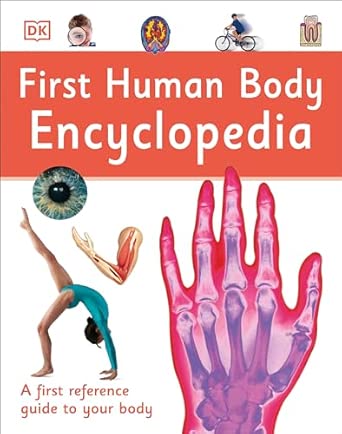 | Best for Young Beginners | Format: Hardcover (DK First Reference series) | Target Age: Approximately 4-7 years | Subject: Human body and basic anatomy | VIEW LATEST PRICE | See Our Full Breakdown |
| The Elements Book: A Visual Periodic Table Encyclopedia for Kids |  | Best Single-Subject Visual Pick | Format: Hardcover visual encyclopedia | Target Age: Approximately 7-12 years | Subject: Periodic table and chemical elements | VIEW LATEST PRICE | See Our Full Breakdown |
| The Way Things Work: Newly Revised Edition |  | Best for Engineering Curiosity | Format: Hardcover, newly revised edition | Target Age: 8 years to adult | Subject: Machines, mechanics, and technology | VIEW LATEST PRICE | See Our Full Breakdown |
| Knowledge Encyclopedia Human Body! |  | Best Deep Anatomy Reference | Format: Hardcover encyclopedia | Target Age: Approximately 10-16 years | Subject: Human anatomy and biology | VIEW LATEST PRICE | See Our Full Breakdown |
| Sciencia: Mathematics, Physics, Chemistry, Biology, and Astronomy for All (Wooden Books, 37) |  | Best Compact Cross-Disciplinary Primer | Format: Paperback | Series: Wooden Books (Book 37) | Subjects Covered: Mathematics, Physics, Chemistry, Biology, Astronomy | VIEW LATEST PRICE | See Our Full Breakdown |
| educational science reference book | Format | Publisher | Subjects Covered |
|---|---|---|---|
| Everything You Need to Ace Sci | Paperback study guide | Workman Publishing | Physical science, life science, earth science |
| Knowledge Encyclopedia Science | Hardcover illustrated encyclopedia | DK | Physics, chemistry, biology, earth science, space |
| National Geographic Kids Scien | Hardcover children’s encyclopedia | National Geographic Kids | Chemistry, biology, space, animals, technology |
| Science: The Definitive Visual | Large-format hardcover visual guide | DK | Physics, chemistry, biology, mathematics, earth and space science |
| Science Book: Everything You N | Illustrated softcover/hardcover reference | National Geographic | Physical world, life science, technology, space |
| The Usborne Science Encycloped | Hardcover encyclopedia | Usborne | — |
| First Human Body Encyclopedia | Hardcover (DK First Reference series) | DK Children | — |
| The Elements Book: A Visual Pe | Hardcover visual encyclopedia | DK Children | — |
| The Way Things Work: Newly Rev | Hardcover, newly revised edition | HMH Books for Young Readers | — |
| Knowledge Encyclopedia Human B | Hardcover encyclopedia | DK Children | — |
| Sciencia: Mathematics | Paperback | — | Mathematics, Physics, Chemistry, Biology, Astronomy |
More Details on Our Top Picks
Everything You Need to Ace Science in One Big Fat Notebook
Everything You Need to Ace Science stands out because it is the only pick here built as an actual study tool rather than a browsing book. While Science Book: Everything You Need to Know About the World explains concepts accessibly, this notebook goes further with practice questions and a doodle-style, notebook-format layout that mirrors how middle schoolers actually learn. Compared with Knowledge Encyclopedia Science!, which prioritizes visual wow-factor, this one prioritizes curriculum alignment — it follows what students are tested on. The tradeoff is scope: it is strictly middle school material, so it will feel shallow to older students, and it lacks the lavish photography that makes DK titles engaging for casual reading.
Pros:- Curriculum-aligned coverage of middle school science
- Practice questions reinforce each concept
- Handwritten-style notebook format feels approachable rather than intimidating
- Condenses an entire year of science into one affordable volume
Cons:- Depth is strictly middle school level
- Minimal photography compared with DK and National Geographic titles
- No index-level rigor for looking up specific topics quickly
Best for: Middle school students (roughly grades 6-8) who need a curriculum-aligned study companion for homework, review, and test prep
Not ideal for: High schoolers or adults — the depth stops at middle school level, and there is no advanced content
- Format:Paperback study guide
- Target Level:Middle school (grades 6-8)
- Publisher:Workman Publishing
- Series:Big Fat Notebooks
- Content Type:Explanations plus practice questions
- Subjects Covered:Physical science, life science, earth science
- Reading Style:Notebook/doodle visual format
Our verdict“This is the pick if the goal is passing science class, not just browsing cool facts.”
Knowledge Encyclopedia Science! 2nd Edition
For readers who learn by seeing, Knowledge Encyclopedia Science! is the strongest visual reference in this lineup. Its 3D-style cross-section illustrations and computer-generated imagery explain mechanisms — plate tectonics, particle physics, genetics — in ways that plain text cannot. Compared with National Geographic Kids Science Encyclopedia, which targets younger readers with punchy fact boxes, this DK volume goes deeper and feels appropriate well into the teen years. Against The Definitive Visual Guide, it is more compact and kid-friendly, though it cannot match that book’s historical scope. The main tradeoff: it is a browsing encyclopedia, not a study resource, so students who need practice questions should pair it with Everything You Need to Ace Science.
Pros:- Stunning 3D cross-section and CG illustrations clarify complex mechanisms
- Broader and deeper than kid-level encyclopedias
- Updated 2nd edition reflects current science
- Topic-based spreads make it easy to explore a subject in 15 minutes
Cons:- Heavy and oversized, so it is a shelf book rather than a carry-along
- No practice material or study scaffolding
- Price sits above simpler single-topic references like The Elements Book
Best for: Visual learners aged roughly 9-16 who want a richly illustrated home reference to dip into by topic
Not ideal for: Students preparing for exams — there are no practice questions or curriculum structure
- Format:Hardcover illustrated encyclopedia
- Target Level:Ages 9-16
- Publisher:DK
- Edition:2nd Edition
- Content Type:Visual encyclopedia with CG imagery
- Subjects Covered:Physics, chemistry, biology, earth science, space
- Structure:Topic-based illustrated spreads
Our verdict“The best choice when the goal is understanding how things work visually, not drilling for tests.”
National Geographic Kids Science Encyclopedia
This is the entry point of the roundup: colorful, fast-paced, and built for elementary readers. Where Knowledge Encyclopedia Science! rewards sustained attention, the National Geographic Kids Science Encyclopedia serves up bite-sized facts, bold photos, and playful layouts that keep 7-to-11-year-olds turning pages. The brand’s photography is a genuine advantage over DK’s illustration-heavy approach for kids who respond to real images of animals, volcanoes, and rockets. The flip side is retention of depth — an ambitious fifth grader will outgrow it within a couple of years, and it lacks the systematic organization that makes Science: The Definitive Visual Guide useful as a long-term family reference.
Pros:- Outstanding National Geographic photography of real-world science
- Short, digestible entries suit short attention spans
- Fun facts and quizzes keep reluctant readers engaged
- Covers a genuinely wide spread of topics from food chemistry to space
Cons:- Reading level caps out around upper elementary
- Fact-bite format is weaker for structured learning than Everything You Need to Ace Science
- Will be outgrown relatively quickly
Best for: Elementary-school kids (ages 7-11) who are curious but not yet ready for dense science text
Not ideal for: Middle schoolers and up — the reading level and depth are below what they need
- Format:Hardcover children’s encyclopedia
- Target Level:Ages 7-11
- Publisher:National Geographic Kids
- Content Type:Fact-based entries with photography
- Subjects Covered:Chemistry, biology, space, animals, technology
- Reading Style:Bite-sized facts and visual spreads
Our verdict“The right first science encyclopedia for a curious elementary reader — buy it for the photos and the fun.”
Science: The Definitive Visual Guide
Science: The Definitive Visual Guide plays a different role than every other pick: it is a serious, shelf-worthy family reference that traces scientific concepts alongside their history and key discoveries. Compared with Knowledge Encyclopedia Science!, it skews older — teens and adults will get more from it than a nine-year-old — and its timeline-driven structure gives context that pure topic encyclopedias skip. It also covers more ground than Science Book: Everything You Need to Know About the World, with richer production values to match a higher price. The tradeoffs are real: it is large, heavy, and expensive, and its density can intimidate younger or casual readers who just want quick answers.
Pros:- Combines concepts with the history and people behind major discoveries
- High production quality suitable as a permanent home reference
- Depth serves teens through adults, unlike kid-focused picks
- Logical chronological and thematic organization supports genuine study
Cons:- Among the most expensive options in this roundup
- Physically large and heavy — not portable
- Too dense for elementary or reluctant readers
Best for: Families and lifelong learners who want a durable, authoritative reference that stays useful from teen years through adulthood
Not ideal for: Budget buyers or younger children — the size, price, and density outweigh its value for that audience
- Format:Large-format hardcover visual guide
- Target Level:Teen to adult
- Publisher:DK
- Content Type:Visual reference with history of science
- Subjects Covered:Physics, chemistry, biology, mathematics, earth and space science
- Structure:Thematic and chronological chapters
- Durability:Coffee-table grade binding
Our verdict“Worth the price if you want one substantial science reference the whole household can grow into.”
Science Book: Everything You Need to Know About the World and How It Works
This is the budget-friendly middle path of the lineup: more accessible than Science: The Definitive Visual Guide, more grown-up than the National Geographic Kids Science Encyclopedia, and cheaper than both in most editions. Its plain-language explanations of how the world actually works — weather, machines, the human body, the universe — suit a wide age range, which makes it a smart default for households with mixed-age readers. The compromise is depth: serious students will hit its ceiling quickly, and unlike Everything You Need to Ace Science, there is no practice structure to support coursework. Think of it as a well-rounded starter reference rather than a definitive one.
Pros:- Accessible explanations work for a wide age range in one household
- Covers an impressively broad range of everyday science questions
- Lower price point than premium DK references
- Clean layout supports quick topical lookups
Cons:- Stops at introductory depth on nearly every topic
- No practice questions or study features
- Less visually striking than Knowledge Encyclopedia Science!
Best for: Families and casual adult readers who want one affordable, accessible science book that works across ages
Not ideal for: Students who need exam prep or technical depth — this stays at an introductory level throughout
- Format:Illustrated softcover/hardcover reference
- Target Level:Ages 10 to adult
- Publisher:National Geographic
- Content Type:Accessible general science reference
- Subjects Covered:Physical world, life science, technology, space
- Structure:Thematic sections with quick-lookup layout
Our verdict“A sensible default buy when you want solid general-science coverage without the premium price or the kid-focused tone.”
The Usborne Science Encyclopedia
The Usborne Science Encyclopedia stands out from the other reference books in this roundup because it refuses to be just a book. Alongside solid coverage of gravity, flight, genes, and DNA, it points readers to over 180 video clips and 1,000 vetted websites, turning static pages into a launchpad for self-directed exploration. Compared with Knowledge Encyclopedia Science!, which keeps everything inside its own pages, this option makes more sense for kids who learn best by watching and clicking rather than reading alone. The tradeoff is real, though: the QR-linked format assumes internet access and some parental supervision, and the depth of any given topic is thinner than a single-subject encyclopedia. This pick rewards curiosity but won’t satisfy a student who needs rigorous, exam-ready detail.
Pros:- Extensive topical coverage spanning physics, genetics, and biology
- 180+ video clips and 1,000 curated websites extend learning far past the page count
- Encourages independent, self-directed research habits
- Well organized for jumping between topics rather than reading cover to cover
Cons:- Depth per topic is shallower than dedicated single-subject references
- Multimedia links depend on internet access and may age or break over time
- Vocabulary may be too advanced for readers under about 9
Best for: Curious kids aged 9-14 with reliable internet access who want to explore science beyond the printed page
Not ideal for: Households limiting screen time or seeking offline-only study material, since the multimedia component requires devices
- Format:Hardcover encyclopedia
- Target Age:Approximately 9-14 years
- Topics Covered:Gravity, flight, genes, DNA, and general science
- Multimedia:180+ video clips included
- Web Resources:1,000 recommended websites
- Publisher:Usborne
- Learning Style:Interactive, self-directed
Our verdict“Choose this if your young reader thrives on screens and wants a gateway to further science exploration, not a final answer.”
First Human Body Encyclopedia (DK First Reference)
Where First Human Body Encyclopedia earns its spot is accessibility. DK has stripped anatomy down to big colorful illustrations and short, simple captions that a five- or six-year-old can genuinely absorb, which no other anatomy option here manages. The natural comparison is Knowledge Encyclopedia Human Body! from the same publisher — that volume offers far more detail, but it’s aimed at readers roughly four grades higher. Choosing this one means accepting that your child will outgrow it within a couple of years, and older siblings will find it thin. Think of it as a first stepping stone rather than a lasting reference: it builds vocabulary and curiosity about the body without overwhelming anyone.
Pros:- Large, colorful illustrations that make anatomy approachable for early readers
- Short, simple text blocks suited to emerging readers
- Durable first-reference format designed for young hands
- Builds foundational anatomy vocabulary before deeper study
Cons:- Limited scientific depth — more introduction than reference
- Short usable lifespan as children quickly outgrow it
Best for: Parents of children aged 4-7 who want a gentle, picture-first introduction to anatomy
Not ideal for: Students in upper elementary or middle school, who will find the content too simplified within months
- Format:Hardcover (DK First Reference series)
- Target Age:Approximately 4-7 years
- Subject:Human body and basic anatomy
- Reading Level:Early reader, short captions
- Visual Style:Full-color illustrations
- Publisher:DK Children
Our verdict“This is the right first anatomy book for the youngest readers in the house, but plan to upgrade within a few years.”
The Elements Book: A Visual Periodic Table Encyclopedia for Kids
The Elements Book takes the one topic that intimidates kids most — the periodic table — and makes it browsable. Each element gets a striking photographic spread, so abstract chemistry becomes something you can actually see and flip through. That narrow focus is exactly what separates it from broad survey books like The Usborne Science Encyclopedia: it goes deeper on chemistry than any generalist title here, at the cost of covering nothing else. Compared with Science Book: Everything You Need to Know About the World, it sacrifices breadth entirely. The honest drawback is that the explanations stay surface-level — it’s a genuine encyclopedia of elements, not a chemistry textbook — so a middle schooler writing a lab report will need supplemental material. For sparking interest in chemistry specifically, though, it has no rival in this lineup.
Pros:- Every element gets its own visual entry, making the table feel personal and browsable
- Photographic approach makes abstract chemistry tangible
- Excellent companion to classroom periodic table instruction
- Narrow subject focus allows more depth on chemistry than general encyclopedias
Cons:- Covers only chemistry — useless as an all-purpose science reference
- Explanations are too basic for middle school coursework and beyond
Best for: Kids aged 7-12 who are curious about chemistry or need a friendly companion to early periodic table lessons
Not ideal for: Students needing rigorous chemical explanations or data, since the science stays introductory
- Format:Hardcover visual encyclopedia
- Target Age:Approximately 7-12 years
- Subject:Periodic table and chemical elements
- Visual Style:Photographic element-by-element layouts
- Coverage:Full periodic table
- Publisher:DK Children
Our verdict“Buy this to make chemistry click for a curious kid; skip it if you need one book that covers all the sciences.”
The Way Things Work: Newly Revised Edition
David Macaulay’s The Way Things Work occupies a category no other book in this roundup touches: applied science. Instead of explaining principles in the abstract, it shows how machines and everyday objects actually function, with charming woolly mammoth illustrations that make mechanics memorable. Where The Way Things Work beats broader titles like National Geographic Kids Science Encyclopedia is in explaining the ‘why does this exist’ question kids actually ask — how a zipper, a jet engine, or a zipper-adjacent gear train operates. The newly revised edition adds modern technology the original lacked. The compromise: it’s engineering-focused, so life sciences are nearly absent, and the treatment stays conceptual rather than mathematical. A teen preparing for physics exams will want something more quantitative.
Pros:- Explains mechanics through real machines, answering the questions kids actually ask
- Genuinely appeals across ages — parents will enjoy it alongside children
- Newly revised edition includes modern technology and current devices
- Signature illustrated style makes complex mechanisms memorable
Cons:- Almost no life science or chemistry content, limiting use as a general reference
- Conceptual explanations skip the math needed for formal coursework
Best for: Hands-on kids and tinkerers aged 8 to adult who want to understand how machines and technology function
Not ideal for: Students needing life science coverage or mathematical rigor, since the book is conceptual and engineering-centric
- Format:Hardcover, newly revised edition
- Target Age:8 years to adult
- Subject:Machines, mechanics, and technology
- Illustrator/Author:David Macaulay
- Visual Style:Detailed cross-section illustrations
- Publisher:HMH Books for Young Readers
Our verdict“This is the pick for the kid who takes apart toasters — just don’t expect it to cover biology or prep anyone for exams.”
Knowledge Encyclopedia Human Body!
Knowledge Encyclopedia Human Body! is what happens when DK’s visual approach is aimed at serious readers. The 3D-style renderings of organs, tissues, and systems show anatomy at a level of detail that simply isn’t attempted elsewhere in this roundup. Its obvious sibling comparison is First Human Body Encyclopedia — this is the sequel a family buys two or three years later, when the simplified version has been exhausted. Against generalist titles like Science: The Definitive Visual Guide, it trades breadth for genuine anatomical depth, making it a stronger choice for a biology-obsessed tween or a student starting serious life science coursework. The flip side is obvious: it’s one subject only, and the dense pages can overwhelm younger readers who aren’t ready for terms like mitochondria in context.
Pros:- 3D renderings reveal anatomy at a depth unmatched by other titles here
- Covers systems, organs, and microscopic structures in real detail
- Accessible enough for tweens while remaining useful through early high school
- Strong natural upgrade path from DK’s First Human Body Encyclopedia
Cons:- Single-subject focus makes it a supplement, not a full science reference
- Dense layouts and vocabulary can overwhelm readers under about 10
Best for: Biology-focused students aged 10-16 who want serious anatomical depth with striking visuals
Not ideal for: Younger children or families wanting one general science book, since it covers only the human body
- Format:Hardcover encyclopedia
- Target Age:Approximately 10-16 years
- Subject:Human anatomy and biology
- Visual Style:3D CGI renderings and cross-sections
- Series:DK Knowledge Encyclopedia
- Publisher:DK Children
- Depth Level:Intermediate to early high school
Our verdict“For a student ready to go beyond basics in human biology, this is the anatomy reference to buy — just pair it with a general encyclopedia.”
Sciencia: Mathematics, Physics, Chemistry, Biology, and Astronomy for All (Wooden Books, 37)
Where heavyweight options like Science: The Definitive Visual Guide and The Usborne Science Encyclopedia sprawl across hundreds of glossy pages, Sciencia takes the opposite approach: it compresses mathematics, physics, chemistry, biology, and astronomy into a slim volume you can actually carry. This pick makes the most sense for readers who want one portable overview rather than a shelf-hogging encyclopedia. The explanations favor elegance and intuition, which works well for curious adults and teens who find textbook prose off-putting. Compared with the Big Fat Notebook, which is built around curriculum checklists, Sciencia reads more like an intellectual sampler — less test prep, more genuine wonder. The tradeoff is real, though: depth is thin. Anyone expecting the anatomical detail of the Knowledge Encyclopedia Human Body! or the visual density of Nat Geo’s encyclopedia will find this under-illustrated and brief.
Pros:- Covers five major sciences in one compact, affordable volume
- Explanations favor clarity and intuition over jargon, making it genuinely beginner-friendly
- Small trim size makes it easy to read on the go or keep on a nightstand
- Elegant editorial design that encourages browsing rather than cramming
Cons:- Thin treatment of each discipline — serious students will outgrow it quickly
- Sparse diagrams compared with visually rich competitors like DK or National Geographic titles
- No clear author or edition information, which makes sourcing and citation awkward
Best for: Curious teens and adults who want a pocket-sized tour of all the major sciences without committing to a full encyclopedia
Not ideal for: Students needing curriculum-aligned study material or detailed diagrams — the Big Fat Notebook or a DK visual encyclopedia will serve better
- Format:Paperback
- Series:Wooden Books (Book 37)
- Subjects Covered:Mathematics, Physics, Chemistry, Biology, Astronomy
- Reading Level:Accessible to general audiences and beginners
- Portability:Compact, travel-friendly trim size
- Visual Content:Limited diagrams and illustrations
- Best Use:Cross-disciplinary overview and curiosity-driven reading
Our verdict“A smart, portable primer for casual learners who want breadth and inspiration, not a reference for anyone who needs depth or visuals.”

How We Picked
I judged these 11 titles against four buyer-relevant criteria rather than raw content volume. Accuracy and currency came first: science references date quickly, so I favored recent revisions and checked whether facts, imagery, and framing reflect current understanding. Age-appropriate accessibility came second — a brilliant explanation pitched at the wrong reading level fails as a reference, so I matched each book to the youngest reader who can realistically use it independently. Third, I weighed retrievability: a reference book succeeds when a student can find an answer in under a minute, which rewarded clear indexing, logical organization, and visual navigation aids over sheer page count. Finally, I considered longevity and value — how many years of use a family or classroom will realistically get before the reader outgrows it.
The ranking reflects fit before polish. Titles that serve a broad audience well (general visual encyclopedias) rank high because they solve the most common buying scenario, while excellent niche picks like The Elements Book rank lower simply because they serve fewer readers. Where two books overlapped heavily, I ranked the one with the better explanations and more durable format higher and flagged the other as potentially redundant.
| educational science reference book | Subjects Covered |
|---|---|
| Everything You Need to Ace Sci | Physical science, life science, earth science |
| Knowledge Encyclopedia Science | Physics, chemistry, biology, earth science, space |
| National Geographic Kids Scien | Chemistry, biology, space, animals, technology |
| Science: The Definitive Visual | Physics, chemistry, biology, mathematics, earth and space science |
| Science Book: Everything You N | Physical world, life science, technology, space |
| The Usborne Science Encycloped | — |
| First Human Body Encyclopedia | — |
| The Elements Book: A Visual Pe | — |
| The Way Things Work: Newly Rev | — |
| Knowledge Encyclopedia Human B | — |
| Sciencia: Mathematics | Mathematics, Physics, Chemistry, Biology, Astronomy |
Factors to Consider When Choosing Educational Science Reference Books
Before picking a specific title, it helps to understand what actually separates a science reference book that gets used for years from one that gathers dust. These are the factors I weighed most heavily, plus the mistakes I see buyers make repeatedly.
Match the Reading Level, Not the Age on the Cover
Publishers label books by age, but reading ability varies enormously within any age group, and a reference book that frustrates a reader once rarely gets opened again. A visual encyclopedia with short captions can serve a strong eight-year-old, while a text-dense title like Sciencia will defeat many fourteen-year-olds. The fastest test is to open any page at random and ask whether the reader could explain the main idea back to you in their own words. When in doubt, buy slightly below the reader’s comfort level for a reference book — unlike a novel, a reference gets pulled out repeatedly, and easy wins build the habit of using it. The most common mistake I see is buying a beautiful ‘aspirational’ book two levels above the reader, which becomes a coffee table ornament within a month.
General Encyclopedia or Subject-Specific Deep Dive?
General science encyclopedias cover physics, chemistry, biology, and earth science in one volume, which makes them the safer default for homework help and general curiosity. The tradeoff is depth: a general book devotes perhaps ten pages to the human body, while a dedicated anatomy title gives it a hundred. My guidance is to buy one strong general reference first and add subject titles only after a demonstrated interest appears — a kid who checks out every library book on space will use a space-focused title constantly, while a speculative purchase sits unread. Also watch for overlap between general encyclopedias themselves: families often end up owning two or three books that cover the same material at nearly the same level. One well-chosen general reference plus interest-driven additions is the pattern that works.
How Visual Design Affects Actual Use
Visual reference books fall into two camps, and the difference matters more than most buyers realize. Diagram-led books — where labeled cutaways do most of the explaining — work for reluctant readers, younger kids, and quick lookups. Text-led books with supporting images demand sustained reading and suit confident readers who want fuller explanations. Neither approach is superior, but mismatching them to the reader is the fastest route to disappointment. Also check the physical size: large-format encyclopedias are gorgeous but awkward for a child to hold in bed or carry to a desk, which quietly reduces how often they get used. A mid-size format that stays open flat on its own will outperform a spectacular coffee-table volume in day-to-day reference use.
Curriculum Alignment for School Support
If the book’s primary job is helping with schoolwork, curriculum alignment beats everything else. Middle school science in the US follows a fairly predictable sequence — cells, forces, energy, earth systems — and a study guide organized around that sequence makes test prep dramatically faster than a topic-by-topic encyclopedia. Look for structural cues: units that mirror classroom topics, key-vocabulary callouts, and practice questions signal a book built for studying rather than browsing. Reference encyclopedias still belong on the shelf for projects and curiosity, but they answer ‘what is mitosis’ differently than they answer ‘what will be on Thursday’s quiz.’ Families who try to stretch a browsing encyclopedia into a study tool are the ones who end up buying a second book a semester later.
Digital Extras: Bonus or Gimmick?
Some references bundle QR codes, video clips, or curated link lists, and the value varies wildly. Curated, publisher-maintained link collections add real value because someone has already filtered the internet’s noise — that’s a genuine service for a young researcher. Generic QR codes pointing to a marketing page, on the other hand, age badly and add nothing. The honest caveat is that all digital extras eventually break, so treat them as a bonus rather than a reason to buy. A book that stands fully on its own printed content is the safer long-term purchase; the digital layer should tip a decision only when two print titles are otherwise equal.
Durability and the Cost Per Year of Use
Reference books get flipped through, left open, and carried around, so binding quality directly affects lifespan. Sewn or glued hardcovers routinely survive a decade of family use, while cheap paperbacks with tight spines crack within a year of heavy handling. Price alone is a poor guide here — a $40 hardcover used for six years costs less per year than a $15 paperback replaced twice. My rule of thumb: buy the most durable format for general encyclopedias that multiple kids will share, and accept cheaper formats for narrow-interest titles that may be outgrown quickly. Also check whether a revised edition exists before buying used, since science references on space, climate, and medicine go stale faster than any other nonfiction category.
Frequently Asked Questions
Should I buy a general science encyclopedia or a subject-specific book like a human body or elements title?
Start with a general reference unless the child already shows a strong, sustained interest in one subject. General encyclopedias like Science: The Definitive Visual Guide cover homework topics across the whole curriculum, so they get pulled off the shelf weekly. Subject-specific books are more engaging but only for readers who chose that subject themselves — a human body encyclopedia handed to a kid fascinated by space will sit unread. The exception is early elementary readers, where a focused title like First Human Body Encyclopedia often works better because general encyclopedias pitch above their reading level. The strongest home library is one general reference plus one or two interest-driven deep dives, added over time.
Is a study guide like the Big Fat Notebook a real reference book or just test prep?
It’s genuinely both, which is unusual. The Big Fat Notebook is organized around the middle school science curriculum, with vocabulary callouts, worked examples, and practice questions, so it functions as a study tool first. But because it covers the entire course in one place with plain-language explanations, it also answers everyday ‘what does that mean’ questions faster than a traditional encyclopedia. Where it falls short is depth and shelf-life — it stops at middle school content and offers little for projects, curiosity browsing, or advanced readers. Treat it as the best possible school-support purchase, and pair it with a visual encyclopedia for everything beyond the curriculum.
How current do science reference books need to be? Should I worry about buying an older edition?
Core physics, chemistry, and biology content ages slowly, so an older edition of a general encyclopedia remains useful for most topics. Space, climate science, and medicine are the exceptions — counts of moons, climate projections, and medical guidance change fast enough that a decade-old book will contain claims a teacher would mark wrong. My practical rule: for Earth and space content, buy the newest edition available; for mechanics, basic biology, and the periodic table’s fundamentals, a recent-but-not-current edition is a fine value play, especially used. Just check that any older edition wasn’t revised specifically to fix errors, which you can usually spot from the publisher’s revision notes.
Are the linked video clips and websites in books like the Usborne Science Encyclopedia worth paying for?
They add real value, but only for certain buyers. Publisher-curated link collections save parents the job of vetting sources, which matters most for kids in the research-project years — roughly ages nine to thirteen. The links extend the book’s shelf life too, since updated online content can compensate for a print edition slowly going stale. The drawbacks: links break over time, they require device access and some supervision, and they turn reading time into screen time if your child defaults to the tablet. If two books are otherwise equal, the digital layer is a reasonable tiebreaker — but I wouldn’t pay a large premium for it alone.
My child finds science boring. Which of these books is most likely to actually get read?
Interest-driven formats beat encyclopedias for reluctant readers. The Way Things Work is the most reliable hook in this lineup because it explains science through machines kids already care about — ramps, zippers, phones — rather than through abstract concepts. For younger reluctant readers, The Elements Book works surprisingly well because each element gets a striking visual spread with almost no sustained reading required. Diagram-led encyclopedias are the next best choice; text-heavy titles like Sciencia will almost certainly fail with this reader despite being excellent books. The goal at first is exposure and habit, not coverage — a book that gets browsed voluntarily beats a better book that never leaves the shelf.
Conclusion
There is no single best science reference book — there is a best book for your reader. For the best overall pick, Science: The Definitive Visual Guide earns the top spot for its breadth, clear explanations, and ability to serve readers from upper elementary through adulthood. For best value, the Big Fat Notebook delivers more practical schoolwork help per dollar than anything else here, especially for middle school families. On the premium side, Knowledge Encyclopedia Human Body! and the digital-equipped Usborne Science Encyclopedia justify their higher prices with production quality and extended learning resources. For beginners and younger readers, First Human Body Encyclopedia is the gentlest entry point in the lineup. And for specific needs: The Way Things Work for mechanically curious kids, The Elements Book for chemistry-obsessed browsers, and Sciencia for adult readers and strong teens who want compact intellectual depth. Match the book to the reader, avoid buying overlapping general encyclopedias, and one well-chosen title will get used for years.
Halloween Picks
halloween
As an affiliate, we earn on qualifying purchases.