

For most teachers, the Canon imageFORMULA R40II Office Document Scanner is the best overall fit: its automatic document feeder and two-sided scanning suit batches of worksheets, forms, and student work. The Brother DS-640 is a better match for a teacher who needs a compact scanner to carry between school and home, while the Canon CanoScan LiDE 300 handles books and delicate originals that should not go through a feeder. The main tradeoff is between batch convenience, portability, and the ability to scan bound or unusual materials. A high-volume office model can be more machine than one classroom needs, while a handheld or mobile scanner asks for more page-by-page effort. Read on for the full breakdown and a guide to choosing for your teaching workflow.

Get school and study supplies delivered free — and shop member deals
- Fast, free delivery on millions of items
- Access to Prime Big Deal Days deals on October 6–7
- Prime Video, Amazon Music and more included
Key Takeaways
- The Canon R40II Office is the strongest all-around classroom document pick because an automatic feeder and two-sided scanning are better suited to repeated stacks than a handheld or single-sheet mobile scanner.
- The two R40II editions are a workflow choice, not a different scanner class: compare the Receipt Edition with the standard Office model by the included software and intended paperwork, rather than assuming either replaces a portable option.
- Portable models trade batch speed for mobility. The Brother DS-640, Epson ES-50, and Canon R10 make more sense for light scanning at a desk, in a shared office, or between home and school than for recurring large stacks.
- Flatbed and wand scanners solve different edge cases. The CanoScan LiDE 300 suits books and fragile pages; the MUNBYN wand avoids a feeder but requires manual passes and careful handling.
- The HP N9000 sn1 and Brother Work Smart 1360 serve broader office needs. The HP is aimed at heavy-duty office throughput, while the Brother is an all-in-one printer with scanning rather than a dedicated document scanner.
| Canon imageFORMULA R40II Receipt Edition Office Document Scanner |  | Best for Mixed Classroom Paperwork | Scanner type: Document | Connection: USB-C | Scanning speed: Up to 45 pages per minute | VIEW LATEST PRICE | See Our Full Breakdown |
| Plustek PS188 Double-Sided Color Document Scanner |  | Best for Searchable Classroom Archives | Scanner type: Document scanner | Connection: USB | Scanning speed: Up to 30 pages per minute | VIEW LATEST PRICE | See Our Full Breakdown |
| Canon imageFORMULA R40II Office Document Scanner |  | Best for High-Volume Classroom Scanning | Scanner type: Document scanner | Connection: USB-C | Scanning speed: Up to 45 pages per minute | VIEW LATEST PRICE | See Our Full Breakdown |
| MUNBYN Portable Scanner, 900 DPI Handheld Wand Scanner, A4, 16GB SD, Black |  | Best for Fragile Books and Loose Pages | Scanner type: Handheld wand scanner | Maximum document size: A4 | Maximum resolution: 900 dpi | VIEW LATEST PRICE | See Our Full Breakdown |
| Brother DS-640 Compact Mobile Document Scanner |  | Best for Teachers Who Scan on the Go | Scanner type: Business card and document scanner | Connection: USB | Scan speed: Up to 16 pages per minute | VIEW LATEST PRICE | See Our Full Breakdown |
| HP ScanJet Enterprise Flow N9000 sn1 |  | Best for High-Volume School Offices | Scanner type: Document scanner | Duplex speed: Up to 80 ppm / 160 ipm | Automatic document feeder: 100 pages | VIEW LATEST PRICE | See Our Full Breakdown |
| Canon CanoScan LiDE 300 Flatbed Scanner |  | Best for Classroom Photos and Flat Originals | Scanner type: Document and photo flatbed | Optical resolution: 2400 × 2400 dpi | Typical scan time: 10 seconds | VIEW LATEST PRICE | See Our Full Breakdown |
| HPPS100 Portable USB Document and Photo Scanner |  | Best for Lightweight Everyday Classroom Scanning | Scanning type: Single-sided sheetfed | Scanning speed: Up to 15 pages per minute | Resolution: Up to 1200 dpi | VIEW LATEST PRICE | See Our Full Breakdown |
| Epson WorkForce ES-50 Mobile Document Scanner |  | Best for Quick Single-Page Scans on the Move | Scanner type: Document scanner | Connection: USB | Resolution: 1200 dpi | VIEW LATEST PRICE | See Our Full Breakdown |
| Canon imageFORMULA R10 Portable Document Scanner | 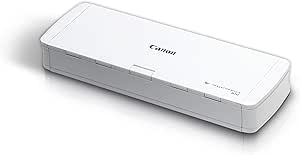 | Best Portable Duplex Scanner | Scanner type: Document scanner | Scanning speed: Up to 12 pages per minute | Duplex scanning: Yes | VIEW LATEST PRICE | See Our Full Breakdown |
| Brother Work Smart 1360 Wireless Color Inkjet All-in-One Printer |  | Best for Teachers Who Also Need a Classroom Printer | Printer type: Color inkjet all-in-one | Functions: Print, copy, scan | Connectivity: Wi-Fi, Wi-Fi Direct, USB | VIEW LATEST PRICE | See Our Full Breakdown |
| document scanners for teacher | Scanner type | Connection | Resolution | Weight |
|---|---|---|---|---|
| Canon imageFORMULA R40II Recei | Document | USB-C | 1200 dpi | 7.1 pounds |
| Plustek PS188 Double-Sided Col | Document scanner | USB | 600 dpi | — |
| Canon imageFORMULA R40II Offic | Document scanner | USB-C | 600 dpi | 7.1 pounds |
| MUNBYN Portable Scanner | Handheld wand scanner | — | — | 0.66 pounds |
| Brother DS-640 Compact Mobile | Business card and document scanner | USB | — | 1 pound |
| HP ScanJet Enterprise Flow N90 | Document scanner | — | 600 dpi | 10.8 pounds |
| Canon CanoScan LiDE 300 Flatbe | Document and photo flatbed | — | — | 3.6 pounds |
| HPPS100 Portable USB Document | — | USB 2.0 | Up to 1200 dpi | — |
| Epson WorkForce ES-50 Mobile D | Document scanner | USB | 1200 dpi | 9.44 ounces |
| Canon imageFORMULA R10 Portabl | Document scanner | USB | 600 dpi | — |
| Brother Work Smart 1360 Wirele | Flatbed, sheetfed | — | — | — |
More Details on Our Top Picks
Canon imageFORMULA R40II Receipt Edition Office Document Scanner
For teachers who regularly need to digitize permission slips, receipts, invoices, and student records in batches, the R40II Receipt Edition offers the most hands-off workflow in this group. Its 60-sheet feeder and duplex scanning can process both sides of a stack, while the stated speed of up to 45 pages per minute suits busy office days better than the 30-page-per-minute Plustek PS188. CaptureOnTouch includes a QuickBooks Online plugin, a useful extra for teachers handling classroom or department expenses. The tradeoff is software flexibility: this model is designed for CaptureOnTouch and does not support TWAIN or ISIS drivers. Compared with the standard Canon imageFORMULA R40II, this Receipt Edition adds a finance-oriented workflow, but it is less appealing if you need broader driver support or accounting tools are irrelevant.
Pros:- Duplex scanning captures both sides of a sheet in one pass.
- A 60-sheet automatic feeder reduces time spent loading classroom paperwork.
- Handles mixed document types, including receipts, reports, contracts, and business cards.
- CaptureOnTouch includes a QuickBooks Online plugin for organizing expense documents.
Cons:- TWAIN and ISIS drivers are not supported.
- Designed to work with the included CaptureOnTouch software rather than a broad choice of scanning apps.
Best for: Teachers, department coordinators, and school office staff who scan mixed paperwork in batches and want a QuickBooks Online workflow for expense records.
Not ideal for: Teachers who rely on TWAIN or ISIS-compatible applications, or who want to choose scanning software beyond Canon CaptureOnTouch.
- Scanner type:Document
- Connection:USB-C
- Scanning speed:Up to 45 pages per minute
- Resolution:1200 dpi
- Automatic feeder capacity:60 sheets
- Duplex scanning:Yes
- Weight:7.1 pounds
- Warranty:1 year manufacturer warranty
Our verdict“Choose this model for fast, batch scanning of varied school paperwork, especially when its QuickBooks workflow is useful to you.”
Plustek PS188 Double-Sided Color Document Scanner
The Plustek PS188 is a strong fit for teachers who need more than image files and want to find old documents by their contents. Its full-text search, customizable scan profiles, and barcode-based file naming can make a digital archive of forms, lesson materials, or student paperwork easier to sort and retrieve. The 50-sheet feeder and duplex scanning support batch work, though the stated maximum of 30 pages per minute is slower than either Canon R40II in this roundup. It also handles cards and documents up to 200 inches long, giving it flexibility for unusual source material. The key limitation is compatibility: it requires USB and lists Windows support only. Compared with the Canon R40II Receipt Edition, the PS188 prioritizes searchable organization over faster scanning and QuickBooks integration.
Pros:- Full-text search helps locate archived documents by their contents.
- Custom scan profiles and one-button operation can simplify repeat classroom workflows.
- Barcode-based file naming supports organized document batches.
- Duplex scanning and a 50-sheet feeder handle routine stacks of paperwork.
Cons:- USB connection is required, limiting use away from a computer setup.
- Listed operating-system support is limited to Windows.
- Its stated scanning speed is lower than the Canon R40II models.
Best for: Windows-based teachers or school staff building a searchable archive of forms and handouts, especially those who benefit from barcode-based file naming.
Not ideal for: Mac or Linux users, and teachers who need a portable scanner or the faster batch throughput of the Canon R40II models.
- Scanner type:Document scanner
- Connection:USB
- Scanning speed:Up to 30 pages per minute
- Resolution:600 dpi
- Automatic feeder capacity:50 sheets
- Optical sensor technology:CIS
- Supported operating systems:Windows 7, 8, 10, and 11
- Dimensions:5 x 11 x 6 inches
- Warranty:1-year limited warranty
Our verdict“Pick the PS188 if searchable filing and repeatable document workflows matter more than maximum speed or cross-platform support.”
Canon imageFORMULA R40II Office Document Scanner
When end-of-term paperwork or regular handout archiving means scanning stacks at once, the standard Canon imageFORMULA R40II pairs a 60-sheet feeder with duplex scanning and a stated speed of up to 45 pages per minute. CaptureOnTouch can turn varied documents into searchable digital files, while one-touch operation helps keep repeat tasks straightforward. It shares its main speed and feeder advantages with the R40II Receipt Edition, but the Receipt Edition adds a QuickBooks Online plugin that may suit staff tracking expenses. This standard version makes more sense when that accounting feature is unnecessary. Its main compromise is software lock-in: it works exclusively with CaptureOnTouch and lacks TWAIN and ISIS drivers, so teachers who need to scan from other applications should look at a more flexible workflow.
Pros:- Up to 45 pages per minute supports frequent batch scanning.
- The 60-sheet feeder and duplex scanning reduce manual page handling.
- CaptureOnTouch supports searchable digital files and one-touch operation.
- Foldable feed tray helps keep the scanner compact when not in use.
Cons:- Works exclusively with Canon CaptureOnTouch software.
- TWAIN and ISIS drivers are not supported.
- Lacks the QuickBooks Online plugin included with the Receipt Edition.
Best for: Teachers and school staff who regularly scan sizable batches of classroom records and want a fast, feeder-based USB-C setup.
Not ideal for: Users who need TWAIN or ISIS support, prefer other scanning applications, or only scan a few pages occasionally.
- Scanner type:Document scanner
- Connection:USB-C
- Scanning speed:Up to 45 pages per minute
- Resolution:600 dpi
- Automatic feeder capacity:60 sheets
- Duplex scanning:Yes
- Weight:7.1 pounds
- Software:Canon CaptureOnTouch
- Warranty:1 year
Our verdict“Choose the standard R40II for high-volume school paperwork when speed and feeder capacity matter more than broad software compatibility.”
MUNBYN Portable Scanner, 900 DPI Handheld Wand Scanner, A4, 16GB SD, Black
The MUNBYN wand scanner serves a different classroom task from the feeder-based Canon imageFORMULA R40II: it is designed for manually scanning individual pages, photos, or book sections rather than clearing a stack quickly. Its handheld design avoids feeding older or delicate material through rollers, which can be useful for archival classroom resources that should stay flat and intact. It stores scans on an included 16GB SD card and transfers files to a computer by USB, without requiring a driver download according to the supplied description. But every page requires a steady manual pass, so it is a poor fit for batches of worksheets or forms. It also runs on two AA batteries that must be purchased separately, and its OCR guidance depends on finding compatible software yourself.
Pros:- Handheld scanning avoids feeding fragile pages through a document feeder.
- Portable 0.66-pound design can travel in a small bag.
- Included 16GB SD card stores scans without requiring an always-connected computer.
- Supports scanning material up to A4 size at a stated maximum resolution of 900 dpi.
Cons:- Manual scanning is much slower and more dependent on a steady hand than feeder-based models.
- Requires two AA batteries, which are not included.
- OCR software is not bundled according to the supplied product details.
Best for: Teachers digitizing fragile books, photographs, or occasional loose pages who need a portable device and can scan each page by hand.
Not ideal for: Teachers processing stacks of worksheets or student records, or anyone who wants an automatic feeder, bundled OCR workflow, or rechargeable power.
- Scanner type:Handheld wand scanner
- Maximum document size:A4
- Maximum resolution:900 dpi
- Storage:16GB SD card included
- Weight:0.66 pounds
- Length:9.5 inches
- Power source:Two AA batteries, purchased separately
- Computer connection:USB cable for file transfer
Our verdict“Choose this wand scanner for occasional, delicate page capture, not for routine stacks of classroom paperwork.”
Brother DS-640 Compact Mobile Document Scanner
The Brother DS-640 is the practical choice for teachers who carry documents between classrooms, meetings, or home rather than scanning large stacks at a desk. At one pound, it is far easier to pack than either Canon R40II, and USB power means it does not need a separate power outlet. Its included software covers OCR and image enhancement, with scanning to a computer, email, or cloud services. It also handles business cards, plastic IDs, receipts, and documents up to 72 inches long. That portability comes with a clear limit: its one-sheet capacity means pages must be fed individually, and it needs a computer connection to operate. Compared with the MUNBYN wand scanner, the DS-640 offers computer-based software and broader operating-system compatibility, but it is not designed for scanning fragile book pages by hand.
Pros:- Compact one-pound body is easy to carry between work locations.
- USB-powered operation avoids the need for a separate power outlet.
- Includes OCR and image enhancement software.
- Supports Windows, Mac, and Linux and handles cards as well as paper.
Cons:- One-sheet capacity makes batch scanning slow and hands-on.
- Requires a connected computer to operate.
- Its 300 dpi optical resolution is lower than the listed maximum resolutions of the Canon and MUNBYN options.
Best for: Teachers who need to digitize occasional forms, receipts, or ID cards while moving between school, home, and meetings.
Not ideal for: Teachers scanning large classroom batches or bound and delicate pages, since it has a one-sheet capacity and requires a computer.
- Scanner type:Business card and document scanner
- Connection:USB
- Scan speed:Up to 16 pages per minute
- Optical resolution:300 dpi
- Weight:1 pound
- Dimensions:1.99 x 11.9 x 1.45 inches
- Maximum document length:72 inches
- Compatibility:Windows, Mac, and Linux
- Warranty:One-year limited warranty
Our verdict“Pick the DS-640 for portable, occasional document scanning with computer-based OCR, but choose a feeder model for classroom stacks.”
HP ScanJet Enterprise Flow N9000 sn1
For a school office digitizing enrollment packets, student records, or shared teaching materials in large batches, the HP ScanJet Enterprise Flow N9000 sn1 is the heavy-duty choice in this group. Its 100-page feeder and single-pass duplex scanning can process both sides without teachers flipping pages, while the stated capacity of up to 30,000 pages per day suits centralized administrative work far better than the Canon imageFORMULA R10’s 20-sheet feeder. The 4.3-inch touchscreen, OCR, USB and Ethernet connections, and direct-to-USB scanning also support repeatable office workflows. That scale comes with a tradeoff: it is an office-focused machine, not a compact scanner for an individual teacher’s desk, and its listed 600 dpi resolution is lower than the Canon CanoScan LiDE 300’s maximum. I’d choose it for volume and workflow controls, not photo detail or portability.
Pros:- 100-page automatic feeder supports substantial batch jobs.
- Single-pass duplex scanning captures both sides without manual page flipping.
- OCR, file classification tools, and personalized shortcuts support repeatable office workflows.
- USB, Ethernet, and direct-to-USB scanning offer flexible ways to move files.
Cons:- Its high-volume office focus is excessive for occasional classroom scanning.
- The listed 600 dpi resolution is below the Canon CanoScan LiDE 300’s 2400 × 2400 dpi maximum.
- The 10.8-pound unit is less convenient to move between classrooms than the portable models.
Best for: School administrators and records staff who regularly scan large, two-sided batches and need Ethernet, OCR, and workflow shortcuts.
Not ideal for: Teachers who need a small personal scanner, detailed photo scans, or a simple solution for occasional worksheets.
- Scanner type:Document scanner
- Duplex speed:Up to 80 ppm / 160 ipm
- Automatic document feeder:100 pages
- Maximum daily volume:Up to 30,000 pages
- Maximum document size:A3 / ledger
- Resolution:600 dpi
- Connectivity:USB 3.0 and Ethernet
- Touchscreen:4.3-inch color
- Weight:10.8 pounds
Our verdict“Choose the HP when a school office must process high-volume, two-sided paperwork; skip it for a teacher’s occasional scans or mobile classroom use.”
Canon CanoScan LiDE 300 Flatbed Scanner
The Canon CanoScan LiDE 300 fills a different need from the sheet-fed options: it is a flatbed for teachers scanning photos, artwork, receipts, and individual pages, not a machine for stacks of handouts. Its 2400 × 2400 dpi optical resolution gives more room to preserve fine detail than the HPPS100’s 1200 dpi maximum, while Auto Scan Mode and four EZ buttons reduce setup for common tasks such as making a PDF or copy. Fade correction and dust reduction can also help when digitizing older classroom photos or marked-up materials. The tradeoff is one sheet at a time and a USB-only connection, so recurring class-set scanning will be much slower than with the Canon imageFORMULA R10’s 20-sheet feeder. I’d put this ahead of mobile sheet-fed scanners for image detail, but not for batch productivity.
Pros:- 2400 × 2400 dpi optical resolution supports detailed document and photo scans.
- Flatbed accommodates individual items that are awkward to feed through sheet-fed scanners.
- Auto Scan Mode and four EZ buttons simplify frequent basic tasks.
- Fade correction and dust reduction can improve older or imperfect image scans.
Cons:- Scans one item at a time, making class sets and multi-page packets slow.
- USB-only connection offers less flexibility than the HP ScanJet’s USB and Ethernet options.
- At 3.6 pounds, it is less suited to carrying between rooms than the Epson WorkForce ES-50.
Best for: Teachers and school librarians who digitize individual photos, artwork, receipts, and flat paper originals at a desk.
Not ideal for: Teachers who regularly scan multi-page packets or need a feeder, duplex scanning, or wireless connectivity.
- Scanner type:Document and photo flatbed
- Optical resolution:2400 × 2400 dpi
- Typical scan time:10 seconds
- Connectivity:USB
- Controls:4 EZ buttons
- Color depth:48 bits
- Power consumption:4.5 watts
- Dimensions:14.5 × 9.9 × 1.7 inches
- Weight:3.6 pounds
Our verdict“Pick the LiDE 300 for detailed flatbed scans of classroom photos and individual originals, not for fast stacks of student paperwork.”
HPPS100 Portable USB Document and Photo Scanner
The HPPS100 suits teachers who want a small, straightforward sheet-fed scanner for occasional worksheets, permission slips, or photos. It scans color and black-and-white originals up to 8.5 × 14 inches and works with Windows and macOS, so it can serve a shared classroom or be packed away between uses. Its 15 pages per minute rating gives it a throughput advantage over single-sheet mobile scanners such as the Epson WorkForce ES-50, although the HP scans only one side at a time. WorkScan adds cropping and image adjustments, but the supplied information describes small-to-medium batches rather than office-scale workloads. Compared with the Canon imageFORMULA R10, the HP is a simpler fit for basic one-sided scanning; the Canon is better when duplex pages and an automatic feeder save time. I’d choose the HP for compact everyday jobs, not two-sided packets.
Pros:- Compact design is easy to store or carry between classroom and office.
- Scans color and black-and-white originals up to 8.5 × 14 inches.
- Works with both Windows and macOS.
- HP WorkScan provides cropping and image-adjustment tools.
Cons:- Single-sided scanning means duplex pages need a separate pass.
- Small-to-medium batch design is a poor match for high-volume school-office work.
- USB 2.0 connection requires a computer and does not offer a wireless option.
Best for: Teachers who need a portable scanner for occasional one-sided worksheets, receipts, or photos on a Windows or Mac computer.
Not ideal for: Teachers who routinely digitize double-sided class packets or need an automatic multi-sheet feeder for large jobs.
- Scanning type:Single-sided sheetfed
- Scanning speed:Up to 15 pages per minute
- Resolution:Up to 1200 dpi
- Paper size range:2 × 2.9 inches to 8.5 × 14 inches
- Connection:USB 2.0
- Supported operating systems:Windows and macOS
- Output formats:PDF, JPG, and other formats
- Included software:HP WorkScan
Our verdict“Choose the HPPS100 for portable, mostly one-sided classroom scans; choose the Canon R10 instead if you need duplex capture and a feeder.”
Epson WorkForce ES-50 Mobile Document Scanner
When a teacher only needs to capture a page or two between classes, the Epson WorkForce ES-50 keeps the setup simple: it is USB-powered, weighs 9.44 ounces, and can scan a single page in as little as 5.5 seconds. Its ScanSmart OCR can turn scans into searchable PDFs or editable Office files, a useful step for saving a worksheet as text rather than an image. Compared with the HPPS100, the Epson is lighter and lists a quicker single-page scan time, but it does not provide automatic feeding for a stack. The Canon imageFORMULA R10 is the stronger choice when double-sided sheets or several pages need to move through together. The ES-50 connects to a computer over USB, with no wireless option in the supplied details, so it is best for a mobile teacher who values portability and OCR over batch speed.
Pros:- At 9.44 ounces, it is easy to carry between classrooms.
- USB power avoids the need for separate batteries.
- Single pages scan in as little as 5.5 seconds.
- ScanSmart OCR creates searchable PDFs and editable Word or Excel files.
Cons:- One-sheet capacity means multi-page jobs require manual feeding.
- USB connection requires a computer and does not provide wireless scanning.
- Single-page operation is less efficient than the Canon imageFORMULA R10’s 20-sheet feeder.
Best for: Teachers who carry a scanner between classrooms and need fast, occasional single-page capture with searchable or editable output.
Not ideal for: Teachers who need to scan multi-page packets, duplex documents, or pages without keeping a computer connected by USB.
- Scanner type:Document scanner
- Connection:USB
- Resolution:1200 dpi
- Single-page scan time:As little as 5.5 seconds
- Standard sheet capacity:1 sheet
- Power:USB-powered; 2.1 watts
- Weight:9.44 ounces
- Optical sensor technology:CIS
- Compatibility:Windows and Mac
Our verdict“Choose the ES-50 for portable single-page scanning and OCR, but use a feeder-equipped model for recurring packets.”
Canon imageFORMULA R10 Portable Document Scanner
The Canon imageFORMULA R10 is the most balanced portable choice here for teachers who scan more than an occasional page. Its 20-sheet feeder and duplex capture can handle a small packet with less stopping and page turning than the Epson WorkForce ES-50 or HPPS100, both of which feed one sheet at a time and scan single-sided. At up to 12 pages per minute, it is suited to routine classroom paperwork rather than the HP ScanJet Enterprise Flow N9000 sn1’s high-volume office workload. USB power and a compact body make it practical to move or store, while support for receipts, business cards, and plastic cards adds flexibility for school administration. The tradeoffs are a stated suggested daily limit of 500 scans and no emphasis on photo-paper scanning. I’d pick it when portability and duplex batches matter more than maximum throughput.
Pros:- Duplex scanning captures both sides without manually turning pages.
- 20-sheet automatic feeder handles small batches more efficiently than single-sheet mobile scanners.
- Supports documents, receipts, business cards, and plastic cards.
- Compact, USB-powered design works with Windows and Mac.
Cons:- Suggested daily volume is limited to 500 scans, below the HP ScanJet’s high-volume capacity.
- USB connection means it is not a wireless or networked scanner.
- Not intended for scanning photographs printed on photo paper.
Best for: Teachers who scan small batches of double-sided worksheets, forms, receipts, or cards and want a portable scanner for Windows or Mac.
Not ideal for: School offices processing large daily volumes, teachers seeking a photo-focused flatbed, or anyone needing wireless scanning.
- Scanner type:Document scanner
- Scanning speed:Up to 12 pages per minute
- Duplex scanning:Yes
- Automatic feeder capacity:20 sheets
- Resolution:600 dpi
- Connection:USB
- Power consumption:2.5 W or less
- Dimensions:3.74 × 11.22 × 1.57 inches
- Compatibility:Windows and Mac
Our verdict“Choose the R10 for portable, small-batch duplex scanning; move to the HP ScanJet for heavy daily volume or the LiDE 300 for photo detail.”
Brother Work Smart 1360 Wireless Color Inkjet All-in-One Printer
I’d choose the Brother Work Smart 1360 when scanning is only part of the job: it also prints and copies classroom materials, making it more versatile than dedicated models such as the Canon imageFORMULA R10. Its 20-sheet automatic document feeder can handle a small stack of pages, while the flatbed gives teachers another way to scan items that should not go through the feeder. Wi-Fi and cloud-app support can simplify sending files from a phone or saving them to online storage. The tradeoff is that the feeder scans single-sided only, so double-sided packets need manual handling. It is also an inkjet printer, not a purpose-built high-volume scanner, and its color printing speed is limited to up to 9 pages per minute.
Pros:- Combines printing, copying, and scanning in one device
- 20-sheet feeder handles small batches without feeding pages one at a time
- Flatbed scanner accommodates originals that are unsuitable for the feeder
- Wi-Fi, mobile printing, and cloud-app support provide flexible ways to send and save documents
Cons:- The automatic document feeder scans single-sided pages only
- Color printing is rated at up to 9 pages per minute
- Its multifunction design is less suited to high-volume scanning than dedicated document scanners
Best for: Teachers who want one compact device for routine scanning, copying, and printing worksheets, notes, and classroom handouts.
Not ideal for: Teachers who regularly digitize large, double-sided packets or need a dedicated scanner for fast, high-volume document capture.
- Printer type:Color inkjet all-in-one
- Functions:Print, copy, scan
- Connectivity:Wi-Fi, Wi-Fi Direct, USB
- Automatic document feeder:20 sheets, single-sided
- Paper tray capacity:150 sheets
- Duplex printing:Automatic, two-sided
- Print speed:Up to 16 ppm black, 9 ppm color
- Scanner type:Flatbed, sheetfed
- Dimensions:13.5 x 15.4 x 7.2 inches (D x W x H)
Our verdict“Choose the Brother Work Smart 1360 if your classroom needs printing and copying alongside occasional scanning, but pick a dedicated duplex scanner for frequent packet digitizing.”

How We Picked
I ranked these options by how well each fits common teacher tasks: digitizing classroom handouts, student work, permission forms, and occasional books or photos. I gave more weight to automatic feeding, duplex scanning, and manageable setup for people who routinely process stacks, while also recognizing that smaller mobile models can be a better match for light workloads and shared spaces. I considered the kind of originals each design can handle, how portable it is, whether it is a dedicated scanner or a multifunction device, and the workflow compromises suggested by each product type.
The ranking reflects fit for a teacher’s day-to-day work, not a single speed or feature contest. The R40II Office leads as the most balanced dedicated desktop choice; compact scanners rank higher for mobility than bulk scanning, and the flatbed or wand options earn their place through specific document needs. The HP enterprise model has substantial office-oriented capacity but sits lower for most individual teachers because that scale may be unnecessary. The Brother Work Smart 1360 is included for buyers who need printing and copying as well as scanning, but it is not a dedicated scanner.
| document scanners for teacher | Scanner type | Connection |
|---|---|---|
| Canon imageFORMULA R40II Recei | Document | USB-C |
| Plustek PS188 Double-Sided Col | Document scanner | USB |
| Canon imageFORMULA R40II Offic | Document scanner | USB-C |
| MUNBYN Portable Scanner | Handheld wand scanner | — |
| Brother DS-640 Compact Mobile | Business card and document scanner | USB |
| HP ScanJet Enterprise Flow N90 | Document scanner | — |
| Canon CanoScan LiDE 300 Flatbe | Document and photo flatbed | — |
| HPPS100 Portable USB Document | — | USB 2.0 |
| Epson WorkForce ES-50 Mobile D | Document scanner | USB |
| Canon imageFORMULA R10 Portabl | Document scanner | USB |
| Brother Work Smart 1360 Wirele | Flatbed, sheetfed | — |
Factors to Consider When Choosing Document Scanners For Teachers
Before choosing a model, I would match the scanner to the paperwork you handle most often, not to an occasional one-off task. A classroom that scans a stack of forms every week has different needs from a teacher who digitizes a few pages while moving between rooms. These broader checks can help prevent paying for office capacity you will not use or buying a compact device that turns routine batches into a chore.
Match the feeder to your weekly volume
Think about how many pages you scan in one sitting, rather than counting every sheet you handle in a month. An automatic document feeder can save repeated page placement when processing class sets, but it adds a larger footprint and is less suitable for bound pages, curled paper, or fragile originals. A mobile single-sheet scanner may be easier to store, yet a stack requires more hands-on attention. Teachers who scan only occasional forms may be happier with a compact model than with a desktop feeder they rarely use. Before buying, check the feeder’s stated capacity and the paper types it supports, since staples, mixed sizes, and damaged sheets can interrupt a batch workflow.
Decide whether duplex scanning will earn its space
Two-sided scanning matters most when forms, assignments, or handouts regularly have content on both sides. Without duplex capture, you may need to turn pages and make additional passes, which can add time and create opportunities to miss a side. If most of your originals are single-sided, the extra capability may not change your routine enough to justify a larger or more specialized machine. Check whether the scanner captures both sides in one feed and how its software presents the resulting files. A short sample run with a two-sided worksheet can reveal whether the output order suits your filing system.
Choose for the originals, not just the page count
Teachers scan more than loose office paper: student artwork, workbook pages, photos, and book excerpts may all appear in the same week. A feeder is convenient for ordinary sheets, but it cannot handle a bound page in the same way a flatbed can, and delicate or unusually shaped material may need individual handling. A wand scanner can reach a page without feeding it through a machine, though consistent manual passes take practice. Avoid assuming that a high DPI figure alone guarantees a better result for every classroom task; readable text and accurate color may matter more than very fine detail. If your work includes many books or fragile originals, favor a design that supports them even if it processes stacks more slowly.
Treat portability as a workflow requirement
A small scanner is useful when it will travel between school, home, and a shared office, but portability only helps if the setup works where you plan to use it. Check how the device connects, whether it needs a computer, and what power or storage arrangements apply before assuming it can scan anywhere. Compact models also tend to put more responsibility on the user to feed and align pages individually. If the scanner will stay on one desk, a larger feeder may save more time than a lighter body. Choose portability for a real change in location, not simply because a product looks easier to store.
Check the full digital workflow before buying
Scanning is only the first step: teachers may need searchable PDFs, files separated by class, or scans sent into a school-approved storage system. Software features and compatibility can determine whether a scanner reduces paperwork or creates another manual sorting task. Confirm the supported operating system and file formats, and check any school rules for storing student information before choosing a cloud or wireless workflow. Do not assume that every scanner includes the same document recognition or filing tools. A simpler device can be the better buy if its output fits the systems you already use.
Pay for capacity only when it solves a recurring problem
A high-capacity office scanner can make sense in a department shared by several teachers, especially when large batches are a regular task. For an individual classroom, that level of throughput may bring extra cost, space use, and setup without improving everyday work. At the other end, an all-in-one printer can be a practical choice when printing and copying are also needed, but its scanning function may not be as focused on document batches as a dedicated scanner. Compare the time saved across a normal school week, not the most demanding day of the year. When the workload is modest, a compact scanner or existing multifunction printer may be enough.
Frequently Asked Questions
Is a dedicated document scanner better than an all-in-one printer for classroom paperwork?
A dedicated document scanner is usually the better fit when scanning stacks is a regular task, since models with feeders are designed around moving pages through a scan workflow. An all-in-one such as the Brother Work Smart 1360 may be a more practical choice if printing and copying matter just as much and scanning is occasional. The deciding factor is not whether one category is always better, but how often you scan and whether you need a feeder or specialized handling. Check the device’s scan functions and paper workflow before treating an all-in-one as a direct substitute for a dedicated scanner. If your school already has shared printing, a personal scanner may fill a different need than another printer.
Should I choose a flatbed scanner if I sometimes scan pages from books?
A flatbed is a sensible choice when book pages, photos, or delicate originals are a recurring part of your work, because the original does not need to pass through a feeder. For mostly loose worksheets and forms, a document feeder will generally make batch work less hands-on. Consider how often the bound material appears: an occasional book scan may not justify giving up feeder convenience for your main workload. Also check the maximum supported scan area if you expect to capture larger pages. A hybrid workflow can work well when you already have access to a feeder scanner for routine paperwork.
Can a portable scanner handle a full class set of student work?
It can, but a portable single-sheet scanner generally asks you to guide pages one at a time, which can make a large class set slower and more demanding than using an automatic feeder. Portability pays off when scanning volume is light or the device must move between locations. For recurring class sets, look for an automatic feeder and duplex support if the work is often printed on both sides. Page condition and size matter too: curled, delicate, or mixed-format work may need more individual attention. Choose based on the volume you handle in a typical week, not only on whether the scanner can technically capture the pages.
Do I need a scanner with wireless connectivity for school use?
Wireless access can be convenient if you need to place scans on a shared computer or network without keeping the scanner beside your desk. It is not automatically the best choice for school paperwork, since district policies may restrict where student records can be sent or stored. A wired connection can offer a simpler, more direct workflow when you scan to one approved computer. Before choosing wireless, confirm compatibility with your school network, devices, and data-handling rules. If you mainly scan at one workstation, prioritize the scanning workflow over wireless as a feature on its own.
When is an enterprise scanner more than a teacher needs?
An enterprise model is likely more machine than an individual teacher needs when scanning is limited to occasional forms or small batches. Its office-oriented capacity makes more sense in a shared department or administrative setting where many people process large volumes. A bigger scanner can also require more room and may add setup complexity that does not help a light classroom workflow. Compare its capacity with the pages your team actually scans during a normal week. If one teacher will use it alone, a desktop feeder scanner may deliver a more practical balance.
Conclusion
For most teachers, I recommend the Canon imageFORMULA R40II Office as the best overall choice for recurring classroom paperwork and batch scanning. The Canon imageFORMULA R40II Receipt Edition is the value-oriented alternative for buyers whose included software and receipt-focused workflow suit their needs; compare the package details before choosing between the two editions. For a premium, high-throughput shared office, the HP ScanJet Enterprise Flow N9000 sn1 is the specialized option, though its scale is excessive for many individual classrooms. Beginners who want a straightforward compact setup can start with the Brother DS-640, while the Canon CanoScan LiDE 300 is the specific-needs pick for books and delicate originals. Choose the Epson ES-50, Canon R10, or another mobile model when carrying the scanner matters more than feeding a large stack; choose the Brother Work Smart 1360 when printing and copying are part of the same need.
Halloween Picks
halloween
As an affiliate, we earn on qualifying purchases.




![Competitive Programmer's Handbook (2018) [Pdf]](https://micronomicon.com/wp-content/uploads/2026/10/competitive-programmer-s-handbook-2018-pdf-featured-260x140.jpg)