
Educational science reference kits range from simple starter sets with a dozen safe activities to full chemistry labs with 250+ guided experiments, and the right choice depends heavily on your child’s age and attention span. My top pick overall is the UNGLINGA 272 Experiments Science Kit, which delivers the deepest experiment library and the best long-term value of anything in this lineup. For younger kids, the Doctor Jupiter My First Amazing Science Kit stands out because it keeps everything safe and achievable for ages 4+, while the National Geographic Amazing Chemistry Set earns the premium spot with polished instructions and genuinely impressive results for the 8-12 crowd. The main tradeoff you’ll face is experiment count versus quality of guidance — some kits pad their numbers with near-duplicate activities, while others offer fewer experiments but far better explanations of the science behind them. Price per experiment, refill availability, and adult-supervision demands also vary widely. Keep reading for the full breakdown of all ten kits.

Prime made for students and young adults
- Fast, free delivery for dorm and study essentials
- Prime Video and Amazon Music included
- Member-only deals
Key Takeaways
- Experiment counts are heavily inflated across the category — the UNGLINGA 272 kit and UNGLINGA 150 kit both repeat core activities with small variations, so buyers should judge kits by unique experiment types, not headline numbers.
- The UNGLINGA 272 Experiments kit won best overall because it combines the lowest cost per genuinely new experiment with broad chemistry and physics coverage, making it the best fit for kids who will actually work through a kit over months.
- Kits for ages 4-6 (Doctor Jupiter, Thames & Kosmos Kids First) trade scientific depth for safety and simplicity — they’re the right starting point but are usually outgrown within a year.
- National Geographic’s two sets offer the best instruction quality and presentation in the lineup, justifying their higher price for gift-giving or reluctant learners, but they cost noticeably more per experiment than UNGLINGA equivalents.
- Themed kits like Thames & Kosmos Magnetic Science are depth-over-breadth picks: fewer experiments, but far more genuine understanding of a single topic than any general-purpose kit provides.
| UNGLINGA 70 Lab Experiments Science Kit for Kids |  | Best Overall | Brand: UNGLINGA | Age Range: 8 years and up | Number of Experiments: 70 | VIEW LATEST PRICE | See Our Full Breakdown |
| Carson Dellosa STEM Challenges, Hands-On Science Kits |  | Best for Classrooms and Homeschool | Format: 30 full-color challenge cards | Target Grade: Grades 2-5 | Dimensions: 7.75 x 5.5 inches | VIEW LATEST PRICE | See Our Full Breakdown |
| UNGLINGA 272 Experiments Science Kit for Kids, Chemistry Set |  | Best Premium Variety Pick | Brand: UNGLINGA | Number of Experiments: 272 | Included Tools: Test tube, measuring spoon, beaker, conical flask | VIEW LATEST PRICE | See Our Full Breakdown |
| Doctor Jupiter My First Amazing Science Experiments Kit Ages 4+ |  | Best for Young Beginners | Brand: Doctor Jupiter | Number of Experiments: 100+ | Recommended Age: 4 years and up | VIEW LATEST PRICE | See Our Full Breakdown |
| UNGLINGA 40+ Experiments Science Kit for Kids STEM Toy |  | Best Budget Gift Pick | Brand: UNGLINGA | Age Range: 8 years and up | Number of Experiments: 40+ | VIEW LATEST PRICE | See Our Full Breakdown |
| Thames & Kosmos Kids First Science Kit – STEM Chemistry for Ages 5+ |  | Best Gentle Introduction for Early Learners | Ages: 5+ | Number of Experiments: 12 | Tools Included: Test tubes, pipettes, tweezers | VIEW LATEST PRICE | See Our Full Breakdown |
| National Geographic Amazing Chemistry Set with 100+ Experiments for Ages 8-12 |  | Best Overall | Age Range: 8 years and up | Number of Experiments: 100+ (plus 85 bonus experiments) | Brand: Blue Marble / National Geographic | VIEW LATEST PRICE | See Our Full Breakdown |
| Thames & Kosmos Magnetic Science: 33 STEM Experiments for Ages 8+ |  | Best Focused Physics Pick | Age Range: 8+ | Number of Experiments: 33 | Manual Pages: 60 | VIEW LATEST PRICE | See Our Full Breakdown |
| UNGILINGA 150 Experiments Science Kit for Kids – Chemistry, Physics & STEM Educational Projects | 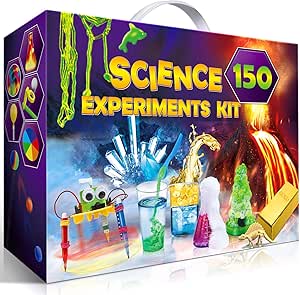 | Best Variety for the Price | Age Range: 8 years and up | Number of Experiments: 150 | Brand: UNGILINGA | VIEW LATEST PRICE | See Our Full Breakdown |
| National Geographic Junior Chemistry Set with 50 Experiments for Kids |  | Best for Preschool Scientists | Age Range: 4 years and up | Number of Experiments: 50 | Brand: Blue Marble / National Geographic | VIEW LATEST PRICE | See Our Full Breakdown |
| educational science reference kit | Number of Experiments | Brand | Age Range |
|---|---|---|---|
| UNGLINGA 70 Lab Experiments Sc | 70 | UNGLINGA | 8 years and up |
| Carson Dellosa STEM Challenges | — | — | — |
| UNGLINGA 272 Experiments Scien | 272 | UNGLINGA | — |
| Doctor Jupiter My First Amazin | 100+ | Doctor Jupiter | — |
| UNGLINGA 40+ Experiments Scien | 40+ | UNGLINGA | 8 years and up |
| Thames & Kosmos Kids First Sci | 12 | — | — |
| National Geographic Amazing Ch | 100+ (plus 85 bonus experiments) | Blue Marble / National Geographic | 8 years and up |
| Thames & Kosmos Magnetic Scien | 33 | — | 8+ |
| UNGILINGA 150 Experiments Scie | 150 | UNGILINGA | 8 years and up |
| National Geographic Junior Che | 50 | Blue Marble / National Geographic | 4 years and up |
More Details on Our Top Picks
UNGLINGA 70 Lab Experiments Science Kit for Kids
UNGLINGA’s 70-experiment kit hits a sweet spot the other options miss: enough variety to stay interesting for months without the overwhelming repetition of the brand’s own 272-experiment set. Compared with the Doctor Jupiter Ages 4+ kit, this one skews toward genuine chemistry — fruit circuits, crystal growing, classic volcano reactions — so an 8-year-old finishes with actual lab habits, not just crafts. The illustrated manual with scientific explanations is what elevates it above the Carson Dellosa card set, which explains the science but leaves you sourcing every material yourself. The tradeoff is real, though: adult supervision is mandatory for several experiments, and a few require household items you may not have on hand. If you want one kit that balances depth, safety, and shelf life, this pick makes the most sense.
Pros:- 70 varied experiments provide long-term engagement without repetition
- Manual pairs instructions with real scientific explanations
- Safe, child-friendly ingredients suited to independent prep by older kids
- Strong balance of chemistry and physics-style activities
Cons:- Adult supervision required for several experiments
- Some activities need additional household items not in the box
Best for: Parents of curious 8-12 year olds who want months of guided chemistry-style learning in a single purchase
Not ideal for: Households with no adult available to supervise — several experiments genuinely require a grown-up present
- Brand:UNGLINGA
- Age Range:8 years and up
- Number of Experiments:70
- Included Components:Science experiments kit with manual
- Model Number:HZDZKH030
- Subject Focus:Chemistry and scientific process
Our verdict“The most well-rounded choice for elementary-age kids ready for real experiments, provided a parent can help out.”
Carson Dellosa STEM Challenges, Hands-On Science Kits
This is the only option in the lineup built for group teaching rather than solo play. While the UNGLINGA kits ship materials for one child at a time, Carson Dellosa’s 30 challenge cards work like a curriculum: each includes a materials list, hints, and an explanation, so a teacher can run stations or a homeschool parent can drop a lesson into the week without prep. The 7¾ x 5½ inch card format makes storage and portability far easier than any boxed kit here — including the compact UNGLINGA 40+ set. The compromise is obvious: you supply every material yourself, and the physical science focus excludes other subjects. Compared with Doctor Jupiter’s pre-packaged experiments, expect more logistics work but far better structure for a classroom of second-through-fifth graders.
Pros:- 30 full-color cards span physical, life, earth, and space science
- Each card includes materials, hints, and explanations — essentially lesson plans
- Card format stores and travels better than bulky kits
- Scales easily to classrooms, centers, or co-op groups
Cons:- All materials must be sourced separately
- Younger students in the grade range will need adult supervision
Best for: Teachers and homeschool parents who need structured, repeatable STEM activities for grades 2-5
Not ideal for: Parents wanting an open-the-box gift — no materials are included, so it requires planning and shopping
- Format:30 full-color challenge cards
- Target Grade:Grades 2-5
- Dimensions:7.75 x 5.5 inches
- Includes Divider:Yes
- Subjects Covered:Physical, life, earth, and space science
- Setting:Classroom, centers, homeschool
Our verdict“A lesson-planning tool disguised as a science kit — buy it for a classroom, not a birthday.”
UNGLINGA 272 Experiments Science Kit for Kids, Chemistry Set
If sheer volume is the goal, nothing else in this roundup competes — 272 experiments is nearly four times the count of UNGLINGA’s own 70-experiment kit and more than double Doctor Jupiter’s 100+. The included test tube, beaker, conical flask, and measuring spoon give it the feel of a real chemistry set rather than a craft box, which matters for kids who want to feel like working scientists. That said, the experiment count comes with caveats: many activities are variations on the same core demonstrations, and the listing lacks a clear age range and detailed safety warnings, so parents of younger children should be cautious. Compared with the National Geographic 100+ set, you trade polish and brand documentation for raw quantity. This model is better suited to families who will actually work through a kit over a year, not weeks.
Pros:- Largest experiment count in the category by a wide margin
- Includes genuine lab tools like a beaker and conical flask
- Mixes chemistry with novel projects like holographic projection
- Kid-safe tested plastic equipment
Cons:- No clearly stated age range or detailed safety warnings
- Experiment count includes many variations of the same demonstrations
Best for: Families committed to long-term science exploration who want lab-style tools and maximum experiment count
Not ideal for: Buyers who want clear age guidance and thorough safety documentation — the listing is vague on both
- Brand:UNGLINGA
- Number of Experiments:272
- Included Tools:Test tube, measuring spoon, beaker, conical flask
- Material:Tested plastic
- Activity Types:Volcano eruptions, crystal growing, holographic projection, rainbow walking water
- Subject Focus:Chemistry and basic science concepts
Our verdict“Maximum quantity and lab authenticity for dedicated young scientists, at the cost of clear safety documentation.”
Doctor Jupiter My First Amazing Science Experiments Kit Ages 4+
Doctor Jupiter is the clear entry point of this lineup — rated for ages 4+ while most competitors here, including the UNGLINGA 70-experiment kit, start at 8. The experiments lean playful (rockets, paper planes, dinosaurs) rather than rigorous, which is exactly the right calibration for preschoolers, and the ASTM F963-17 safety certification gives it stronger documented safety credentials than the UNGLINGA 272 set. Compared with the National Geographic Junior chemistry sets, this option trades scientific depth for accessibility — a four-year-old can participate meaningfully rather than just watching. The drawback is longevity: older kids will outgrow the craft-heavy activities quickly, and like most kits here, some experiments still need household items and an adult’s hands. Think of it as a first taste of science, not a multi-year resource.
Pros:- Lowest age rating in the roundup at 4+
- Meets ASTM F963-17 safety standards
- Over 100 activities provide excellent value per experiment
- Instructions written for adult-child collaboration
Cons:- Craft-style activities will be outgrown quickly by older kids
- Some experiments require additional household items
Best for: Parents of 4-7 year olds wanting a safe, screen-free introduction to STEM thinking
Not ideal for: Kids 8 and up — the activities skew young and will feel simplistic next to true chemistry sets
- Brand:Doctor Jupiter
- Number of Experiments:100+
- Recommended Age:4 years and up
- Safety Standards:ASTM F963-17
- Activity Types:Rockets, paper planes, aliens, dinosaurs, volcanoes
- Format:Screen-free hands-on kit
Our verdict“The best first science kit for preschool-age children, as long as you expect them to graduate beyond it.”
UNGLINGA 40+ Experiments Science Kit for Kids STEM Toy
At 40+ experiments, this is the most approachable entry in UNGLINGA’s lineup — a low-commitment way to test whether a child even likes science kits before graduating to the 70-experiment version. What sets it apart from the Carson Dellosa cards and Doctor Jupiter set is that most materials are actually in the box, so a gift recipient can start experimenting on day one. The headliners — bouncy balls and lava lamps — are crowd-pleasers that land well as birthday presents, and the illustrated step-by-step manual matches the quality of the larger UNGLINGA kits. The tradeoffs: it has the shortest runway of any kit here, and the 8+ age rating excludes younger siblings who could join in with the Doctor Jupiter set. Compared with the National Geographic Junior 50-experiment set, expect similar scale with less brand polish.
Pros:- Most materials included, so experiments can start immediately
- Clear illustrated step-by-step instructions
- Lower price point makes it a low-risk gift choice
- Fun, visual experiments like lava lamps and bouncy balls
Cons:- Only 40+ experiments — the smallest count among UNGLINGA’s kits
- Age rating of 8+ excludes younger children
- Some household items still required
Best for: Gift-givers and parents wanting an affordable, complete starter kit to gauge a child’s interest in science
Not ideal for: Younger children under 8, and families who already know their kid wants maximum experiment variety
- Brand:UNGLINGA
- Age Range:8 years and up
- Number of Experiments:40+
- Set Name:40+ experiments kit
- Manufacturer Part Number:HZDZKH52
- Materials:Most experiment materials included
- Best Sellers Rank:#8,447 in Toys & Games
Our verdict“A smart, low-cost way to test the science-kit waters before investing in a bigger set.”
Thames & Kosmos Kids First Science Kit – STEM Chemistry for Ages 5+
Sitting between the preschool-focused NatGeo Junior set and the bigger 100+ experiment kits, this Thames & Kosmos option finds a sweet spot for the 5-to-7 age bracket that most chemistry sets skip over. The tools — real test tubes, pipettes, and tweezers — feel like proper lab equipment scaled down safely, which matters when the goal is building familiarity with scientific tools rather than just producing a colorful mess. Compared with the National Geographic Junior set, the experiment count is lower, but the 28-page manual is pitched at a slightly older reading level, giving kids more ownership of the activities. The tradeoff is longevity: an 8-year-old who has already done the UNGILINGA 150-experiment kit will finish this in a weekend. Think of it as a bridge product, not a destination.
Pros:- Durable, child-safe tools that can be reused beyond the included experiments
- Age-appropriate chemistry concepts that don’t overwhelm early readers
- Bridges the gap between toddler kits and the 8+ chemistry sets
- Trusted Thames & Kosmos instruction quality in a compact format
Cons:- Only 12 experiments — the lowest count in this lineup
- Requires hands-on adult supervision for the youngest users
- Manual content will feel too basic for kids 8 and up
Best for: Parents of 5-7 year olds who want a first chemistry kit with real lab tools but gentler pacing than the 8+ sets
Not ideal for: Families with older or science-obsessed kids — the 12 experiments will be exhausted quickly
- Ages:5+
- Number of Experiments:12
- Tools Included:Test tubes, pipettes, tweezers
- Manual Pages:28
- Subject Focus:Introductory chemistry (bubbles, density, rainbow solutions)
- Supervision Level:Adult supervision recommended for younger children
Our verdict“Choose this if you have a 5-to-7 year old ready for real lab tools; skip it for anyone old enough for the 100+ experiment kits.”
National Geographic Amazing Chemistry Set with 100+ Experiments for Ages 8-12
This is the pick I would point most families toward first, because it solves the two problems that sink most chemistry sets: running out of experiments and running out of materials. With over 100 experiments plus a bonus guide of 85 more, it roughly doubles the content of the UNGILINGA 150 kit’s core chemistry portion while keeping everything chemistry-specific rather than scattered across topics. Compared with the Thames & Kosmos Magnetic Science kit, the experiments here produce more dramatic, visible results — color-changing liquids, glowing test tubes — which is what keeps an 8-to-12 year old coming back voluntarily. The real tradeoff is that some activities borrow household items like vinegar or baking soda, so a few sessions stall if your pantry isn’t stocked. It also starts at age 8, so younger siblings are left out of the fun.
Pros:- 185 total experiments counting the bonus guide — the deepest content pool in this batch
- All core materials and tools included in the box
- Visually dramatic results that sustain kid interest without screens
- Award-winning STEM pedigree from a trusted education brand
Cons:- Some experiments require household items not in the kit
- Younger children need constant adult supervision
- Chemistry-only scope — no physics or earth science variety like the UNGILINGA kit
Best for: Families with 8-12 year olds who want a deep, chemistry-focused kit with enough experiments to last months
Not ideal for: Households with kids under 8 — the reaction-based experiments assume stronger reading and fine motor skills
- Age Range:8 years and up
- Number of Experiments:100+ (plus 85 bonus experiments)
- Brand:Blue Marble / National Geographic
- Educational Objective:STEM / Chemistry
- Model Number:NGMEGACHEMAR
- Highlights:Crystal growing, chemical reactions, glowing test tubes
- Manufacturer:JMW Sales, Inc.
Our verdict“The strongest all-around choice for the core 8-12 demographic, provided you’re happy restocking a few kitchen supplies.”
Thames & Kosmos Magnetic Science: 33 STEM Experiments for Ages 8+
Where the National Geographic Amazing Chemistry Set goes broad and flashy, this kit goes narrow and conceptual — every one of its 33 experiments is about magnetism, from building electromagnets to mapping Earth’s magnetic poles. That focus is its whole argument: instead of a grab bag of reactions, a child finishes this kit actually understanding an invisible force, which is rare in this price class. The 60-page full-color manual is the most substantial instruction book in this batch, nearly double the page count of the Kids First Science Kit’s guide. The obvious tradeoff is scope. If your child wants variety — chemistry, physics, earth science in one box — the UNGILINGA 150 kit covers all three, and a kid who only cares about explosions will find magnets quiet by comparison. Experiments are also reusable and repeatable, which offsets the lower count somewhat.
Pros:- Deep single-subject coverage that builds genuine conceptual understanding
- 60-page full-color manual, the most detailed in this roundup
- Experiments are repeatable since magnets don’t get used up
- Teaches electromagnets and fields — topics most kits ignore entirely
Cons:- Magnetics-only content — zero chemistry or earth science
- Requires adult supervision for younger children on electromagnet builds
Best for: Curious kids 8+ who like understanding how things work rather than watching reactions, and parents who value depth over variety
Not ideal for: Kids who want varied, visually dramatic experiments — the single-topic focus will feel repetitive
- Age Range:8+
- Number of Experiments:33
- Manual Pages:60
- Subject Focus:Magnetism, electromagnets, magnetic fields
- Experiment Type:Repeatable hands-on physics activities
- Supervision Level:Adult supervision recommended for younger children
Our verdict“The best pick for a child who asks ‘why’ more than ‘wow’, provided magnetism as a single topic holds their interest.”
UNGILINGA 150 Experiments Science Kit for Kids – Chemistry, Physics & STEM Educational Projects
If the NatGeo Amazing Chemistry Set is a specialist, this UNGILINGA kit is the generalist — spreading its 150 experiments across chemistry, physics, earth science, and surface tension. That spread makes it the better fit for a child whose interests haven’t settled yet, or for a classroom where different students gravitate toward different topics. The illustrated manual is genuinely easy to follow, which matters more than raw experiment count when kids work semi-independently. Compared with Thames & Kosmos Magnetic Science, you trade depth for breadth: nothing here gets explored as thoroughly as magnetism does in that kit, but nothing gets skipped either. The tradeoffs are familiar — some activities expect household items the box doesn’t contain, and the tools, while kid-friendly, are more basic than the NatGeo set’s. It’s the pragmatic choice, not the premium one.
Pros:- 150 experiments spanning four science disciplines in one box
- Well-illustrated, easy-to-follow manual for independent use
- Works equally well at home or in a classroom setting
- Strong value per experiment compared with name-brand kits
Cons:- Some experiments require household items not included
- Tools and materials are more basic than National Geographic’s
- Jack-of-all-trades design means shallow coverage of each topic
Best for: Parents and teachers who want the widest topic coverage per dollar for kids 8+ with mixed interests
Not ideal for: Buyers seeking premium tools or a single deep subject — the breadth comes at the cost of quality and depth
- Age Range:8 years and up
- Number of Experiments:150
- Brand:UNGILINGA
- Subjects Covered:Chemistry, physics, earth science, surface tension
- Included:Science tools and materials, illustrated manual
- Recommended Use:Home or classroom educational projects, gifts
- Supervision Level:Supervision needed for younger children
Our verdict“The smart pick when variety and budget matter more than premium components or single-subject depth.”
National Geographic Junior Chemistry Set with 50 Experiments for Kids
This is the kit for the youngest scientists in the family — ages 4 and up, a full year below where the Thames & Kosmos Kids First kit starts and four years below the big chemistry sets. The 20+ child-safe lab tools, including goggles and test tubes, do a lot of the educational work here: a preschooler putting on safety goggles feels like a real scientist, and that roleplay is half the value at this age. Compared with the Kids First Science Kit, you get more experiments (50 versus 12) but a heavier reliance on household items like baking soda and vinegar — the classic preschool reactions — rather than supplied materials. Instructions are picture-based and genuinely readable by pre-readers. The tradeoff is ceiling: a 6-year-old with any science exposure will outgrow this quickly, at which point the Kids First or NatGeo Amazing set becomes the natural next step.
Pros:- Lowest entry age in the roundup at 4 years old
- 20+ child-safe lab tools including goggles for authentic roleplay
- Illustrated instructions accessible to pre-readers
- 50 experiments is generous for the preschool category
Cons:- Heavy dependence on household supplies like vinegar and baking soda
- Basic experiments that older kids will outgrow fast
- Requires near-constant adult supervision and preparation
Best for: Parents of 4-6 year olds wanting a safe, supervised first lab experience with real roleplay value
Not ideal for: Kids 7 and up — the experiments and concepts are too basic and will bore them within a few sessions
- Age Range:4 years and up
- Number of Experiments:50
- Brand:Blue Marble / National Geographic
- Lab Tools Included:20+ tools including test tubes and goggles
- Model Number:NGJRCHEMT
- Materials Needed:Common household items (e.g., baking soda, vinegar)
- Educational Objective:STEM / Introductory chemistry
Our verdict“The right first chemistry set for a 4-to-6 year old, with the understanding that it’s a stepping stone to the 8+ kits.”

How We Picked
I evaluated each kit against four criteria that actually predict satisfaction: unique experiment quality (not the advertised count), age-appropriateness and independence, instruction clarity, and value after refills run out. I read through experiment lists to identify duplication, compared what’s included versus what parents must supply from home, and weighed how well each manual explains the underlying science rather than just presenting steps. Safety requirements and the amount of adult supervision needed also factored in, since a kit a child can’t touch without a parent hovering gets used far less often.
The ranking order reflects longevity and learning depth. Kits that can sustain months of use with genuinely different activities ranked above one-off novelty sets, and kits with clear scientific explanations ranked above pure spectacle. Age fit acted as a filter rather than a ranking factor — a brilliant kit for a 10-year-old isn’t better than a good one for a 4-year-old, it’s for a different buyer, which is why the lineup includes picks across the full age range.
| educational science reference kit | Brand |
|---|---|
| UNGLINGA 70 Lab Experiments Sc | UNGLINGA |
| Carson Dellosa STEM Challenges | — |
| UNGLINGA 272 Experiments Scien | UNGLINGA |
| Doctor Jupiter My First Amazin | Doctor Jupiter |
| UNGLINGA 40+ Experiments Scien | UNGLINGA |
| Thames & Kosmos Kids First Sci | — |
| National Geographic Amazing Ch | Blue Marble / National Geographic |
| Thames & Kosmos Magnetic Scien | — |
| UNGILINGA 150 Experiments Scie | UNGILINGA |
| National Geographic Junior Che | Blue Marble / National Geographic |
Factors to Consider When Choosing Educational Science Reference Kits
Before choosing a kit, it helps to understand how this category really works — where the marketing numbers mislead, where the hidden costs sit, and how to match a kit to how your child actually learns.Read the Experiment Count Skeptically
The single biggest marketing trick in this category is the experiment number on the box. Many manufacturers count every color variation, every re-run with a different ratio, and every observation activity as a separate experiment, so a “150-experiment” kit may contain only 30 genuinely distinct activities. Before buying, look at the actual experiment list if the seller publishes it, and check whether early experiments are just setup steps for later ones. A kit with 40 truly different experiments usually teaches more than a 270-experiment kit built on repetition. This is also why price-per-unique-experiment, not price-per-advertised-experiment, is the honest way to compare value across brands.
Match the Kit to the Child’s Reading Level, Not Just Their Age
Age ratings on science kits are loosely applied, and the real gating factor is whether your child can follow the instructions independently. A curious 7-year-old who reads well will outgrow a 4+ kit within weeks, while a 9-year-old who struggles with reading may abandon an 8+ chemistry set out of frustration. Look at whether the manual relies on pictures, short steps, or dense paragraphs, and be honest about whether you’ll be available to co-pilot. The best outcome is a kit a child can run mostly alone with you checking in — that independence is what builds sustained interest in science. Buying above a child’s independent reading level is the most common reason expensive kits end up untouched in a closet.
Budget for Refills and Household Supplies
Every consumable-based kit has a hidden second price: replacement chemicals, batteries, balloons, and the baking soda and vinegar you’ll be resupplying from your kitchen. Some brands sell affordable refill packs while others effectively make the kit single-use, which changes the true cost dramatically. Check the included-supplies list against what the experiments demand — kits that lean on common household materials age better and keep working long after the packaged chemicals run out. If you’re buying for a classroom or multiple children, refill availability should be a deciding factor rather than an afterthought. A slightly more expensive kit with cheap refills almost always beats a cheap kit that’s finished in one weekend.
Decide Between Breadth and Depth
General-purpose kits introduce kids to many topics but rarely explain any of them deeply, while single-topic kits like magnetism or crystal-growing build real conceptual understanding of one field. If your child flits between interests, a broad kit lets them sample and find what excites them. If they already show a specific fascination — magnets, chemistry reactions, physics — a themed kit feeds that interest far better and avoids the half-finished-kit problem. A practical approach for younger kids is one broad kit first, then a themed kit in whatever topic they gravitated toward. Buying both types at once usually means one sits unused.
Weigh Instruction Quality Over Packaging Flash
The manual is the product. A kit with beautiful packaging but vague, poorly translated instructions produces frustration and abandoned experiments, while a plain box with a well-written, illustrated guide can carry a child through weeks of learning. Look for manuals that explain why each reaction happens, include troubleshooting tips, and suggest follow-up variations — this turns a one-time activity into a reference kids return to. Reviews that mention “couldn’t figure out the instructions” are a stronger warning sign than any feature list is a selling point. This is often where the premium brands justify their price, and where budget brands cut corners.
Supervision Requirements Differ More Than Labels Suggest
Even kits labeled for young children often require an adult to measure chemicals, handle hot water, or manage cleanup, and the labeled age rarely tells you how hands-on you’ll need to be. If you’re buying a kit to occupy a child while you work or cook, look for sets built around safe, self-directed activities — typically the preschool-oriented options. If you plan to do the kit together on weekends, the supervision demands of a real chemistry set become a feature rather than a flaw, since guided experiments become shared learning time. Check the safety section of the manual before the first session, especially for anything involving powders, colorants, or reactions that stain. Planning for supervision honestly prevents both disappointment and safety shortcuts.
Frequently Asked Questions
Are the big-experiment-count kits like UNGLINGA 272 actually worth it, or is the number inflated?
Both, honestly. The 272-experiment count does include many variations of the same core activities — color changes, bubbling reactions, and simple physics demos repeated with different materials — so the number of truly unique experiments is much smaller than the box suggests. That said, even discounting for repetition, the kit still delivers more distinct activities per dollar than nearly anything else in this comparison, and the variations themselves can teach kids how changing one variable alters a result. The honest framing is that you’re buying a large activity library rather than 272 separate lessons. If your child likes returning to a kit repeatedly, it’s excellent value; if they’ll only do each activity once, a smaller curated set may serve them just as well.
Which kit should I buy for a 5-year-old who’s just getting interested in science?
At age 5, the priority is safe, achievable wins that build confidence rather than genuine chemistry depth. The Doctor Jupiter My First Amazing Science Kit is the strongest fit in this lineup because every experiment is designed for small hands and short attention spans, with an adult handling the messy parts. The Thames & Kosmos Kids First Science Kit is a close alternative with slightly more structured scientific framing, which matters if your child asks a lot of “why” questions. Avoid the 8+ chemistry sets even for advanced 5-year-olds — the fine-motor demands and patience required usually lead to frustration rather than fun. The right move at this age is a starter kit now and a bigger chemistry set at 7 or 8 once they’ve built habits of following steps.
Do these kits come with everything needed, or will I need to buy extra supplies?
No kit in this category is fully self-contained, and the gap between what’s in the box and what experiments require varies a lot by brand. Most rely on common household items — vinegar, baking soda, cooking oil, food coloring, cups, and hot water — but a few experiments call for less common items that may send you to the store mid-session. Before the first use, read the supply list and stage everything in one place, because hunting for a missing item mid-experiment is the fastest way to lose a child’s interest. Also expect consumables to run out: chemicals and test strips deplete well before the kit’s educational value does, so check whether the brand sells refills. Treating the kit as a system with ongoing supply needs rather than a one-time purchase sets realistic expectations.
Is the National Geographic set worth the higher price compared to the UNGLINGA kits?
It depends on what you’re buying it for. Per experiment, National Geographic costs more than the UNGLINGA options, and the experiment library is smaller. What you’re paying for is presentation and instruction quality: clearer manuals, better photography, more polished materials, and experiments designed to produce visually impressive results reliably. That makes the National Geographic sets the better gift choice or the better pick for a child who’s skeptical about science and needs a wow factor to get hooked. For a kid who’s already enthusiastic and will happily work through dozens of activities, the UNGLINGA kits deliver more total learning per dollar. If budget is tight, skip the premium — the science is comparable — but if this is a birthday gift meant to impress, the premium presentation earns its price.
How much adult supervision do these chemistry kits actually require?
More than the age labels suggest, especially for the chemistry-focused sets aimed at 8-12 year-olds. Even though these kits use child-safe concentrations, they involve measuring powders, mixing reactive substances, and sometimes hot water, so an adult should be present and engaged for at least the first several sessions. The preschool kits need adult involvement too, but for different reasons — setup and cleanup rather than safety. The middle ground is kits built around physical demonstrations, like the Thames & Kosmos Magnetic Science set, which a confident 8-year-old can largely run independently because there’s nothing to ingest, spill, or heat. A practical rule: assume you’ll co-pilot any reaction-based kit for the first few experiments, then gauge whether your child can follow the safety steps alone before stepping back.
Conclusion
For most families, the UNGLINGA 272 Experiments Science Kit is the best overall choice — it offers the most genuine learning per dollar and enough variety to keep a curious kid busy for months. The UNGLINGA 70 Lab Experiments kit takes best value for buyers who want the same format at a lower commitment, and the UNGLINGA 40+ Experiments kit is the budget entry point for testing whether science kits stick at all. On the premium end, the National Geographic Amazing Chemistry Set justifies its price with superior instructions and results, making it the standout gift pick for ages 8-12. For beginners, the Doctor Jupiter My First Science Kit is the safest, most age-appropriate starting point at 4+, with the Thames & Kosmos Kids First kit as a close alternative for slightly more structured learning. Finally, for specific interests, the Thames & Kosmos Magnetic Science kit is the depth-over-breadth pick for a child fascinated by physics, and the Carson Dellosa STEM Challenges set suits classroom-style, project-based learning better than any home chemistry kit. Match the kit to the child in front of you — their age, reading level, and attention span — and any of these ten will do its job well.
Fall Picks
fall essentials
As an affiliate, we earn on qualifying purchases.