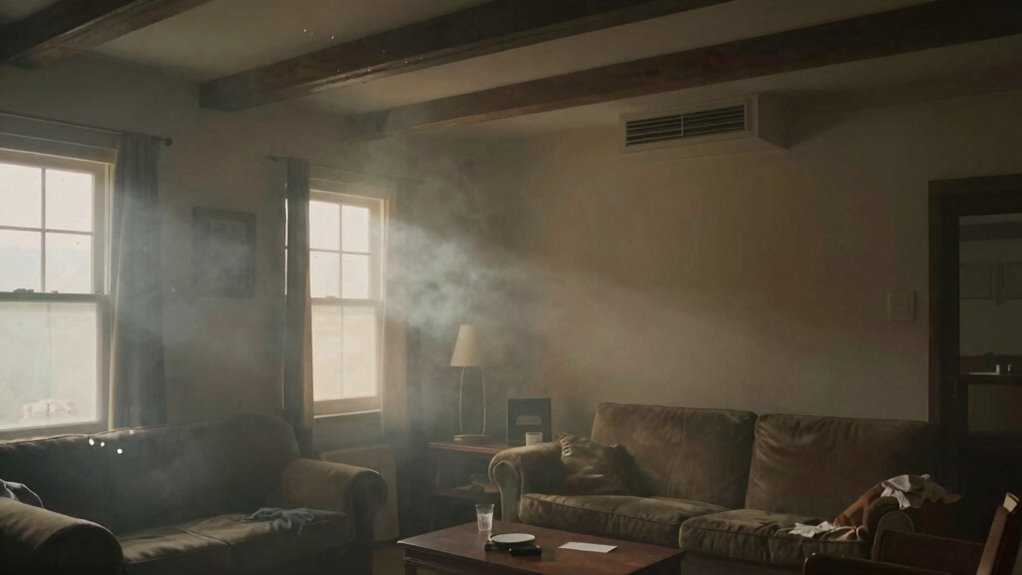

When wildfire smoke is in the air, opening windows and vents can worsen indoor air quality by letting in outdoor smoke rather than clearing it out. Relying on natural ventilation or exhaust fans often pulls smoky air inside instead of removing pollutants. Instead, keep windows and doors closed, use HEPA filters, and seal gaps to prevent outdoor smoke from entering. Staying cautious can make a big difference—if you want to learn more, you’ll find helpful strategies ahead.
Key Takeaways
- Opening windows or vents during wildfires can introduce more outdoor smoke indoors.
- Using exhaust or attic fans pulls smoky air inside, worsening indoor air quality.
- Increasing airflow without filtration spreads indoor smoke particles more widely.
- Sealing gaps around doors and windows helps prevent outdoor smoke from entering.
- Relying on natural ventilation during wildfire events often worsens indoor air pollution.
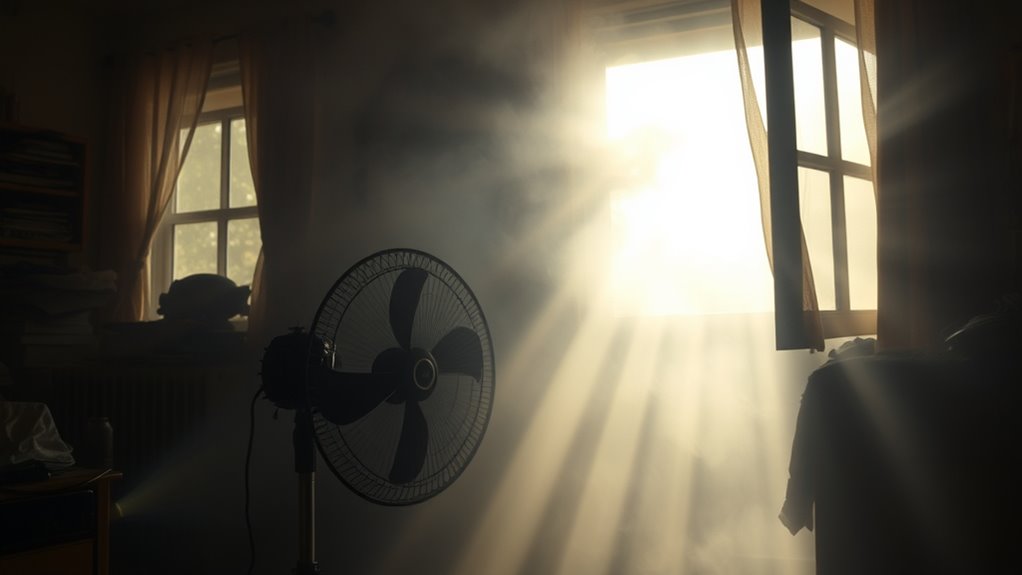
Have you ever wondered how wildfire smoke manages to seep into your home even when you’re indoors? It’s frustrating to think that, despite closing windows and doors, smoke can still find its way inside. The truth is, many common ventilation strategies inadvertently make the problem worse. When wildfire smoke is in the air outside, your immediate instinct might be to ventilate your home by opening windows or vents to “freshen” the air. However, this often introduces more smoky air rather than clearing it out. Instead, you need to think carefully about how your ventilation choices impact indoor air quality.
Proper air filtration becomes essential in these situations. Using high-efficiency particulate air (HEPA) filters can notably reduce the amount of smoke particles circulating inside your home. These filters trap tiny smoke particles that standard filters might miss, keeping the air you breathe cleaner. Relying solely on ventilation strategies that involve opening windows or exhaust fans can backfire because they often draw in outdoor smoke rather than expelling indoor pollutants. If your home is well-sealed, it’s better to keep windows closed during a wildfire event. Instead, focus on air filtration systems, such as portable HEPA units, which actively clean indoor air without letting in outdoor smoke.
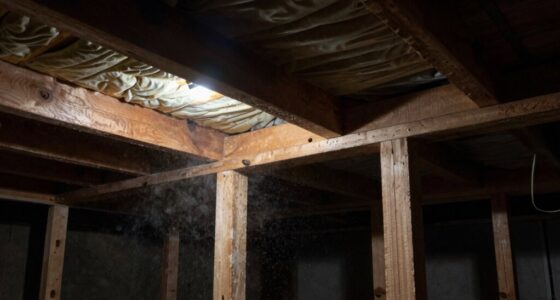
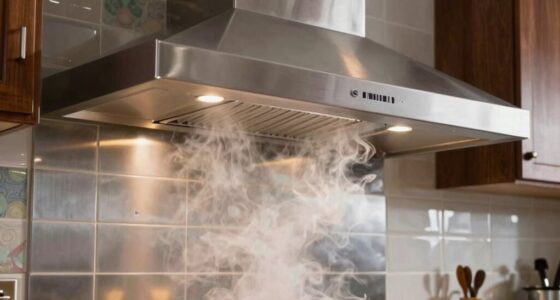
When it comes to ventilation strategies, the key is to regulate airflow rather than increase it indiscriminately. Mechanical ventilation systems with proper filtration can circulate air within your home, removing indoor pollutants and preventing smoke from lingering. If your home has an HVAC system, ensure that its filters are high-rated and replaced regularly during wildfire events. This helps trap smoke particles before they circulate throughout your living space. Avoid the temptation to use attic fans, exhaust fans, or open windows because these actions tend to pull in smoky air from outside, worsening the indoor air quality. It’s also important to understand that the air exchange rate plays a crucial role in how effectively your home can manage indoor pollutants during such events.
In addition, consider sealing gaps around doors and windows to prevent outdoor smoke infiltration. Use weather stripping and door sweeps to make your home more airtight. This reduces the burden on your air filtration systems and keeps smoky air from sneaking in during outdoor air quality emergencies. Remember, the goal isn’t just to ventilate but to control the quality of the air inside. Properly combining air filtration with strategic ventilation—primarily through sealed environments and filtered airflow—can make a real difference during wildfire events. Your best approach is to minimize outdoor air intake, enhance indoor air cleaning, and stay informed about local air quality reports.
Frequently Asked Questions
How Can I Detect Wildfire Smoke Indoors Effectively?
You can detect wildfire smoke indoors effectively by using air quality sensors, which monitor changes in particulate levels and alert you early. Additionally, smoke detectors can help identify smoke buildup, though they’re less specific. Keep these devices maintained and in key areas to make sure of prompt detection. When either device signals poor air quality, take action by ventilating properly and sealing gaps to prevent smoke from spreading further.
Are Air Purifiers Always Effective Against Wildfire Smoke Indoors?
Air purifiers can considerably improve indoor air quality during wildfires, but they’re not always fully effective. Limitations like filter capacity and placement affect their performance, so you shouldn’t rely solely on them. To maximize their benefits, choose high-efficiency models with HEPA filters and keep windows and doors closed. Remember, good ventilation combined with purifiers offers the best protection, but understanding these limitations helps set realistic expectations for indoor air quality improvements.
Can Opening Windows Help or Worsen Indoor Smoke Levels?
A stitch in time saves nine, and in this case, sealing your windows is key. Opening windows during wildfire smoke can worsen indoor air quality, as it lets in more pollutants and disrupts indoor air circulation. To keep smoke out, make sure your windows are properly sealed and use air purifiers. If you need fresh air, open windows briefly during low smoke periods, but always prioritize indoor air quality.
What Specific Ventilation Practices Should I Avoid During Wildfires?
You should avoid outdoor air exchange during wildfires by keeping windows and doors closed, as many ventilation misconceptions suggest opening them helps, but it actually introduces more smoke. Instead, rely on filtered air systems and air purifiers. Avoid using exhaust fans that pull air from outside and don’t rely on ventilation methods that increase outdoor air exchange, which can worsen indoor air quality during wildfire events.
How Long Does Wildfire Smoke Typically Stay Indoors After a Fire?
Wildfire smoke can linger indoors for several hours to days, depending on your home’s ventilation and air filtration. Smoke infiltration affects indoor air quality, so you might notice lingering odors or respiratory irritation even after the fire is out. To reduce this, keep windows closed, use air purifiers with HEPA filters, and avoid unnecessary ventilation. This helps improve indoor air quality and minimizes smoke infiltration, keeping your home safer and more comfortable.
Conclusion
Remember, your home is your sanctuary, a lighthouse in a smoky storm. When you open windows or rely solely on ventilation, you risk inviting the wildfire’s shadow inside. Think of your ventilation system as a gatekeeper—mustering the right strength to keep danger out while letting in fresh hope. By choosing wisely, you protect your haven and preserve your peace. Stay vigilant, and let your home stand as a beacon of safety amid the smoke’s encroaching darkness.