
Adding too much airflow to your space can cause discomfort, noise, and inefficient energy use. Oversized ventilation may lead to drafts, turbulence, and uneven air distribution, making occupants feel cold or stuffy. It also forces your system to work harder, shortening its lifespan and increasing costs. Properly sizing your ventilation guarantees balanced airflow, comfort, and efficiency. Stay with us to learn how selecting the right system prevents these common issues and keeps your space comfortable.
Key Takeaways
- Excessive airflow can cause drafts, uneven temperature distribution, and discomfort for occupants.
- Over-ventilating increases noise levels and turbulence, reducing overall indoor comfort.
- Larger systems may operate inefficiently, wasting energy and causing temperature fluctuations.
- Improperly sized ventilation can lead to pressure imbalances and uneven air distribution.
- Oversized airflow can reduce air quality by disturbing moisture and contaminant removal processes.
Have you ever wondered how to determine the right size for your ventilation system? It’s a common question, and the answer isn’t just about installing the biggest unit available. Instead, it involves understanding how airflow efficiency and duct design play vital roles in creating a comfortable indoor environment. Too much airflow might seem beneficial at first glance, but over-ventilating can actually cause discomfort, noise, and energy waste. To get it right, you need to focus on matching your system’s capacity to your space’s specific needs, rather than simply opting for higher airflow rates.
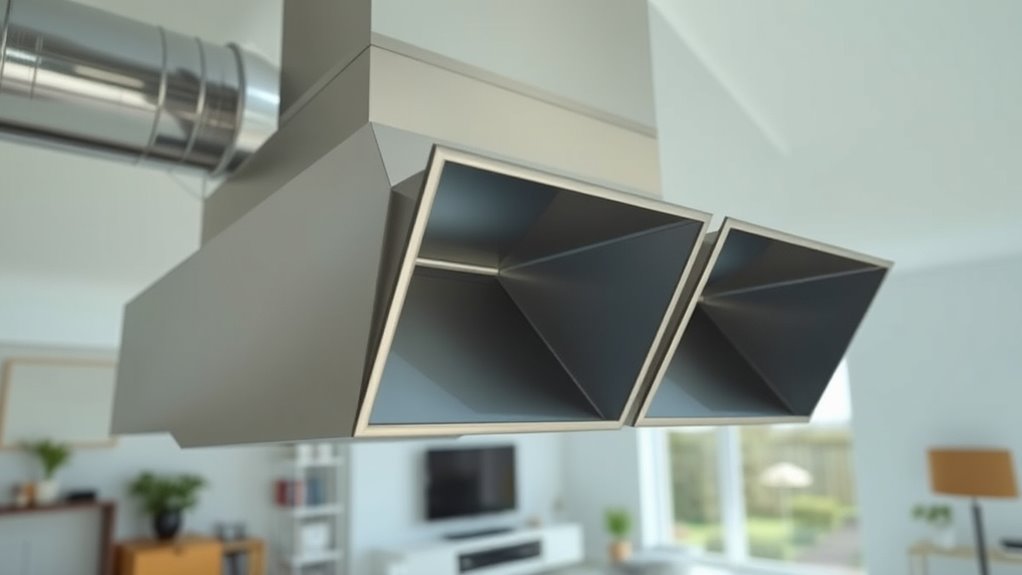
Airflow efficiency is key here. When your ventilation system pushes too much air through improperly designed ducts, it can result in uneven distribution and drafts that make occupants uncomfortable. Efficient airflow means delivering the right amount of air consistently across all areas without creating turbulence or excessive noise. This requires careful planning of duct design—considering factors like duct size, layout, and material—to minimize restrictions and pressure drops. Well-designed ducts ensure that air moves smoothly, maintaining a balanced flow that keeps your space comfortable without overbursting or under-ventilating.
Proper duct design ensures smooth airflow and consistent comfort without turbulence or noise.
Choosing the correct duct design is essential for optimizing airflow efficiency. Narrow or poorly laid-out ducts increase resistance, forcing the system to work harder and potentially causing noise, energy waste, and uneven ventilation. Conversely, oversized ducts might deliver large volumes of air but can reduce pressure and cause inefficient airflow patterns, leading to drafts near vents and inconsistent comfort levels. Proper sizing and routing of ducts mean you can achieve an ideal balance—delivering sufficient fresh air without creating discomfort or excessive noise. It’s about finding that sweet spot where airflow matches your room’s volume, occupancy, and purpose.
Furthermore, understanding how duct design influences airflow efficiency helps prevent future problems. When ducts are correctly sized and laid out, your system can operate smoothly, reducing strain on components and prolonging its lifespan. It also minimizes energy consumption because the system doesn’t have to work harder to compensate for restrictions or leaks. This balance between airflow and duct design ensures your ventilation system provides fresh air effectively, maintaining comfort and indoor air quality without unnecessary energy costs.
In addition, considering airflow control techniques can further enhance system performance by allowing precise regulation of air distribution according to changing needs. When ducts are correctly sized and laid out, your system can operate smoothly, reducing strain on components and prolonging its lifespan. It also minimizes energy consumption because the system doesn’t have to work harder to compensate for restrictions or leaks. This balance between airflow and duct design ensures your ventilation system provides fresh air effectively, maintaining comfort and indoor air quality without unnecessary energy costs.
In essence, determining the right size for your ventilation system isn’t just about capacity numbers. It’s about carefully considering airflow efficiency and duct design to create a system that’s both effective and comfortable. When you focus on these elements, you avoid the pitfalls of over-ventilating, such as drafts, noise, and wasted energy. Instead, you achieve a well-balanced environment where fresh air circulates efficiently, and your space remains comfortable year-round.
Frequently Asked Questions
How Does Ventilation Size Affect Indoor Air Quality?
You can greatly influence indoor air quality by choosing the right ventilation size. Properly sized systems guarantee efficient air exchange, bringing in fresh air and removing pollutants effectively. Oversized vents may cause drafts and noise, while undersized ones can reduce pollutant removal, leading to stale air. To maintain a healthy environment, select a ventilation system that matches your space’s needs, balancing airflow for ideal pollutant removal and fresh air supply.
Can Oversized Ventilation Systems Increase Energy Bills?
Imagine your home’s ventilation system is like a vintage radio—overpowered and noisy. Oversized ventilation systems can definitely raise your energy bills because they work harder than needed, reducing energy efficiency. Plus, they often produce more ventilation noise, making it uncomfortable. You’ll spend more on electricity, and the constant hum can disturb your peace. Properly sized systems balance airflow, comfort, and cost, saving you money in the long run.
What Are the Signs of Over-Ventilation in a Home?
You might notice over-ventilation if indoor humidity drops too low, making your skin and throat feel dry. You could also detect increased drafts or temperature fluctuations, which can make your home uncomfortable. Additionally, over-ventilation can cause airborne pollutants to be pulled in from outside, leading to poor indoor air quality. Pay attention to these signs to make certain your ventilation system is balanced and effectively maintains comfort and air quality.
How Does Room Size Influence Ventilation Requirements?
Room size is the backbone of proper ventilation. As the room volume grows, it demands more air exchange to keep air fresh and prevent stale odors. If you don’t match ventilation to the size, it’s like trying to fill a bathtub with a teaspoon—ineffective. Larger rooms need higher airflow rates, ensuring each corner gets fresh air and maintaining comfort. Properly sizing ventilation keeps your space healthy and comfortable.
Are There Risks to Under-Ventilating a Building?
Yes, under-ventilating your building jeopardizes poor humidity control and mold growth. Without enough airflow, moisture becomes trapped, creating a damp environment that fosters mold and mildew. You might also notice increased indoor air pollution and discomfort. Proper ventilation ensures fresh air replaces stagnant air, helping to regulate humidity levels and prevent mold. Neglecting this can lead to health issues and costly repairs caused by mold damage.
Conclusion
Remember, bigger isn’t always better when it comes to ventilation. Oversizing your system might seem like a way to guarantee fresh air, but it can actually cause discomfort by creating drafts or uneven airflow. Instead, focus on properly sizing your ventilation to match your space’s needs. By doing so, you’ll enjoy balanced, comfortable air without the drafts or energy waste. Trust the experts to find that perfect balance—you’ll notice the difference every day.