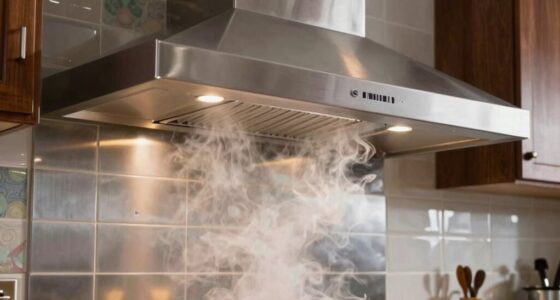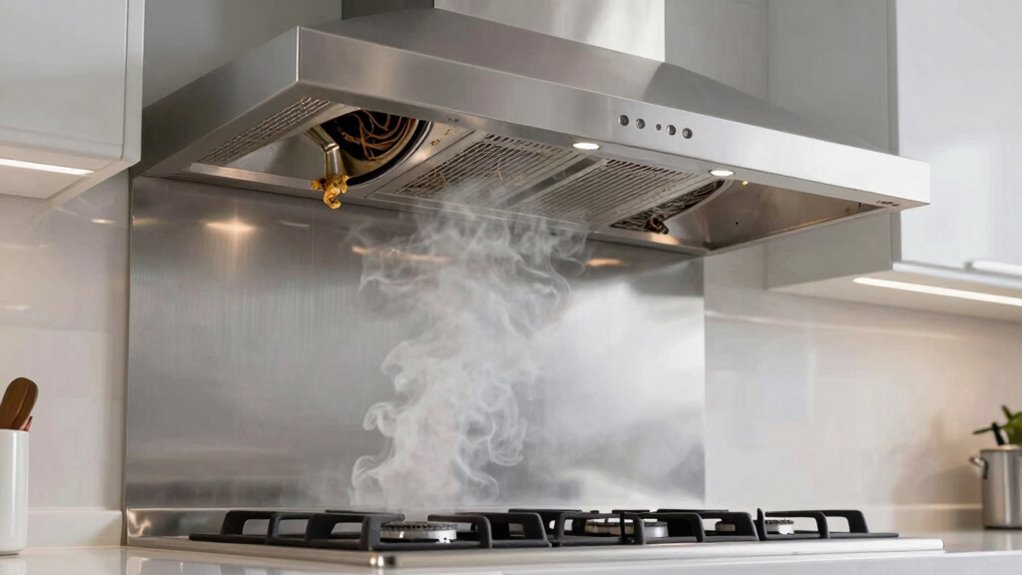
Recirculating range hoods often fail because they rely only on filters to trap smoke, odors, and airborne pollutants instead of venting outside. This means cooking smells and moisture stay in your kitchen, making the air stale and uncomfortable. While easier to install, these systems don’t eliminate the root cause of odors or grease buildup. To improve air quality and keep your kitchen fresher, understanding better venting options is essential—more details ahead can help you decide what’s best.
Key Takeaways
- Recirculating hoods only filter air but do not remove airborne pollutants or odors effectively.
- Filters in recirculating systems can become clogged, reducing their efficiency over time.
- They fail to vent moisture, smoke, and fumes outside, allowing odors to linger in the kitchen.
- Recirculating systems do not eliminate grease buildup, leading to potential maintenance issues.
- External venting provides better odor control and air quality by removing contaminants at the source.

Have you ever wondered how to effectively vent your range hood to keep your kitchen air clean? Proper venting is essential not just for odor control but also for maintaining good indoor air quality. However, many homeowners face installation challenges that make venting a tricky task. When your range hood is set up for recirculating air, it often fails to eliminate cooking odors completely. Instead, it just filters the air and puts it back into the room, which can leave your kitchen smelling stale over time. This setup might seem easier initially because it doesn’t require ductwork, but it’s rarely effective at controlling odors and pollutants.
Recirculating range hoods often fail to fully eliminate cooking odors. Proper venting outside improves air quality.
The main issue with recirculating range hoods is that they rely solely on filters, which trap grease and odors but don’t remove airborne contaminants effectively. Without proper venting outside, smoke, steam, and cooking smells linger, creating an uncomfortable environment. Many people underestimate the importance of proper installation when choosing between ducted and non-ducted systems. Installing a vent directly to the outside can be challenging, especially if your kitchen layout or building structure limits options for duct placement. You might face obstacles like limited space for duct runs, the need to cut through walls or cabinets, or complications with existing ventilation systems. These installation challenges often discourage homeowners from opting for ducted systems, leading them to settle for recirculating models that don’t solve the core problem.
Despite these hurdles, effective odor control requires venting your range hood outdoors. When you vent outside, you eliminate cooking fumes and moisture at the source, ensuring your kitchen stays fresh and clean. Proper installation involves careful planning, such as selecting the right duct size and ensuring a smooth airflow path, which minimizes resistance and noise. It’s worth investing time and effort into a professional installation to avoid common pitfalls like leaks, improper sealing, or inadequate ducting. A well-installed exterior vent system doesn’t just improve odor control; it also reduces grease buildup in your kitchen and prolongs the lifespan of your range hood. Additionally, understanding the types of vents available can help you make informed decisions for your home.
In the end, while recirculating hoods might seem like a simpler solution, they often fall short in delivering the clean, odor-free environment you want. Overcoming installation challenges and choosing a ducted vent system might require more effort upfront, but it pays off with better air quality and a healthier kitchen. So, if fresh air and efficient odor control matter to you, investing in proper venting is definitely worth it.
Frequently Asked Questions
How Often Should I Clean My Range Hood Filter?
You should clean your range hood filter at least once every one to three months, depending on your cooking habits. Regular filter maintenance guarantees it functions efficiently and prevents buildup of grease and grime. If you cook frequently or use oily foods often, consider cleaning the filter more often. Proper cleaning frequency keeps your kitchen safe, odor-free, and your range hood working effectively.
Can Recirculating Hoods Remove All Cooking Odors?
Recirculating hoods can’t remove all cooking odors because airflow restrictions limit their effectiveness, and odor absorption depends on the filters. While they can reduce smells, they often struggle with strong or lingering odors, especially if filters aren’t cleaned regularly. To improve performance, make certain the filters are clean and replace them as needed. Remember, vented hoods generally do a better job at fully removing odors than recirculating ones.
What Are the Signs of a Failing Recirculating Vent?
You’ll notice a failing recirculating vent when the filter becomes clogged, reducing airflow and trapping odors. If the fan starts making louder noise than usual, it’s a sign the motor is struggling. Additionally, if odors linger despite running the hood, it indicates the filter isn’t working efficiently. Regularly check and replace filters, and listen for increased fan noise to maintain peak performance.
Does Duct Size Impact Venting Efficiency?
Yes, duct size considerably impacts venting efficiency. If the duct diameter is too narrow, it restricts airflow, reducing ventilation capacity and making your range hood less effective at removing smoke and odors. Conversely, a properly sized duct allows for better airflow, increasing efficiency. Make sure your duct diameter matches your range hood’s specifications to optimize venting performance and prevent recirculating failures.
Are There Specific Foods That Produce More Ventilation Issues?
You’ll find that pungent spices and greasy foods can cause major ventilation issues, almost like trying to clear a fog machine with a tiny straw. These foods produce overwhelming odors and greasy fumes that quickly clog filters and strain your vent system. Recirculating hoods often struggle to handle such intense smells, leading to persistent odors and reduced air quality. The key is proper venting that can keep up with these powerful culinary culprits.
Conclusion
While recirculating range hoods might seem convenient, they often fall short in truly clearing your kitchen air. Think of it like trying to catch smoke with a screen—it might trap some particles, but the lingering odors and fumes still seep through. Venting outside, on the other hand, acts like a dedicated highway for smoke and smells, ensuring your kitchen stays fresh and safe. Don’t settle for less—choose proper venting for a healthier cooking environment.