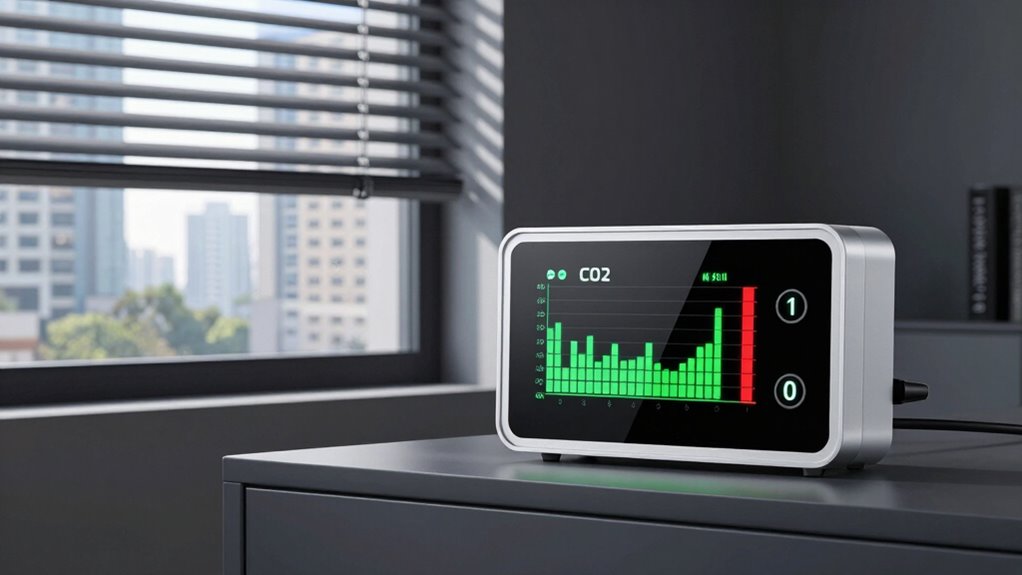
A CO2 level around 800 ppm signals it’s time to contemplate ventilating your space, as this indicates active air exchange. When levels reach 1,000 ppm or higher, you should immediately increase airflow or open windows to guarantee good air quality. Monitoring these numbers helps you prevent stale air and respiratory issues. If you want to know the specific actions for different CO2 levels, keep exploring how proper ventilation keeps your environment healthy.
Key Takeaways
- CO2 levels around 800 ppm indicate active ventilation should be considered.
- Readings exceeding 1,000 ppm require immediate ventilation to reduce stale air.
- Maintaining CO2 below 800 ppm suggests effective indoor air exchange.
- Continuous monitoring helps identify when ventilation adjustments are necessary.
- The number signals whether indoor air quality is healthy or needs improvement.

With indoor air quality becoming an increasingly important concern, CO2 monitors offer an effective way to guarantee your environment remains safe and comfortable. These devices help you keep tabs on the levels of carbon dioxide in your space, providing real-time data that can influence your ventilation decisions. Good indoor air quality isn’t just about adding air purifiers or opening windows; it’s about making certain your ventilation system is working effectively to remove stale air and bring in fresh air. When CO2 levels rise, it’s a clear sign that your ventilation isn’t keeping up with the number of people or activity in the room. Maintaining proper ventilation effectiveness is vital because it directly impacts indoor air quality. If your space isn’t properly ventilated, CO2 concentrations will climb, leading to stuffiness, decreased alertness, and even health issues like headaches or respiratory discomfort. A CO2 monitor acts as an early warning system, alerting you when the levels reach a point that indicates poor ventilation. You’ll be able to respond promptly by increasing airflow, opening windows, or adjusting your HVAC system to improve air exchange. This proactive approach guarantees the environment remains safe and prevents the buildup of pollutants or allergens that can compromise health. Monitoring indoor air quality with a CO2 sensor is straightforward and empowering. Instead of guessing whether your space is well-ventilated, you get precise data. For example, a CO2 level of around 400 parts per million (ppm) is typical for outdoor air and indicates good ventilation. Once levels cross 800 ppm, it’s time to contemplate ventilating more actively. If levels reach 1,000 ppm or higher, you should take immediate steps to increase airflow. This simple metric allows you to gauge the effectiveness of your ventilation system without complex testing or guesswork. By consistently tracking CO2 levels, you develop an understanding of how your indoor environment responds to changes in occupancy and activity. If you notice persistent high readings, it’s a sign that your ventilation needs improvement. This might mean upgrading your system, adding air purifiers with fresh air intake, or simply increasing natural ventilation by opening windows or doors. Maintaining effective ventilation is essential for ideal indoor air quality, as it helps remove excess CO2, odors, and airborne pollutants that could impact your health and comfort. Ultimately, using a CO2 monitor isn’t just about reading numbers; it’s about taking control of your indoor environment. You can make informed decisions to enhance ventilation effectiveness, ensuring your space remains fresh, healthy, and safe for everyone inside.

Temtop CO2 Monitor Indoor air Quality Monitor Portable CO2 Meter, CO2, Temperature, Humidity Home, Office or School
Multifunctional CO2 Monitor: This air quality monitoring system delivers continuous, real-time measurements of carbon dioxide levels ranging from…
As an affiliate, we earn on qualifying purchases.
As an affiliate, we earn on qualifying purchases.
Frequently Asked Questions
How Often Should I Calibrate My CO2 Monitor?
You should calibrate your CO2 monitor at least once every six months to guarantee monitor accuracy. Regular calibration helps maintain precise readings, especially if you notice inconsistent or unexpected levels. If you move the monitor frequently or use it in different environments, consider calibrating more often. Always follow the manufacturer’s instructions for calibration, and keep track of your calibration schedule to ensure your device provides reliable data.
Can CO2 Levels Indicate Other Indoor Air Pollutants?
Think of your CO2 levels as a friendly alert system, hinting at more than just airflow. Elevated CO2 can sometimes whisper about broader indoor pollution, like formaldehyde or VOCs, but it’s not a definitive indicator. To keep your air fresh, focus on effective ventilation strategies that reduce various indoor pollutants. Regularly monitoring CO2 helps you maintain a healthier environment, ensuring you breathe easier and enjoy a more comfortable space.
Are There Different Types of CO2 Monitors Suitable for Homes and Offices?
Yes, there are different types of CO2 monitors suitable for homes and offices. You should compare device features like accuracy, display type, portability, and connectivity options. For homes, compact and easy-to-read devices work well, while offices benefit from monitors with data logging and alert features. By evaluating these types comparison factors, you can choose a monitor that best fits your space, ensuring safe and healthy indoor air quality.
What Is the Ideal CO2 Concentration for Healthy Indoor Air?
You should aim for a CO2 level below 800 ppm for ideal indoor air quality, as higher concentrations can cause fatigue and decreased concentration. The American Society of Heating, Refrigerating and Air-Conditioning Engineers recommends ventilation standards to keep indoor CO2 levels below 1000 ppm. Keeping your indoor air healthy means monitoring CO2 levels regularly and ventilating effectively when they rise, ensuring a comfortable and safe environment.
Do CO2 Monitors Require Regular Maintenance or Battery Replacement?
You need to regularly check your CO2 monitor’s sensor accuracy and replace batteries as recommended by the manufacturer to guarantee reliable readings. Over time, the device lifespan may reduce sensor effectiveness, leading to less accurate measurements. Regular maintenance, including calibration if needed, helps keep your monitor functioning correctly. By staying on top of these tasks, you’ll ensure your CO2 levels are accurately tracked and your indoor air remains healthy.

VETOUCH Plug-in Carbon Monoxide Detector with Digital Color Display CO Detector for CO, Temperature & Humidity, 85dB Loud Alert, Self Test Function vetouch CO Detector, for Home, Bedroom, Kitchen, RV
【Plug-in CO Detector】Plug-and-use real-time vetouch CO detector with built-in temperature and humidity sensors for comprehensive air quality monitoring.
As an affiliate, we earn on qualifying purchases.
As an affiliate, we earn on qualifying purchases.
Conclusion
Think of your CO2 monitor as a helpful lighthouse guiding you through indoor air quality. When it signals high levels, it’s like a red flag waving, reminding you to open windows or improve ventilation. Staying attentive keeps the air invigorating and your space safe—just like a gust of fresh air after a storm. Don’t ignore the warning; it’s your cue to act and breathe easier. Keep your environment healthy and your mind at ease.
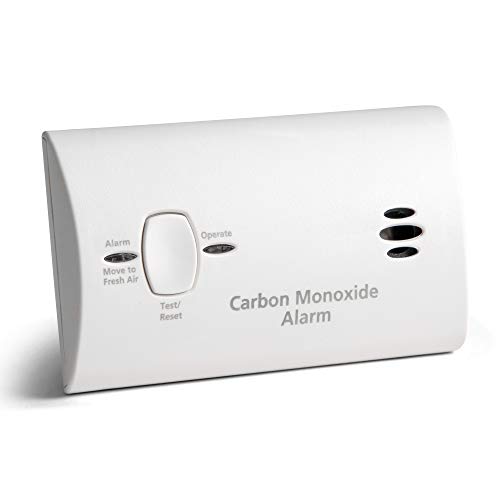
Kidde Carbon Monoxide Detector, AA Battery Powered, Portable for Travel or Home, 85 dB Alarm, LED Status Indicators, 3rd Edition
Electrochemical sensor technology detects CO gas
As an affiliate, we earn on qualifying purchases.
As an affiliate, we earn on qualifying purchases.

Amazon Smart Air Quality Monitor – Know your air, Works with Alexa
Know your air – Amazon Smart Air Quality Monitor makes it easy to understand what’s in your indoor…
As an affiliate, we earn on qualifying purchases.
As an affiliate, we earn on qualifying purchases.