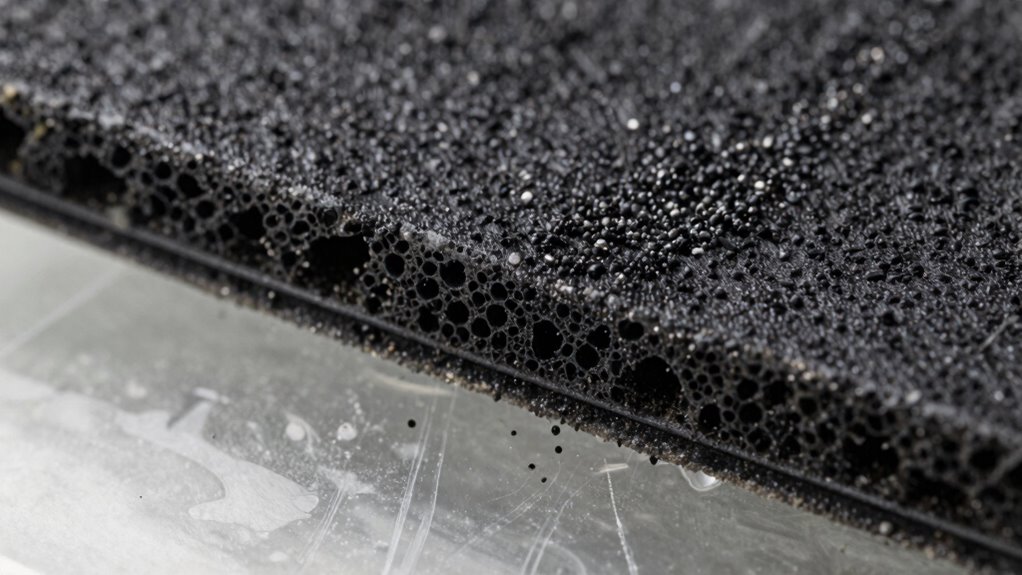
Activated carbon filters are great at removing organic chemicals, odors, and certain impurities from your water and air. They work by trapping contaminants through adsorption, which makes them effective against VOCs, chemicals, and odors. However, they don’t remove inorganic substances like heavy metals, nitrates, or bacteria. To get the best results, it’s important to understand their limitations and proper maintenance. If you want to discover how to maximize their performance, keep exploring further.
Key Takeaways
- Activated carbon filters effectively remove organic chemicals, odors, and volatile compounds via adsorption but are less effective against inorganic contaminants.
- They do not remove heavy metals, nitrates, bacteria, or viruses, which require additional purification methods.
- Adsorption capacity is finite; once saturated, filters lose effectiveness and require replacement.
- Proper maintenance, including timely replacement, ensures optimal removal of chemicals and odors.
- Combining activated carbon with other filtration technologies enhances overall water and air purification.
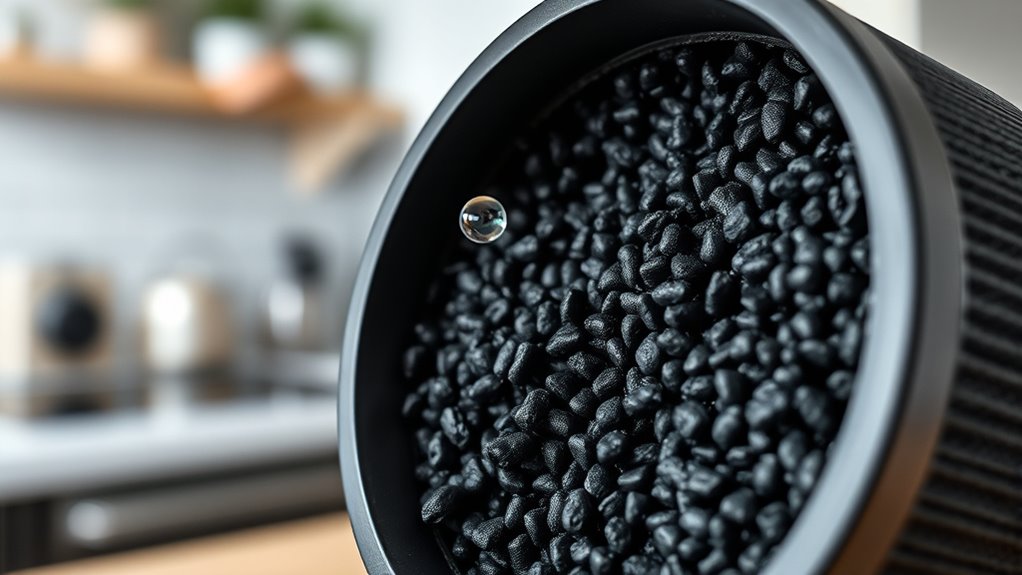
Activated carbon filters are essential tools for improving water and air quality by removing contaminants and impurities. Their effectiveness largely depends on their adsorption efficiency, which determines how well they can attract and trap pollutants. When you install an activated carbon filter, you’re providing a barrier that captures organic compounds, chemicals, and odors through a process called adsorption, where contaminants stick to the surface of the carbon particles. Over time, however, the filter’s adsorption sites become saturated, reducing its effectiveness. This means that as you use the filter, its ability to remove impurities diminishes, making regular replacement crucial to maintain peak purification. The lifespan of your filter is influenced by several factors, including the level of contaminants in your water or air, the amount of use, and the quality of the carbon itself. A filter with a higher adsorption efficiency will generally last longer because it can trap more pollutants before needing replacement, but even high-quality filters eventually reach their capacity.
You might notice that a filter’s lifespan varies considerably based on what it’s tasked with removing. For example, if your water contains a high concentration of organic chemicals or odors, the filter will fill up faster, reducing its overall lifespan. Similarly, in air purification, filters exposed to strong odors or volatile organic compounds (VOCs) will need more frequent changing. To maximize the filter’s lifespan and adsorption efficiency, it’s essential to monitor usage and replace the filter as recommended by the manufacturer. Ignoring these guidelines can lead to decreased performance and potentially allow contaminants to bypass the filter, which defeats its purpose. Additionally, pre-filtering or reducing contaminant loads before they reach the activated carbon can extend its lifespan. For instance, using a sediment filter ahead of the carbon filter can remove larger particles, preventing clogging and ensuring the activated carbon works more efficiently for longer periods. Proper maintenance also involves understanding the importance of filter lifespan and how it affects overall purification efficiency.
While activated carbon filters are highly effective against many impurities, they don’t remove everything. They excel at trapping chemicals, odors, and organic compounds but are less effective against inorganic contaminants like heavy metals, nitrates, or bacteria. If your water or air contains these, you’ll need additional purification methods. Understanding the limitations of activated carbon filters helps you choose the right combination of filtration systems and avoid false expectations about what they can achieve. Keep in mind that proper maintenance, timely replacements, and understanding your specific contaminant profile are key to getting the most out of your activated carbon filter. When used correctly, these filters greatly improve water and air quality, but their success hinges on your awareness of their adsorption efficiency and the importance of maintaining an appropriate filter lifespan.
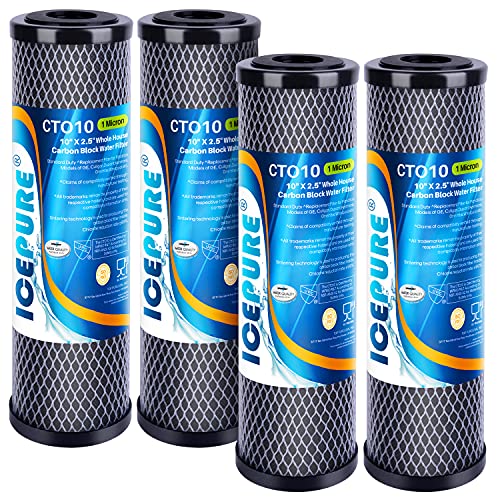
ICEPURE 1 Micron 2.5" x 10" Whole House CTO Carbon Sediment Water Filter Cartridge Compatible with DuPont WFPFC8002, WFPFC9001, SCWH-5, WHCF-WHWC, WHCF-WHWC, FXWTC, CBC-10, RO Unit, Pack of 4
NSF/ANSI 42 Certified – This filter has passed the IAMPO NSF/ANSI 42, ensuring it effectively reduces chlorine taste…
As an affiliate, we earn on qualifying purchases.
As an affiliate, we earn on qualifying purchases.
Frequently Asked Questions
Can Activated Carbon Filters Remove Viruses From Water?
Activated carbon filters aren’t effective for viral filtration, so they won’t reliably remove viruses from water. You need specialized filters like UV purifiers or reverse osmosis systems for water safety against viruses. Relying solely on activated carbon can give you a false sense of security. To guarantee your water is virus-free, combine filtration methods or choose equipment designed specifically for viral removal.
How Long Do Activated Carbon Filters Typically Last?
Imagine you’re back in the days of dial-up, waiting for slow progress—your activated carbon filter needs similar patience. Typically, they last about 3 to 6 months, but this depends on usage, water quality, and filter type. Regularly check for signs of saturation, and follow the manufacturer’s recommended filter replacement intervals. Proper maintenance guarantees your filter works effectively, giving you fresh, clean water when you need it most.
Are Activated Carbon Filters Effective Against Pesticides?
Yes, activated carbon filters are effective for pesticides removal from water. They work by adsorbing many organic chemicals, including pesticides, reducing their presence considerably. However, their effectiveness depends on the filter’s quality and lifespan; over time, they become less efficient at pesticides removal. To guarantee peak filter performance, replace your activated carbon filter regularly, especially if you suspect pesticide contamination in your water source.
Do Activated Carbon Filters Eliminate Heavy Metals?
You might think activated carbon filters eliminate heavy metals, but that’s a misconception. While they excel at removing organic compounds and certain chemicals, their limitations in heavy metal removal are clear. These filters don’t effectively target metals like lead or mercury, so relying solely on them won’t protect you from heavy metal contamination. For proper heavy metal removal, consider specialized filters designed specifically for those contaminants.
Can Activated Carbon Filters Improve Taste and Odor?
Yes, activated carbon filters can improve taste and odor in your water. To get the best results, check if the filter is fridge compatible before installation. Follow the installation tips provided by the manufacturer, such as replacing the filter regularly and ensuring proper placement, to maintain peak performance. This way, you’ll enjoy fresher-tasting water and better odor control directly from your fridge.

MOOKA Air Purifiers for Home Large Room up to 1076ft², H13 True HEPA Air Filter Cleaner, Odor Eliminator, Remove Smoke Dust Pollen Pet Dander, Night Light, B-D02L White
MOOKA B-D02L AIR PURIFIER FOR LARGE ROOM: With the high-efficiency filtration system, the air purifier covers an area…
As an affiliate, we earn on qualifying purchases.
As an affiliate, we earn on qualifying purchases.
Conclusion
Activated carbon filters act like sponges, soaking up many unwanted impurities from your water or air. They’re great at removing odors, chemicals, and pollutants, but they’re not a catch-all solution. Think of them as a helpful gatekeeper, letting through only the cleaner, fresher elements while blocking the bad stuff. To keep your environment truly pure, consider combining them with other filtration methods. Remember, no filter is perfect, but together, they form a strong shield against contaminants.

iSpring WSP-50 Spin Down Sediment Water Filter, Whole House Reusable Flushable Prefilter for Well Water, 50-Micron, 1" MNPT + 3/4" FNPT, Lead-Free Brass
Rated at 50 micron. Whole House Spin Down Sediment Water Filter. Ideal frontier water filter in whole house…
As an affiliate, we earn on qualifying purchases.
As an affiliate, we earn on qualifying purchases.

greenr3 1 Pack Pass Carbon Pad 16" x 48" for Air Filter Charcoal Table Fits Air Purifier Range Hoods Oven Filter Removes Odor VOC Parts Accessories Replacement Replenishment and More
Cut-to-fit charcoal sheet, 16" x 48" x 1/8 inch Carbon Pad ,1-Pack
As an affiliate, we earn on qualifying purchases.
As an affiliate, we earn on qualifying purchases.