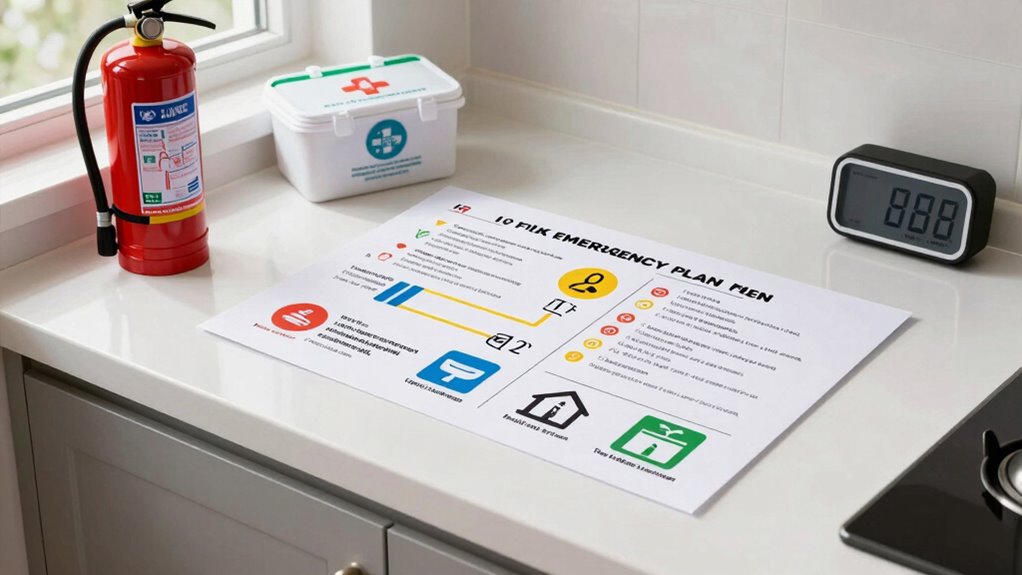

Create a simple, one-page household emergency plan with clear evacuation routes, designated safe meeting spots, and key contact numbers. Include step-by-step procedures for different emergencies, using easy language and diagrams. Place it in a visible spot and review it regularly. Practice drills so everyone knows their role. Keeping your plan concise and familiar boosts confidence and quick action during crises. To discover how to tailor yours effectively, explore the detailed tips ahead.
Key Takeaways
- Create a simple, clearly labeled one-page plan with evacuation routes, contact info, and safety procedures for quick reference.
- Use visuals and straightforward language to ensure everyone understands their roles during an emergency.
- Place the plan in a central, accessible location like the refrigerator or family binder.
- Regularly review and practice the plan to keep everyone familiar and confident in executing it.
- Include backup communication methods and designated outside meeting spots to enhance overall preparedness.
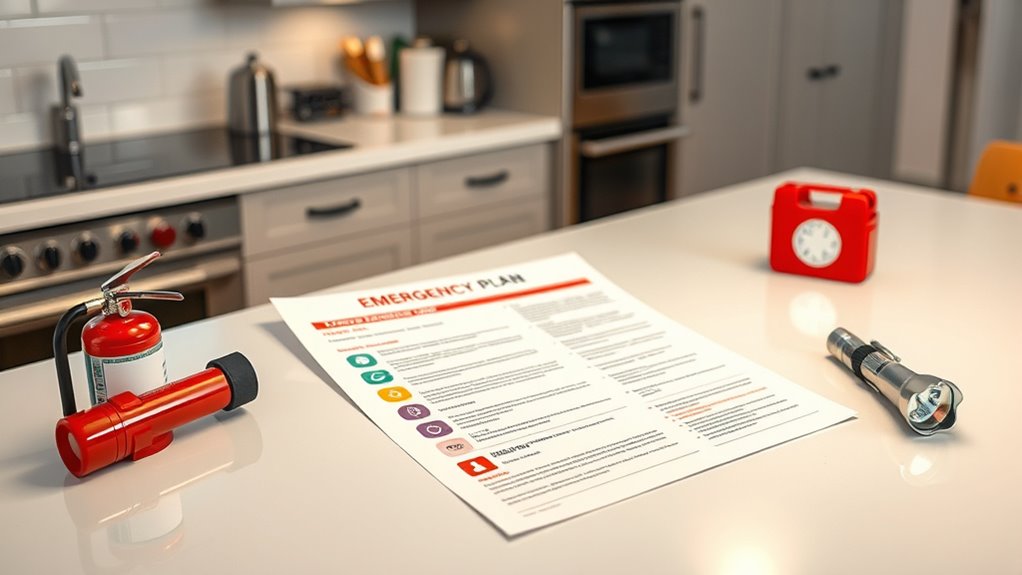
Having a household emergency plan is essential to keep your family safe during unexpected situations. When disaster strikes, knowing what to do can make all the difference, and that starts with clear evacuation procedures. You need to establish a straightforward plan so everyone knows exactly how to leave your home quickly and safely. Decide on multiple escape routes from each room, considering potential hazards like blocked exits or stairs. Practice these routes regularly with your family so they become second nature. It’s also wise to designate a safe meeting spot outside your home, where everyone can gather once they’re out of danger. This guarantees no one gets lost or left behind in chaos.
Along with evacuation procedures, communication strategies are equally critical. In emergencies, your phone lines or internet might be down, so it’s imperative to have a backup plan. Create a list of key contacts, including family members, neighbors, and emergency services, and keep it in a visible, accessible place. Teach your family how to use emergency communication tools, like walkie-talkies or a designated emergency app, if available. Make sure everyone knows how to reach each other without relying solely on cell phones. Also, establish a plan for informing loved ones outside your immediate area, so they aren’t left in the dark about your safety. Regularly review and update this contact list to guarantee accuracy. Incorporating basic emergency preparedness into your routine can significantly improve your response during crises.
In developing your plan, simplicity is key. Write down your evacuation procedures and communication strategies on a single sheet of paper—your one-page emergency plan—that everyone can easily access. Use clear, simple language and diagrams if needed, so even young children can understand. Keep this document in a central, visible spot, like on the fridge or in a family binder. This quick reference will help everyone stay calm and focused during a stressful situation. Remember, the goal is to make sure your plan is easy to follow and actionable. Practicing these procedures periodically will boost confidence and guarantee your family reacts swiftly when it matters most.

Mr. Pen- House Plan, Interior Design and Furniture Templates, Drafting Tools and Ruler Shapes for Architecture – Set of 3
3 Pc Architect Drawing And Interior Design Template Set (Scale: 1/4 Inch = 1 Ft): House Plan Template,…
As an affiliate, we earn on qualifying purchases.
As an affiliate, we earn on qualifying purchases.
Frequently Asked Questions
How Often Should I Review and Update My Emergency Plan?
You should review and update your emergency plan at least once a year and after any significant change, like a move or new family member. Conduct drills regularly, ideally every six months, to guarantee everyone knows their roles. Your plan review schedule helps identify gaps and keep your plan current, so you’re prepared. Regular drills and updates make your household safer and more confident during emergencies.
What Should I Include for Household Members With Special Needs?
You should include specific caregiver communication plans and emergency equipment details for household members with special needs. Clearly outline how you’ll stay in touch, provide assistance, and access necessary tools or devices. Make certain everyone understands these protocols, and regularly review and update this information. By doing so, you ensure prompt, effective responses, reducing confusion during emergencies and keeping all family members safe.
How Can I Ensure My Plan Is Accessible During an Emergency?
You guarantee your plan is accessible during an emergency by keeping digital access and printed copies handy. Store digital versions on your phone, cloud, or USB, so you can retrieve them quickly. Keep printed copies in multiple, easily accessible locations around your home and in your emergency kit. Regularly update both formats, test their accessibility, and train your household members to use them confidently, ensuring everyone stays informed and prepared.
What Are Some Common Mistakes to Avoid in a Household Plan?
You should avoid common mistakes like neglecting to update your plan regularly, which can lead to outdated information. Also, make certain your plan promotes clear communication; a communication breakdown can cause chaos during emergencies. Keep it simple, easy to understand, and accessible to everyone. Regularly review and practice your plan, so everyone knows their roles and responsibilities, reducing confusion and ensuring effective response when it matters most.
How Do I Coordinate With Neighbors or Local Services?
You should establish clear neighbor communication and coordinate with local resources before an emergency happens. Reach out to neighbors to share your plans and exchange contact info, guaranteeing everyone knows how to help each other. Contact local services to understand available emergency resources and protocols. Keep this information accessible in your plan, and regularly update it. Effective coordination helps ensure quick, organized responses when disaster strikes.

TRADESAFE Emergency Evacuation Route Sign – Evacuation Plan With Arrow Left, Quick Install Aluminum Safety Sign, Light Reflective, UV-Resistant, Waterproof, 14” X 10” Signs for Business
Industrial Grade – One (1) 40-mil wall sign made of durable, ultra-tough & rust-resistant aluminum
As an affiliate, we earn on qualifying purchases.
As an affiliate, we earn on qualifying purchases.
Conclusion
Having a household emergency plan empowers you to act confidently, to stay calm under pressure, and to protect those you love. It keeps you prepared, keeps you informed, and keeps you safe. With a simple, one-page plan, you can respond quickly, think clearly, and recover faster. Remember, a plan isn’t just a document—it’s your safeguard, your reassurance, and your peace of mind in times of crisis. Stay prepared, stay proactive, and stay safe.

Walkie Talkies, MOICO Long Range Walkie Talkies for Adults with 22 FRS Channels, Family Walkie Talkie with LED Flashlight VOX LCD Display for Hiking Camping Trip (Orange 2 Pack)
Two way Radio: FCC ID ; 2ASV6-T5A. MOICO walkie talkies have 22 FRS channels plus 99 sets of…
As an affiliate, we earn on qualifying purchases.
As an affiliate, we earn on qualifying purchases.

Emergency Contacts & Accounts Organizer: Important Numbers, Accounts, Logins & Notes | Family Information Binder | 8.5×11
As an affiliate, we earn on qualifying purchases.
As an affiliate, we earn on qualifying purchases.