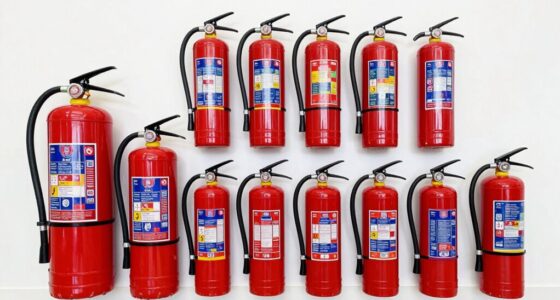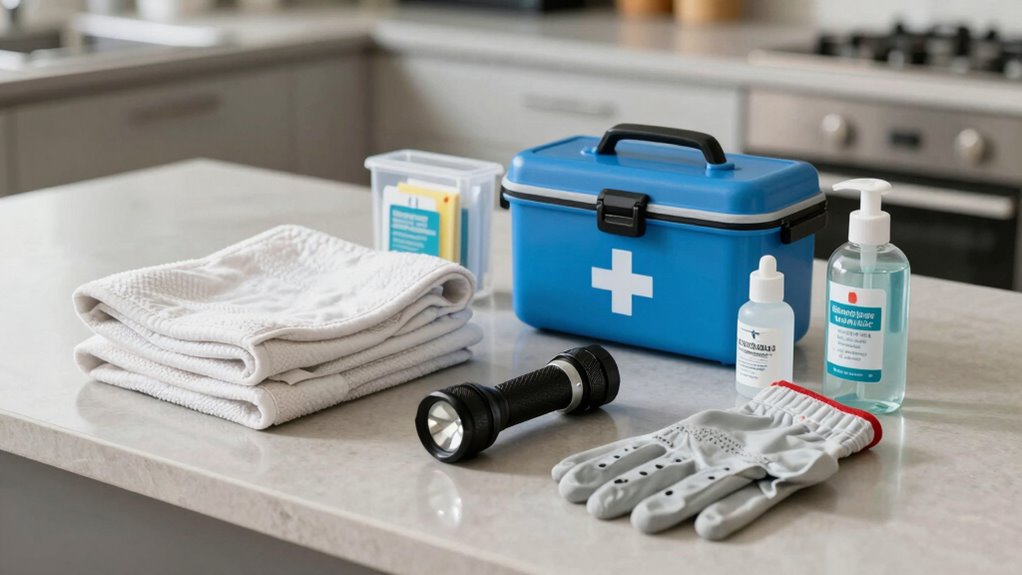

In any household emergency, stay calm and follow a straightforward checklist. First, assess the situation, guarantee everyone’s safety, and evacuate or shelter in place if necessary. Call emergency services clearly and calmly, then activate your household emergency plan. Gather supplies, important documents, and keep stress levels in check. Provide first aid if needed and follow up after the crisis passes. Keep your plan updated regularly—if you want to know more, there’s useful advice ahead.
Key Takeaways
- Assess the situation quickly, ensuring safety and determining whether to evacuate or shelter in place.
- Activate your emergency plan and gather supplies like water, food, first aid, and important documents.
- Communicate clearly with household members and emergency services, maintaining calm and focus.
- Provide immediate first aid for injuries, controlling bleeding and treating minor wounds confidently.
- After the emergency, inspect property, document damage, restock supplies, and review your emergency plan regularly.

First Aid Only 91248 OSHA-Compliant First Aid Kit, All-Purpose 50-Person Emergency First Aid Kit for Business, Worksite, Home, and Car, 260 Pieces
OSHA-Compliant Emergency Kit: Includes supplies including bandages, gauze, butterfly closures, burn cream packets, antibiotic ointment, BZK antiseptic towelettes,…
As an affiliate, we earn on qualifying purchases.
As an affiliate, we earn on qualifying purchases.
Assess What’s Happening and Stay Safe
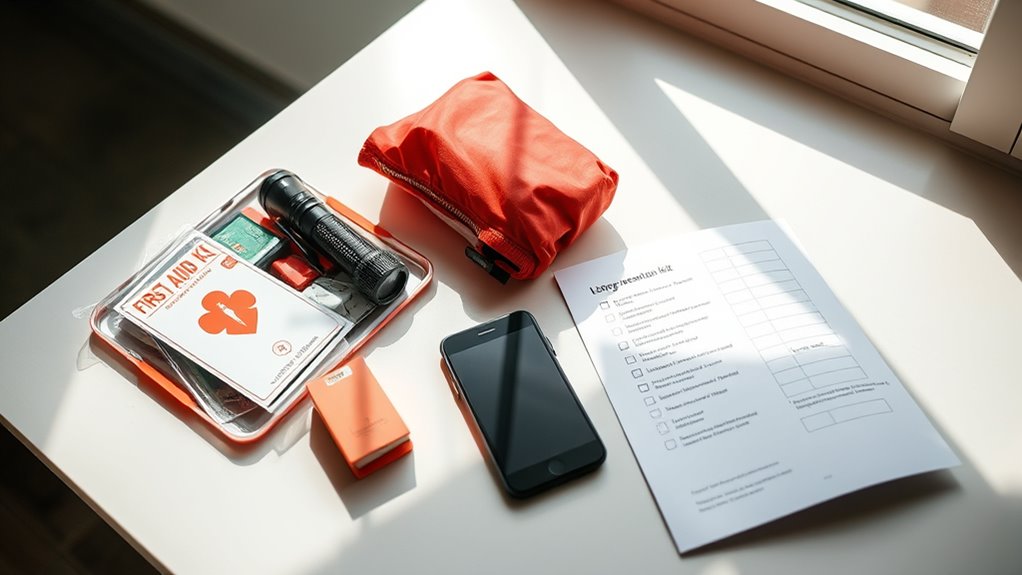
When an emergency occurs, your first priority is to understand what’s happening and guarantee your safety. Quickly assess the situation by listening carefully and observing your surroundings. Use household communication to gather information from others nearby or through a reliable device. Remember, practicing emergency preparedness drills helps you recognize warning signs and respond faster. Stay calm and avoid panicking, as it can impair your judgment. Confirm if anyone needs immediate help and decide if you should evacuate or shelter in place. Keep your phone charged and accessible for updates or to call emergency services. Being familiar with emergency response procedures can improve your ability to act effectively. By staying alert and prepared, you’ll be better equipped to handle the situation safely and efficiently. Your quick, calm response can make all the difference.

ReadyWise Emergency Food Supply – 120 Servings Favorites Sample Bucket, Survival Food Kit, Freeze Dried Prepper Food & Dehydrated Meals for Camping Essentials & Backpacking, up to 25 Year Shelf Life
THE ULTIMATE SURVIVAL ESSENTIAL: With 120 servings of entrées meals, ReadyWise Grab & Go Bucket is the perfect…
As an affiliate, we earn on qualifying purchases.
As an affiliate, we earn on qualifying purchases.
Make Sure Everyone Is Safe First
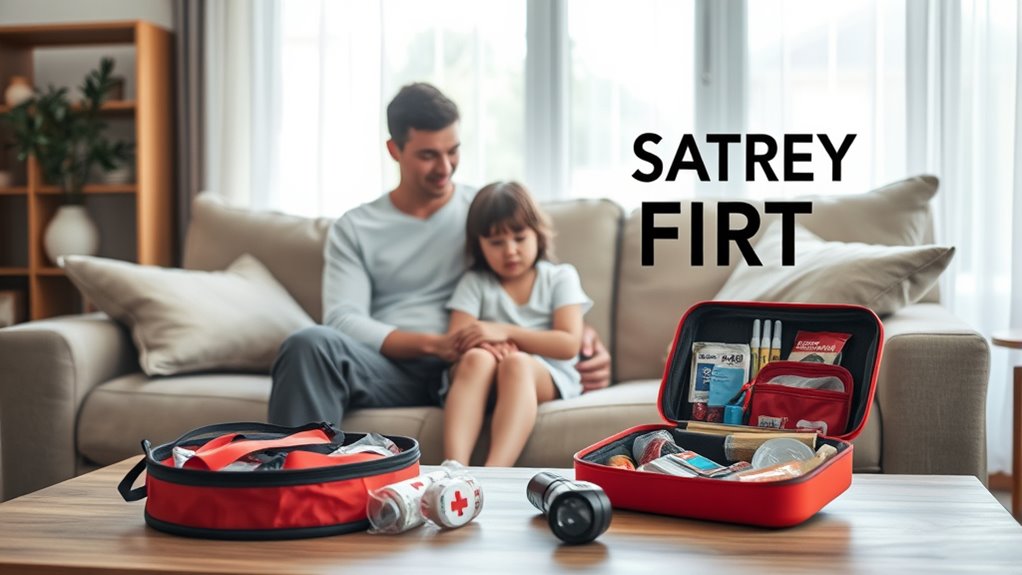
First, check everyone for injuries and provide first aid if needed. Make sure the area is safe to prevent further harm. Your priority is to keep everyone as safe as possible before moving on. Incorporating stress management techniques can help maintain calmness during emergencies, ensuring clearer decision-making.
Check for Injuries
Before doing anything else, you need to check if anyone is hurt and make certain the scene is safe. Look for signs of injuries, such as bleeding, bruising, or unconsciousness. If someone is injured, avoid moving them unless there’s immediate danger, to prevent further harm. Use your first aid kit to address minor injuries like cuts or burns, practicing injury prevention by acting promptly and calmly. Check each person carefully to see if they’re bleeding or in pain. If you notice serious injuries or someone is unconscious, prioritize calling emergency services. Staying calm and focused helps you assess injuries quickly and prevent the situation from worsening. Remember, your first aid kit is a crucial resource in managing minor injuries until professional help arrives. Additionally, understanding the role of proper lighting and setup can help prevent accidents in emergency situations by ensuring the environment is safe.
Ensure Immediate Safety
How can you guarantee everyone is safe right now? First, check that all household members are accounted for and alert. Your priority is household safety, so move everyone to a safe area away from hazards like fire, fallen debris, or electrical dangers. If someone is injured, provide basic first aid if you’re trained, but don’t risk further harm. Make sure exits are clear in case you need to evacuate quickly. Keep calm and reassure everyone. Emergency preparedness means staying composed and acting swiftly. Once everyone is safe and out of immediate danger, call emergency services. Remember, ensuring immediate safety is the critical first step in any household emergency, helping to prevent further injury or chaos. Practicing emergency plans regularly can make responses faster and more effective.

waterBOB Bathtub Emergency Water Storage Bladder Up To 100 Gallon Capacity – Food Grade Liner with Hand Pump for Hurricane and Disaster Preparedness – BPA Free Drinking Water Container
Space-Saving Up To 100-Gallon Emergency Water Storage: Transform your existing bathtub into a clean, safe water storage system…
As an affiliate, we earn on qualifying purchases.
As an affiliate, we earn on qualifying purchases.
Call Emergency Services Clearly and Calmly
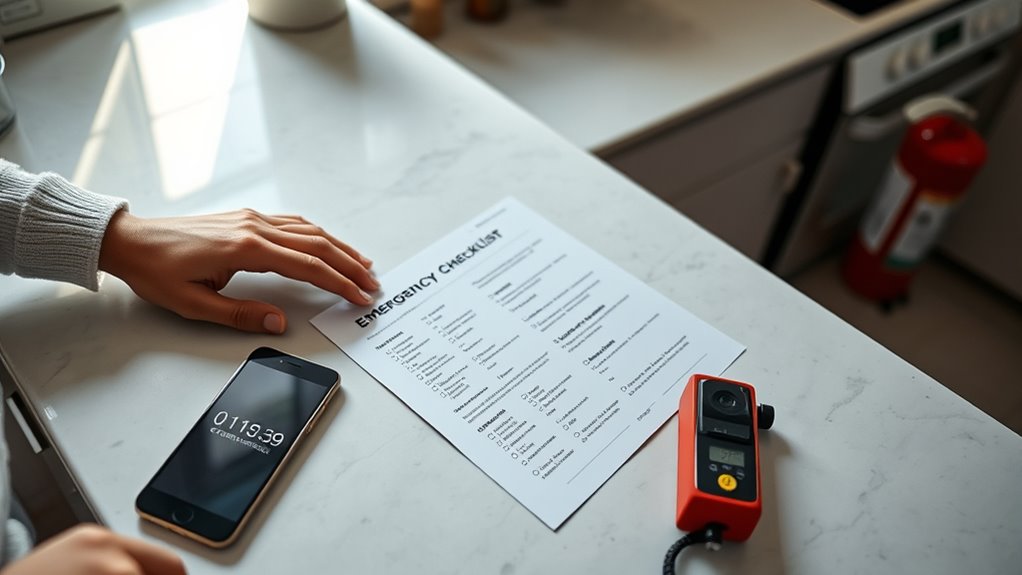
When calling emergency services, stay calm and focused to communicate effectively. Clearly state the details of the situation, such as what happened and your location. Listen carefully to instructions and follow them precisely to make sure help arrives quickly. Verify your location before hanging up to ensure responders can find you without delay.
Stay Calm and Focused
Ever wonder what to say when calling emergency services? Staying calm and focused is key to emotional resilience and effective stress management. Speak clearly, keeping your voice steady. Take deep breaths to maintain composure, helping you think clearly. Remember, the dispatcher needs essential details, so be concise but thorough. To help stay on track, consider this quick guide:
| Step | What to Do | Why It Matters |
|---|---|---|
| Stay calm | Take deep breaths | Keeps stress levels down |
| Speak clearly | Use a steady voice | Ensures understanding |
| Be concise | Share only necessary info | Saves time and avoids confusion |
| Listen carefully | Focus on the dispatcher’s questions | Ensures accurate info collection |
| Maintain focus | Keep your attention on the call | Prevents missing critical details |
Additionally, remember that effective communication during emergencies can significantly impact the outcome.
Clearly State Emergency Details
Are you unsure what details to share when calling emergency services? Clearly stating emergency details is vital for a quick response. First, calmly explain the type of household hazards involved, like a fire or gas leak. Second, give your exact location, including address and any nearby landmarks. Third, describe the number of people affected and their condition. Remember to keep your voice steady and avoid unnecessary details. Mentioning your emergency kit contents can help responders understand your preparedness and needs. Being precise ensures emergency responders quickly grasp the situation, especially when hazards are involved. Also, providing information about fire safety equipment can assist responders in assessing the scene more effectively. Stay focused, speak clearly, and provide all relevant details to help emergency services act swiftly and effectively.
Listen and Follow Instructions
Listening carefully and following instructions when calling emergency services can make a critical difference in how quickly help arrives. Stay calm, speak clearly, and provide all necessary details without panic. Your mental resilience helps you stay focused and avoid confusion, ensuring responders get accurate information swiftly. Remember, offering emotional support—whether to others involved or yourself—can help maintain your composure. Follow the operator’s questions step-by-step, even if your emotions are running high. This helps prevent delays and sets a clear path for emergency crews. Your calmness and attentiveness can influence the entire rescue process, so trust your training. Staying composed and attentive guarantees you communicate effectively, ultimately speeding up assistance and reducing stress during a challenging situation. Additionally, understanding water safety protocols can help you respond more effectively in aquatic emergencies.

Victoper LED Flashlight 2 Pack, Bright Tactical Torch High Lumens with 5 Modes, Waterproof Zoomable Flash Light, Valentine's Day Gifts for Men, Hunting Camping Essentials Gear
[ Ultra-Powerful Brightness ] Illuminate your path with this flash light boasting high lumens of brightness, capable of…
As an affiliate, we earn on qualifying purchases.
As an affiliate, we earn on qualifying purchases.
Activate Your Household Emergency Plan
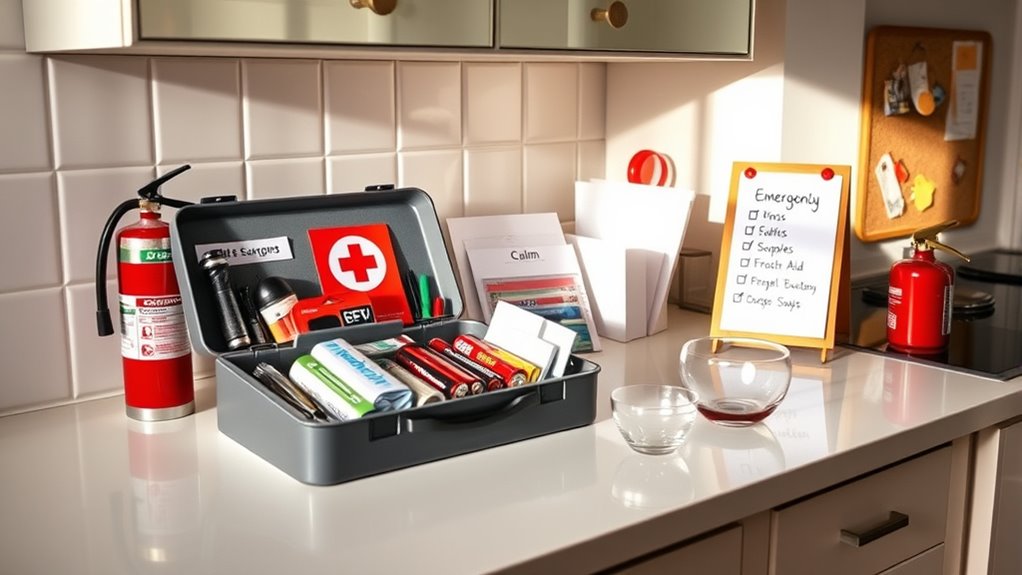
To effectively respond to an emergency, you must activate your household emergency plan immediately. This ensures everyone knows what to do and maintains household communication. First, gather your family and review the plan, confirming everyone understands their roles. Second, practice emergency drills regularly to keep responses quick and efficient. These drills help identify gaps in your plan and improve coordination. Third, designate a communication method, such as a group chat or emergency contacts, so everyone stays informed during a crisis. Activating your plan quickly minimizes confusion and chaos. Remember, the goal is to stay calm, coordinated, and prepared. Regularly updating your smart home setup can enhance safety features and automate alerts during emergencies. Practice your emergency drills often, so when an emergency strikes, your household responds smoothly and confidently.
Gather Emergency Supplies and Important Documents

Once your household emergency plan is activated and everyone knows their roles, gathering the right supplies and documents becomes the next essential step. Start by assembling an emergency kit with essentials like water, non-perishable food, first aid supplies, flashlights, batteries, and any necessary medications. Keep these items in a ready-to-go bag or container. Additionally, gather your important documents, such as identification, insurance policies, medical records, and emergency contact lists. Store these in a waterproof, easily accessible location or digital format. Having your emergency kit and important documents prepared guarantees you’re ready to act quickly and efficiently during a crisis. Being organized now helps reduce stress and saves valuable time when seconds count. Proper document management ensures all critical papers are easy to locate in emergencies.
Communicate Clearly With Family and Neighbors
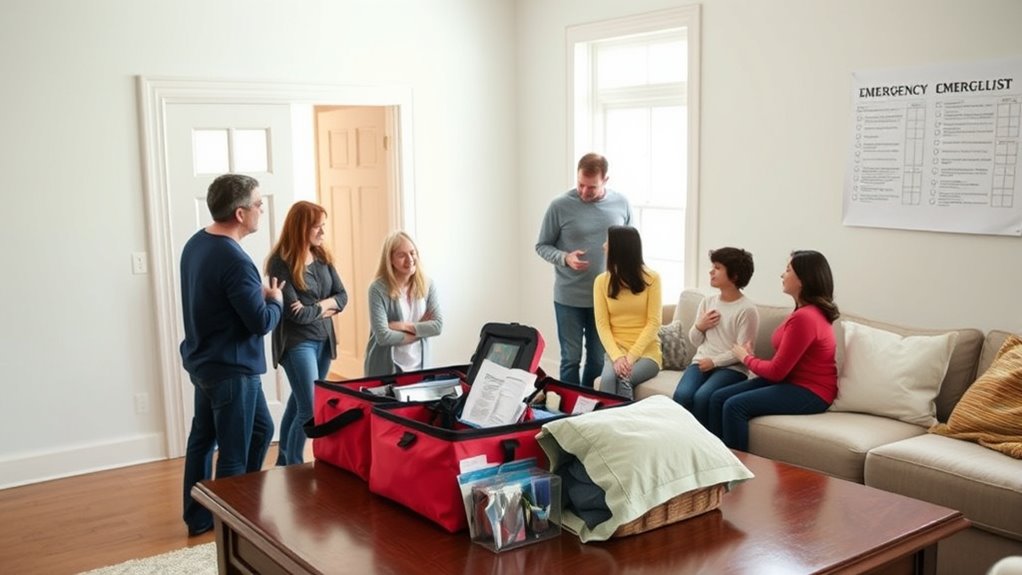
Effective communication is crucial during an emergency, so it’s important to establish clear, reliable ways to stay in touch with your family and neighbors. Good family communication ensures everyone stays informed and safe, while neighborhood cooperation helps coordinate assistance. To improve your communication plan, consider these steps:
Clear, reliable communication with family and neighbors is essential for safety during emergencies.
- Share a list of emergency contacts with family and neighbors.
- Agree on a designated meeting spot and check-in times.
- Use multiple communication methods, like cell phones, walkie-talkies, or social media, to stay connected if one fails.
Keep Calm and Manage Stress Under Pressure
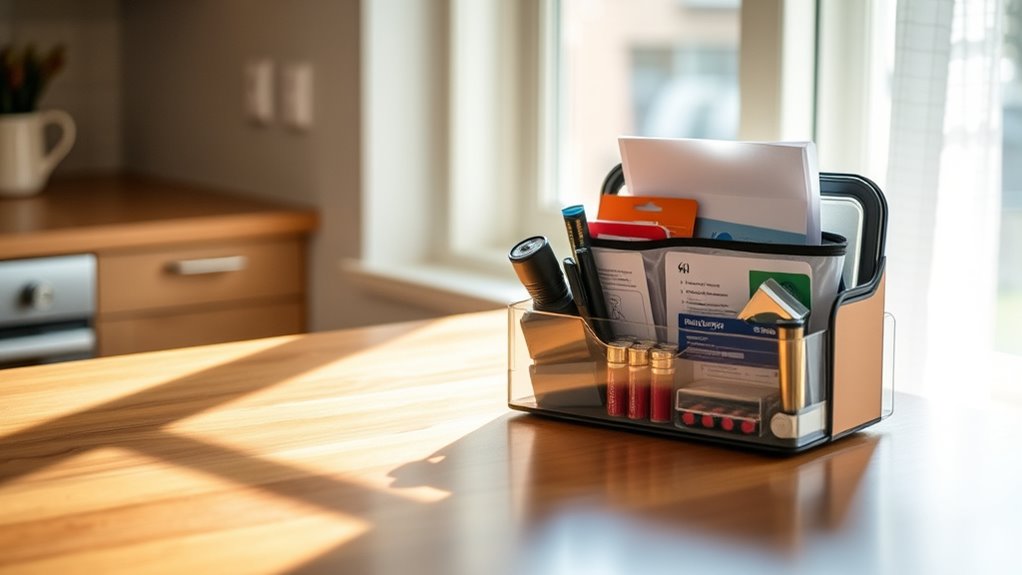
Staying calm under pressure directly impacts your ability to make sound decisions during an emergency. When stress levels rise, practice mindfulness techniques like deep breathing or grounding exercises to center yourself. These stress reduction methods help clear your mind, allowing you to focus on what’s most important. Keep in mind that panicking can cloud your judgment and slow your response. Take a moment to pause, breathe deeply, and assess the situation calmly. By managing stress effectively, you’ll stay more alert and better equipped to handle the crisis at hand. Remember, maintaining your composure not only benefits you but also reassures others around you, helping everyone work together more efficiently during stressful moments.
Provide Basic First Aid if Needed
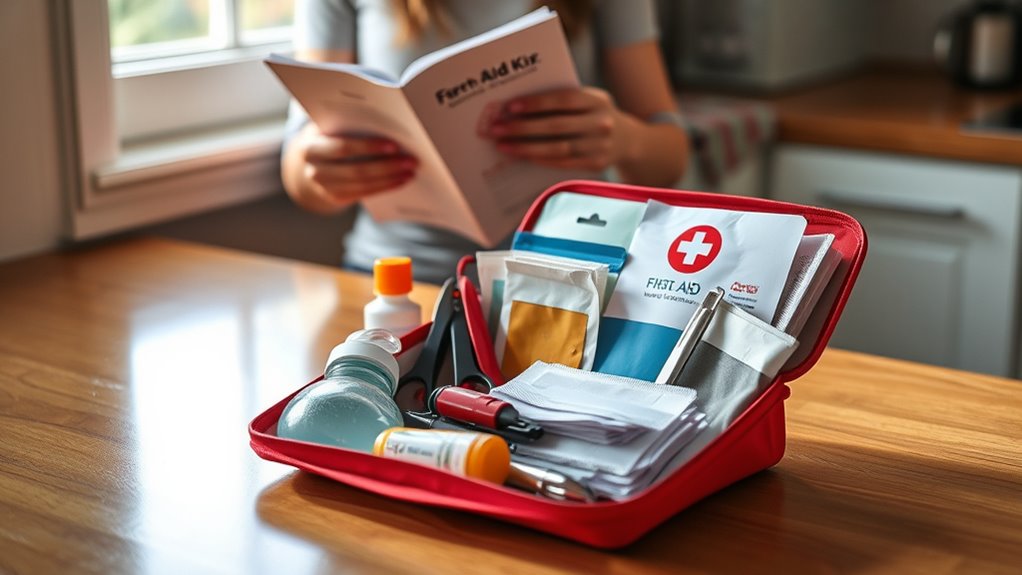
When you encounter someone who is injured or suddenly becomes ill, providing basic first aid can prevent the situation from worsening. Your household first aid kit should be accessible and stocked with essential emergency medical supplies. Acting quickly and confidently can make a difference.
Here are three key steps:
- Assess the situation: Check for responsiveness and breathing. Call emergency services if necessary.
- Stop bleeding: Apply direct pressure with a clean cloth or bandage from your first aid kit.
- Treat minor injuries: Clean cuts with antiseptic wipes and cover with sterile bandages to prevent infection.
Follow Up After the Emergency Passes

After the emergency passes, you need to check your property for any damage to guarantee safety. Restocking your emergency supplies promptly keeps you prepared for future incidents. Taking these steps helps you recover quickly and stay ready for what’s next.
Check for Damage
Once the immediate danger has passed, you should carefully check your property and surroundings for any signs of damage. Look for visible issues that could affect your safety or require urgent home repair. Ignoring property damage can lead to bigger problems later.
Here are key steps to follow:
- Inspect the roof, walls, and foundation for cracks, leaks, or structural damage.
- Check windows, doors, and seals for breakage or broken glass.
- Examine utilities like gas, water, and electricity for leaks, outages, or hazards.
Document any damage you find with photos for insurance claims or repairs. Address urgent issues immediately, and plan for professional assessments if needed. Being thorough now helps prevent more extensive damage later.
Restock Emergency Supplies
As the emergency situation stabilizes, it’s vital to begin restocking your supplies to guarantee you’re prepared for future events. Check your food inventory and replace any perishable items that may have been used or spoiled. Make certain your emergency kit organization is updated, with essential items like batteries, first aid supplies, and hygiene products readily accessible. Take note of what’s missing or damaged, and replenish those supplies promptly. Restocking isn’t just about replacing what’s gone; it’s an opportunity to review and improve your emergency preparedness. Keep items organized in clearly labeled containers, making it easier to grab what you need quickly next time. Staying proactive now ensures your household remains resilient and ready for whatever comes next.
Review and Update Your Emergency Plan Regularly
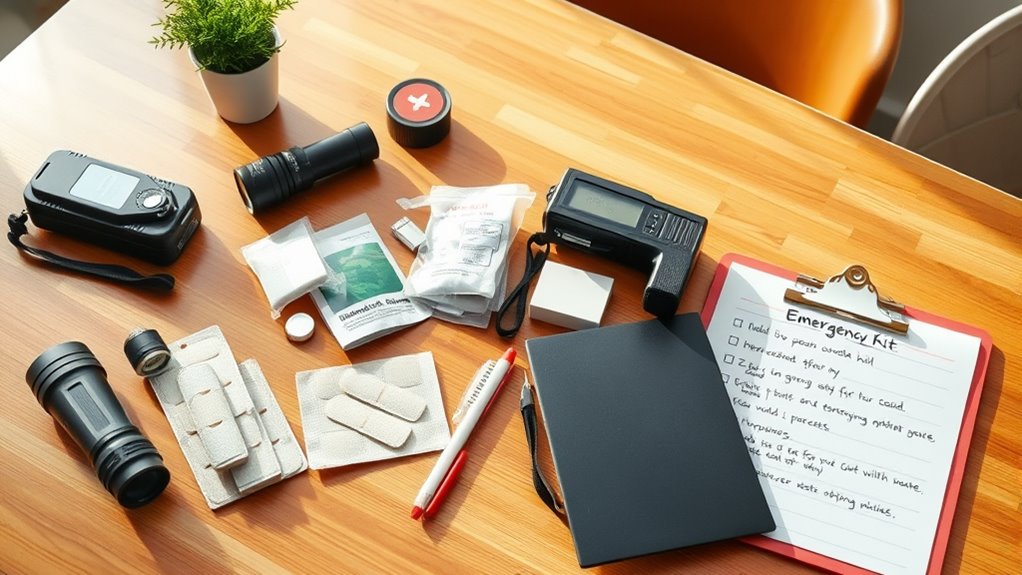
Regularly reviewing and updating your emergency plan guarantees it remains effective and relevant. As part of your home safety and emergency preparedness, it’s essential to keep your plan current. Changes in your household, new hazards, or updates in local emergency protocols mean your plan needs regular tweaks.
To help, consider these steps:
- Test your communication plan with family members to ensure everyone knows what to do.
- Review your emergency contacts and update any outdated information.
- Reassess your escape routes and safe spots to confirm they’re accessible and clear.
Frequently Asked Questions
How Can I Teach Children to Stay Calm During Emergencies?
You can teach children to stay calm during emergencies by practicing breathing exercises with them regularly, helping them learn to control their responses. Use role-playing scenarios to simulate emergency situations, so they understand what to do and feel more confident. Encouraging open conversations about fears and solutions also helps reduce anxiety. These activities build their resilience, ensuring they stay calmer and more focused when real emergencies happen.
What Should I Include in a Household Emergency Kit?
You should include essential emergency supplies like water, non-perishable food, a flashlight, batteries, a first aid kit, and necessary medications. Additionally, pack important safety procedures information, such as escape routes and emergency contacts. Don’t forget to add a whistle, hygiene products, and backup chargers for devices. Regularly check and update your kit to guarantee everything is functional and accessible, so you’re prepared to act quickly during any household emergency.
How Often Should I Review and Update My Emergency Plan?
You should review and update your emergency plan annually to guarantee it’s current and effective. During your annual review, customize the plan based on any changes in your household, such as new members or updated contact information. Regularly practicing and refining your plan helps you stay prepared for emergencies. Make it a routine to revisit and adjust your plan, so you’re always ready to respond confidently when needed.
What Are Signs of Shock and How Do I Treat It?
If someone shows signs of shock—pale, clammy skin, rapid breathing, weakness, or confusion—you must act fast! Use first aid basics like laying them down, elevating their legs, and keeping them warm. Offer emotional support, stay calm, and reassure them. Recognizing these signs and responding quickly can save a life. Always call emergency services immediately and monitor their condition until help arrives.
How Can I Prevent Panic Among Family Members During Crises?
You can prevent panic during crises by practicing stress management and maintaining effective communication. Stay calm yourself, speak clearly, and reassure family members that you’re in control. Share information honestly, listen actively, and encourage questions to reduce anxiety. Creating a supportive environment helps everyone stay focused and resilient, making it easier to handle the situation together without unnecessary panic or confusion.
Conclusion
By staying calm and following this checklist, you can handle household emergencies confidently. For example, imagine a power outage during a storm—you quickly gather flashlights and check on loved ones, keeping everyone safe. Regularly reviewing your plan guarantees you’re prepared for anything. Remember, staying composed not only protects you but also reassures your family. With practice and preparation, you’ll navigate emergencies more effectively and come through stronger together.