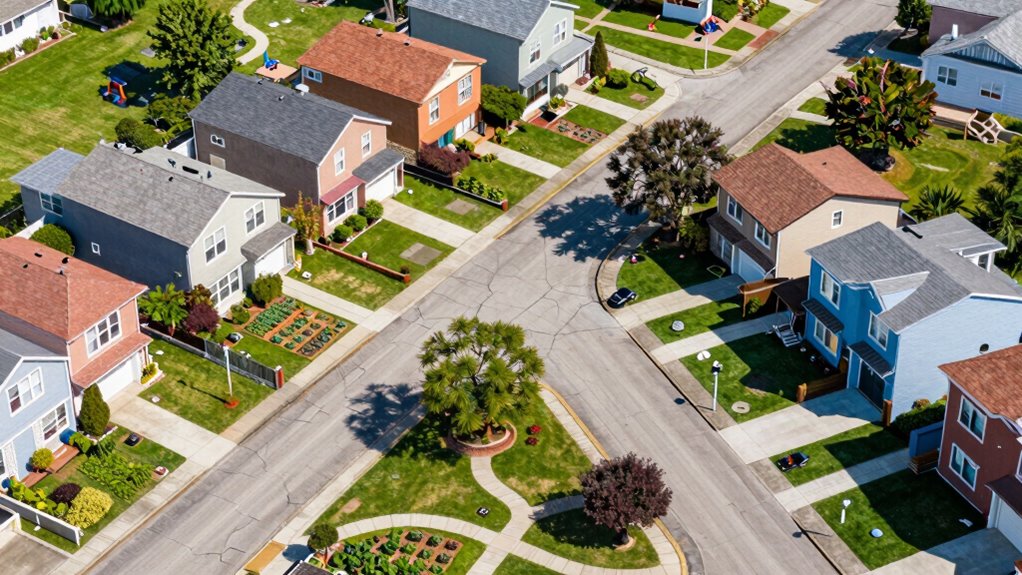

Create a thorough household map that clearly marks your property boundaries, emergency exits, utility locations, and key neighborhood landmarks. Include escape routes, safe zones, and important contact information to prepare for emergencies. Highlight safety features like fire exits and shelters, ensuring everything is easy to understand and update as needed. This all-in-one map helps you stay organized and ready; explore further to learn how to craft yours step-by-step.
Key Takeaways
- Create a detailed property boundary map including fences, natural markers, and legal land divisions.
- Mark all emergency exits, escape routes, and safe zones within and around your home.
- Identify utility sources such as water, gas, and electrical points, and note key landmarks nearby.
- Include routes for daily travel, highlighting safe crossings, shortcuts, and community resources.
- Regularly update the map with new features, modifications, and safety information for ongoing household safety.
Assessing Your Property Boundaries and Layout
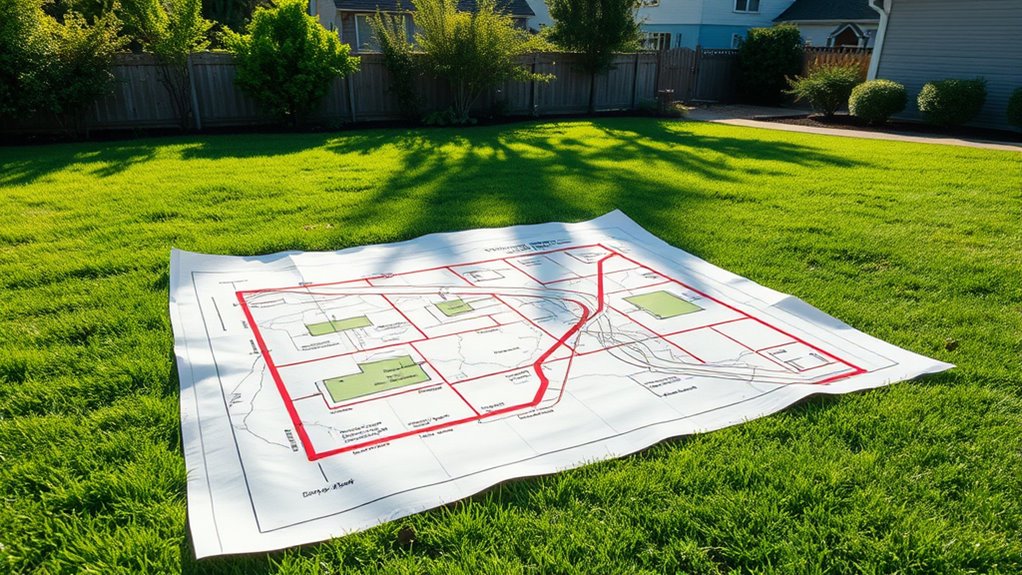
Have you ever wondered if your property boundaries are accurate? Knowing your land ownership details helps prevent disputes and ensures you respect neighboring properties. Start by reviewing your deed and any official surveys to understand your exact property boundaries. It’s a good idea to physically walk your land, noting fences, walls, or natural markers that define your space. Use tools like a measuring tape or a GPS device for precise measurements. Remember, even small inaccuracies can cause conflicts later. Updating your map with these observations gives you a clear layout of your property. This assessment not only clarifies your land ownership but also empowers you to maintain and protect your property rights effectively. Considering property boundary markers can help you identify natural or artificial features that delineate your land, especially when they are based on land surveying techniques. Being aware of local boundary laws can also ensure you are in compliance with regulations and avoid potential legal issues. Recognizing the importance of accurate land measurements can further help you avoid boundary disputes and potential legal complications. Utilizing modern mapping tools can enhance the precision of your property layout and prevent future conflicts. Taking these steps now can save you headaches down the line.
Marking Emergency Exits and Escape Routes
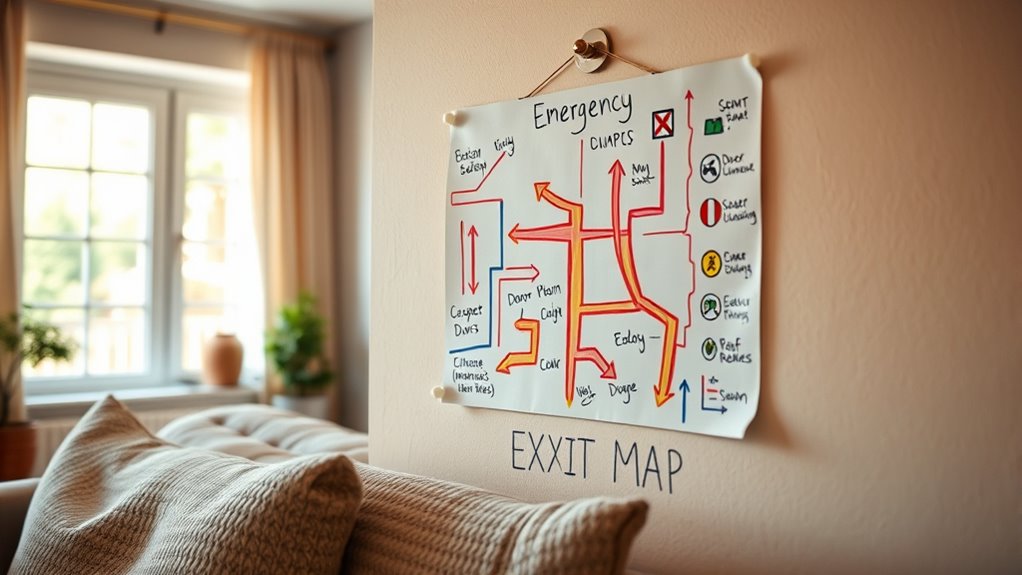
Start by identifying all the exits in your home, including doors and windows that could serve as escape points. Then, plan multiple routes to safety so you’re prepared no matter the situation. Additionally, practice your escape plan regularly to ensure everyone knows what to do in an emergency. Conducting emergency drills can also help reinforce preparedness and reduce panic during actual events. Finally, mark these exits and routes clearly on your map, so everyone in your household knows exactly where to go. Incorporating emergency preparedness and timeless style guidance into your safety plan can also help ensure your emergency preparations are both practical and aesthetically coordinated. Additionally, utilizing power tools and equipment for quick modifications or repairs to your escape routes can enhance your home’s safety features when needed.
Identify All Exits
Knowing where all the exits are located is essential for safe evacuation in an emergency. You should identify all possible escape points, including doors, windows, and alternative exits. Mark these clearly on your map, making sure they are unobstructed and easy to access. During safety drills, practice using each exit to ensure everyone knows how to reach safety quickly. Proper evacuation planning involves understanding which routes lead outside safely, so familiarize yourself with every potential escape route in your home. Regularly update your map if you make changes or add new exits. Being aware of all available exits minimizes confusion during an emergency, helping you and your family evacuate swiftly and safely when it matters most. Incorporating clear labeling and signage can further improve evacuation efficiency by guiding people toward the nearest exits without hesitation. Additionally, knowing the Gold IRA markets can be a helpful part of your overall financial safety plan, providing resources and strategies to protect your assets during unforeseen events. Moreover, understanding the 16PF personality traits can assist in planning evacuation roles tailored to each family member’s strengths, ensuring a more organized response. To enhance safety, consider regular safety assessments to identify potential hazards near exits and ensure they remain accessible. Recognizing juice extraction techniques can also be useful in emergency situations where nutrition and hydration are needed quickly, as having a supply of easily prepared juices can be beneficial.
Plan Multiple Routes
To guarantee a quick and safe evacuation, it’s important to plan multiple routes from each area of your home. Effective evacuation planning involves identifying several escape paths to avoid congestion and delays. Think about:
- Stairs leading to the backyard, side door, or garage
- Windows that can serve as secondary exits
- Hallways leading to different exits
- Alternative routes around furniture or obstacles
- Clear pathways that avoid fire-prone areas
- Incorporating emergency exit signage and illumination to ensure visibility during an evacuation.
Additionally, considering fire safety measures such as fire extinguishers and smoke alarms can further enhance your home’s safety plan. Regularly practicing your evacuation plan ensures all household members are familiar with the routes and procedures in case of an emergency. Creating a detailed evacuation map can help household members familiarize themselves with all available escape routes in advance. Incorporating escape route signage and keeping pathways unobstructed can significantly improve response times during an emergency.
Mark Clearly on Map
Have you clearly marked your emergency exits and escape routes on your map? It’s essential to identify these paths, especially considering property zoning and landscaping features. Marking exits helps you navigate quickly during emergencies, avoiding barriers like fences or bushes. Use symbols or colors to highlight doors, windows, and alternative routes. Remember, landscaping features such as trees or garden beds can block escape paths, so note these on your map. Property zoning may also influence accessible routes, especially in multi-use areas. Keep your map simple and accurate to prevent confusion. Additionally, understanding property zoning regulations can help you plan safer escape routes tailored to your property’s specific use. Being aware of flushing mechanisms can ensure your plumbing system remains reliable during emergencies, preventing additional stress. Planning for emergency plumbing failures can make a significant difference in maintaining safety during crises. Incorporating escape route signage can further improve safety and quick response times. Being aware of essential oil properties can also be beneficial in emergency preparedness, as certain oils may help with stress relief or infection prevention. Here’s a quick reference:
| Property Zone | Exit Location | Landscaping Features |
|---|---|---|
| Residential | Front door | Shrubs near pathway |
| Garden Area | Side window | Large oak tree |
| Garage | Back door | Flower beds |
| Basement | Emergency stairs | Potted plants |
| Storage Shed | Side exit | Fence line |
Identifying Key Utilities and Service Points

You should identify where your water sources, electricity outlets, and gas connections are located on your map. Knowing these points helps you respond quickly in emergencies or maintenance situations. Marking them now guarantees you have a clear overview of your household’s key utility connections.
Locate Water Sources
Ever wondered where your household’s water comes from and how to find it quickly in an emergency? Locating your water source is essential for water accessibility during crises. Start by identifying where the main water line enters your property. Look for pipes, meters, or valves outside your home. Consider nearby features like:
- Bridges or underground pipes running beneath your yard
- Wellheads or pumping stations if you rely on a well
- Nearby municipal water tanks or reservoirs
- Hidden pipes along fences or garden beds
- Access points at local hydrants or fire stations
Knowing these key points helps you quickly shut off the water if needed and guarantees you can access water fast when it matters most. Mapping your water source makes emergency response more efficient and keeps your household prepared.
Mark Electricity Outlets
Knowing where your household’s water comes from helps you respond quickly in emergencies, but it’s equally important to identify key utility points like electricity outlets. Marking outlet placement guarantees electrical safety and quick access during outages or repairs. Take note of outlets in high-traffic areas, kitchens, bathrooms, and garages. Use a simple map to mark their locations clearly. Keep in mind that proper outlet placement minimizes risks, especially for children or pets. Make sure to identify GFCI outlets in wet areas. Here’s a quick overview:
| Location | Notes |
|---|---|
| Kitchen | GFCI outlets, appliance spots |
| Bathroom | GFCI outlets, near sink |
| Garage | Heavy-duty outlets |
Mapping these points helps you stay safe and prepared.
Identify Gas Connections
Have you ever wondered where your home’s gas supply enters and connects? It’s vital to identify these points to prevent issues like a gas leak or faulty appliance connection. Look for the main gas line entering your property, usually underground or along the wall. From there, trace these key areas:
- The meter where gas is measured
- The shut-off valve for emergencies
- Connection points to appliances like stoves or water heaters
- Flexible hoses or pipes linking appliances to the main line
- Any signs of corrosion, leaks, or damage near these connections
Knowing these points helps you quickly shut off gas in case of leaks or emergencies. Regular checks ensure safe appliance connections and peace of mind. Proper identification keeps your household safe and functional.
Noting Important Landmarks and Neighborhood Features
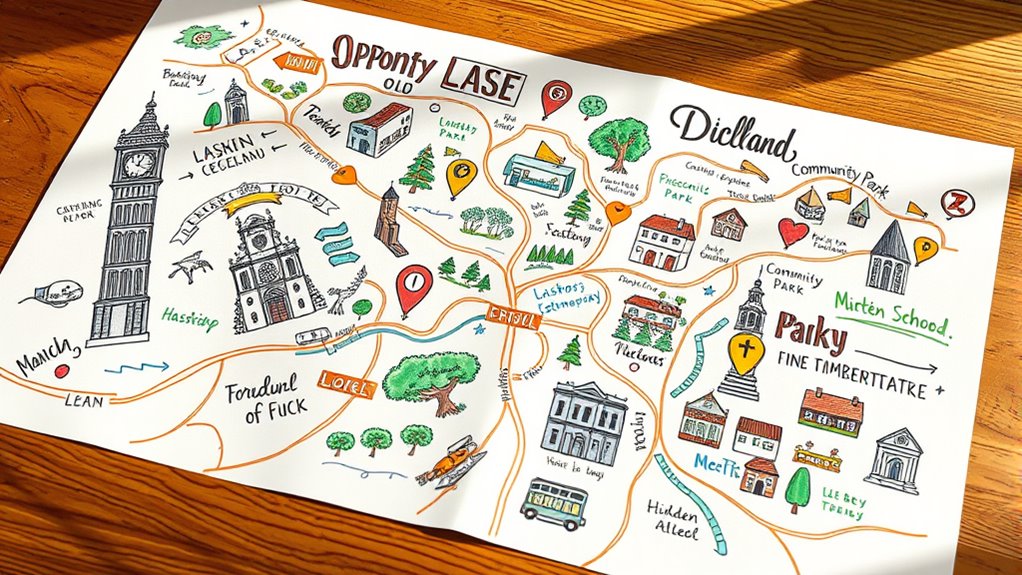
Taking note of important landmarks and neighborhood features helps you quickly identify your surroundings and navigate easily. Recognizing notable sites like a historic clock tower, a unique mural, or a community center can anchor your mental map. These landmarks often reflect the neighborhood’s history and local customs, giving you insight into its character. Use the table below to identify key features:
| Landmark/Feature | Description | Significance |
|---|---|---|
| Old Town Hall | Historic building from 1900s | Neighborhood history |
| Community Market | Weekly gathering spot | Local customs |
| Local Park | Green space with playground | Social hub, recreation |
| Unique Mural | Art on Main Street | Cultural expression |
| Traditional Festival | Annual neighborhood event | Celebrates local customs |
This map helps you connect with your community’s story and daily life.
Charting Daily Routes and Access Points
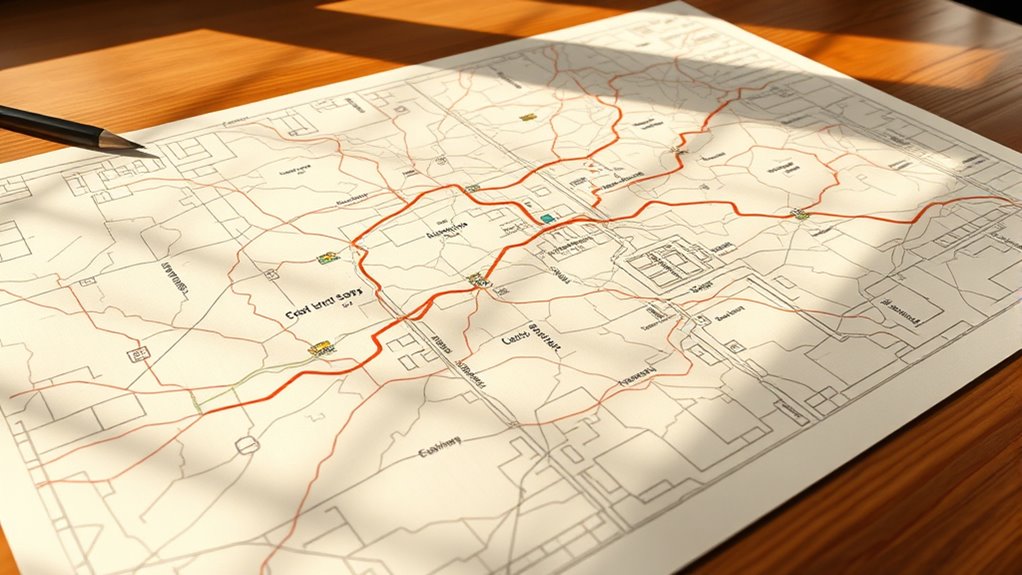
To navigate your neighborhood efficiently, it’s essential to chart your daily routes and access points clearly. Knowing the best paths helps you avoid traffic congestion and unsafe crossings. Focus on how traffic patterns flow during rush hours and identify pedestrian pathways that are safe and shaded. Visualize your routes with these key features:
- The main street you take to work
- Shortcuts through quiet alleys
- Crosswalks and pedestrian bridges
- Safe spots near schools or parks
- Entry points to local shops or services
Mapping these areas helps you plan the quickest, safest routes for daily errands and commutes. By understanding traffic and pedestrian flow, you ensure smoother travel and better safety for everyone in your household.
Highlighting Safe Zones and Shelter Areas

Because emergencies can happen suddenly, it’s crucial to identify safe zones and shelter areas in your neighborhood. Start by engaging with your community to pinpoint designated safe spots, such as schools, community centers, or open parks. Community involvement ensures everyone knows where to go and can assist those who need help. Mark these locations clearly on your map, making them easy to find during stressful moments. Also, consider nearby shelters equipped for various emergencies. Keep disaster preparedness kits in accessible places within your safe zones, so you’re ready to act quickly. Regularly review and update your map with family members and neighbors, fostering a collective sense of safety and readiness. Highlighting these areas helps you respond swiftly and effectively when it matters most.
Documenting Emergency Contacts and Resources
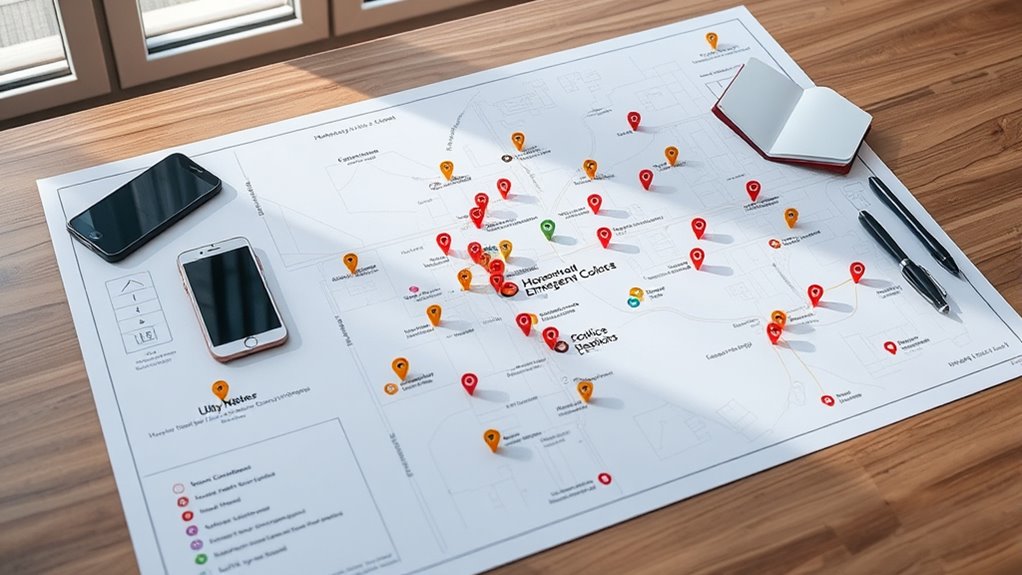
Once you’ve marked safe zones and shelter areas on your map, the next step is to compile a list of emergency contacts and resources. This list ensures you can quickly access help when needed. Include essential community resources such as local hospitals, fire stations, and police stations. Also, note down emergency contacts like family members, neighbors, and work contacts who can assist or provide support. Visualize each entry clearly:
- Local hospital and urgent care centers
- Fire and police stations nearby
- Family and friends’ phone numbers
- Community resource centers and shelters
- Local utility companies for power and water emergencies
Having this information at your fingertips helps you stay organized and prepared, reducing panic during crises. Keep this list accessible, whether on your map or a backup, for quick reference when every second counts.
Updating and Maintaining Your Household Map

Regularly updating your household map guarantees it remains a dependable resource during emergencies. As your home evolves through renovations or property valuation changes, your map should reflect these updates. Keep track of new exits, added rooms, or altered layouts to confirm accuracy. Schedule quarterly reviews to incorporate recent home renovation projects or changes in property boundaries. Use a simple table to record updates:
| Date | Change Made | Details |
|---|---|---|
| 2024-01-15 | Added garage extension | Increased property size |
| 2024-03-10 | Moved main entrance | Renovation completed |
| 2024-06-05 | Updated emergency routes | New fire escape plan |
| 2024-09-12 | Changed property valuation | Updated for insurance purposes |
| 2024-11-20 | Rearranged storage areas | Improved accessibility |
Consistent updates ensure your map remains a crucial tool for safety and property management.
Frequently Asked Questions
How Often Should I Review and Update My Household Map?
You should review and update your household map at least twice a year, especially during seasonal changes. Regular updates help with home maintenance and emergency planning, ensuring your maps reflect current layouts, hazards, and safety features. Whenever you make significant home improvements or notice changes in your surroundings, revise your map promptly. Staying proactive keeps your household prepared for emergencies and maintains an accurate, useful reference for everyday safety.
What Materials Are Best for Creating a Durable Map?
You should choose materials that enhance map durability and withstand wear over time. Waterproof paper or laminated sheets are excellent choices because they resist moisture and tearing. Using sturdy materials like plastic or laminated cardstock guarantees your map stays intact during frequent handling or adverse weather. Prioritize material selection to keep your household map reliable and long-lasting, so you can easily update or reference it whenever needed without worry about damage.
How Detailed Should My Household Map Be for Safety Purposes?
For safety purposes, your household map should be detailed enough to support emergency planning and family coordination. Include exits, safe spots, fire extinguishers, and utility shutoffs. Mark key landmarks and potential hazards. Keep it clear and easy to read, updating it regularly. The goal is to make certain everyone can quickly understand and navigate your home in an emergency, making safety drills more effective and reducing confusion during real crises.
Can I Include Digital Elements in My Physical Household Map?
Yes, you can include digital elements in your physical household map. Imagine your map glowing with interactive features like QR codes or augmented reality overlays that bring safety details to life. Digital integration enhances your map’s usefulness, allowing you to quickly access emergency contacts or escape routes. Incorporating these elements makes your household map more dynamic, ensuring you’re prepared and confident when emergencies arise.
Who Should I Share My Household Map With for Maximum Safety?
You should share your household map with trusted family members, close friends, and emergency contacts to guarantee safety. Including security zones on your map helps others understand critical areas, especially during emergencies. Share it securely through private channels and avoid posting publicly online. By doing this, you ensure that those who need to know about your security zones and emergency contacts can act quickly if needed, maximizing safety for everyone involved.
Conclusion
By drawing this map, you create a safety net woven with your own knowledge and awareness. It’s like planting a lighthouse within your home, guiding you through storms and uncertainties. Keep it updated, and it’ll serve as a trusted guide when seconds count. Remember, this simple act transforms your household into a fortress of preparedness — a clear, steady compass in the chaos, ensuring you’re always ready to navigate life’s unpredictable waters.