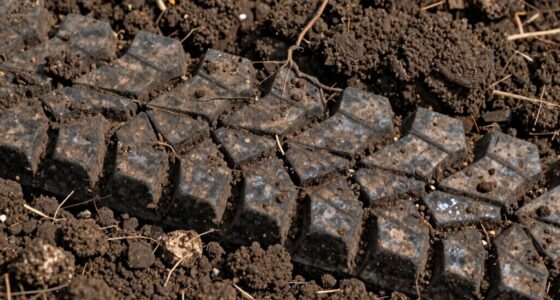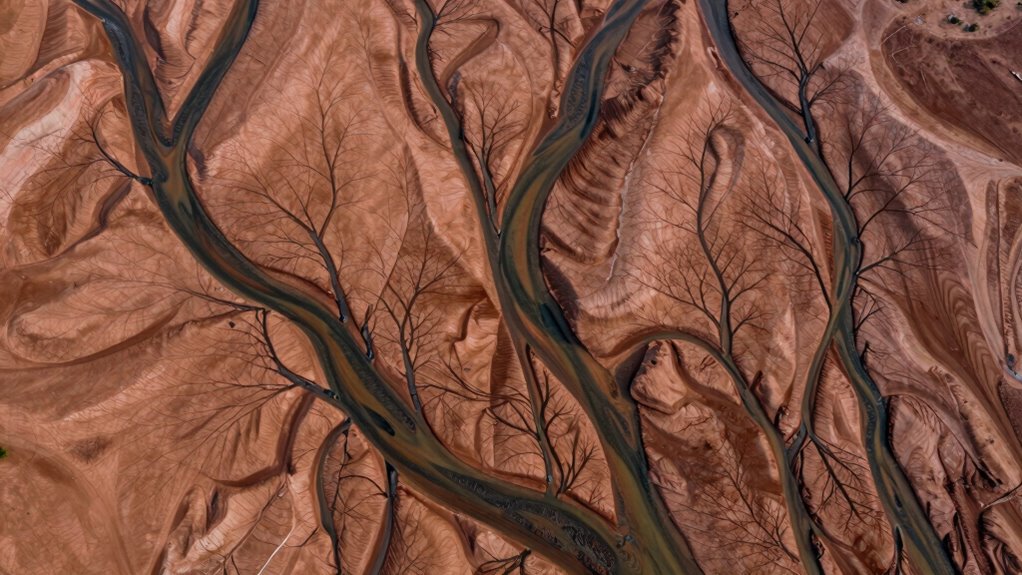

Drainage patterns show how water naturally or artificially moves across land, following the terrain’s shape, soil, and rocks. Water tends to flow downhill along paths shaped by the landscape features, such as slopes, valleys, and geological structures. The type of drainage pattern—dendritic, radial, or trellis—depends on topography and landforms. Climate, soil, and human activities also influence how water chooses its route. If you look closer, you’ll discover the many factors guiding water’s journey across the land.
Key Takeaways
- Water follows the path of least resistance, moving from higher to lower elevations due to gravity.
- The underlying landforms and terrain slope influence the direction and speed of water flow.
- Soil type and permeability determine whether water infiltrates or flows on the surface.
- Existing drainage patterns and geological structures guide water along preferred channels.
- External factors like precipitation, vegetation, and human-made features can alter natural water pathways.

4 Inch Yard Drain kit,French Drain kit for 4 inch drainage pipe, Angled Yard Drainage Emitter,yard Drain Grate for Sump Pump Discharge,with sch40 dwv connetction (1pcs)
【 Easy to install 】 The Yard Drain Emitter is combined with a 4-inch connector, eliminating the hassle…
As an affiliate, we earn on qualifying purchases.
As an affiliate, we earn on qualifying purchases.
What Are Drainage Patterns and Why Do They Matter?
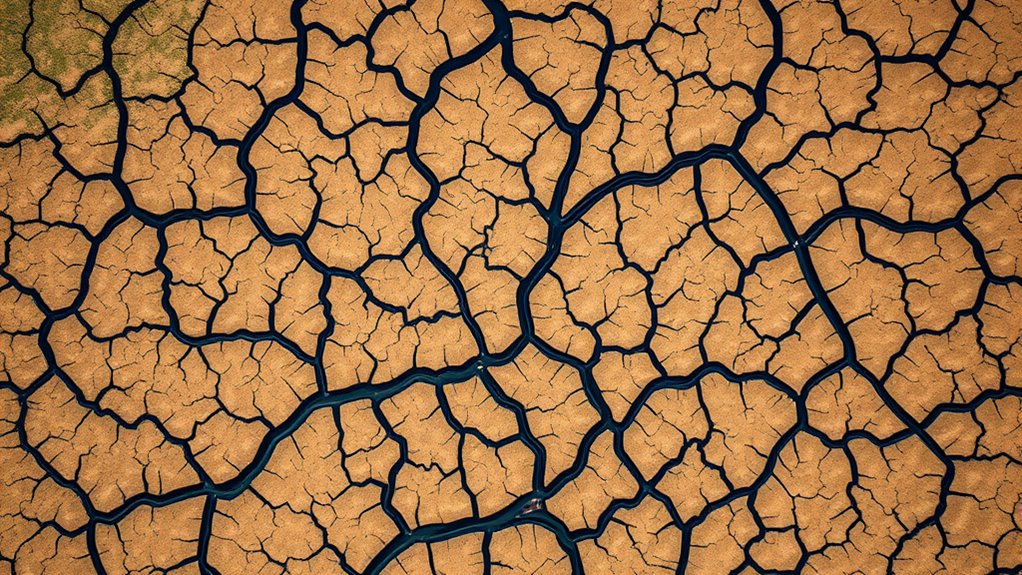
Drainage patterns are the natural arrangements of streams and rivers within a landscape, shaping how water flows across the terrain. They are crucial for understanding how water moves through different environments, especially in urban areas. Urban drainage systems are designed to mimic natural patterns, helping to quickly channel runoff away from streets and buildings. Proper drainage reduces flood risks and protects communities from water damage. Flood management relies on understanding these patterns to prevent water from pooling and causing erosion or flooding. Recognizing how drainage patterns function allows city planners to develop better infrastructure and mitigate flood risks effectively. These natural pathways are influenced by the terrain’s geology and topography, which determine how water flows and collects. Whether in rural or urban settings, understanding these natural water pathways helps you appreciate their importance in maintaining a balanced and safe environment.

Advanced Drainage Sy. 417AA 4" Internal Coupling
Sold on Amazon
As an affiliate, we earn on qualifying purchases.
As an affiliate, we earn on qualifying purchases.
Main Types of Drainage Patterns and How to Identify Them
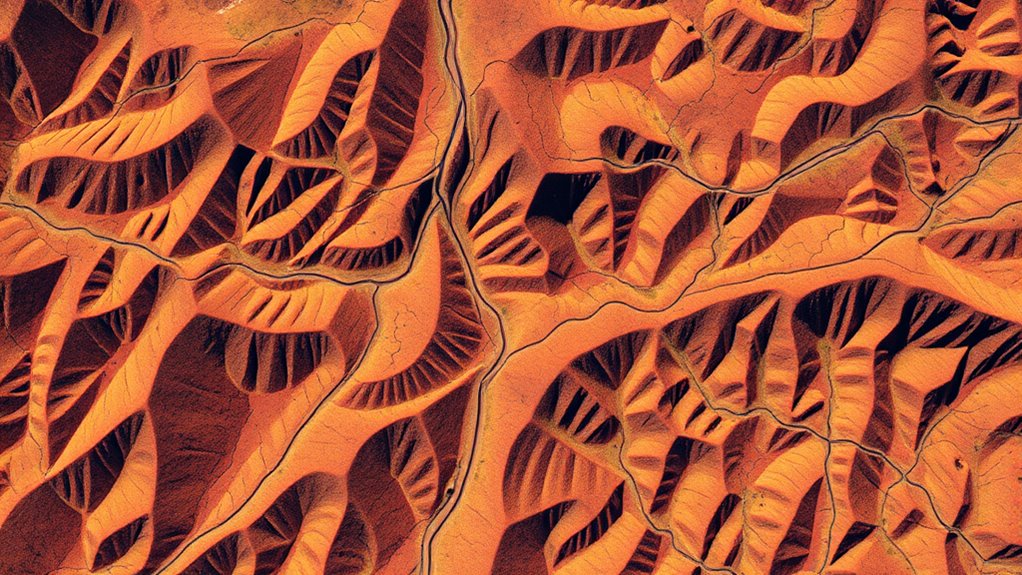
Understanding the main types of drainage patterns helps you recognize how water flows across the landscape. Look for dendritic patterns with branching streams, radial patterns spreading outward from a central point, or trellis patterns with parallel streams crossing ridges. Identifying these features makes it easier to interpret terrain and landform development.
Dendritic Pattern Characteristics
Dendritic patterns are among the most common types of drainage arrangements, resembling the branching of tree roots or veins. They form when water flows through uniform material, creating a network of tributaries joining at nearly right angles. You’ll notice these patterns in areas with consistent soil composition, where erosion occurs evenly, and groundwater flow remains steady. The channels tend to be irregular and widespread, with no dominant central stream. This pattern indicates the landscape’s surface and subsurface conditions are relatively uniform, allowing water to diverge and converge freely. Recognizing dendritic patterns helps you understand how water moves across the terrain, shaping erosion processes and influencing groundwater recharge. They’re efficient for drainage but can be susceptible to increased soil erosion if disturbed. High flow rates also contribute to the development of dendritic drainage networks by increasing the velocity and volume of water moving through the channels.
Radial Pattern Features
Radial patterns stand out because water flows outward in all directions from a central point, creating a spoke-like arrangement. This pattern exhibits radial symmetry, where streams radiate uniformly around a central feature such as a hill or mountain. When observing a radial pattern, you’ll notice:
- Water flowing away from the center in straight lines, resembling spokes on a wheel.
- Multiple channels that extend outward, maintaining a consistent distance from each other.
- A clear central point that influences the water flow, often marked by elevated terrain or a peak.
- The formation of radial patterns often indicates underlying geological structures that guide water flow.
This pattern typically forms in areas with a central elevation, guiding water in a symmetrical fashion. Recognizing these features helps you identify radial drainage, which is distinct from other main types of drainage patterns.
Trellis Pattern Identification
A trellis pattern is characterized by a network of main streams that run roughly parallel, with smaller tributaries joining them at right angles, forming a grid-like structure. To identify this pattern, observe how water flow follows straight, parallel channels across the land division. The main streams are usually aligned along geological features such as folded rocks or areas where land division creates natural barriers. Tributaries cut across the land at right angles, connecting the main streams and resembling a lattice. This pattern often appears in regions with alternating bands of resistant and less resistant rocks or terrain shaped by tectonic activity. Recognizing a trellis pattern helps you understand how water moves across complex land division, following the natural contours and structural features of the terrain. Understanding geological features can further enhance your ability to identify various drainage patterns and their formation.

Garden Tutor Multiscale Garden & Landscape Design Kit – 2 Translucent Yellow Design Stencils, 12-Inch Flexible Curve Ruler, 40-Sheet Multi-Scale Graph Paper & Garden Design Guide
All-in-One Garden & Landscape Planning: Includes two multi-scale design templates, a 12-inch flexible curve drafting ruler, custom landscape…
As an affiliate, we earn on qualifying purchases.
As an affiliate, we earn on qualifying purchases.
How Topography and Landforms Shape Water’s Path
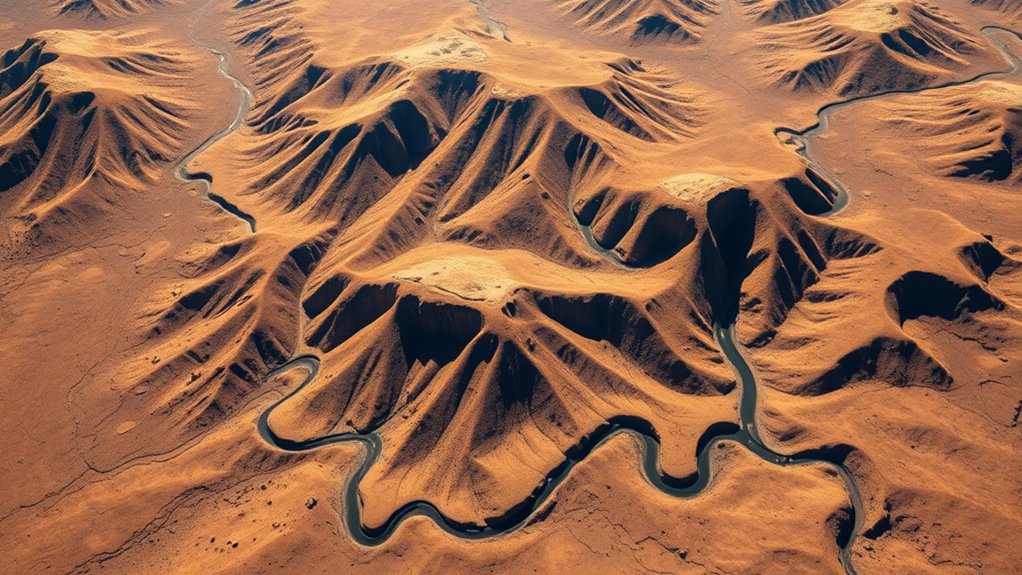
Topography and landforms directly influence how water flows across the Earth’s surface. You can see this in action when mountain streams carve steep valleys, guiding water swiftly downward. As water approaches coastal outlets, it follows gentle slopes, spreading out into deltas or estuaries. These landforms determine whether water flows directly into the ocean or meanders through plains. Imagine:
- Mountain streams rushing through narrow, rocky channels, carving deep gorges.
- Sloping hills funneling water toward broad river valleys.
- Coastal outlets spreading water into estuaries, shaping wetlands and beaches.
Your landscape’s shape directs water’s journey, creating unique drainage patterns. Whether it’s a rapid mountain stream or a slow-moving coastal outlet, landforms define the paths water takes across the terrain. Landforms influence water flow, shaping the drainage patterns we observe across different landscapes.
drainage pattern modeling kit
As an affiliate, we earn on qualifying purchases.
As an affiliate, we earn on qualifying purchases.
The Influence of Soil and Rock Types on Drainage
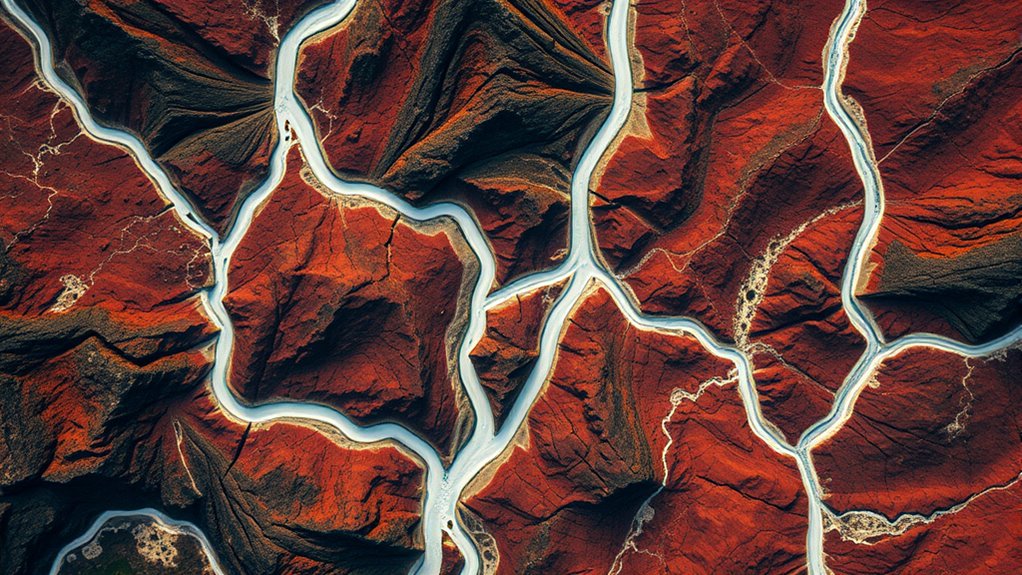
The type of soil and rock in an area considerably influences how water drains through the landscape. Your soil composition determines whether water seeps quickly or pools on the surface. For example, sandy soils have high permeability, allowing water to drain rapidly, reducing surface runoff. Conversely, clay soils have low permeability, causing water to move slowly and often leading to surface saturation. Rock permeability also plays a crucial role; permeable rocks like sandstone let water pass easily, shaping underground drainage paths. Impermeable rocks such as slate or shale restrict water movement, forcing it to find alternative routes. Understanding permeability is essential for predicting how water will behave in different environments. By understanding soil and rock types, you can predict drainage patterns more accurately and manage landscape water flow effectively. This knowledge helps in designing sustainable drainage systems and preventing erosion.
How Climate Changes Drainage Patterns Over Time
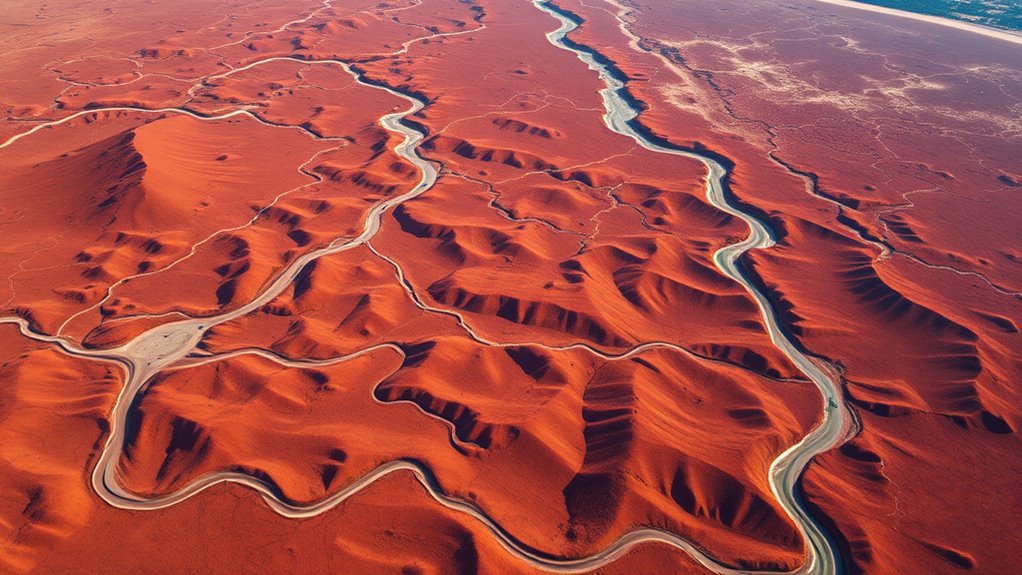
Climate changes considerably impact drainage patterns by altering precipitation, temperature, and evaporation rates over time. These climate impacts lead to water redistribution, reshaping how water flows across landscapes. You might imagine:
- Heavy rains carving new channels through softened soil.
- Longer droughts drying up existing streams and shifting flow paths.
- Frequent temperature swings causing freeze-thaw cycles that break apart rock and redirect water.
These variations cause drainage systems to evolve, sometimes creating new valleys or drying up old ones. As climate shifts, water no longer follows the same paths, forcing the landscape to adapt. Your understanding of water redistribution becomes key to predicting how drainage patterns change, highlighting the dynamic relationship between climate and water flow over time.
How Rivers Form and Evolve Through Landscape Changes
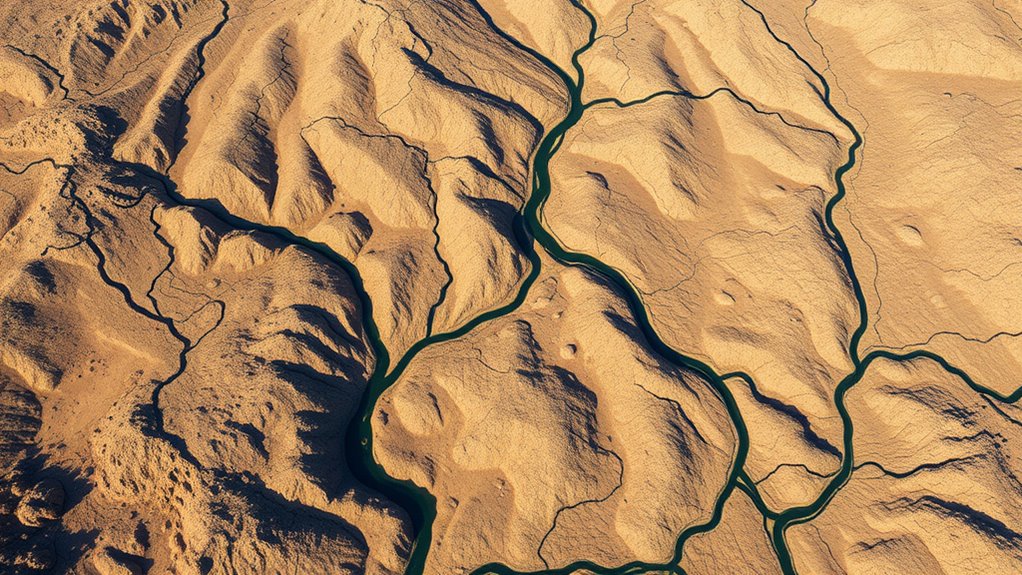
You can observe how rivers begin when water starts flowing over land, carving pathways through the landscape. The formation and growth of rivers depend on factors like terrain slope, soil type, and existing landforms. Understanding these landscape influences helps explain how rivers evolve over time and shape the environment around them. Additionally, the presence of landform features can significantly direct the flow and development of water pathways.
River Initiation Processes
River initiation begins when rainfall or snowmelt starts to erode the landscape, carving out small channels in the process. You witness the start of river formation as water follows the path of least resistance, gradually enlarging these tiny grooves through erosion processes. Imagine:
- Raindrops splashing onto soil, loosening dirt and creating tiny indentations.
- Water pooling and flowing into these depressions, deepening them over time.
- Streams merging and expanding, forming a network of initial channels that define the future river.
As erosion continues, these channels grow larger and more defined, setting the stage for a full-fledged river. This process is dynamic, driven by water’s relentless movement and the landscape’s susceptibility, shaping pathways water will follow for years to come. Understanding these processes helps explain how rivers develop and evolve over time.
Landscape Influence Factors
Landscape features such as slopes, rock types, and soil composition play a crucial role in shaping how rivers form and evolve. These factors influence water flow paths and determine erosion patterns. For example, steep slopes accelerate runoff, while softer soils allow easier channel formation. Human activities like urban planning and groundwater management also impact river development by altering natural landscapes. Additionally, erosion processes are significantly affected by these landscape characteristics, further shaping river courses.
| Natural Factors | Human Influences |
|---|---|
| Slope gradient | Urban expansion |
| Rock hardness | Groundwater extraction |
| Soil permeability | Infrastructure development |
| Vegetation cover | Land use changes |
Understanding these landscape influence factors helps predict river behavior and manage water resources effectively. Recognizing how natural and human elements interplay ensures sustainable river evolution and land use planning.
Human Activities That Alter Natural Drainage Systems
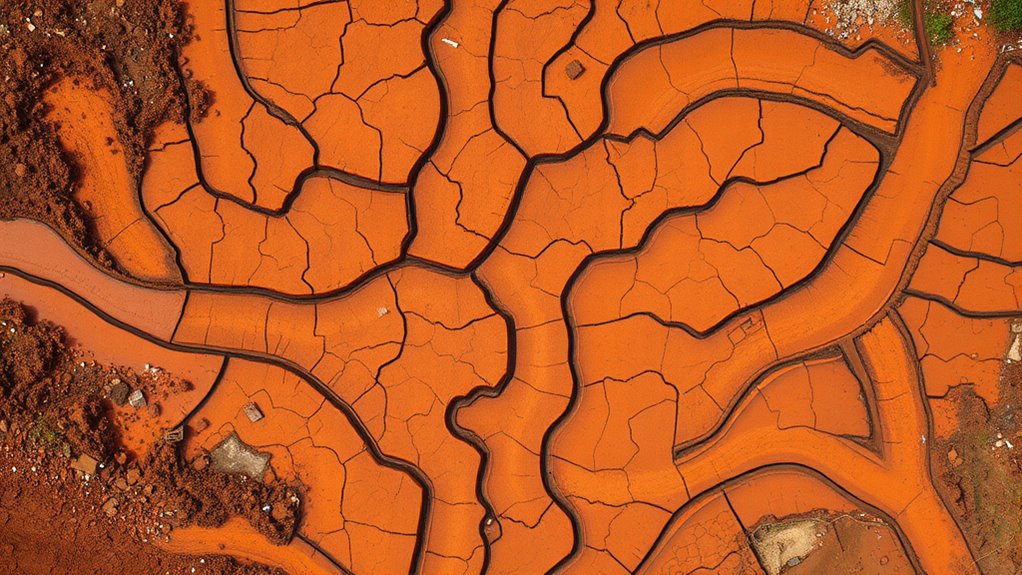
Human activities have markedly altered natural drainage systems, often with unintended consequences. Urban development reshapes landscapes, replacing permeable soil with concrete and asphalt, which speeds up runoff and increases flood risks. Agricultural runoff introduces excess nutrients and chemicals into waterways, disrupting natural flow patterns. These activities can cause erosion, sediment buildup, and water pollution. Imagine a city skyline replacing a natural floodplain, or farms channeling water through drainage ditches. The land’s natural water paths are rerouted or blocked, leading to unpredictable flooding or dry spells. Altered water flow can also impact aquatic ecosystems, harming fish and plant life. By understanding these impacts, you see how human actions, like expanding cities or intensifying farming, substantially change how water moves across the land, often undermining the very systems that once kept water flow balanced.
Why Drainage Patterns Are Important for Ecosystems and Land Use
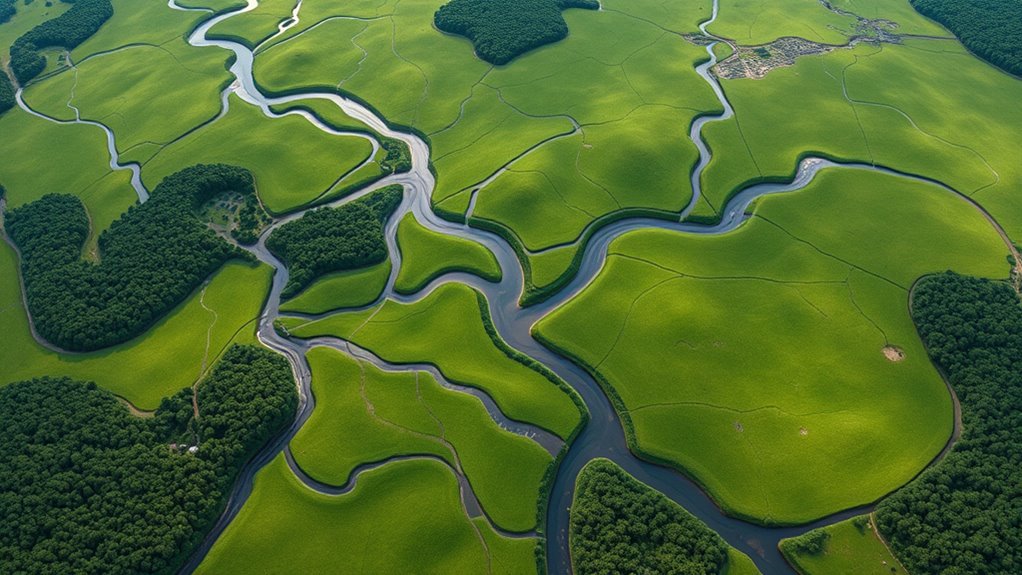
Have you ever wondered why drainage patterns matter for the health of ecosystems and land use? These patterns influence how water flows across the landscape, affecting water erosion and soil stability. When water follows natural drainage routes, it minimizes destructive erosion and helps maintain fertile land. Proper drainage supports floodplain formation, creating essential habitats for plants and animals. Conversely, altered or poorly designed drainage can lead to increased erosion, land degradation, and unpredictable flooding. This can threaten agricultural productivity and infrastructure. Recognizing these patterns helps land managers plan sustainable development and conservation efforts. By understanding how water moves, you can better protect ecosystems, reduce erosion, and ensure land remains productive and resilient over time.
How to Recognize and Read Drainage Patterns in the Field
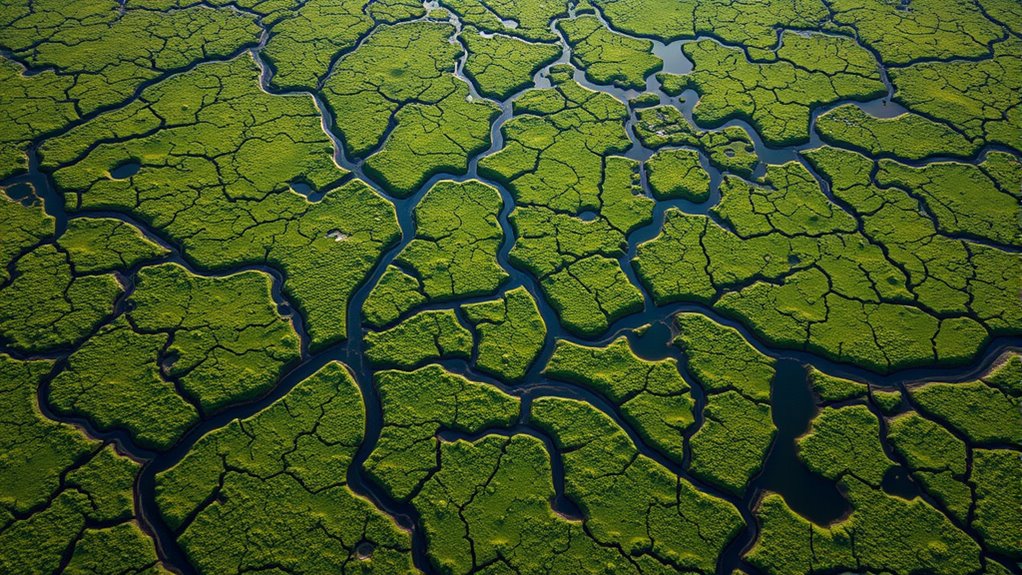
Understanding how water moves across the land begins with recognizing drainage patterns in the field. To do this, look for key signs such as the shape of water channels, the direction of flow, and the surrounding land features. Visualize a map:
- Rivers and streams weaving through valleys, indicating the main drainage channels.
- Converging tributaries, showing how smaller streams feed into larger ones.
- Groundwater flow indicators like wet spots or seepage areas, revealing underground movement.
In urban drainage systems, observe stormwater outlets and drainage ditches that shape water paths. Recognizing these patterns helps you understand water’s natural direction and its interaction with human-made infrastructure, making it easier to manage water flow, prevent flooding, and protect groundwater resources.
Frequently Asked Questions
How Do Underground Drainage Systems Differ From Surface Patterns?
Underground drainage systems differ from surface patterns because they channel water through subsurface flow via underground channels. You’ll notice these systems are hidden, directing water beneath the surface, unlike surface patterns that follow natural or man-made paths on the ground. This setup reduces erosion and manages excess water efficiently. You rely on underground channels to control drainage in urban areas, ensuring water moves smoothly without disrupting surface activities.
Can Drainage Patterns Predict Future Flooding Areas?
Think of drainage patterns as maps guiding rainwater runoff, revealing where water is likely to pool. They can help predict future flooding areas through drainage basin analysis, highlighting zones prone to overflow during heavy rains. By studying how water naturally flows, you can identify vulnerable spots before flooding occurs. This proactive approach allows you to plan better drainage systems and mitigate potential flood damage effectively.
What Role Do Vegetation and Land Cover Play in Drainage?
Vegetation influence and land cover effects markedly impact drainage. When you have dense vegetation, it slows water flow, promotes infiltration, and reduces surface runoff, helping prevent erosion and flooding. Conversely, areas with sparse or disturbed land cover, like urban surfaces or deforested zones, allow water to move quickly, increasing runoff and flood risk. Your land cover choices directly shape how water moves across the landscape, affecting drainage efficiency and flood potential.
How Do Urban Development Projects Impact Natural Water Paths?
Urban sprawl increases water runoff by up to 55%, drastically altering natural water paths. When you develop land, you replace permeable surfaces with concrete and asphalt, preventing water from soaking in. This causes more runoff, which can overwhelm drainage systems and erode natural channels. Your projects impact water flow patterns, often leading to flooding and pollution in nearby waterways. Managing runoff through green infrastructure can help restore some natural water pathways.
Are There Technological Tools to Analyze Drainage Patterns Remotely?
Yes, you can analyze drainage patterns remotely using technological tools like remote sensing and GIS analysis. These tools enable you to gather satellite imagery and topographic data, helping you identify water flow paths without physically being on-site. By integrating remote sensing data with GIS analysis, you can accurately map and study drainage patterns, making it easier to plan urban development projects and manage water resources effectively from a distance.
Conclusion
Understanding drainage patterns helps you appreciate how water shapes the land. While some believe nature’s flow is entirely random, evidence shows that topography, soil, and climate strongly influence water’s path. Recognizing these patterns allows you to predict erosion, plan land use, and protect ecosystems. By studying drainage, you see that water follows predictable rules, reminding you that even complex natural systems operate based on fundamental principles.