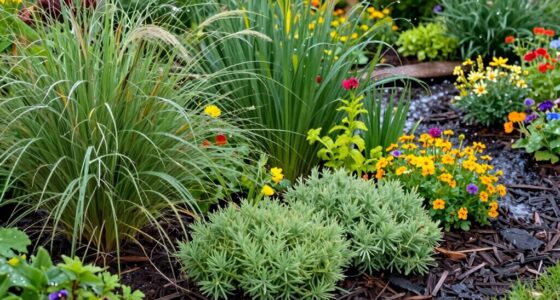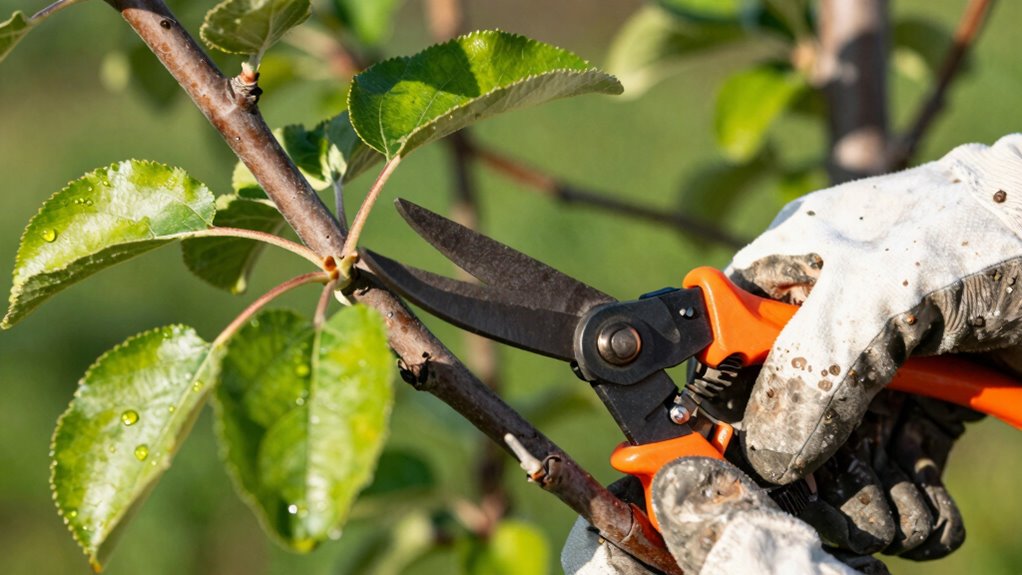

To prevent damage when pruning, follow the simple rule of doing it during your plant’s dormant period. This is when growth slows, and leaves drop, making it easier to shape and remove dead or damaged branches without stressing the plant. Pruning at the right time encourages healthy recovery and minimizes disease risk. When you understand your plant’s growth cycle, you can prune safely and effectively—keep going to learn how to spot the perfect moment.
Key Takeaways
- Prune during plant dormancy to minimize stress and promote healthy spring growth.
- Observe natural growth cues like leaf drop or minimal activity to determine the best pruning time.
- Avoid pruning during active flowering or fruiting phases to prevent damage to yields.
- Use sharp, clean tools to make precise cuts that heal quickly and reduce disease risk.
- Post-pruning, ensure proper wound care and avoid over-fertilizing to support recovery and prevent damage.

OXO Brew 8-Cup Coffee Maker - Single-Serve & Carafe, Thermal Stainless Steel, SCA Certified
Rainmaker shower head evenly distributes water over grounds
As an affiliate, we earn on qualifying purchases.
Understand Why Pruning Benefits Your Plants
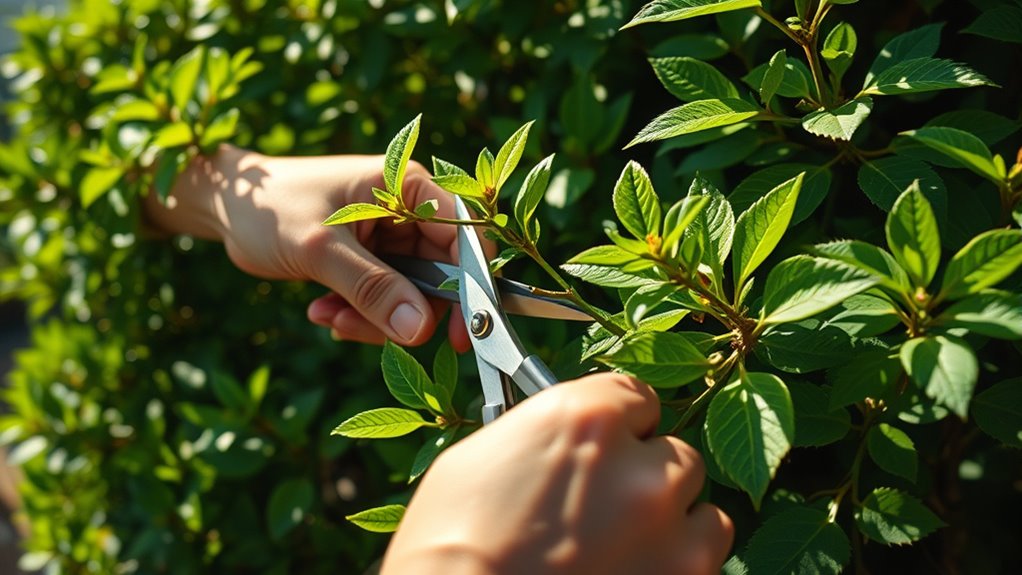
Pruning is essential because it helps your plants stay healthy and grow better. When you prune at the right time, you support ideal fertilizer timing, ensuring nutrients reach the parts of the plant that need them most. Proper pruning also improves airflow and light penetration, which reduces the chances of pests and diseases taking hold. By removing dead or overcrowded branches, you prevent pest hiding spots and keep your plants strong. Pruning encourages new growth, making your plants more vigorous and productive. When you understand the benefits of pruning, you can schedule it strategically to enhance overall health and yield. Consistent, timely pruning is a simple yet effective way to keep your plants thriving and pest-free. Auditory Processing Disorders can also impact how plants respond to environmental cues, highlighting the importance of tailored care strategies.

Ninja 12-Cup Programmable Coffee Brewer, 2 Brew Styles, Adjustable Warm Plate, 60oz Water Reservoir, Delay Brew - Black/Stainless Steel
2 BREW STYLES: Classic or Rich, each brew is flavorful and never bitter with custom brew strengths.
As an affiliate, we earn on qualifying purchases.
Spot Your Plant’s Growth Cycle Phases
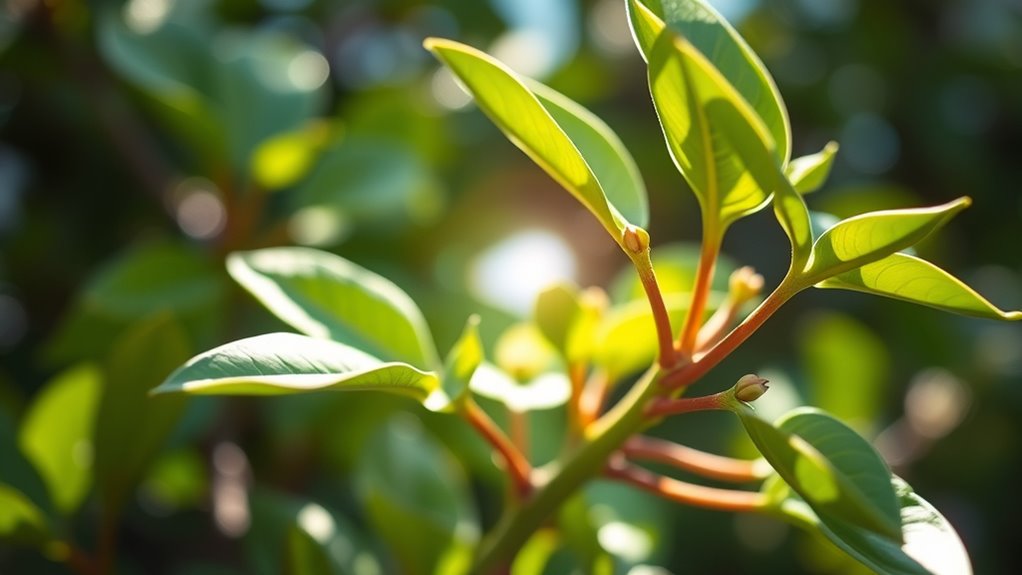
Understanding your plant’s growth cycle is key to timing your pruning effectively. Recognizing the different phases—such as active growth, flowering, and dormancy—helps you determine the right moment to prune. During active growth, your plant shows vigorous new shoots and leaves, indicating it’s ready for light pruning. In flowering or fruiting phases, avoid heavy cuts to prevent disrupting development. When your plant enters dormancy, growth slows, and pruning is less risky. Spotting these phases requires observing your plant’s behavior—new leaf emergence, flowering signals, or leaf drop. Accurate identification of growth cycle stages ensures you prune at the most suitable time, promoting healthy growth and preventing damage. Understanding the plant’s natural cycle helps you make more informed pruning decisions, aligning your efforts with the plant’s biological rhythms. Proper understanding of these phases enhances your pruning timing, making your efforts more effective.

Insoma WiFi Hose Timer - Brass Inlet & Outlet, Voice/App Control Sprinkler Timers with Rain Delay/Manual/Auto Mode, Smart Water Timer for Garden/Lawn/Yard Work with Alexa & Google Home, Energy Saving
【Upgraded Brass Swivel Inlet & Outlet】New upgraded water timer, pure brass water inlet and outlet, brass threads are...
As an affiliate, we earn on qualifying purchases.
Follow One Simple Rule: Prune During Dormancy
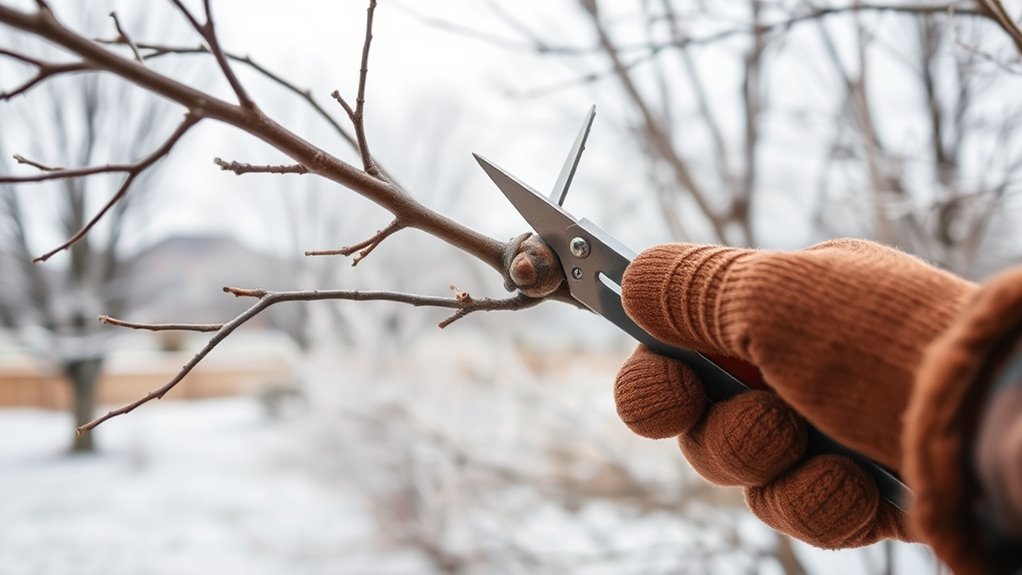
When your plant enters dormancy, it’s the ideal time to prune because its energy is focused on resting rather than growth. This seasonal pruning minimizes stress and helps prevent pruning mistakes that can weaken the plant. Pruning during dormancy allows you to shape and remove dead or damaged branches without interfering with active growth. If you prune at the wrong time, you risk stimulating unwanted new growth or exposing the plant to disease. Following this simple rule guarantees your pruning efforts are effective and safe. Avoid the temptation to prune during the growing season, which can cause unnecessary stress and setbacks. Pruning during dormancy keeps your plant healthy, promotes vigorous growth in spring, and prevents damage caused by improper timing. Additionally, understanding the plant’s growth cycle helps you determine the best pruning window.

Orbit 24632 B-hyve XD 2-Port Smart Hose Watering Timer
EFFORTLESS AUTO WATERING - Orbit B-hyve XD Smart Hose Timer controls watering based on precise local weather data,...
As an affiliate, we earn on qualifying purchases.
Learn How to Recognize Dormant Periods
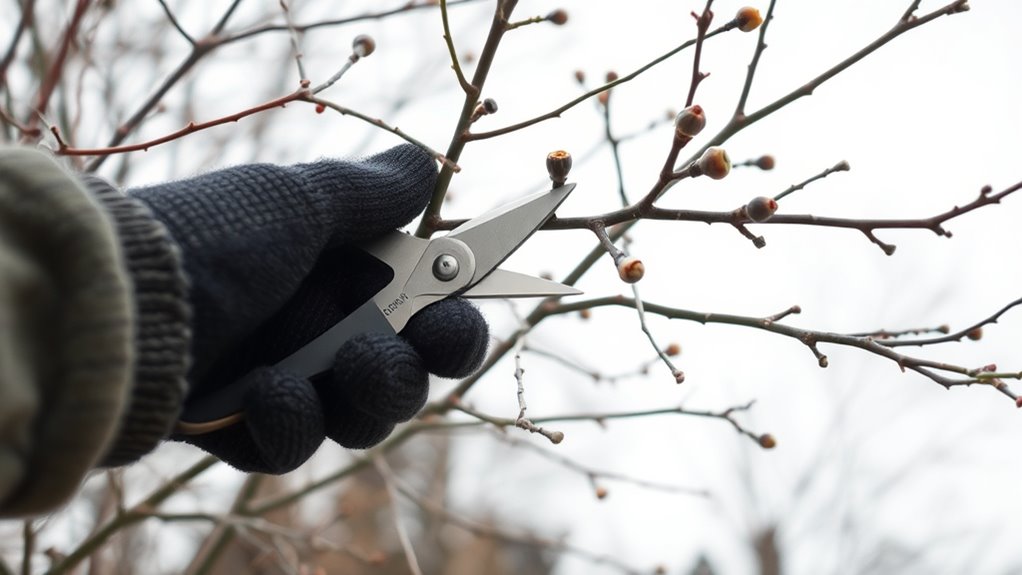
Recognizing when your plant is in dormancy is key to timing your pruning correctly. Seasonal awareness helps you identify these quiet periods when growth slows or halts. Look for plant signaling cues like leaf drop, minimal new growth, or a lack of flowering. These signs indicate the plant is conserving energy and resting. Pay attention to your local climate, as dormancy timing varies by region and species. By observing these signals, you avoid pruning too early or late, which can harm the plant. Understanding dormancy helps you align your pruning schedule with the plant’s natural cycle, reducing stress and promoting healthy growth. Stay attentive to seasonal cues and plant signaling to ensure your pruning is both timely and beneficial. Dormancy detection is an important concept that can help you better understand your plant’s needs.
When and Why You Should Prune Outside Dormancy
Pruning outside dormancy can help prevent sap flow disruption, which can stress your plants. It also encourages healthy growth by allowing wounds to recover quickly and new shoots to develop properly. Knowing the right timing ensures your plants stay vigorous and productive throughout the season. Additionally, understanding pruning timing can improve overall plant health and reduce the risk of disease.
Prevents Sap Flow Disruption
Pruning outside dormancy can considerably reduce the risk of disrupting the flow of sap through the plant’s vascular system. When you prune during active growth, you preserve continuous sap flow, ensuring efficient nutrient transport. Disrupting sap flow can lead to stress, disease, or poor healing. To minimize this risk, consider these points:
- Prune only when the plant is actively growing, not in dormancy.
- Make clean cuts to prevent excessive sap loss.
- Avoid removing large branches that could block nutrient transport.
- Time pruning to avoid exposing fresh wounds to harsh weather.
- Understanding plant physiology helps you choose the best pruning times to protect the plant’s health.
Promotes Healthy Growth
To promote healthy growth, it’s best to prune during the plant’s active growing season rather than during dormancy. Pruning at this time encourages new, vigorous growth, which benefits your flower arrangements and overall plant health. It also helps with pest control by removing dead or diseased branches that pests might hide in. Timing your pruning outside dormancy ensures your plant recovers quickly and develops a strong structure. Being aware of plant growth cycles can help you determine the optimal time for pruning.
Pick the Right Tools for Safe Pruning
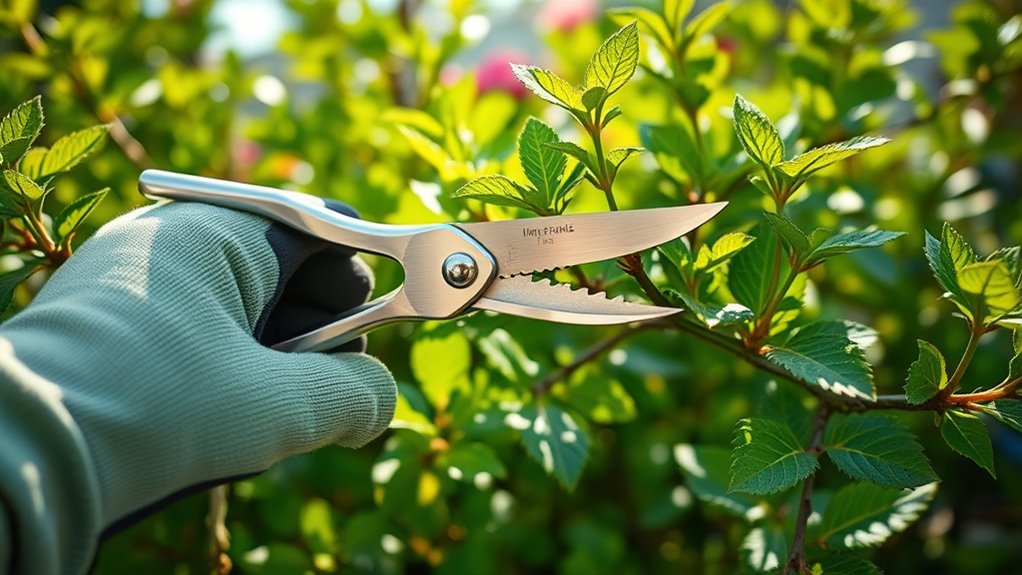
Choosing the right tools makes pruning safer and more effective. Always use sharp, clean tools to prevent damage and disease. Depending on the job, pick proper pruning shears or avoid power tools when precision is needed. For backyard transformations, using Free Floating techniques can help create natural, sustainable landscapes.
Use Sharp, Clean Tools
Using sharp, clean tools is essential for safe and effective pruning. Dull or dirty blades can tear tissue, increase infection risk, and slow healing. To guarantee your tools are in top shape, keep these tips in mind:
- Regularly sharpen your pruning tools to maintain clean cuts.
- Always clean blades with alcohol or disinfectant before use.
- Replace or repair damaged tools to prevent tearing tissue.
- Store tools in a dry, clean environment to prevent rust and contamination.
- Incorporate energy-efficient tools to reduce environmental impact during pruning activities.
Select Proper Pruning Shears
Selecting the right pruning shears is essential for making clean cuts and ensuring your plants heal quickly. Proper tools help maintain your garden design and prevent pest entry. Choose shears suited to your plant type—large, sturdy scissors for thick branches, and smaller, precise shears for delicate work. Visualize these options:
| Shear Type | Ideal Use |
|---|---|
| Bypass Pruners | Live branches, healthy tissue |
| Anvil Pruners | Deadwood, dry branches |
| Loppers | Thick, woody stems |
Using appropriate shears minimizes plant damage, reduces disease risk, and supports pest control. Well-chosen tools make pruning safer and more efficient, helping your garden flourish with fewer problems or setbacks. Proper pruning techniques also contribute to floating on water by encouraging healthy growth and structural integrity in your plants.
Avoid Power Tools When Necessary
While power tools can speed up pruning, they aren’t always the safest choice, especially for delicate or mature plants. Using the right tools minimizes damage and enhances power tool safety. Before starting, make certain your tools are well-maintained; dull blades increase the risk of tearing tissue. Consider these points:
- Use hand pruners for fine, detailed cuts.
- Reserve power saws for thick branches only.
- Always follow manufacturer instructions for tool maintenance.
- Wear protective gear and handle tools carefully to prevent accidents.
Choosing the appropriate tool reduces stress on plants and prevents damage. Keep power tools sharp and clean, and avoid rushing. Proper tool selection and maintenance are essential for safe, effective pruning that promotes healthy growth.
Support Healthy Growth After Pruning
After pruning, your plants need extra care to promote healthy growth. Focus on closing pruning wounds quickly by making clean cuts to prevent disease. Protect the plant from pests and infections by removing debris and applying a suitable wound dressing if necessary. To support recovery, maintain a proper nutrient balance—avoid over-fertilizing, which can stress the plant, and ensure it receives adequate nitrogen, phosphorus, and potassium. Water consistently, especially during dry spells, to help the plant recover and develop new roots and shoots. Keep an eye on new growth, and don’t prune again too soon, as this can weaken the plant. By managing pruning wounds and nutrients carefully, you’ll encourage strong, healthy development after trimming.
Frequently Asked Questions
How Often Should I Prune Different Types of Plants?
You should prune different plants based on their seasonal growth patterns and overall health. For example, prune deciduous trees during late winter or early spring before new growth begins, while flowering plants may need light pruning after blooming. Regularly remove dead or diseased branches to maintain plant health. Always adjust your pruning schedule to the specific plant’s needs, avoiding over-pruning, which can harm growth and vigor.
Can Pruning Be Harmful if Done Incorrectly?
Pruning can be harmful if done incorrectly, especially if you fall for pruning myths or make common mistakes. For example, over-pruning or cutting too close to the main stem can stress plants and invite disease. Always follow proper techniques, avoid pruning during the wrong season, and use clean tools. By learning correct methods and avoiding these common mistakes, you help your plants stay healthy and thrive.
What Signs Indicate I Need to Prune Immediately?
Imagine your plant as a firefighter, ready to battle a blaze. If you notice dying, diseased, or damaged branches, it’s time to prune immediately. Doing so helps prevent disease spread and maintains wildlife protection by removing deadwood that might attract pests. Look for signs like discoloration, mold, or decay—these indicate urgent pruning needs to keep your plant healthy and vibrant.
How Does Pruning Influence Flowering and Fruiting?
Pruning directly influences flowering and fruiting by encouraging a flowering boost and improving fruit development. When you prune at the right time, you remove dead or overgrown branches, allowing better sunlight exposure and air circulation. This stimulates more blooms and enhances fruit quality. Regular pruning also helps control plant size and shape, ensuring healthy growth and maximizing your harvest. Proper timing is key to achieving the best flowering and fruiting results.
Are There Specific Pruning Techniques for Young Versus Mature Plants?
Yes, you should modify your pruning techniques based on the growth stages and pruning priorities of your plants. For young plants, focus on shaping and encouraging strong structure, removing dead or weak growth. For mature plants, prioritize maintaining health and productivity by selectively removing old or overcrowded branches. Tailoring your approach ensures healthy growth, better flowering, and fruiting, while minimizing stress and damage to your plants at any stage.
Conclusion
By timing your pruning just right, you gently encourage your plants to flourish and brighten your space. Think of it as a tender whisper to your greenery, guiding it to rest peacefully and bloom beautifully. When you listen to the subtle cues of dormancy, you nurture growth without disturbance. With careful attention and kind tools, you’ll help your plants thrive in harmony, turning your garden into a cheerful haven of vibrant life.