
Overwatering is worse than underwatering because excess moisture suffocates roots, reduces oxygen availability, and encourages fungi and bacteria that cause root rot. It hampers nutrient absorption and weakens plant health faster than drought conditions do. When soil stays too wet, roots drown and decay, making plants more vulnerable to diseases. To protect your plants, understanding the signs and proper watering techniques is key—keep going, and you’ll discover how to prevent these issues.
Key Takeaways
- Overwatering causes root rot, suffocation, and fungal growth, leading to rapid plant decline.
- Excess water blocks oxygen from roots, impairing respiration and nutrient uptake more severely than drought stress.
- Waterlogged soil prevents proper drainage, increasing disease risk and weakening root systems over time.
- Underwatering primarily causes dehydration and cell damage, which are generally reversible with proper watering.
- Overwatering often results in more immediate and irreversible damage compared to the gradual effects of underwatering.
The Science Behind Plant Water Needs
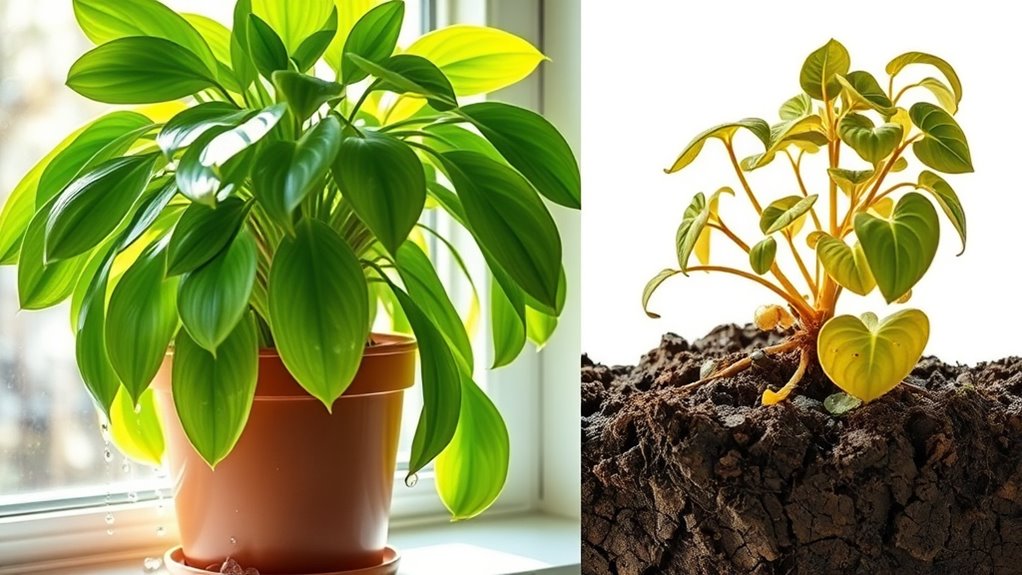
Understanding how plants use water is essential to caring for them properly. When you water your plants, you’re helping them absorb water through their roots, a process called water absorption. Healthy roots are crucial because they facilitate efficient water uptake, which keeps the plant hydrated and supports nutrient transport. If roots are damaged or unhealthy, water absorption decreases, making the plant more vulnerable to stress. Overwatering can drown roots, reducing oxygen availability and harming root health. Additionally, proper watering techniques can help prevent issues caused by over- or underwatering by maintaining the right moisture levels. Proper watering also depends on factors like soil composition, which influences water retention and drainage. Understanding root health can help you identify early signs of over- or underwatering and adjust your watering habits accordingly. Conversely, underwatering limits water supply, causing roots to dry out and become less effective. Knowing the science behind water needs helps you strike the right balance, ensuring your plants stay healthy and thrive. Proper watering promotes strong root health, essential for overall plant vitality.
How Overwatering Causes Root Damage
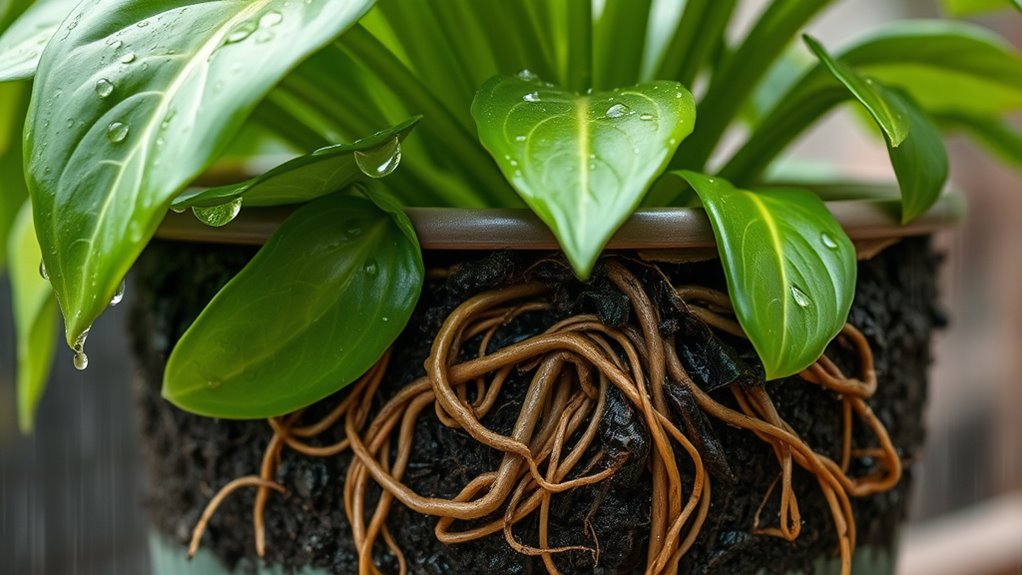
When you overwater your plants, the excess moisture blocks oxygen from reaching the roots, causing them to suffocate. This lack of oxygen makes roots weak and more vulnerable to diseases like root rot. As a result, overwatering can seriously damage your plant’s root system and overall health. Additionally, sound therapy techniques can sometimes be used in natural treatments to support recovery and prevent infections. Proper watering practices can help maintain healthy root systems and prevent such issues. Incorporating glycolic acid products in plant care routines has been explored for improving skin health, which parallels the importance of proper care for plant roots to prevent damage.
Oxygen Deprivation in Roots
Overwatering can lead to oxygen deprivation in plant roots, which severely hampers their ability to function properly. When roots sit in overly saturated soil, they can’t access the oxygen needed for respiration. This creates aeration issues, causing roots to suffocate and weaken over time. As oxygen levels drop, nutrient deficiencies develop because roots struggle to absorb essential minerals. Imagine this scene:
| Soil Conditions | Root Response |
|---|---|
| Well-drained, moist | Healthy respiration and nutrient uptake |
| Saturated, waterlogged | Oxygen-starved, weak, prone to damage |
| Compacted soil | Restricted airflow, root stress |
| Aerated soil | Ideal oxygen, strong roots |
Proper DIY techniques and understanding soil health are crucial for preventing these issues. Without proper aeration, roots become vulnerable, leading to root damage and reduced plant vitality. Recognizing how soil aeration impacts root health can help gardeners take proactive steps to maintain healthy plants. Understanding the importance of soil structure can further assist in preventing waterlogging and promoting better root health. Additionally, maintaining optimal soil moisture levels is essential to avoid both overwatering and underwatering, ensuring the roots stay healthy and functional.
Increased Root Rot Risk
Excess water around the roots creates an ideal environment for harmful fungi and bacteria to thrive, substantially increasing the risk of root rot. When you overwater, plant hydration levels become too high, and soil drainage suffers, leading to waterlogged soil. Poor soil drainage traps moisture around the roots, preventing oxygen from reaching them and weakening their structure. This damp, oxygen-starved environment allows root rot-causing organisms to flourish, damaging your plant’s root system. Overwatering consistently keeps the soil saturated, making it impossible for roots to breathe or function properly. As a result, your plant’s health deteriorates quickly, and root decay sets in. To prevent this, guarantee proper soil drainage and water only when the topsoil feels dry to the touch. Additionally, understanding the importance of plant care knowledge can help you develop better watering habits and maintain healthier roots, especially since soil aeration plays a crucial role in preventing such issues. Incorporating automatic watering systems with proper moisture sensors can also help ensure consistent and appropriate watering levels.
Signs That Your Plant Is Overwatered
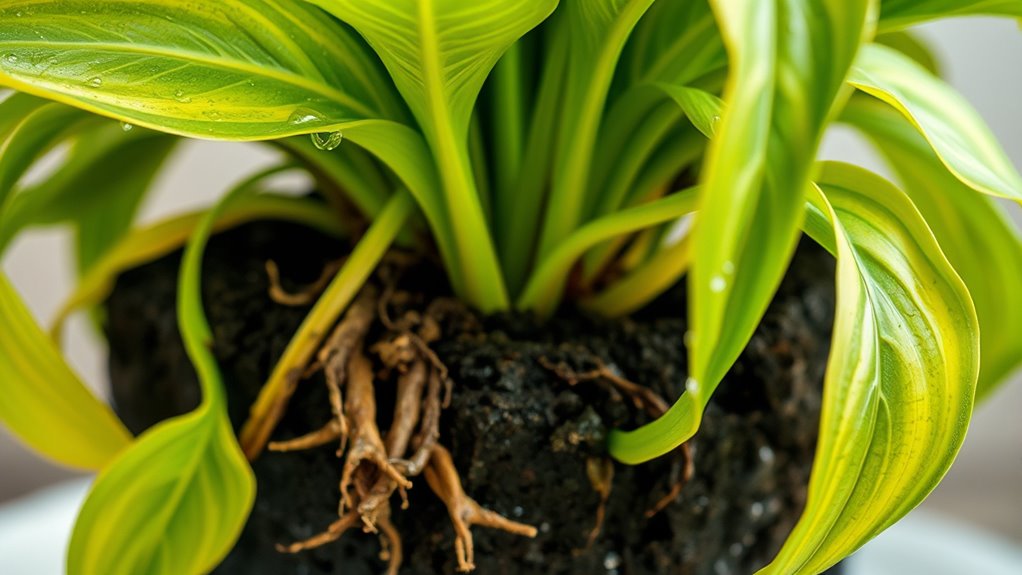
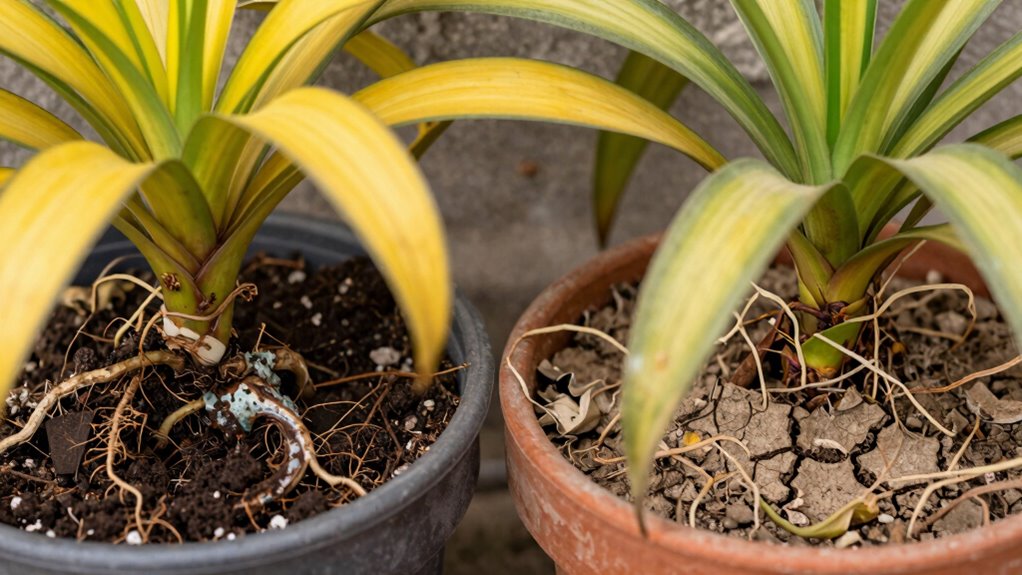
If your plant shows yellowing leaves and wilting despite regular watering, it’s a strong sign that it may be overwatered. Overwatering often results from watering frequency that’s too high or poor soil drainage, causing roots to suffocate. You might notice:
Overwatering causes yellow leaves, wilting, and root suffocation—check drainage and watering habits.
- Mushy, brown roots when you inspect the soil or pot
- Soil that stays constantly wet or feels soggy
- Persistent yellowing leaves and drooping stems
These signs indicate your plant is struggling to breathe and absorb nutrients. Check how often you water and whether the soil drains well—both are essential. Proper drainage is crucial to prevent overwatering from drowning roots, so adjusting watering habits and improving drainage are key to restoring your plant’s health. Additionally, avoiding excessive watering can help prevent root rot and other issues related to overhydration. Regularly monitoring soil moisture levels with a moisture meter can also help you maintain the right balance for your plants. Utilizing well-draining soil can significantly reduce the risk of overwatering by promoting proper water flow and oxygen access to roots. Moreover, understanding the watering needs specific to your plant species can further prevent overhydration issues.
The Dangers of Fungal and Bacterial Growth

When soil remains consistently wet due to overwatering, it creates an ideal environment for fungi and bacteria to thrive. Fungal proliferation can lead to root rot, weakening your plant’s health, while bacterial invasion causes decay and disease. These microorganisms spread rapidly in saturated soil, compromising plant vitality. Proper soil drainage techniques are essential to maintain healthy moisture levels. Additionally, using a quality water management approach can help prevent excess moisture buildup. Maintaining proper soil moisture balance is critical for creating a healthy and resilient gardening environment. To further protect your plants, understanding the importance of microorganism control is crucial in maintaining a healthy gardening environment.
Comparing the Effects of Overwatering and Underwatering

Both overwatering and underwatering can cause root damage, but in different ways. Overwatering leads to root rot and suffocation, while underwatering causes roots to dry out and die. These issues ultimately suppress plant growth and threaten your plant’s health.
Root Damage Risks
Root damage risks differ considerably between overwatering and underwatering, each causing distinct harm to your plants. Overwatering leads to a saturated root zone, depriving roots of oxygen and promoting rot. Underwatering, on the other hand, causes roots to dry out and shrink, impairing nutrient uptake.
- Excess moisture creates a suffocating environment, making roots vulnerable to fungal diseases.
- Lack of water causes roots to become brittle and die back.
- Imbalanced moisture disrupts the root zone’s health, weakening the plant’s foundation.
Maintaining proper moisture balance is key. Overwatering drowns roots, while underwatering starves them. Both extremes threaten root integrity, but overwatering’s risks tend to be more severe due to ongoing oxygen deprivation and rot.
Growth Suppression Factors
Overwatering and underwatering each suppress plant growth through distinct mechanisms. Overwatering leads to oxygen deprivation in the soil, causing root rot and limiting nutrient uptake. This results in slow growth and weak plants, regardless of watering schedules. Underwatering, however, stresses plants by depriving them of essential moisture, directly impairing cell function and photosynthesis. While some plants develop drought tolerance, prolonged dryness still stunts growth and reduces resilience. Both extremes hinder development, but overwatering often causes more immediate damage by destroying roots, whereas underwatering’s effects are more gradual. Understanding these growth suppression factors helps you optimize watering habits, ensuring your plants grow steadily and healthily. Striking the right balance is key to preventing growth setbacks caused by either watering mishap.
Real-Life Examples of Overwatering Failures
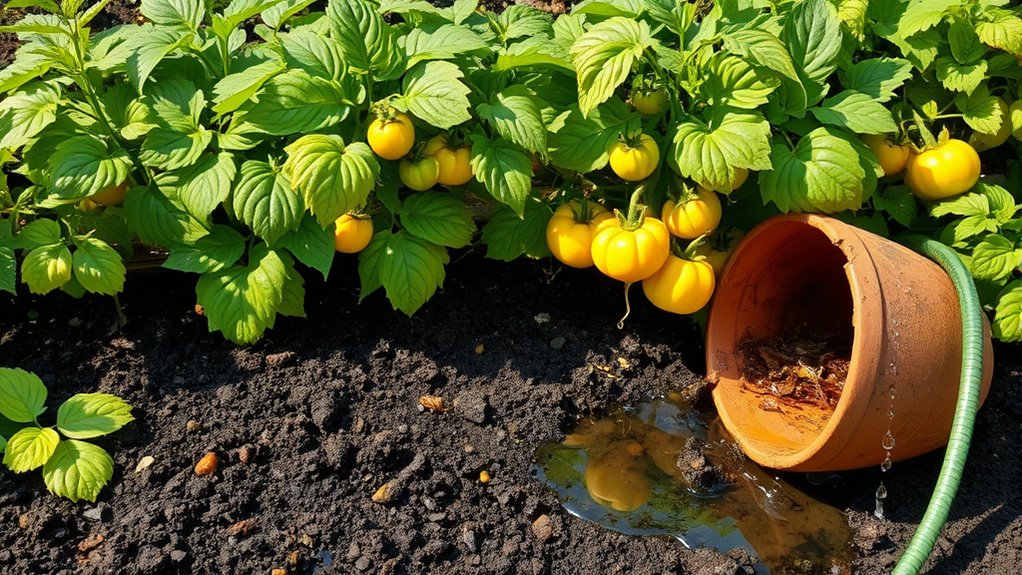
Many gardeners have learned the hard way that overwatering can do just as much damage as drought. Misunderstanding watering myths often leads to overhydrating plants, causing root rot and mold growth. For example, you might think frequent watering keeps plants healthy, but excess water suffocates roots and promotes disease. Consider these real-life failures:
- A lush vegetable garden turns yellow and wilts despite daily watering, revealing root rot.
- Potted succulents die because owners believe more water means happier plants, leading to soggy soil.
- Flower beds with persistent fungal issues develop due to overwatering, despite efforts to promote plant hydration.
These cases highlight how overwatering can backfire, emphasizing the importance of understanding proper watering practices and debunking watering myths to prevent failures.
Preventing Overwatering: Tips for Proper Care
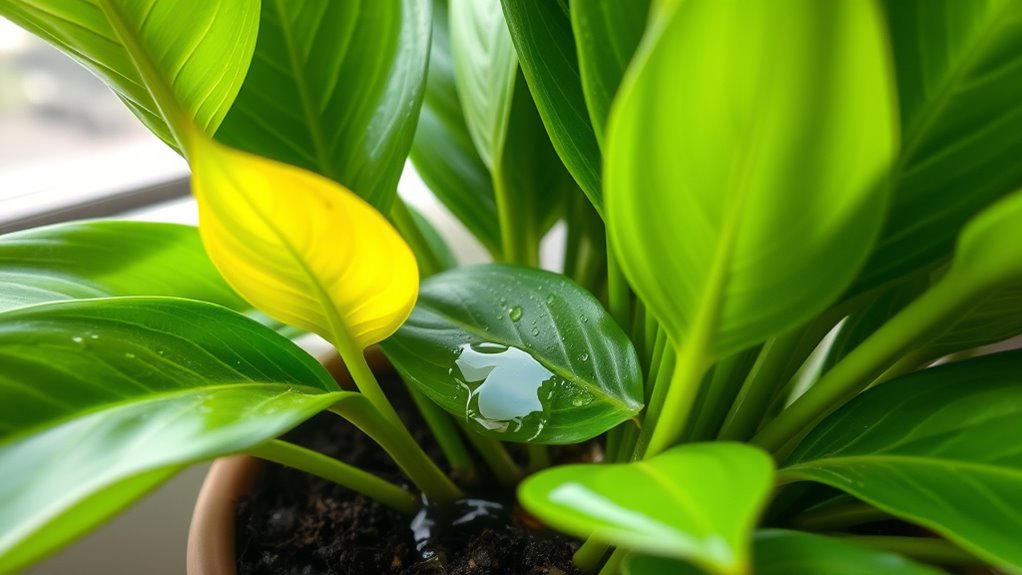
To prevent overwatering, establishing a consistent watering routine tailored to your plants’ needs is vital. Pay attention to your plant’s watering frequency; avoid watering on a fixed schedule. Instead, check soil moisture regularly. Proper container drainage is necessary—use pots with drainage holes to prevent water from stagnating. When watering, guarantee excess water can escape easily. Here’s a simple guide:
| Plant Type | Recommended Watering Frequency | Container Drainage Tips |
|---|---|---|
| Succulents | Weekly or when soil dries out | Use pots with drainage holes |
| Ferns | Every 2-3 days | Elevate pots for drainage |
| Flowering Plants | Once a week | Use lightweight, porous pots |
Monitoring soil moisture and guaranteeing proper drainage keeps roots healthy and prevents overwatering.
Soil Types and Their Impact on Water Retention
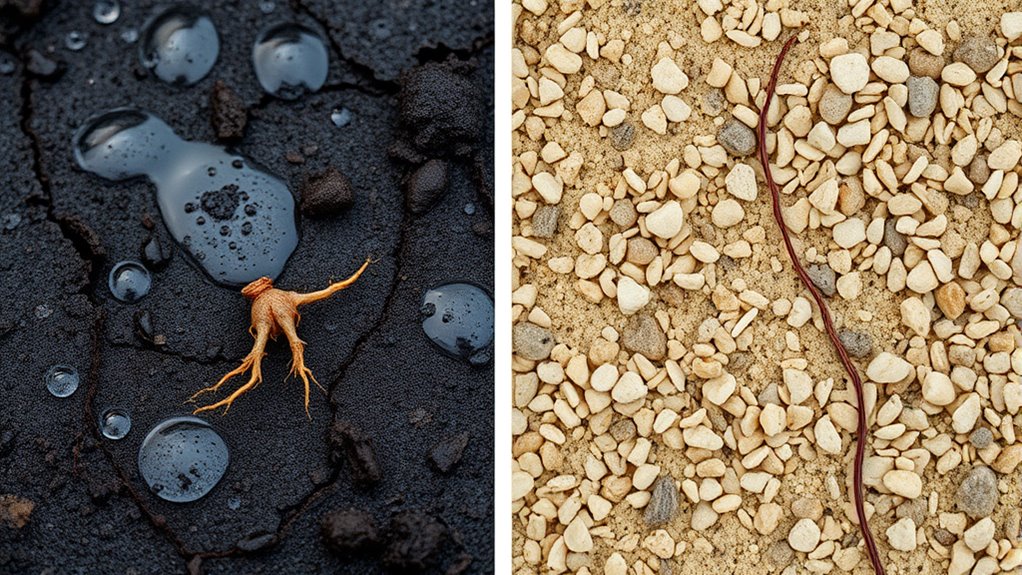
Choosing the right soil type is crucial because it directly influences how much water your plants can retain. Different soils have unique properties affecting soil drainage and moisture retention, impacting plant health. For example, sandy soils drain quickly but don’t hold moisture well, risking dehydration. Loamy soils balance drainage and moisture retention, making them ideal for most plants. Clay soils retain water but drain poorly, which can lead to root rot if overwatered. Visualize these differences through:
Choosing the right soil ensures proper water retention and healthy plant growth.
- Sandy soil: quick drainage, low moisture retention
- Loamy soil: balanced drainage and moisture retention
- Clay soil: poor drainage, high moisture retention
Selecting the appropriate soil ensures your plants receive consistent moisture without the risks of overwatering or underwatering, aligning water availability with their needs.
Recognizing When a Plant Is Beyond Help
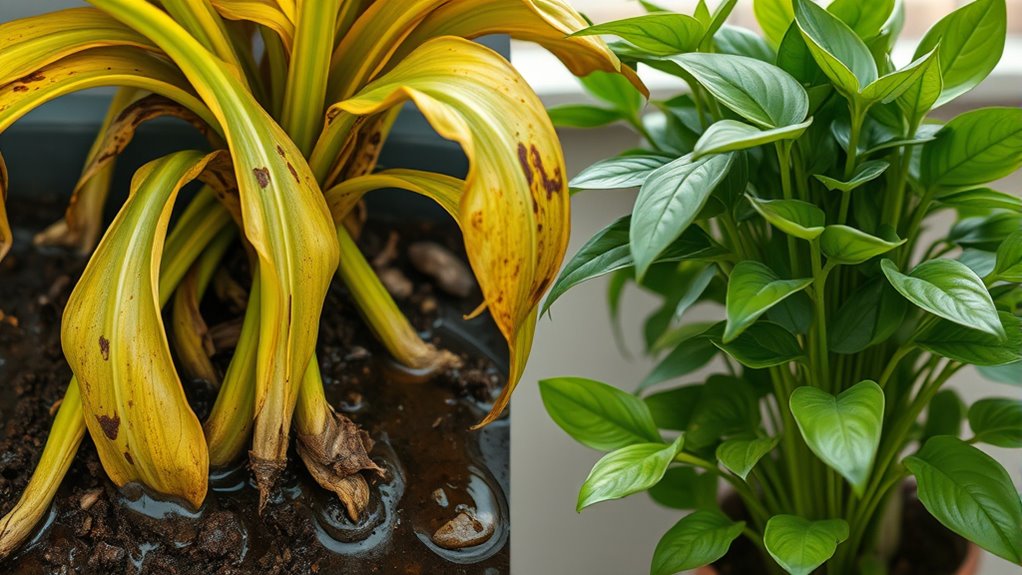
Sometimes, despite your best efforts, a plant shows signs of irreversible damage that indicate it’s beyond saving. Poor soil drainage often leads to persistent root rot, making recovery impossible. If the plant’s leaves are yellowing, wilting despite proper watering frequency, and the stem feels mushy or discolored, it’s a clear sign it’s beyond help. When roots are rotting, no amount of watering can revive it. Look for a foul smell from the soil or a consistently soggy texture—these are dead giveaways. If you’ve tried adjusting watering habits and improving drainage without success, it’s time to accept that the plant has reached its end. Recognizing these signs early can save you time and help you focus on healthier plants.
Frequently Asked Questions
How Does Overwatering Affect Different Types of Indoor Plants?
Overwatering harms indoor plants by suffocating roots and reducing soil aeration, which can lead to root rot. Different plants react differently; succulents and cacti are especially prone to root rot from excess moisture, while tropical plants may show signs of overwatering through yellowing leaves. To prevent damage, make certain of proper watering habits and well-draining soil, allowing roots to breathe and stay healthy.
Can Overwatering Be Beneficial in Certain Situations?
Yes, overwatering can sometimes be beneficial, contrary to common watering myths. If your plant is stressed or recovering from damage, gentle, consistent watering can boost its resilience by encouraging root growth and nutrient uptake. Just make certain you don’t go overboard, as too much water can harm roots. Understanding your plant’s specific needs helps you avoid mistakes and support healthy growth, proving that moderation and knowledge are key.
What Role Does Humidity Play in Watering Needs?
Humidity plays a key role in your watering needs by affecting moisture control. When humidity is high, your plants require less frequent watering because the moisture regulation in the air helps keep the soil moist longer. Conversely, low humidity speeds up evaporation, meaning you’ll need to water more often to maintain proper hydration. Adjust watering based on humidity levels to prevent both overwatering and underwatering, ensuring healthy plant growth.
Are There Specific Tools to Help Prevent Overwatering?
You can prevent overwatering using soil moisture monitors, which show real-time moisture levels and help you water only when needed. Additionally, watering cans with measurement markers allow precise control, reducing guesswork. Studies show that using these tools markedly decreases overwatering risks and promotes healthier plants. By combining these tools, you ensure your plants get just the right amount of water, avoiding the common mistake of overwatering.
How Long Does It Take for Overwatering Damage to Appear?
You’ll usually notice overwatering damage within a week or two. When you overwater, your plant’s root system suffers from oxygen deprivation, leading to root rot and soil compaction. This causes leaves to yellow, wilt, or drop prematurely. The slow decline results from the compromised root health, which struggles to absorb nutrients. Stay attentive to soil moisture levels and check for root issues early to prevent long-term damage.
Conclusion
Remember, overwatering can be more deadly to your plants than neglecting their thirst. By understanding their needs and spotting warning signs early, you can avoid fungal battles and root rot—saving your green friends from becoming a tragic tale, like a fallen knight of yore. So, be wise, water thoughtfully, and keep your garden thriving—lest your plants become mere echoes of energy, lost in the shadows of careless care.