
To set up drip irrigation without the headache, focus on understanding its benefits like conserving water and promoting healthy plants. Start by choosing quality, affordable components such as tubing, emitters, and filters, then plan your layout based on plant needs. Install step-by-step, regularly check for clogs or leaks, and adjust as needed for efficiency. If you want to keep things simple and budget-friendly, there’s more to discover below.
Key Takeaways
- Plan your layout carefully, considering plant spacing and water needs to avoid unnecessary complexity.
- Use quality starter kits and bulk components for easy, cost-effective installation and maintenance.
- Incorporate timers and simple filters to automate watering and prevent clogs, reducing manual effort.
- Regularly inspect and clean emitters and filters to ensure consistent performance and prevent headaches.
- Adjust watering schedules seasonally and use moisture sensors for efficient, stress-free water management.
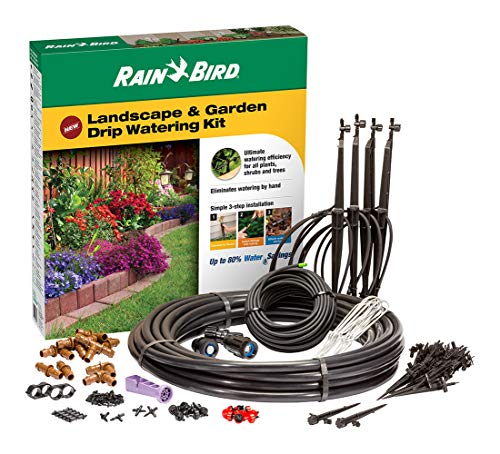
Rain Bird LNDDRIPKIT Drip Irrigation Landscape/Garden Watering Kit with Drippers, Micro-Bubblers, Micro-Sprays
Comprehensive 108-piece kit for flower beds, gardens and landscaped areas; eliminates hand watering, saves time and money
As an affiliate, we earn on qualifying purchases.
As an affiliate, we earn on qualifying purchases.
Discover the Benefits of Drip Irrigation
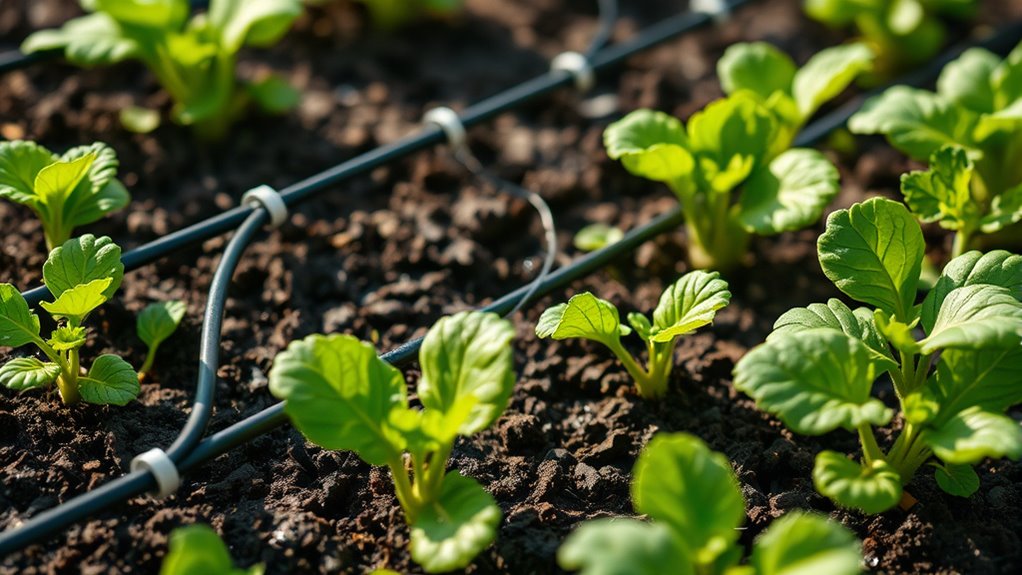
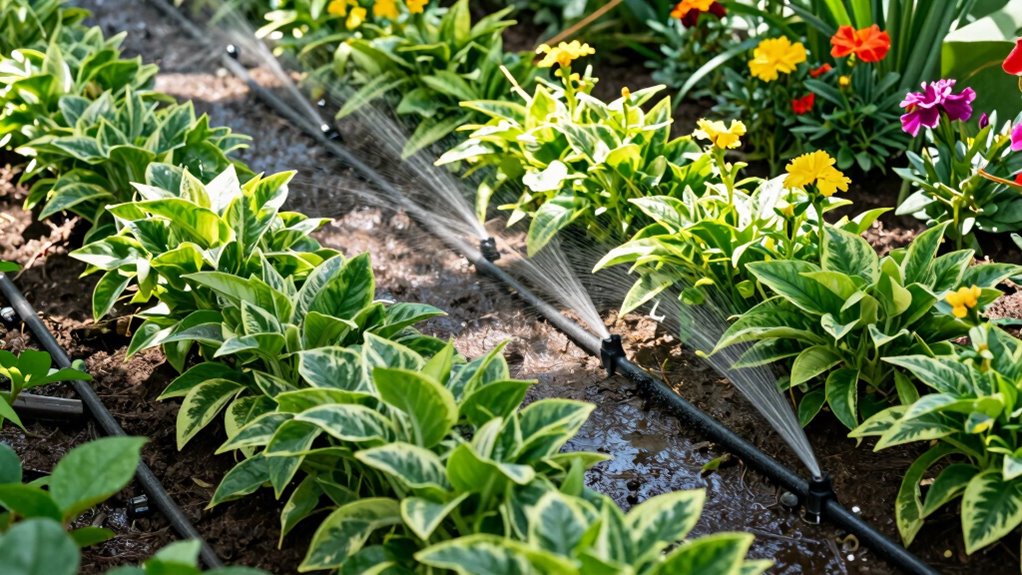
Drip irrigation offers numerous advantages that make it a popular choice for efficient watering. One key benefit is how it maintains ideal soil moisture levels, ensuring your plants receive consistent hydration. This targeted approach helps prevent overwatering and runoff, saving water and reducing waste. By delivering water directly to the roots, it promotes healthier root development and improves overall plant health. You’ll notice stronger, more resilient plants because their roots aren’t exposed to excess moisture or drought stress. Additionally, drip systems minimize weed growth since water only reaches your desired plants, not the surrounding soil. This focused watering method simplifies garden maintenance and supports a thriving, healthy landscape—making drip irrigation an effective and sustainable solution. Soil moisture management is essential for optimizing plant growth and conserving water resources.

Drip Irrigation Emitters with Adjustable 360 Degree Water Flow Drippers Sprayer for 1/4 inch Tubing, Garden Drippers Sprayer Perfect for House Garden Watering System. (25pcs-Blue 360 Degree Sprayer)
You Will Get Set of 25 Drip Emitters for 1/4" Drip Irrigation Tubing, featuring Adjustable 360 Degree Water…
As an affiliate, we earn on qualifying purchases.
As an affiliate, we earn on qualifying purchases.
Identify the Key Components of Your System

To set up your drip system, you need to identify your main water source and guarantee it can supply consistent pressure. Next, select appropriate tubing and emitters to deliver water efficiently to your plants. Don’t forget to include control valves and filters to maintain system performance and prevent clogs. Additionally, understanding water chemistry can help ensure your system operates effectively and lasts longer.
Main Water Source
Your main water source is the foundation of a reliable drip irrigation system. The water quality is essential because contaminants can clog emitters and reduce efficiency. Make sure to test your water for sediment, minerals, or pathogens before installation. Pressure regulation is also critical; inconsistent or high pressure can damage components or cause uneven watering. Installing a pressure regulator helps maintain a steady flow, preventing leaks and emitter failure. If your water source is a well, pond, or hose hookup, check its flow rate and pressure regularly. Using filters to remove debris and a pressure regulator ensures your system runs smoothly. Remember, a clean, properly regulated water source is key to a healthy, long-lasting drip irrigation system.
Tubing and Emitters
Tubing and emitters are the main components that deliver water directly to your plants. Drip tubing forms the backbone of your system, guiding water along your garden beds or containers. It’s flexible and easy to install, making setup straightforward. Emitter types vary to suit your watering needs; some emit water slowly over time, while others deliver a quick, targeted flow. You can choose from drip emitters, micro-sprayers, or adjustable options depending on your plants’ requirements. Proper placement of emitters ensures even watering and healthy growth. When selecting drip tubing, consider durability and diameter, while for emitters, think about flow rate and type. These components work together to provide precise, efficient watering, reducing waste and ensuring your garden thrives. High pressure in your system can improve water delivery and coverage, making your irrigation more effective.
Control and Filters
Have you considered how control and filters optimize your drip irrigation system? Proper control components, like pressure regulators, ensure consistent water flow and prevent damage from high pressure. This keeps your system running smoothly and conserves water. Filters are equally important; they remove debris and prevent clogging of emitters. There are different filter types, such as screen filters and disc filters, each suited for specific needs. Installing a filter at the system’s beginning protects the entire setup. By choosing the right pressure regulators and filters, you reduce maintenance and extend the lifespan of your system. Clear, clean water flow means your plants get consistent watering, and you avoid costly repairs down the line. Control and filters are essential for a reliable, efficient drip irrigation setup. Auditory processing techniques can also be used to ensure your system operates smoothly and efficiently.

Water Timer for Outdoor Garden Hose, Hose Timer with Rain Delay/Manual Mode, Automatic Drip Irrigation Controller System for Lawn Yard Garden Watering
【Easy to Set Up Program】Rotate the dial and press the buttons to set clock, how often (watering frequency),…
As an affiliate, we earn on qualifying purchases.
As an affiliate, we earn on qualifying purchases.
Plan Your Drip Irrigation Layout
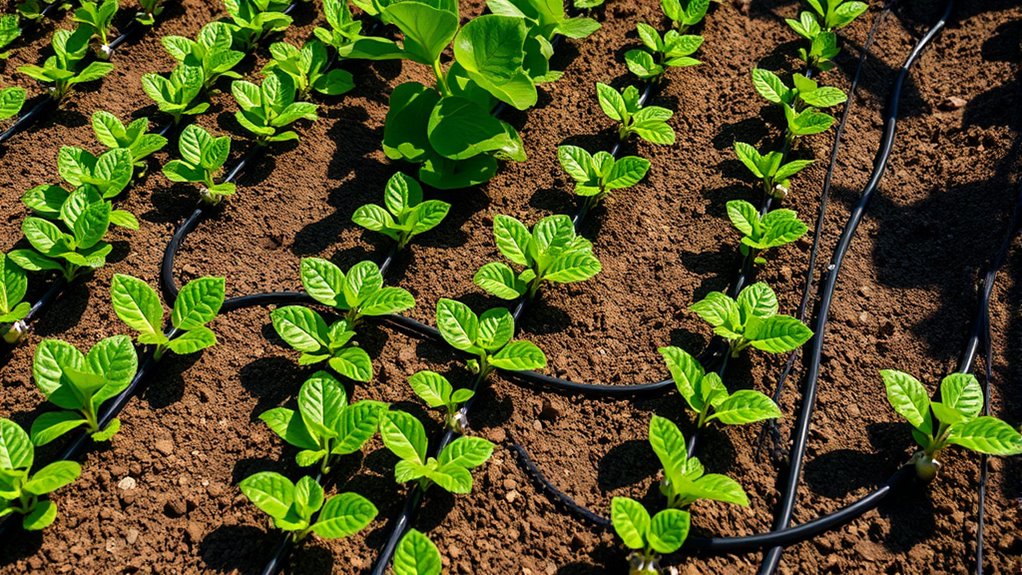
Planning your drip irrigation layout is a crucial step to guarantee efficient water distribution across your garden or landscape. You need to take into account soil moisture levels and plant spacing to ensure each plant gets the right amount of water. Start by mapping out your garden, placing plants based on their water needs and spacing requirements. Visualize your layout with this simple table:
| Plant Type | Spacing | Water Needs |
|---|---|---|
| Vegetables | 12 inches | Moderate |
| Shrubs | 24 inches | Low to moderate |
| Flower beds | 8 inches | High |
This helps you plan emitter placement, avoiding dry spots or overwatering. Proper layout reduces water waste, keeps plants healthy, and simplifies maintenance. Additionally, understanding soil moisture levels can significantly improve watering efficiency by helping you adjust your layout as needed.

GIEX 200 Mesh Garden Hose Filter with Quick Connect, 3/4" GHT Thread Sediment Trap for Irrigation, Drip System, Misting, Greenhouse & Pressure Washer
🔩 Standard 3/4" Thread Design – Equipped with American standard 3/4" NH/GHT threads, this garden hose filter fits…
As an affiliate, we earn on qualifying purchases.
As an affiliate, we earn on qualifying purchases.
Install Your Drip System Step-by-Step
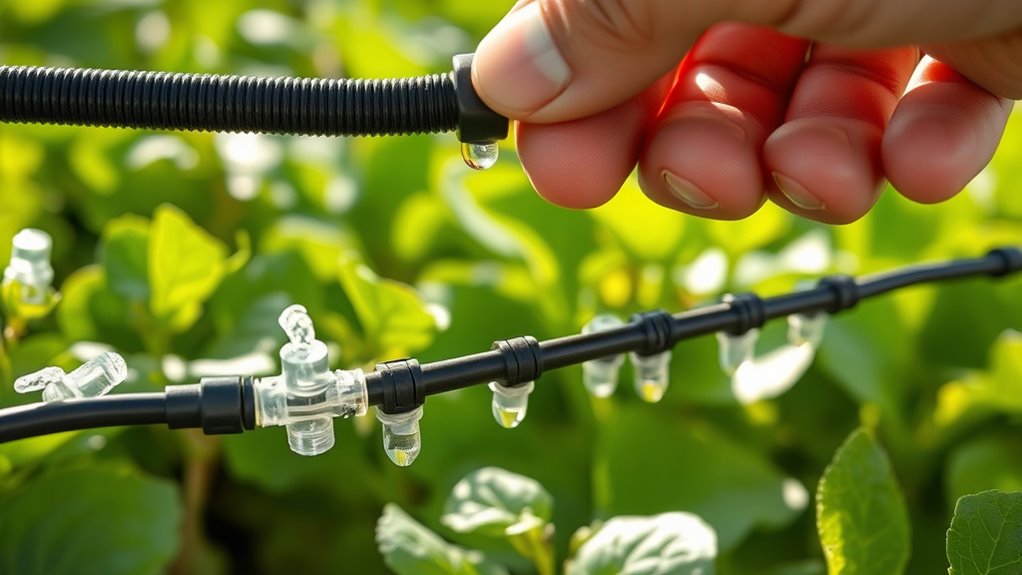
Once you’ve mapped out your garden and determined the most favorable placement for each plant, it’s time to start installing your drip system. Begin by connecting the mainline to your water source and run it along your garden bed. Attach drip emitters or tubing to each plant’s root zone, ensuring they’re securely fitted. Keep your watering schedule planning in mind—set timers or manually water to prevent over- or under-watering. As you install, check for leaks and make adjustments to maintain consistent flow. Proper installation simplifies drip system maintenance later on, reducing clogs and ensuring even watering. Once everything is in place, test your system thoroughly, making sure each plant receives adequate moisture. Regular maintenance will keep your drip system functioning smoothly and extend its lifespan.
Maintain and Troubleshoot Your Drip System
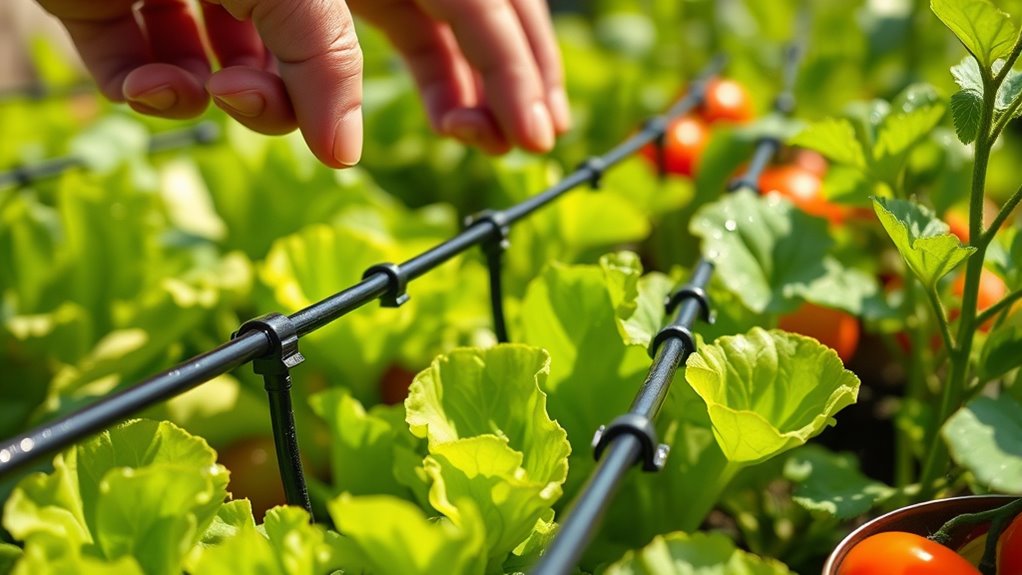
Regular maintenance is essential to keep your drip system operating efficiently and prevent common issues like clogs or leaks. To troubleshoot common issues, regularly inspect your system for blockages or damaged parts. Perform drip system maintenance by flushing filters and replacing worn-out emitters. Keep an eye out for uneven watering, which indicates clogs or pressure problems. Here are some tips:
- Check for clogged emitters and clean or replace them
- Inspect tubing for leaks or damage
- Ensure filters are clean and functioning properly
- Adjust pressure regulators if watering is inconsistent
- Remove debris from filters and connectors
- Be aware of free floating issues that can affect water distribution and system performance.
Optimize Water Use and Keep Plants Healthy
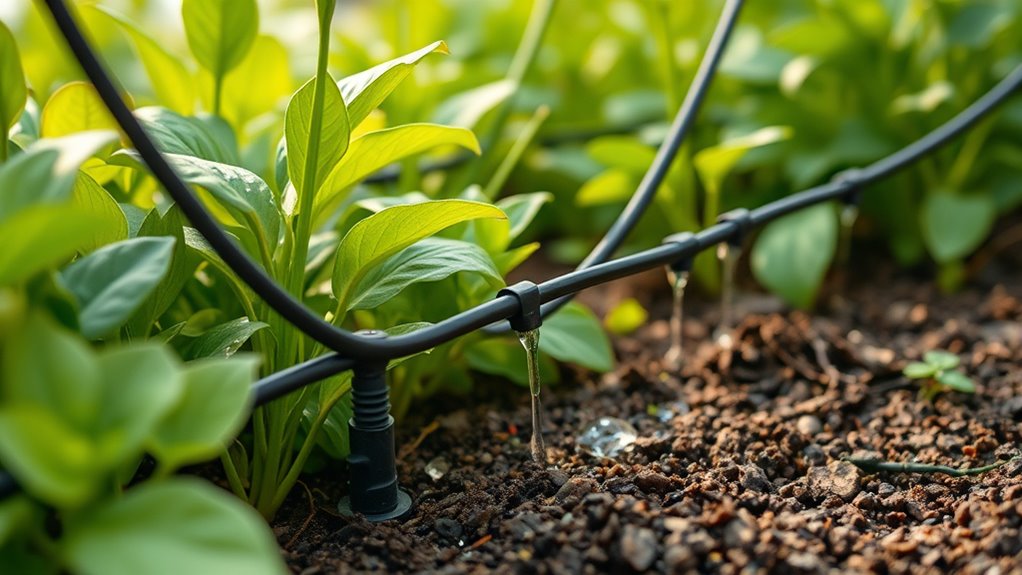
Maintaining your drip system is key to ensuring your plants receive the right amount of water without waste. One effective way to optimize water use is through rain harvesting, which captures natural rainfall and reduces reliance on manual watering. Incorporate soil moisture sensors to monitor moisture levels directly in the soil; these sensors help prevent overwatering and drought stress. Adjust your system based on sensor data and rainfall patterns to deliver just enough water. This approach keeps your plants healthy and encourages strong growth while conserving water. Regularly check your rain harvesting setup and sensor functionality to ensure accurate readings. By combining rain harvesting with soil moisture sensors, you create an efficient watering routine that supports plant health and reduces waste. Understanding the principles of deep-sky imaging can inspire innovative solutions to optimize your watering system and improve plant health.
Find Budget-Friendly Options and Save Money
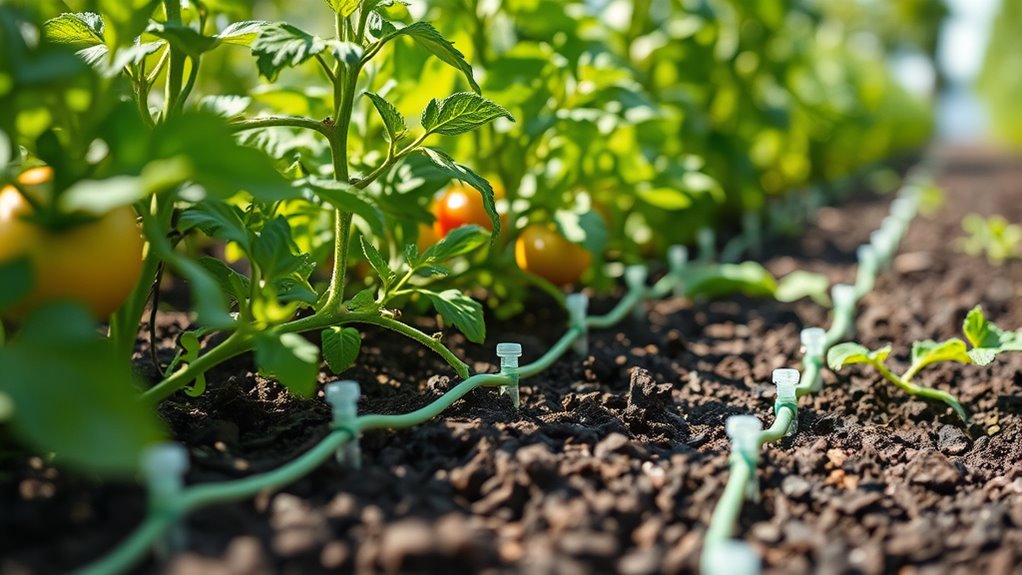
Looking for ways to save money on your drip irrigation system? You can choose affordable equipment options that fit your budget without sacrificing quality. Plus, with some simple DIY installation tips, you’ll cut costs and get your system up and running quickly. Using cost-effective tools designed for DIY projects can make the process even easier and more affordable.
Affordable Equipment Choices
Choosing affordable drip irrigation equipment doesn’t mean sacrificing quality. You can find cost-effective solutions that suit your budget while ensuring reliable performance. To save money, consider these budget-friendly options:
- Reused or repurposed tubing from previous projects
- Bulk purchase discounts on emitters and connectors
- DIY assembly with affordable components from local stores
- Starter kits that include essential parts at lower prices
- Reputable brands offering affordable, durable equipment
Opting for these choices helps keep costs down without compromising efficiency. Look for trusted suppliers that offer reliable products at competitive prices. Remember, a bit of research and shopping smart can lead to great deals that fit your budget. This way, you get quality equipment that meets your needs without overspending. Additionally, selecting cost-efficient components can help optimize your irrigation system’s performance and longevity.
DIY Installation Tips
To save money on your drip irrigation system, consider DIY installation using budget-friendly options. Start by planning your layout carefully to avoid unnecessary parts and reduce costs. Use affordable tubing and connectors, and repurpose materials whenever possible. When setting up, pay attention to fertilizer application needs, ensuring your system delivers nutrients evenly. Seasonal adjustments are key—modify your system’s flow and watering schedule as weather changes to prevent over- or under-watering. Regularly check for leaks or clogs to keep costs low and efficiency high. Installing your system yourself not only saves money but also gives you control over the setup. With some patience and careful planning, you can achieve a reliable, cost-effective drip irrigation system tailored to your garden’s needs. Additionally, understanding water efficiency can help you optimize your system for long-term savings and sustainability.
Frequently Asked Questions
How Often Should I Water My Plants With Drip Irrigation?
You should water your plants with drip irrigation based on their specific watering schedule and hydration needs. Typically, most plants require watering every 1-3 days, but this can vary with weather, soil type, and plant type. Check the soil moisture regularly and adjust your drip system accordingly. Consistent watering helps maintain proper plant hydration, preventing both drought stress and overwatering, ensuring healthy growth and vibrant foliage.
Can Drip Irrigation Be Automated With Timers?
Imagine your garden thriving as sunlight filters through leaves, thanks to a drip system effortlessly delivering water. Yes, you can automate it with timers, making watering schedule planning a breeze. Regular drip system maintenance guarantees everything runs smoothly, preventing clogs or leaks. With timers, you set and forget, trusting your plants get consistent moisture. This setup saves time, conserves water, and keeps your garden lush without the headache of manual watering.
What Plants Benefit Most From Drip Irrigation?
You’ll find that plants like vegetables, strawberries, and shrubs benefit most from drip irrigation because it maintains consistent soil moisture directly at the roots. This system delivers water efficiently, preventing overwatering or drought stress. You can customize watering schedules based on soil moisture levels and plant types, ensuring each plant gets exactly what it needs, which promotes healthy growth and reduces water waste.
How Do I Prevent Clogging in Drip Emitters?
To prevent clogging in drip emitters, you should regularly check and clean them, especially through emitter maintenance. Incorporate soil filtration by installing filters before the emitters to trap debris. Flush your system periodically to clear out any buildup, and avoid using high-pressure water that can dislodge particles. Consistent maintenance and proper filtration keep your drip system running smoothly, ensuring your plants receive consistent, clog-free watering.
Is Drip Irrigation Suitable for Large-Scale Gardens or Farms?
Imagine a vast, thriving farm where each plant receives a gentle, steady sip of water. Drip irrigation is perfect for large-scale gardens or farms because it offers precise water delivery, enhancing garden design and conserving water. You can efficiently irrigate extensive areas, reducing waste and ensuring every crop gets the right amount. This system’s flexibility makes it an excellent choice for big projects focused on water conservation and healthy growth.
Conclusion
With a little planning and some basic steps, you can set up drip irrigation without the headache. Think of it like watering your garden through a network of tiny pipes delivering water directly to each plant—saving you time and money. Even if you’re worried about complexity, start small, troubleshoot as you go, and watch your garden thrive. Before you know it, watering becomes effortless, and your plants stay healthy and happy.