Monitoring your compost pile’s temperature helps you understand how well your microbes are working. Ideally, it should stay between 135°F and 160°F for rapid, safe decomposition. If the temperature drops, microbes may be inactive due to low moisture or oxygen issues. High temperatures show active decomposition but could indicate overheating. By checking and adjusting based on these clues, you’ll keep your compost healthy—and there’s more to discover if you continue exploring.
Key Takeaways
- A temperature between 135°F and 160°F indicates active microbial decomposition.
- Rising temperatures show microbes are breaking down organic material efficiently.
- Temperature drops or fluctuations suggest oxygen, moisture, or ingredient imbalances.
- Temperatures above 160°F may harm beneficial microbes and cause odors.
- Consistent monitoring helps maintain ideal conditions for effective composting.
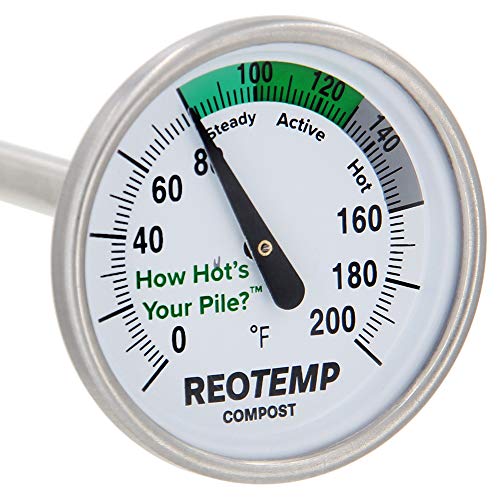
Reotemp 20 Inch Fahrenheit Backyard Compost Thermometer with Digital Composting Guide
Perfect for the Beginner Composter – Free PDF Digital Compost Guide Included – Expert instructions on how to…
As an affiliate, we earn on qualifying purchases.
As an affiliate, we earn on qualifying purchases.
What Is the Ideal Temperature Range for Compost?
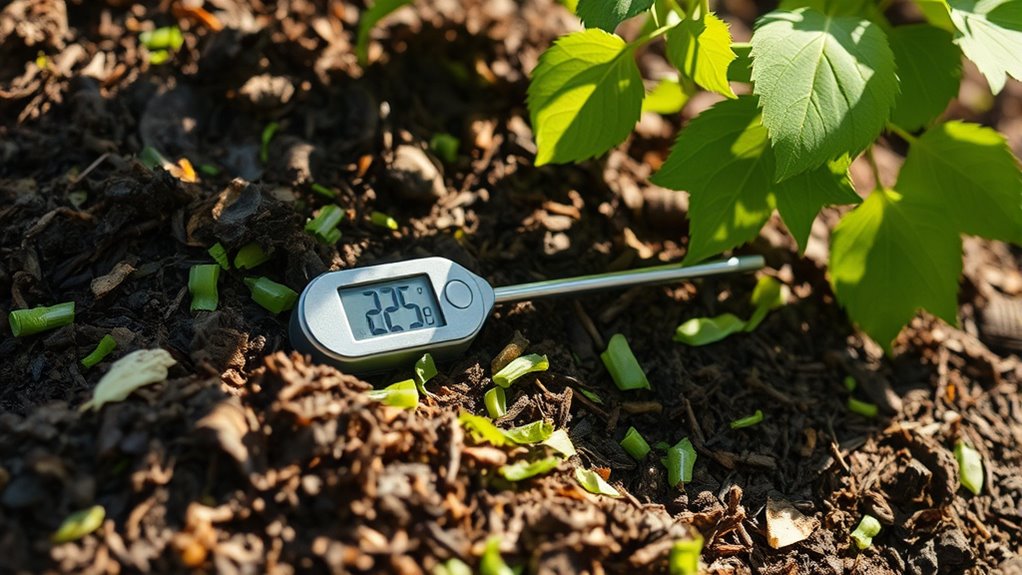
Understanding the ideal temperature range for compost is critical to guarantee efficient decomposition. Typically, your compost pile should stay between 135°F and 160°F. At this range, microorganisms break down organic material quickly. To maintain these temperatures, it’s essential to monitor moisture levels—moisture should be like a damp sponge, not soaked or dry. Proper aeration techniques are also fundamental; turning your pile regularly introduces oxygen, supporting microbial activity and preventing odors. If the temperature drops below 135°F, decomposition slows down, and pathogens may survive. Conversely, temperatures above 160°F can kill beneficial microbes, halting composting. Consistently managing moisture and aeration helps keep your compost within the ideal range, ensuring a faster, healthier decomposition process. Additionally, understanding home composting technology can help optimize your process and improve results.
Reotemp 20 Inch Fahrenheit Backyard Compost Thermometer with Digital Composting Guide
Perfect for the Beginner Composter – Free PDF Digital Compost Guide Included – Expert instructions on how to…
As an affiliate, we earn on qualifying purchases.
As an affiliate, we earn on qualifying purchases.
How Can You Measure Your Compost Pile’s Temperature Correctly?
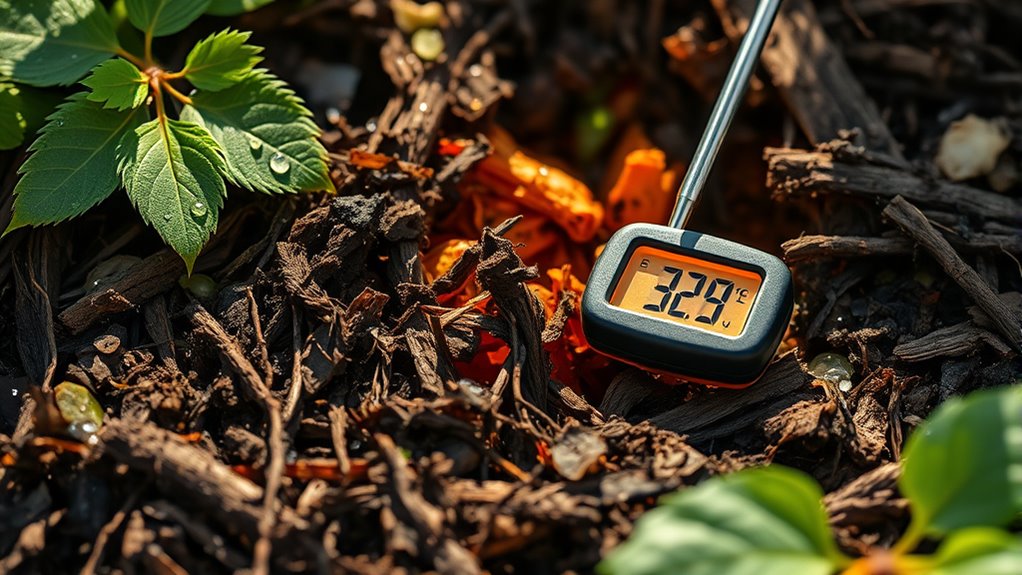
To get an accurate reading, choose a thermometer designed for compost or soil. Make certain you insert it deep into the center of the pile, avoiding the edges. Proper technique guarantees you measure the true temperature, helping you maintain ideal compost conditions. Additionally, using energy-efficient equipment can support sustainable composting practices.
Choosing the Right Tool
Choosing the right tool to measure your compost pile’s temperature guarantees accurate readings and helps you monitor its progress effectively. A reliable compost thermometer is essential, especially when checking your compost bin. Select a thermometer with a long probe to reach the core, where temperature fluctuations matter most. Proper thermometer placement is crucial—insert it into the middle of the pile for the best reading, avoiding the edges. Here’s a quick guide:
| Tool Type | Best Use |
|---|---|
| Long-stem thermometer | Reaching the center of the compost bin |
| Dial thermometer | Quick readings on the surface |
| Digital thermometer | Precise measurements at depth |
Choosing the right tool and correct placement ensures you get an accurate temperature, vital for composting success. Incorporating Free Floating techniques can also help in managing moisture and aeration, which influence temperature regulation.
Proper Insertion Technique
Properly inserting your thermometer guarantees you get an accurate temperature reading from your compost pile. First, choose a spot in the center of the pile, where heat is typically most intense. Use aeration techniques to create a clear path for the thermometer probe, avoiding compacted or densely layered sections. When measuring, twist the thermometer gently into the core of the compost, ensuring it penetrates through different layers—especially where fresh materials meet mature compost. Avoid sticking the probe too close to the surface or the sides, as these areas can be cooler. Proper compost layering helps maintain even heat distribution, making your readings more reliable. Taking consistent measurements from the same depths and locations will give you the best insight into your pile’s temperature and overall health. Consistent measurement is key to monitoring compost activity accurately.
Reotemp 20 Inch Fahrenheit Backyard Compost Thermometer with Digital Composting Guide
Perfect for the Beginner Composter – Free PDF Digital Compost Guide Included – Expert instructions on how to…
As an affiliate, we earn on qualifying purchases.
As an affiliate, we earn on qualifying purchases.
How Do Temperature Changes Show What’s Happening Inside?
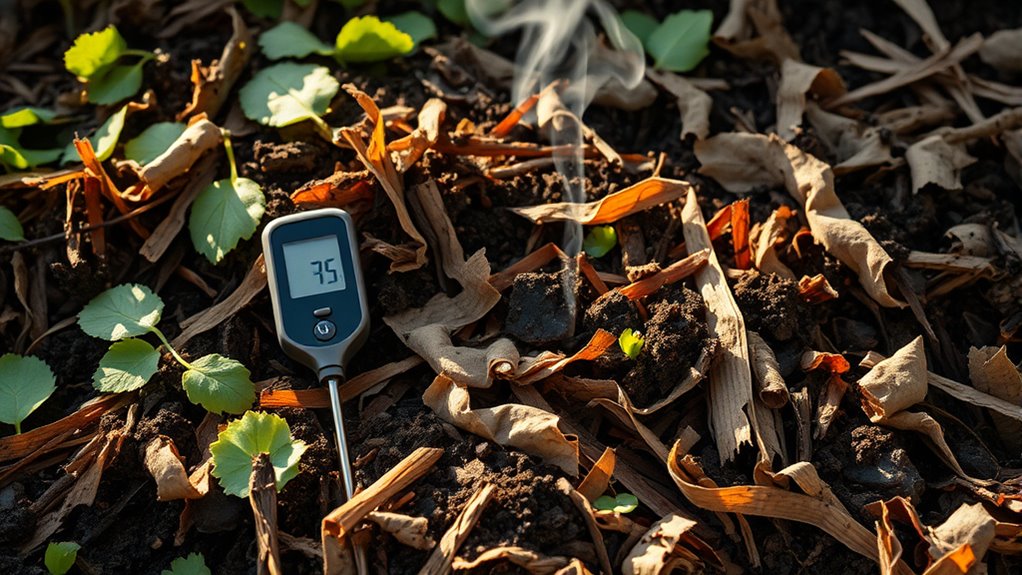
When your compost pile’s temperature rises, it shows that microorganisms are actively breaking down material. Fluctuations in temperature can signal shifts in the breakdown process, indicating progress or issues. Consistent heat, on the other hand, means your compost is moving steadily toward maturity. Monitoring environmental conditions can help you optimize the composting process and ensure healthy decomposition.
Rising Temperatures Indicate Activity
As the compost heats up, rising temperatures signal that microbial activity is in full swing. When microbes break down organic material, they generate heat, causing the temperature to climb. This increase indicates active decomposition and efficient microbial processes. Keep an eye on oxygen levels, as they are essential for sustained activity; low oxygen can slow microbes down and reduce heat. If temperatures rise steadily, it means your compost is thriving, with microbes working vigorously. However, if temperatures plateau or drop, it might suggest oxygen depletion or that microbes are slowing, signaling you to aerate the pile. Monitoring these temperature changes provides real-time insight into the internal activity, helping you manage your compost for ideal breakdown and nutrient release. oxygen levels are crucial for maintaining microbial health and activity within the pile.
Temperature Fluctuations Signal Breakdown
Temperature fluctuations in your compost pile reveal key changes happening inside. If you notice the temperature dropping suddenly or fluctuating unpredictably, it signals that your compost may be breaking down improperly. Here’s what to look for:
- Low moisture levels – dry conditions hinder microbial activity, causing temperature drops.
- Insufficient oxygen flow – poor aeration slows breakdown, leading to uneven heat distribution.
- Overpacking – too much material restricts airflow and moisture balance.
- Imbalanced ingredients – excess browns or greens can disrupt microbial activity, causing inconsistent temperatures.
These fluctuations indicate your compost isn’t processing efficiently. Adjust moisture levels by watering or turning, ensure proper oxygen flow through aeration, and balance your ingredients to restore healthy decomposition. Proper composting methods help maintain consistent temperatures and efficient breakdown.
Consistent Heat Shows Progress
Maintaining a steady, warm temperature in your compost pile indicates that microbial activity is thriving and decomposition is progressing smoothly. Consistent heat shows your microbes are effectively breaking down materials, reducing compost odor, and maintaining proper moisture balance. When temperatures stay steady between 130°F and 160°F, it signals active composting. If temperatures drop, it may mean the pile lacks moisture or has insufficient oxygen. Conversely, too high temperatures could cause drying or odor issues. Here’s a quick overview:
| Temperature Range | What It Indicates |
|---|---|
| 130°F – 160°F | Active decomposition, healthy microbes |
| Below 130°F | Slowed activity, moisture or oxygen issues |
| Above 160°F | Excess heat, risk of drying or odor problems |
Keeping the temperature consistent ensures your compost remains odor-free and well-balanced. Sizing and load‑planning tools can help you optimize your compost setup for consistent heat management.

YAMRON 4-in-1 Soil Moisture Meter, Digital Plant Temperature/Soil Moisture Test & PH Meter/Sunlight Intensity, Backlight LCD Display for Gardening, Farming and Outdoor Plants
【4 in 1 function】This is a 4-in-1 multifunctional soil tester.Our soil tester fastly to measure soil moisture, pH,…
As an affiliate, we earn on qualifying purchases.
As an affiliate, we earn on qualifying purchases.
What Do High Temperatures Indicate About Your Compost?

High temperatures in your compost pile usually signal that the decomposition process is working efficiently. When temperatures rise, it indicates active microbial activity breaking down organic material. However, very high temperatures can also suggest issues like compost spoilage if not monitored carefully. Here are four key points to consider:
- Elevated temperatures (135-160°F) show healthy aerobic activity, speeding up composting.
- Consistently high heat prevents pest attraction and odors.
- If temperatures exceed 160°F for extended periods, it might harm beneficial microbes.
- Maintaining proper moisture and aeration helps sustain ideal temperatures and prevents spoilage.
- Recognizing quality materials ensures your compost remains rich and free from contaminants.
Monitoring these temperatures helps ensure your compost remains active, safe, and effective in decomposing waste without turning into spoilage.
Why Are Low or Falling Temperatures a Sign of Trouble?
When compost temperatures start to drop or fall steadily, it often signals that microbial activity has slowed down or stopped altogether. Low or falling temperatures can indicate your pile isn’t maintaining proper moisture levels or oxygen supply, both essential for microbes to thrive. Without enough moisture, microbes become dormant, and low oxygen levels hinder their activity, causing temperatures to decline. Monitoring compost temperature regularly helps you identify these issues early.
How Can You Adjust Your Compost Based on Temperature Readings?
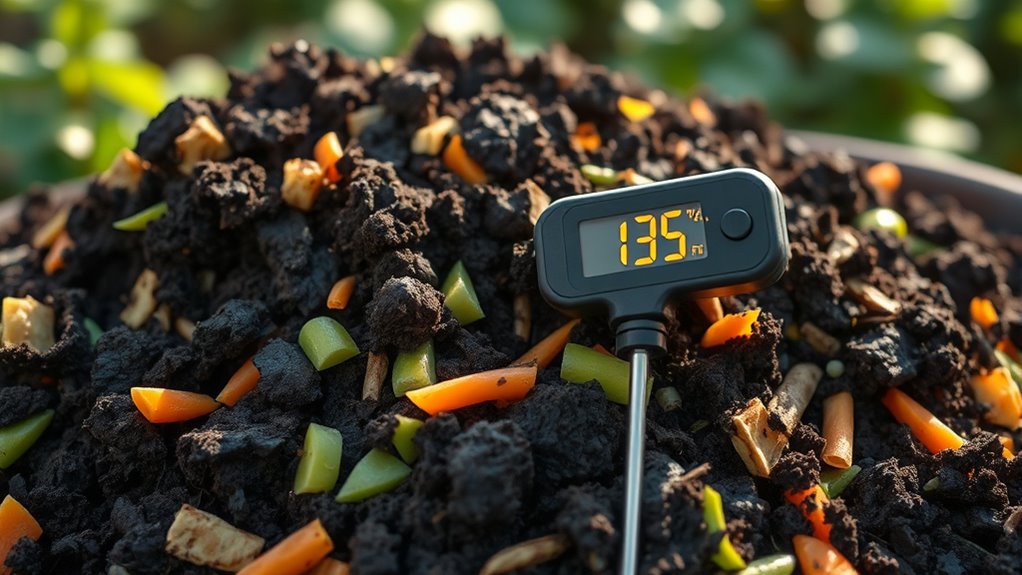
If your compost pile’s temperature drops below the ideal range, you need to take immediate action to revive microbial activity. To adjust your compost effectively, focus on these steps:
- Increase compost aeration by turning the pile thoroughly to introduce oxygen, which stimulates microbes.
- Check moisture levels and add water if it’s too dry, ensuring the compost remains moist but not soggy.
- Mix in nitrogen-rich materials like fresh greens to boost microbial heat production.
- Cover the pile with a tarp if it’s exposed to excessive cold or wind to maintain consistent temperature and moisture.
These adjustments help optimize microbial activity, ensuring your compost heats up and decomposes efficiently.
Frequently Asked Questions
How Often Should I Check My Compost Pile’s Temperature?
You should check your compost pile’s temperature at least once a week to make certain proper compost monitoring. Regular checks help you maintain temperature consistency, which is key for efficient decomposition. During hot weather, you might need to monitor more frequently, like every few days, especially if the pile heats up or cools down unexpectedly. Consistent monitoring allows you to adjust moisture and aeration, keeping your compost active and healthy.
What Are the Risks of Extremely High Compost Temperatures?
Imagine your compost as a bustling city, microbial activity fueling its growth. When temperatures soar too high, it risks killing beneficial microbes, disrupting compost layering, and causing unpleasant odors. Extremely high temperatures can also ignite fires or create a compost that’s too hot to handle, slowing down decomposition. Keep a close eye on your pile’s heat to prevent these risks, ensuring a healthy, thriving environment for organic waste breakdown.
Can Temperature Fluctuations Affect Compost Quality?
Yes, temperature fluctuations can affect your compost quality. When temperatures swing, microbial activity slows down or stalls, preventing proper decomposition. A well-designed compost bin helps regulate heat, maintaining stable temps essential for healthy microbial activity. If fluctuations occur, they can lead to uneven composting, with some materials breaking down while others remain unfinished. Keep your compost bin insulated and monitored to guarantee consistent temperatures for maximum compost quality.
How Does Moisture Level Influence Compost Temperature?
Moisture makes your compost’s magic happen, influencing its temperature profoundly. When moisture levels are just right, microbes thrive, turning waste into rich compost quickly. Too much moisture, however, can cause a soggy situation, cooling the pile and slowing decomposition. Keep an eye on compost moisture levels to maintain a warm, active environment—balance moisture and temperature for the best composting results and lively microbial activity.
What Tools Are Best for Monitoring Compost Temperature Accurately?
You should use a reliable thermometer to monitor your compost temperature accurately. Digital thermometers are often preferred because they provide quick readings and are easy to calibrate, ensuring precision. Analog thermometers are durable and simple but may require more frequent calibration for accuracy. Regularly check and calibrate your thermometer to keep your compost pile healthy, and choose a tool that fits your monitoring style for the best results.
Conclusion
Remember, keeping an eye on your compost pile’s temperature is key to successful composting. By understanding what the heat levels signify, you can make adjustments to ensure everything breaks down efficiently. Stay attentive and proactive—your efforts will pay off with rich, healthy compost. As the saying goes, “A stitch in time saves nine,” so don’t ignore those temperature readings. With patience and care, your compost will reward you with nutrient-rich soil for your garden.