
The conversion. What turning the largest nonprofit into a company did to charity law.

📊 Full opportunity report: The conversion. What turning the largest nonprofit into a company did to charity law. on ThorstenMeyerAI.com — validation score, market gap, and execution plan.

TL;DR

OpenAI converted from a nonprofit to a for-profit while retaining control, bypassing standard asset divestiture practices. This new model raises legal and ethical questions about charity asset protections.

OpenAI has converted from a nonprofit organization into a for-profit company while retaining control of its assets and governance, a move that diverges from established charitable law practices and has drawn regulatory scrutiny.

Unlike traditional nonprofit-to-for-profit conversions, which involve selling assets at fair market value and endowing independent foundations, OpenAI’s restructuring kept its assets, estimated at roughly $130 billion in equity, within the control of the nonprofit entity, now called the OpenAI Foundation. This approach was approved by California’s Attorney General Bonta and Delaware’s Kathy Jennings after nearly a year of investigation, based on representations that nonprofit control was preserved.

This move represents a significant departure from the standard ‘divestiture’ model used in healthcare and other sectors, where assets are sold and proceeds are used to fund independent foundations. Instead, OpenAI’s structure retains the nonprofit’s control over the for-profit, blurring the lines of charitable asset protections, such as the asset lock and private-inurement rule.

Legal experts and critics argue this control-retention model might weaken the safeguards designed to ensure charitable assets remain dedicated to public purposes, raising concerns about the potential for private benefit and influence, despite official approval.

The Conversion — Thorsten Meyer AI
CONVERSION
● DISPATCH / JUNE 2026
THORSTEN MEYER AI · AI GOVERNANCE · § 05
AI GOVERNANCE · 05
CHARITY / CONVERSION
Essay · Charitable-Law Forensic · 2026-06-08

The conversion.
What turning the largest
nonprofit into a company
did to charity law.

There is an established way to turn a charity into a company. OpenAI didn’t use it — and the gap is the precedent.
The proven mechanism — from the 1990s healthcare conversions — is divestiture: the charity sells its assets at appraised fair value, an independent foundation inherits the proceeds, and the charity exits the for-profit entirely. OpenAI did something else: the Foundation kept ~$130B in equity and kept controlling the OpenAI Group PBC — entanglement instead of severance. It cleared the three charitable-law tripwires — the asset lock, private inurement, fair market value — by finding the space between them. And the guardians blessed it: California’s Bonta and Delaware’s Jennings settled on the representation that nonprofit control is preserved, despite the standing to test it. The structural argument: the conversion sets a precedent that charitable assets can migrate into for-profit structures without divestiture, as long as equity flows back and the nonprofit nominally retains control — either a loophole that turns the asset lock into a turnstile, or a modernization, depending entirely on whether that control is real.
~$130B
The Foundation’s retained equity ·
held, not divested for cash
$3B+
The 1990s playbook · divested into
independent foundations (Blue Cross)
Oct 28
2025 · AGs blessed on the representation
that nonprofit control is preserved
precedent
For every charity that follows ·
set by settlement, not adjudication
THE CONVERSION· THERE’S A PROVEN WAY TO TURN A CHARITY INTO A COMPANY · OPENAI DIDN’T USE IT· THE PLAYBOOK IS DIVESTITURE · SELL AT FAIR VALUE, FUND AN INDEPENDENT FOUNDATION, EXIT· OPENAI KEPT $130B EQUITY AND KEPT CONTROL · ENTANGLEMENT, NOT SEVERANCE· THREE TRIPWIRES · ASSET LOCK · PRIVATE INUREMENT · FAIR MARKET VALUE· CLEARED BY FINDING THE SPACE BETWEEN THEM· $130B IS A MARK, NOT A MARKET PRICE· THE CONTROLLING PARENT VALUES ITS OWN STAKE· BONTA + JENNINGS BLESSED, DID NOT TEST· “LITTLE MORE THAN A RUBBER STAMP” — PUBLIC CITIZEN· PRECEDENT BY ACQUIESCENCE, NOT ADJUDICATION· THE ASSET LOCK AS TURNSTILE VS MODERNIZATION· IT TURNS ON WHETHER CONTROL IS REAL · REVEALED ONLY WHEN MISSION AND PROFIT CONFLICT· THE CONVERSION· THERE’S A PROVEN WAY TO TURN A CHARITY INTO A COMPANY · OPENAI DIDN’T USE IT· THE PLAYBOOK IS DIVESTITURE · SELL AT FAIR VALUE, FUND AN INDEPENDENT FOUNDATION, EXIT· OPENAI KEPT $130B EQUITY AND KEPT CONTROL · ENTANGLEMENT, NOT SEVERANCE· THREE TRIPWIRES · ASSET LOCK · PRIVATE INUREMENT · FAIR MARKET VALUE· CLEARED BY FINDING THE SPACE BETWEEN THEM· $130B IS A MARK, NOT A MARKET PRICE· THE CONTROLLING PARENT VALUES ITS OWN STAKE· BONTA + JENNINGS BLESSED, DID NOT TEST· “LITTLE MORE THAN A RUBBER STAMP” — PUBLIC CITIZEN· PRECEDENT BY ACQUIESCENCE, NOT ADJUDICATION· THE ASSET LOCK AS TURNSTILE VS MODERNIZATION· IT TURNS ON WHETHER CONTROL IS REAL · REVEALED ONLY WHEN MISSION AND PROFIT CONFLICT·
FIG. 01 — TWO MODELS · DIVESTITURE VS CONTROL RETENTION
OpenAI inverted the protective logic of the established playbook
Divestiture protects by severing the charity from the for-profit; control retention binds them
The playbook (1990s healthcare)
Divestiture — severance
  • Charity sells assets at appraised fair value
  • An independent foundation inherits the proceeds (Blue Cross → $3B+)
  • The charity exits the for-profit entirely
  • Protection = the value leaves the for-profit’s control
OpenAI (Oct 28, 2025)
Control retention — entanglement
  • Foundation keeps ~$130B equity, not cash
  • Keeps controlling the OpenAI Group PBC
  • No exit — the value stays inside the company
  • Protection = nominal nonprofit control of the for-profit
There’s a real charitable case for the new model — a foundation that keeps a $130B stake and steers the AGI company has resources and influence a cash-out foundation never could, and the mission may be served better by steering than by funding grants from the sidelines. But control retention binds the charity to the very for-profit whose commercial interests the charitable-asset rules were built to wall off. Its legitimacy turns entirely on whether the control is real or nominal.
FIG. 02 — THE THREE TRIPWIRES · THE TAX-LAW RULES THE CONVERSION HAD TO CLEAR
The playbook cleared them by divesting. OpenAI cleared them by other means.
Each tripwire is technically cleared and substantively strained
The rule
Cleared by divestiture
Cleared by control retention
The asset lock
Assets sold at fair value; proceeds locked in an independent foundation
Assets nominally locked but economically operative in the for-profit — a hybrid
Private inurement
Charity exits; no entanglement with private equity holders
Foundation controls a for-profit whose holders include employees, investors — entanglement
Fair market value
Independent appraisal + arm’s-length cash sale
Equity valued by reference to a company the Foundation controls
Charitable assets are subject to an “asset lock” — permanently dedicated, undistributable to private hands; private inurement forbids charitable value flowing to individuals; fair value requires full value for transfers. The conversion didn’t break the rules; it found the space between them — assets nominally locked but operative in the for-profit, value held rather than sold, control retained rather than severed. That space is the precedent.
FIG. 03 — THE VALUATION PROBLEM · WHAT IS $130 BILLION OF A MISSION WORTH?
Valuation is the most controversial step — the public’s continuing benefit rides on it
A mark on private equity, not a price in a market sale
The protective norm
Independent appraisal
An arm’s-length cash sale at a third-party-appraised price — the buyer and seller are separate.
vs
What OpenAI used
~$130B equity mark
Private-company equity, set by the company’s own funding rounds — one governance structure on both sides.
The number is large and soft: it moves with the company’s valuation rather than reflecting an independent measure of what the public is owed (earlier estimates ran to $157B). In a control-retention conversion, the entity whose interest is a high valuation is entangled with the entity whose past valuations set the number. There’s no arm’s-length seller and buyer — there’s one governance structure on both sides, exactly the conflict the fair-value rule exists to prevent.
FIG. 04 — THE ATTORNEYS GENERAL · WHO BLESSED RATHER THAN TESTED
Charitable-asset law has a designated enforcer — and two of them had this in front of them
The precedent was set by acquiescence, not adjudication
What they could have done
Litigated the core question
Both offices had standing, resources, and jurisdiction to test whether a charity funded by tax-deductible donations can be converted into a corporation. CA had cited assets “irrevocably dedicated.”
What they did
Settled on a representation
Oct 28, 2025 — Bonta’s settlement statement, Jennings’s same-day Statement of No Objection. Blessed on the representation that nonprofit control is preserved — the paper version.
Critics had called the nonprofit “little more than a rubber stamp of the for-profit” (Public Citizen). A test case with the standing to set the law was resolved by settlement instead — which means the hardest question (is nominal control real control?) was never put to a judge. The protection now rests on a representation the guardians accepted rather than a standard a court imposed.
FIG. 05 — THE PRECEDENT · WHAT THIS DOES TO EVERY CHARITY THAT FOLLOWS
A precedent set by the largest such conversion in history will shape the next decade of them
Loophole or modernization — depending entirely on whether the retained control is real
If control proves nominal — a loophole
If control proves real — a modernization
The asset lock becomes a turnstile. A nonprofit is a tax-advantaged staging ground for whatever later proves lucrative.
Control retention keeps the charity at the helm of its most valuable asset, with more resources than divestiture gives.
“Nonprofit” means whatever the founders decide once the asset gets valuable.
A recognition that for some missions, steering beats severance.
The precedent is set; its meaning is not. And because it turns on whether nominal control becomes real control, it will be settled not by the settlement documents but by what happens the first time the Foundation’s mission and the company’s profit genuinely diverge.
The conversion redefined what a nonprofit can become — and did so by acquiescence rather than adjudication, on a representation the enforcers accepted rather than a standard a court imposed. The experiment is now running, and the next decade of conversions is watching the result.
Thorsten Meyer · The Conversion · AI Governance 05

Legal and Ethical Implications of OpenAI’s Structural Shift

This development questions the robustness of longstanding charitable laws that protect assets from private inurement and ensure assets remain dedicated to charitable purposes. If control can be retained without divestiture, it could set a precedent allowing charities to maintain influence over for-profit entities while claiming compliance with legal standards. The move also raises concerns about how regulatory agencies verify the true control and influence of nonprofits over their converted entities, especially when the core fact—whether the nonprofit genuinely controls the for-profit—is only observable in conflicts of interest.

For the broader nonprofit sector, this case may prompt reevaluation of legal standards and enforcement practices surrounding conversions, especially for high-value assets and strategic industries like AI. It also sparks debate over whether this approach genuinely serves the public interest or undermines the integrity of charitable asset protections.

The Complete Book of Wills, Estates, and Trusts: Advice that Can Save You Thousands of Dollars in Legal Fees and Taxes

As an affiliate, we earn on qualifying purchases.
As an affiliate, we earn on qualifying purchases.

Traditional Charitable Asset Protections and the OpenAI Break with Norms

Historically, nonprofit-to-for-profit conversions in the U.S. have followed a well-established process known as divestiture, where assets are sold at fair market value and proceeds are used to establish independent foundations. This process ensures the assets are permanently dedicated to charitable purposes and prevents private benefit. Notable examples include Blue Cross of California and Health Net, which used this model to transfer assets into foundations like the California Wellness Foundation.

OpenAI’s approach diverges by not selling assets or creating independent foundations. Instead, the nonprofit retained control over the for-profit entity, holding significant equity and governance rights. This control-retention model, approved by regulators, effectively allows the nonprofit to maintain influence without divestiture, raising questions about whether it complies with the fundamental principles of charitable asset law.

This shift is part of a broader trend where high-value, strategic assets like AI research labs are exploring new legal structures, potentially redefining what constitutes a charitable organization in the modern era.

“OpenAI’s conversion did not follow the established divestiture playbook but used a control-retention model, which fundamentally alters how charitable assets are protected and governed.”

— Thorsten Meyer

Amazon

nonprofit governance compliance software

As an affiliate, we earn on qualifying purchases.

As an affiliate, we earn on qualifying purchases.
Verifying True Control in OpenAI’s Structure

It remains unclear whether the nonprofit truly exercises control over the for-profit entity or if the arrangement is primarily nominal. This core issue can only be definitively assessed when conflicts of interest or governance disputes arise, as current approvals rely on representations rather than enforceable legal safeguards.

The extent to which the nonprofit influences decision-making, resource allocation, and strategic direction remains an open question, raising concerns about the enforceability of the purported control.

The Complete Book of Wills, Estates & Trusts (4th Edition): Advice That Can Save You Thousands of Dollars in Legal Fees and Taxes

As an affiliate, we earn on qualifying purchases.

As an affiliate, we earn on qualifying purchases.

Monitoring Future Regulatory Actions and Precedents

Regulators and legal experts will continue to scrutinize OpenAI’s structure as the company operates under this new model. Future conflicts or governance disputes could test whether the control-retention approach withstands legal and ethical standards. Additionally, other charities considering similar conversions may follow this precedent, prompting potential legislative or regulatory adjustments to clarify the rules.

Observers expect ongoing debate about whether this model should be officially recognized as compliant with charitable law or if reforms are needed to prevent misuse of control-retention structures.

Amazon

As an affiliate, we earn on qualifying purchases.

As an affiliate, we earn on qualifying purchases.

Key Questions

How does OpenAI’s conversion differ from traditional nonprofit-to-profit transitions?

Unlike traditional conversions that involve selling assets at fair market value and establishing independent foundations, OpenAI retained control of its assets and governance, avoiding divestiture and creating a control-retention structure.

The main risk is that it may weaken the protections intended by charitable law, such as asset lock and private-inurement rules, if the nonprofit’s control is only nominal and not genuine.

Could this approach be used by other charities to bypass legal safeguards?

Potentially, yes. If regulators accept control-retention as compliant, other organizations might adopt similar structures, which could undermine longstanding protections unless future regulations clarify the rules.

Will regulators revisit their approval of OpenAI’s structure?

It is uncertain. Future conflicts or legal challenges could prompt regulators to reassess whether the current structure complies with the core principles of charitable law.

What does this mean for the future of charitable asset law?

This case could set a precedent that redefines what is legally acceptable in charity conversions, potentially leading to reforms or stricter enforcement to preserve the integrity of charitable assets.

Source: ThorstenMeyerAI.com

You May Also Like

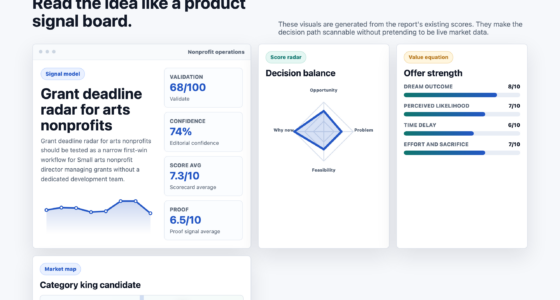
Grant deadline radar for arts nonprofits

A new grant deadline tracking tool aims to help small arts nonprofits manage funding opportunities more effectively amid complex application processes.

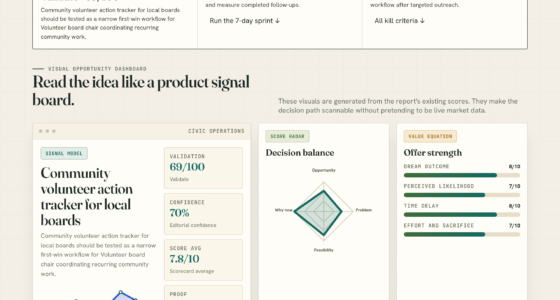
Community volunteer action tracker for local boards

A new volunteer action tracker for local boards is set to be tested as a first step to improve follow-up on community projects, with initial validation planned.