
The “Two Lists” method helps you cut through overwhelm by organizing tasks into two clear categories: urgent and important. It simplifies decision-making, reduces mental clutter, and keeps you focused on what truly matters. By regularly updating and reviewing your lists, you stay aligned with your goals and avoid stress. When you master this approach, you’ll find it easier to prioritize and stay calm during busy times—discover how to make it work for you beyond this overview.

Prime made for students and young adults
- Fast, free delivery for dorm and study essentials
- Prime Video and Amazon Music included
- Member-only deals
Key Takeaways
- Organize tasks into two categories: urgent and non-urgent, to prioritize effectively and reduce overwhelm.
- Break large projects into smaller, actionable steps with clear deadlines for easier management.
- Conduct daily reviews to update and reprioritize lists, maintaining alignment with evolving goals.
- Use visual cues like headings or color coding to clearly distinguish task types and boost clarity.
- Focus on important, meaningful tasks to prevent spending excessive time on less impactful activities.
As an affiliate, we earn on qualifying purchases.
Understanding the Core Concept of the Two Lists Technique

The Two Lists technique simplifies decision-making by helping you organize your options clearly. At its core, it encourages mindfulness awareness, making you more conscious of each task’s true nature. By categorizing tasks, you gain clarity on what needs immediate attention versus what can wait. This process involves creating two distinct lists: one for tasks that demand your focus and another for those that are less urgent. Task categorization is essential because it breaks down overwhelming choices into manageable groups. With this approach, you avoid mental clutter and stay present, ensuring you’re making deliberate decisions rather than reacting impulsively. Recognizing the importance of decision-making strategies can enhance your ability to prioritize effectively. The method transforms chaos into order, enabling you to prioritize effectively and manage your workload with confidence, ultimately supporting better mental clarity and reducing stress. Incorporating contrast ratio considerations from home theatre projectors can also help you evaluate what aspects of your workload require more focus, much like how contrast ratio affects image quality. Additionally, understanding nail styles can assist in visualizing how different choices in your tasks or projects can be styled or prioritized for better outcomes.
As an affiliate, we earn on qualifying purchases.
Differentiating Between Your Urgent and Important Tasks

Understanding the difference between urgent and important tasks is crucial for effective prioritization. Urgent tasks demand immediate attention, often driven by deadlines or external pressures, but they don’t always contribute to your long-term goals. Important tasks, on the other hand, align with your values and priorities, helping you make meaningful progress. When managing your time, it’s essential to recognize this distinction to avoid spending too much time on urgent but less impactful activities. Effective task prioritization involves focusing on important tasks first, even if they aren’t pressing right now. This approach ensures you’re working toward your goals and reducing the stress of last-minute crises. Recognizing task prioritization as a key component of time management can help you allocate your resources more efficiently. Additionally, understanding how stress management influences your decision-making can improve your ability to focus on what truly matters, ensuring your actions reflect your core intentions. Cultivating mental clarity can further enhance your capacity to distinguish between what is urgent and what is truly important, allowing for more deliberate choices. Developing decision-making skills can also support better evaluation of tasks, preventing unnecessary distractions and helping you stay aligned with your priorities. Mastering this differentiation improves your overall time management, making your daily efforts more intentional and productive.
As an affiliate, we earn on qualifying purchases.
Setting Up Your Lists for Maximum Clarity and Efficiency
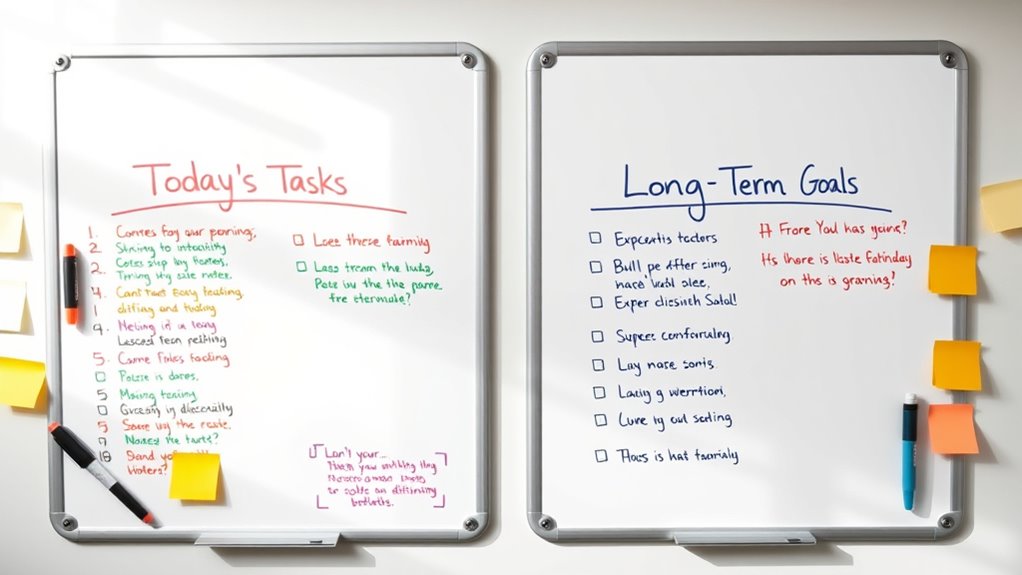
How you set up your lists can dramatically impact your ability to stay organized and focused. To maximize clarity and efficiency, prioritize good list organization by clearly dividing tasks into relevant categories. Use task categorization to separate work-related tasks from personal chores, or urgent tasks from long-term goals. Keep your lists simple—avoid clutter and unnecessary detail that can cause confusion. Use headings or color codes to distinguish different types of tasks easily. Break down large projects into smaller, actionable steps, and assign deadlines if possible. Regularly review and refine your lists to ensure they reflect your current priorities. Incorporating hardware news and updates can help you stay informed about the latest devices and trends, making your task prioritization more aligned with current technology developments. Additionally, understanding AI job roles can help you identify which tasks or skills to focus on for career growth. Employing effective list management techniques ensures your priorities stay clear and manageable, reducing overwhelm and boosting productivity. Creating motivational cues within your list system can further enhance your focus and commitment to completing tasks. Applying essential oils for task focus, such as peppermint or lavender, can also create a calming environment that enhances your concentration and efficiency. With well-structured lists, you’ll find it easier to identify what needs immediate attention and what can wait, reducing overwhelm and boosting productivity.
As an affiliate, we earn on qualifying purchases.
Strategies for Maintaining and Updating Your Lists
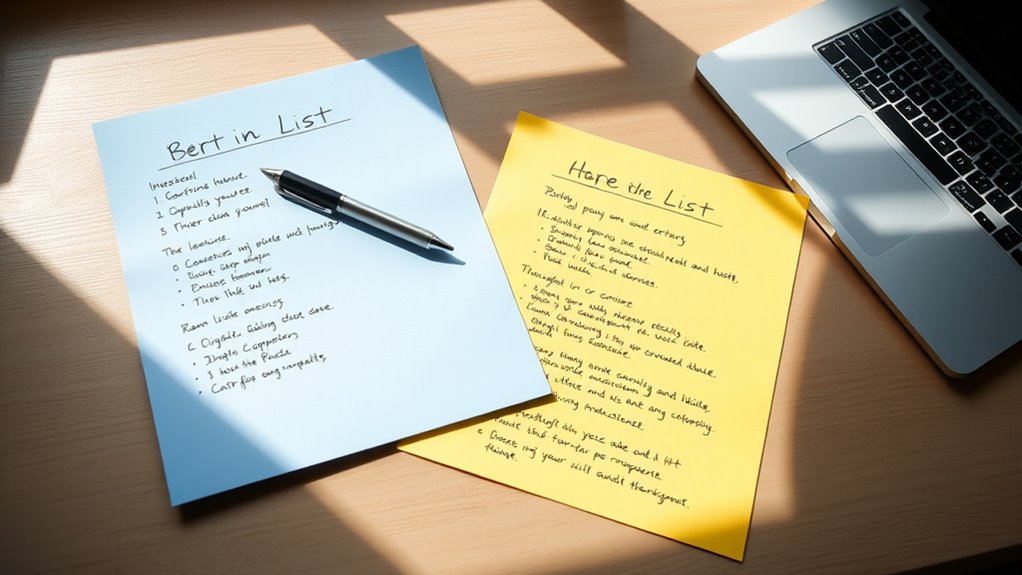
Keeping your lists current and accurate is key to staying organized and productive. Regular updates ensure tasks are properly prioritized and categorized, preventing overwhelm. To maintain effective list organization and task categorization, consider these strategies:
Regularly updating your lists keeps you organized, focused, and prevents overwhelm.
- Review your lists daily to add new tasks and remove completed ones
- Allocate specific times for updating your lists to build consistency
- Reassess task priorities as circumstances change
- Break larger tasks into smaller, manageable sub-tasks
- Use clear labels or categories to distinguish between different types of tasks
- Incorporate goal review sessions to ensure your lists align with your evolving objectives
- Paying attention to pinball machine weight can help you plan for proper transportation and installation, keeping your setup safe and functional.
- Regularly evaluate your list management techniques to identify areas for improvement and ensure your system adapts to your changing needs.
Overcoming Common Challenges When Implementing the Method

Implementing the “Two Lists” Method can be tricky if you struggle with prioritizing tasks or feel overwhelmed. You might find it hard to stay consistent or manage triggers that cause you to lose focus. Addressing these challenges head-on helps you stay on track and make the most of the method. For example, understanding the concept of Free Floating can help you identify tasks that are not tied to a specific context, making it easier to organize and prioritize them effectively. Recognizing your digestive health and dietary needs can also aid in selecting appropriate strategies for maintaining focus and managing stress. Developing mindfulness skills can further support you in staying present and reducing feelings of overwhelm. Additionally, being aware of your wave and wind patterns can help you adapt your routines to better align with your natural energy cycles, improving focus and enhancing your ability to stay focused and balanced.
Prioritizing Tasks Effectively
Even with a clear plan in place, prioritizing tasks effectively can be challenging when you encounter common obstacles. Distractions, indecision, or underestimating task importance can derail your focus. To improve your time management and maximize productivity hacks, try:
- Breaking larger tasks into smaller, manageable steps
- Using urgency and importance to rank tasks clearly
- Limiting distractions by setting specific work periods
- Setting strict deadlines to stay accountable
- Regularly reviewing and adjusting your lists to reflect changing priorities
- Incorporating sound therapy techniques to enhance focus and reduce stress during work sessions
- Considering the compatibility of your tools and components to ensure seamless integration and optimal performance.
Managing Overwhelm Triggers
Managing overwhelm triggers can be challenging, especially when you’re faced with a long to-do list or unfamiliar tasks. Emotional triggers, like frustration or anxiety, can intensify feelings of overwhelm, making it harder to focus. Recognizing these emotions helps you pause and reset. Environmental cues, such as cluttered spaces or noisy environments, can also heighten stress and distract you from your priorities. To manage these triggers, create a calm workspace and practice mindfulness when emotions run high. Break tasks into smaller steps to prevent feeling overwhelmed by the scope. Limit distractions and set boundaries to minimize environmental triggers. By actively addressing emotional and environmental cues, you regain control and make implementing the “Two Lists” method more effective.
Maintaining Consistent Practice
Once you’ve started using the “Two Lists” method, maintaining a consistent practice can pose its own set of challenges. Time management becomes essential, as you need to carve out regular moments for updating and reviewing your lists. Habit formation is key—without it, skipping days can disrupt momentum. To stay on track:
- Schedule specific times daily for list updates
- Set reminders to reinforce your routine
- Keep your lists visible to boost engagement
- Celebrate small wins to build motivation
- Adjust your lists as priorities shift over time
Real-Life Examples of the Two Lists Method in Action

Real-life examples of the Two Lists Method demonstrate how it can effectively clarify difficult decisions. For instance, you might face a busy week and struggle with prioritizing tasks. By listing what’s urgent and important on one side, and less critical items on the other, you gain clarity. This simple step becomes a powerful productivity hack, helping you focus on what truly matters. It improves your time management skills by visually breaking down overwhelming to-do lists into manageable parts. One person used this approach to decide whether to attend social events or work late, ultimately choosing options aligned with their goals. These examples show how the Two Lists Method simplifies decision-making, reduces stress, and boosts productivity, making it easier to stay on track without feeling overwhelmed.
Tips for Making the Technique a Sustainable Daily Habit
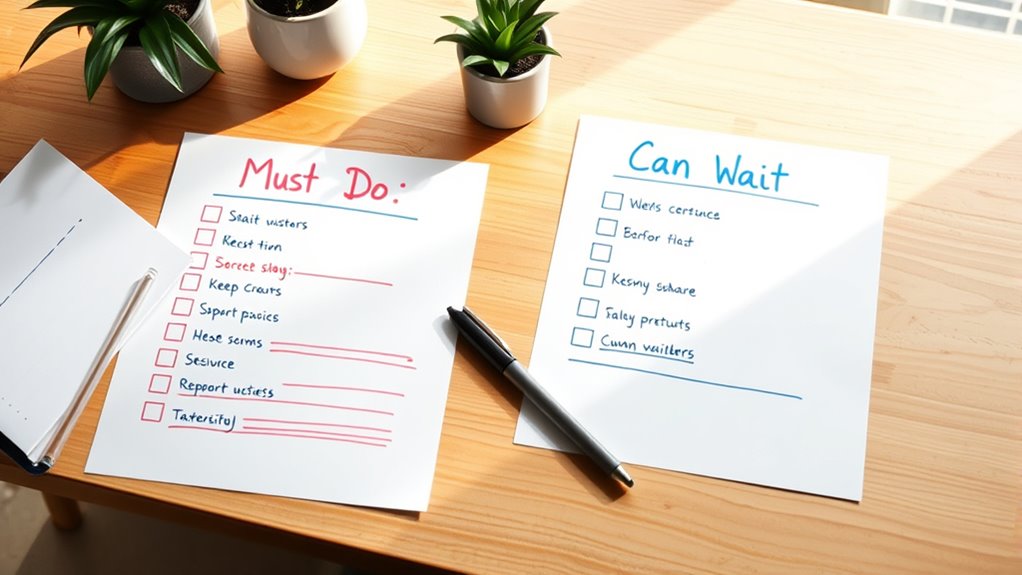
To keep using the Two Lists Method every day, start by setting clear intentions so you know exactly what you want to achieve. Building consistent routines helps turn the technique into a natural part of your day. Stick to these habits, and you’ll find it easier to make the method a sustainable, long-term practice.
Set Clear Intentions
Setting clear intentions is essential for turning the “Two Lists” method into a sustainable daily habit. When you focus on goal setting and emotional awareness, you create a purposeful approach that keeps you engaged. To do this effectively:
- Define specific, achievable goals for each day
- Recognize your emotional state to inform your priorities
- Visualize how completing your lists aligns with your bigger picture
- Set a dedicated time to review and update your lists
- Remind yourself of your purpose to stay motivated
Build Consistent Routines
Establishing consistent routines is key to making the “Two Lists” method a lasting part of your daily life. By creating mindful passages between tasks, you signal your brain that it’s time to shift focus, making routines feel natural and less overwhelming. Consistency helps build emotional resilience, as you learn to navigate stress without losing momentum. Start small—integrate a routine at the same time each day and stick with it, even on busy days. Over time, these habits become automatic, reducing decision fatigue and increasing your sense of control. Remember, the goal isn’t perfection but progress. With patience and persistence, your routines will become a reliable foundation, empowering you to stay organized and calm amid daily chaos.
Frequently Asked Questions
How Does the Two Lists Method Improve Long-Term Productivity?
The two lists method improves your long-term productivity by enhancing prioritization clarity and fostering habit development. By separating tasks into urgent and important lists, you focus on what truly matters, reducing distractions. This structured approach helps you develop consistent habits around tackling high-priority tasks, which builds momentum over time. As a result, you stay organized, motivated, and better equipped to sustain productivity in the long run.
Can This Method Be Adapted for Team or Family Task Management?
Yes, you can adapt this method for team or family task management by creating collaborative workflows. Have everyone contribute to two lists: one for immediate tasks and another for future plans. Use shared platforms or physical lists to keep everyone updated on family scheduling or team priorities. This way, you foster clear communication, reduce confusion, and guarantee that everyone stays aligned and accountable for their responsibilities.
What Tools or Apps Are Recommended to Organize These Lists?
Think of digital planners and task management apps as your organizational toolbox. Apps like Todoist, Trello, and Notion make it easy to create and manage your two lists, keeping tasks visible and prioritized. These tools sync across devices, so you stay on top of your game whether you’re on your phone or computer. They turn chaos into clarity, helping you conquer overwhelm with just a few clicks.
How Do I Handle Tasks That Shift Between Urgent and Important?
When tasks shift between urgent and important, you should reassess their priority regularly. Address prioritization challenges by reviewing your lists daily and reassigning tasks as needed. Stay flexible and avoid getting stuck on a task just because it was urgent yesterday. By continuously updating your priorities, you’ll manage task shifting effectively, ensuring you focus on what truly matters without feeling overwhelmed or neglecting essential responsibilities.
Is the Two Lists Technique Suitable for Managing Personal Goals?
Yes, the two lists technique suits managing personal goals by helping you prioritize and stay focused. It supports personal goal alignment by clearly distinguishing what matters most, boosting your motivation. Use one list for immediate tasks and another for long-term ambitions. This approach keeps you organized, maintains momentum, and taps into your individual motivation strategies, making it easier to track progress and celebrate achievements along your personal growth journey.
Conclusion
By embracing the two lists method, you’ll clear the fog from your mind and steer your day with confidence. Think of it as planting seeds in your garden—each task carefully categorized helps your productivity blossom. Stick with it daily, and gradually, overwhelm will fade like morning mist. With consistency, this simple technique becomes your trusted map, guiding you through busy days and turning chaos into clarity.
Halloween Picks
halloween
As an affiliate, we earn on qualifying purchases.