
The “Default Calendar” method helps you stay consistent by setting a pre-planned schedule with recurring events and routines, reducing daily decision fatigue. It boosts productivity by automating commitments, reinforcing habits, and keeping you focused on priorities. By defining your goals beforehand and choosing the right tools, you’ll build a daily and weekly routine that adapts as needed. Stick with this system, and you’ll discover key strategies to optimize your schedule and stay on track.
Open a free Amazon Business account
Business pricing, bulk buying and tax-exempt orders.
As an affiliate, we earn on qualifying purchases.
Key Takeaways
- Establish a pre-set schedule with recurring daily and weekly events to automate routine commitments.
- Use visual cues like color-coding to reinforce habits and ensure consistency in your calendar.
- Regularly review and adjust your calendar to stay aligned with evolving goals and energy levels.
- Prioritize high-impact tasks during peak productivity times and buffer periods for flexibility.
- Automate reminders and alerts for routines and deadlines to maintain discipline and prevent missed commitments.
digital calendar with recurring events
As an affiliate, we earn on qualifying purchases.
As an affiliate, we earn on qualifying purchases.
What Is a Default Calendar and How Does It Work?

Have you ever wondered how your digital calendar automatically displays your upcoming events? It’s a powerful tool for improving your time management and habit formation. A default calendar is simply a pre-set schedule that automatically populates your day with recurring tasks and appointments. It works by syncing your routines, deadlines, and priorities into one centralized system, making it easier to stay organized and consistent. When you follow this method, you don’t need to manually input every event, saving time and reducing the chance of forgetting important activities. Over time, this consistency helps reinforce good habits, as your calendar becomes a visual cue for your daily routines. Additionally, understanding the contrast ratio in your viewing setup can significantly enhance the clarity and depth of your visual experience. In essence, a default calendar streamlines your schedule, making it easier to manage your time effectively.
As an affiliate, we earn on qualifying purchases.
How a Default Calendar Boosts Your Consistency

Using a default calendar helps you build routine habits that stick. It also minimizes scheduling conflicts by keeping your commitments organized in one place. As a result, you stay consistent and focused on your goals. Incorporating smart scheduling tools can further enhance your efficiency by automating reminders and adjustments.
Establishes Routine Habits
A default calendar helps you establish routine habits by turning your commitments into automatic, recurring events. This consistent structure supports habit formation by embedding time blocking into your daily schedule. When you schedule tasks regularly, they become second nature, reducing decision fatigue and increasing adherence. Visualizing your habits in a calendar reinforces their importance and helps you stick to them. Incorporating energy-efficient cloud solutions into your planning can further optimize your routines for sustainability and security.
Reduces Scheduling Conflicts
When you rely on a default calendar, it automatically consolidates your commitments, minimizing overlaps and double bookings. This streamlines your time management, making it easier to see where your priorities lie. With a clear view of your schedule, you’re better equipped to set realistic goals and allocate dedicated time for each task. The default calendar acts as a safeguard against overcommitting, reducing the chance of conflicts that can derail your focus. As a result, you spend less time rearranging appointments and more time working toward your objectives. By maintaining a consistent schedule, you ensure that your commitments align with your goals, leading to smoother days and more effective productivity. Overall, a default calendar helps you stay organized and confident in your planning. Incorporating a calendaring system that suits your needs can further enhance your scheduling efficiency.
As an affiliate, we earn on qualifying purchases.
How to Set Your Priorities Before Building Your Calendar

Before you start filling in your calendar, it’s essential to identify your most important priorities. Clear task prioritization ensures you focus on activities that truly matter, helping you allocate time effectively. Begin by evaluating your goals and aligning daily tasks with them, so your calendar reflects what’s most impactful. Consider which projects or responsibilities have deadlines or high stakes, and mark these as top priorities. This process helps prevent distractions and ensures your schedule supports your long-term objectives. By setting these priorities upfront, you create a foundation for a consistent and purposeful calendar. When your tasks align with your goals, you’ll find it easier to stay focused and productive, leading to better time management and meaningful progress. Incorporating task prioritization techniques can further enhance your ability to maintain a balanced and effective schedule.
As an affiliate, we earn on qualifying purchases.
Which Tools Are Best for Your Default Calendar

Choosing the right tool for your default calendar depends on the digital options available and how well their features meet your scheduling needs. Look for apps with strong integration capabilities that connect seamlessly with your other tools. Prioritizing user-friendly interfaces and smart features can make managing your calendar much easier. Additionally, selecting a system that supports practical, room-by-room solutions can help you maintain a calm and organized home environment.
Digital Calendar Options
Selecting the right digital calendar tool can considerably streamline your scheduling and boost productivity. When choosing a platform, consider how it supports your time management and helps you prioritize tasks effectively. Popular options include Google Calendar, Microsoft Outlook, and Apple Calendar. Each offers unique features for seamless integration, reminders, and sharing. Here’s a quick comparison:
| Feature | Google Calendar | Outlook Calendar | Apple Calendar |
|---|---|---|---|
| Cross-platform access | Yes | Yes | Yes |
| Custom notifications | Yes | Yes | Yes |
| Collaboration tools | Yes | Yes | Limited |
Pick a tool that aligns with your workflow to optimize scheduling priorities and stay consistent.
Scheduling App Features
When evaluating different digital calendar options, it’s important to contemplate the features that best support your scheduling needs. Look for tools that facilitate effective time blocking and task batching, helping you organize your day efficiently. The right app should allow easy customization of event types, quick rescheduling, and visual clarity for your daily plan. Features like color coding, recurring events, and seamless notifications help reinforce your routine. Integrate prompts for focused work sessions and break periods to optimize productivity. A user-friendly interface ensures you stay consistent with your default calendar, minimizing disruptions. Consider these key features to ensure your calendar promotes disciplined scheduling and maintains your workflow smoothly. Additionally, understanding thermal behavior and how your selected tool adapts to high-heat environments can improve your planning accuracy for outdoor activities.
Integration Capabilities
To maximize your calendar’s effectiveness, you need integration capabilities that connect seamlessly with the tools you already use daily. The best calendars support user integration, allowing you to customize your workflow effortlessly. Look for options that sync with email platforms, task managers, and communication apps for smooth collaboration. Ensuring your calendar supports safe and reliable power solutions can also help prevent disruptions caused by technical issues. Choosing a calendar with strong integration ensures better calendar customization, making it easier to stay consistent and productive every day.
How to Create a Daily and Weekly Schedule
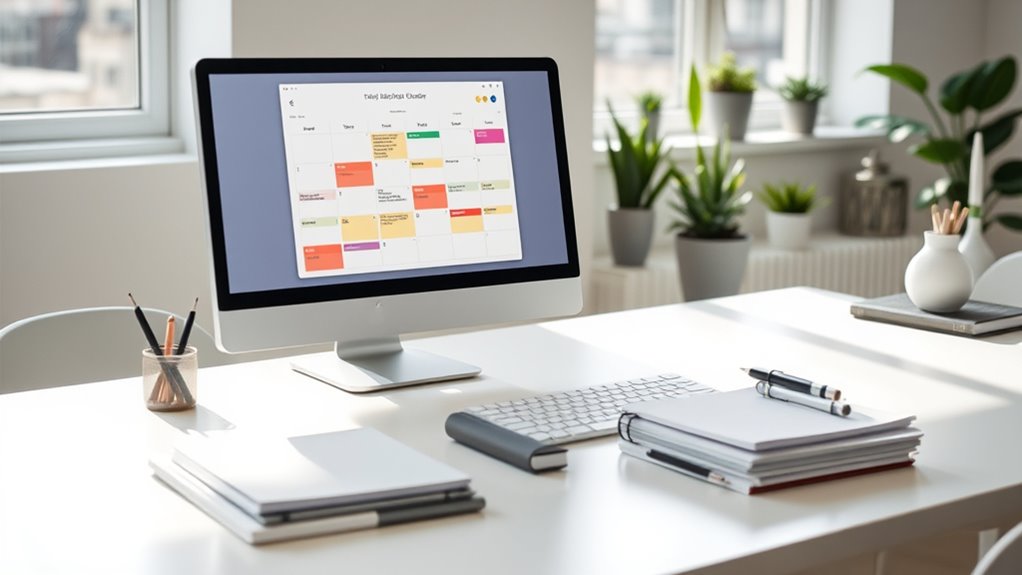
Ever wonder how to organize your day effectively? Start by setting clear goals and prioritizing tasks to improve your time management. Create a weekly overview by blocking out dedicated time for key activities, then break those into daily tasks. Consistency is key, so stick to your schedule as much as possible to build habits. Use your calendar to visualize your commitments and adjust as needed. Incorporate buffers between tasks to account for unexpected delays. Review your progress regularly to stay aligned with your goals. Paying attention to the small systems that underpin your routines can help you identify areas for improvement and ensure your schedule functions smoothly. Here’s a quick guide:
Organize your day by setting goals, blocking time, and reviewing progress regularly for better productivity.
- Define weekly objectives based on your goals
- Allocate specific time slots for high-priority tasks
- Break down tasks into manageable daily steps
- Schedule buffer times for breaks and contingencies
- Review and adjust your schedule weekly for continuous improvement
How to Automate Reminders That Keep You on Track

Once you’ve established a solid schedule, automating reminders guarantees you stay on track without constantly checking your calendar. Use digital tools like calendar apps or task managers to set alerts for each activity or deadline. This boosts your time management by providing timely cues, so you don’t forget important tasks or meetings. Incorporate productivity hacks like recurring reminders for daily routines or batching similar tasks together. Make reminders specific and actionable, ensuring they prompt immediate action rather than just a vague alert. Automating these prompts reduces mental clutter and keeps your focus sharp. Understanding appliance maintenance plans can help you set timely reminders for regular upkeep, preventing unexpected issues. As a result, you’ll develop consistency, stay organized, and maximize your productivity—turning your schedule into a powerful, self-sustaining system.
When and How to Adjust Your Calendar for Better Results

To improve your results, you need to regularly verify how well your routine works. Recognize when you’re most productive so you can shift tasks accordingly. Making strategic calendar adjustments ensures you stay efficient and focused throughout the day.
Monitoring Your Routine Effectiveness
Monitoring your routine’s effectiveness is vital to guarantee you’re staying on track and making progress. Regularly review your habit tracking data and observe how well your time blocking aligns with your goals. Adjust your calendar when you notice patterns indicating overcommitment or underperformance. Pay attention to which tasks take longer than expected and adjust your schedule accordingly. Use feedback from your tracking tools to identify areas needing improvement. Flexibility is key—don’t hesitate to reallocate time or modify routines to enhance productivity. Keep an eye on your energy levels and focus periods to optimize your schedule. Regular assessment ensures your calendar remains a tool for growth, not a rigid constraint.
- Review habit tracking logs weekly
- Analyze time blocking efficiency
- Identify tasks that need more or less time
- Adjust based on energy levels and focus
- Stay flexible to optimize results
Identifying Peak Productivity Periods
By identifying when you’re most alert and focused during the day, you can make smarter adjustments to your calendar. Pay attention to your natural rhythms to find your peak hours, the times when your energy and concentration are at their best. These focus windows are prime opportunities to tackle demanding tasks, creative work, or important meetings. Track your productivity over several days, noting when you feel most energized and least distracted. Once you recognize these periods, reserve your most challenging tasks for those times. Adjust your calendar accordingly, blocking out peak hours for deep work. This targeted approach helps you maximize your efficiency, reduces burnout, and guarantees you’re working during your most productive periods.
Implementing Strategic Calendar Changes
Adjusting your calendar strategically involves identifying the best times for different tasks and then reshaping your schedule to align with those periods. Effective goal setting and time management require you to recognize when you’re most productive and modify your calendar accordingly. This might mean shifting high-focus tasks to your peak energy times or carving out dedicated blocks for deep work. Regularly review your progress and be flexible in making changes to optimize results. Implementing strategic calendar adjustments ensures you stay aligned with your goals and maximize productivity.
- Assess your energy levels throughout the day
- Allocate time for high-priority tasks during peak periods
- Schedule breaks to maintain focus and prevent burnout
- Reevaluate your calendar weekly to stay aligned with goals
- Use time management tools to track and adjust your schedule
Common Challenges and How to Overcome Them

One common challenge with the Default Calendar Method is managing conflicting schedules, which can lead to missed appointments and confusion. To overcome this, focus on improving your time management skills by regularly reviewing and adjusting your calendar. Set clear goals for each day and prioritize tasks to ensure important commitments are protected. Use color-coding or labels to distinguish different types of activities, making conflicts easier to spot early. When conflicts arise, don’t hesitate to reschedule or delegate tasks to keep your calendar accurate. Staying disciplined with your goal setting helps you maintain consistency and prevents last-minute surprises. Regularly updating your calendar and being proactive about resolving conflicts will make this method more effective and reduce stress.
Real-Life Success Stories With Default Calendars

Have you ever wondered how some people effortlessly stay organized and meet all their deadlines? They often use the default calendar method to enhance their time management and goal setting. Many success stories highlight how adopting a consistent calendar helps them prioritize tasks and maintain focus. By sticking to a routine, they reduce decision fatigue and increase productivity. These individuals often:
- Allocate specific blocks for work and relaxation
- Set clear daily and weekly goals
- Track progress visually within their calendar
- Avoid overcommitting by managing expectations
- Adjust schedules for flexibility and efficiency
Their stories demonstrate that a reliable default calendar isn’t just about scheduling—it’s about creating a structure that supports achieving goals and managing time wisely. This approach turns chaos into clarity and boosts overall performance.
Tips to Stay Disciplined and Flexible With Your Calendar

Staying disciplined and flexible with your calendar requires intentional strategies that keep you on track while allowing room for unexpected changes. Effective time management involves blocking out dedicated periods for your priorities and sticking to them as much as possible. At the same time, set clear goals so you know what’s most important, helping you avoid distractions. Build in buffer time for unforeseen tasks or delays, so your schedule remains adaptable without losing focus. Regularly review and adjust your calendar to reflect your progress and shifting priorities. By balancing discipline with flexibility, you ensure consistent progress toward your goals while remaining responsive to life’s surprises. This approach helps you stay motivated and in control, no matter what challenges come your way.
Frequently Asked Questions
How Often Should I Review and Update My Default Calendar?
You should review your default calendar at least once a month to guarantee it remains accurate and effective. Update triggers include changes in your schedule, new commitments, or shifting priorities. Regular reviews help you stay organized and prevent conflicts. If your routines change frequently, consider more frequent updates. Consistently checking and adjusting your calendar ensures it reflects your current commitments and keeps you on track effortlessly.
Can I Customize My Default Calendar for Different Activities?
Yes, you can customize your default calendar for different activities. Use activity categorization to organize tasks and events, making it easier to identify priorities at a glance. Calendar personalization allows you to assign specific colors or labels to each category, helping you stay visually organized and focused. Adjust your default calendar settings to reflect these customizations, ensuring your schedule aligns with your unique workflow and lifestyle needs.
What Are Common Mistakes to Avoid When Using a Default Calendar?
Ever seen a cluttered calendar and wondered what went wrong? Avoid overplanning and neglecting priorities by keeping your calendar simple and focused. Don’t try to fit everything in; instead, prioritize key tasks and set realistic time slots. Always review and adjust regularly to stay aligned with your goals. This prevents burnout and guarantees your calendar works for you, not against you, keeping your schedule effective and manageable.
How Do I Balance Flexibility With Consistency in My Schedule?
To balance flexibility with consistency, you should use time blocking to allocate specific periods for tasks, ensuring routine and focus. Incorporate habit stacking by attaching new activities to existing routines, making it easier to maintain consistency. Allow some buffer time in your schedule for unexpected needs, and adjust your blocks when necessary. This approach helps you stay steady while adapting to life’s surprises, keeping your productivity on track without rigidity.
Is a Digital or Paper Calendar More Effective for Default Scheduling?
Choosing between digital and paper calendars is like picking between a spaceship and a bicycle—each has its own advantages. Digital scheduling tools offer flexibility, easy updates, and reminders, making them ideal for quick changes. Paper calendars, on the other hand, provide a tactile experience that can improve memory and focus. Consider your lifestyle and preferences; many find using both, depending on the task, creates a balanced approach for default scheduling.
Conclusion
So, you’ve got your default calendar ready to go—yet somehow, life still throws curveballs. Funny, isn’t it? Even with perfect schedules, consistency can slip away. But don’t worry, the irony is in your favor: the more flexible you stay, the more reliable your routine becomes. Embrace the chaos, tweak your calendar, and watch your productivity soar. After all, perfection’s overrated—resilience is where the real magic happens.
Flea & tick season Picks
flea and tick prevention
As an affiliate, we earn on qualifying purchases.