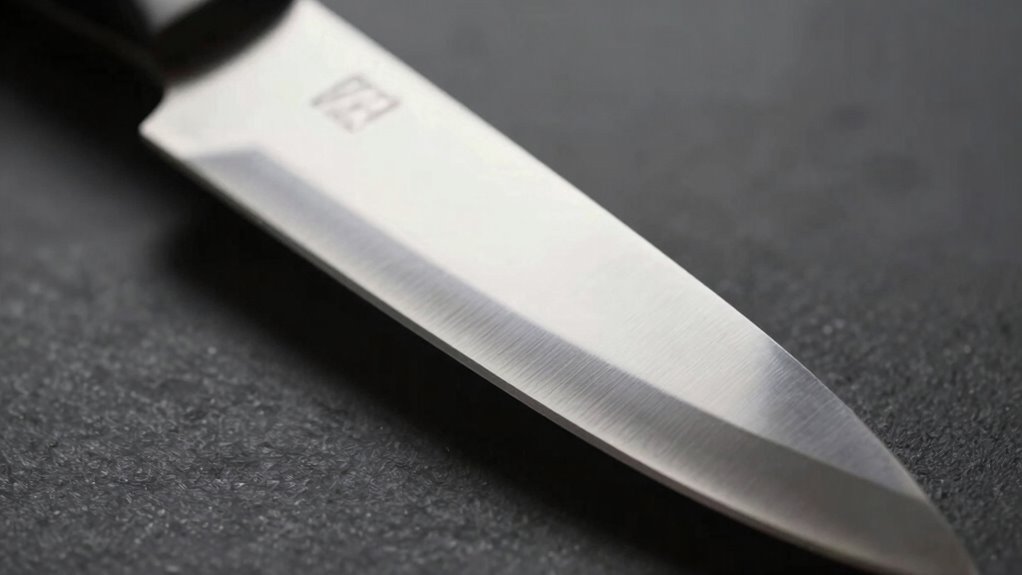

A dull knife is actually more dangerous than a sharp one because it requires you to apply more force, which increases the chance of slipping and cutting yourself. Dull blades are unpredictable, making it harder to control your cuts. Plus, they can cause you to use improper technique, further risking injury. Maintaining your knives keeps them sharp, safer, and easier to handle—so if you want to understand how to stay safe, keep exploring this topic.
Key Takeaways
- Dull knives require more force to cut, increasing the risk of slips and accidental injuries.
- Dull blades are less predictable and can cause unexpected slips during slicing.
- Using a dull knife often leads to improper cutting techniques, raising safety hazards.
- Dull knives increase fatigue, leading to decreased control and higher injury likelihood.
- Dull blades can cause uneven cuts, requiring more effort and risking loss of control.
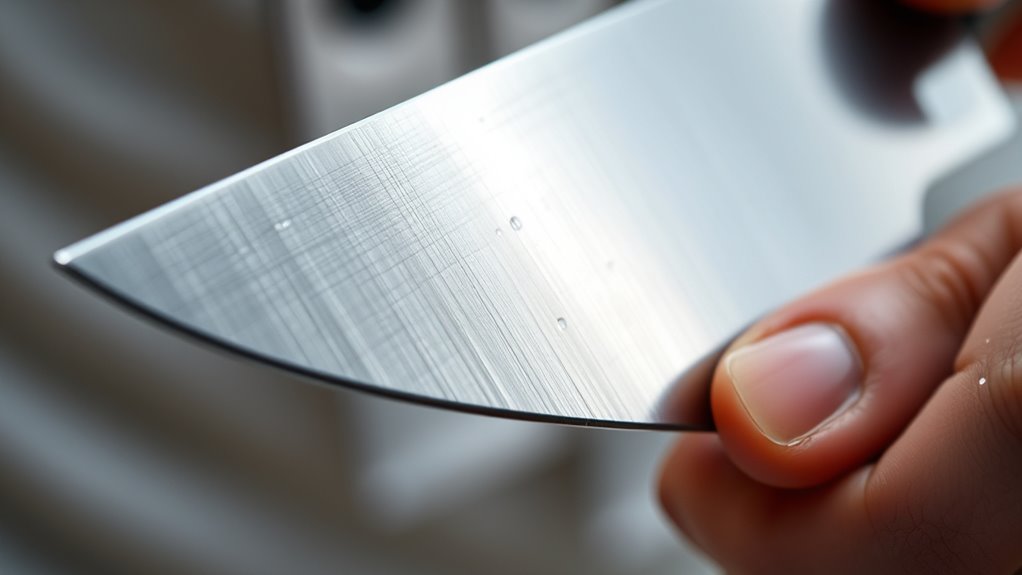
Have you ever struggled to cut through vegetables or meat because your knife just isn’t sharp enough? If so, you’re not alone. Many people underestimate how important a sharp knife is for both efficiency and safety. A dull blade requires more force to cut, which increases the risk of slips and accidents. To keep yourself safe in the kitchen, it’s essential to understand safety precautions when handling knives and to stay on top of maintenance tips that keep your blades in prime condition.
A sharp knife enhances safety and efficiency—maintain and handle it carefully to prevent accidents.
First, always remember to handle knives carefully, even when they’re dull. A dull knife can seem safer because it doesn’t cut as easily, but it’s actually more dangerous. It requires more pressure, and that extra force can cause the knife to slip unexpectedly. To prevent accidents, always cut away from your body, keep your fingers clear of the blade’s path, and use a stable cutting surface. When you’re finished using your knife, don’t leave it lying around where someone might accidentally cut themselves. Instead, store it securely in a knife block or on a magnetic strip.
Maintenance tips are *vital* for ensuring your knives stay sharp and safe. Regular honing with a honing steel realigns the blade’s edge, maintaining its sharpness between sharpenings. However, honing doesn’t actually sharpen the knife; it just keeps the edge aligned. When your knife begins to dull, it’s time to sharpen it with a whetstone or a professional sharpening service. Dull knives require more force to cut, which not only makes the task harder but also increases the chance of slipping. Sharpening your knives properly reduces this risk and makes your cooking safer and more efficient.
Cleaning your knives properly also plays a role in their longevity and safety. Hand wash your knives with warm, soapy water immediately after use, and dry them thoroughly to prevent rust and corrosion. Avoid putting knives in the dishwasher, as the high heat and abrasive detergents can damage the blade and handle. Checking for chips or cracks during cleaning is also a good safety habit—damaged blades can be unpredictable and dangerous. Additionally, understanding knife manufacturing and blade materials can help you choose the best knives for durability and safety.

Intelitopia Complete Knife Sharpening Stone Set – Dual Grit Whetstone 400/1000 3000/8000 Knife Sharpener with Leather Strop, Flattening Stone, Bamboo Base, 3 Non-slip Rubber Bases & Angle Guide
【Complete Knife Sharpening Stone Kit】You don't need to be a Pro to sharpen your blades, all you need…
As an affiliate, we earn on qualifying purchases.
As an affiliate, we earn on qualifying purchases.
Frequently Asked Questions
How Can I Safely Test if My Knife Is Sharp?
To safely test if your knife is sharp, use gentle testing techniques like slicing through a piece of paper or a tomato. Hold the item firmly and cut with controlled, smooth strokes. Avoid using excessive force, which can compromise cutting safety. If the knife glides easily without tearing or crushing, it’s sharp. Always keep your fingers clear of the blade to prevent accidents, and handle your knife with care.
What Materials Are Best for Sharpening Knives?
You need the best materials to sharpen your knives effectively—think of them as the superheroes of the sharpening world. Ceramic honing rods are excellent for fine-tuning and maintaining sharpness, while diamond sharpening tools cut through steel like a hot knife through butter. Using these materials, you’ll turn a dull, dangerous blade into a razor-sharp tool in no time, ensuring safety and precision in every cut.
How Often Should I Sharpen My Kitchen Knives?
You should sharpen your kitchen knives every 1 to 2 months, depending on use, to maintain ideal knife maintenance. Regular sharpening prevents dull blades, which can be more dangerous than sharp ones because they require more force and slip easily. Keep an eye on your knife’s performance, and sharpen when you notice it becoming less effective. Consistent sharpening frequency keeps your knives safe, effective, and prolongs their lifespan.
Can Sharpening Damage My Knife’s Blade?
Sharpening your knife can damage the blade if you use improper techniques or overdo it. Incorrect sharpening methods can compromise blade integrity, making it weaker or prone to chipping. To avoid this, use proper sharpening techniques, like maintaining a consistent angle and choosing the right stone. Regular, careful sharpening preserves your knife’s edge and prolongs its lifespan, ensuring safety and efficiency in your kitchen.
What Are the Signs My Knife Needs Sharpening?
Imagine trying to cut a tomato with a dull knife—it slips and crushes instead of slicing cleanly. If your knife struggles to cut smoothly, it needs sharpening. Signs include a lack of precision, increased effort, and a torn edge. Regular blade maintenance and proper sharpening techniques keep your knife effective and safe. If you notice these signs, it’s time to sharpen your knife to guarantee maximum performance.

Utopia Kitchen Knife Sharpener Rod 12 Inch, Professional Honing Rod for Knife Sharpening with Hanging Hook, Black
Premium Steel Construction – The steel rod is made of carbon steel and plated with nickel-chrome; the fine…
As an affiliate, we earn on qualifying purchases.
As an affiliate, we earn on qualifying purchases.
Conclusion
Remember, a dull knife can be more dangerous than a sharp one—you might think you’re in control, but it’s the unexpected slip that catches you off guard. Keep your blades sharp and your focus sharpener to avoid the hidden risks lurking in dullness. Don’t wait until trouble strikes; stay ahead of the curve and handle your knives with care. After all, a little maintenance now saves a lot of trouble later.
Intelitopia Complete Knife Sharpening Stone Set – Dual Grit Whetstone 400/1000 3000/8000 Knife Sharpener with Leather Strop, Flattening Stone, Bamboo Base, 3 Non-slip Rubber Bases & Angle Guide
【Complete Knife Sharpening Stone Kit】You don't need to be a Pro to sharpen your blades, all you need…
As an affiliate, we earn on qualifying purchases.
As an affiliate, we earn on qualifying purchases.

Magnetic Knife Holder for Wall, Knife Magnetic Strip Magnetic Knife Holder for Refrigerator Mount Knife Rack Kitchen Utensil Holder Metal Tool Holder Knife Block Kitchen Organizers Accessories 10 Inch
Heavy Duty and Solid magnetic knife holder: Our magnetic knife holder for refrigerator contains powerful magnets and has…
As an affiliate, we earn on qualifying purchases.
As an affiliate, we earn on qualifying purchases.